Why Textile Processing Units Need an ETP Wastewater Treatment Plant
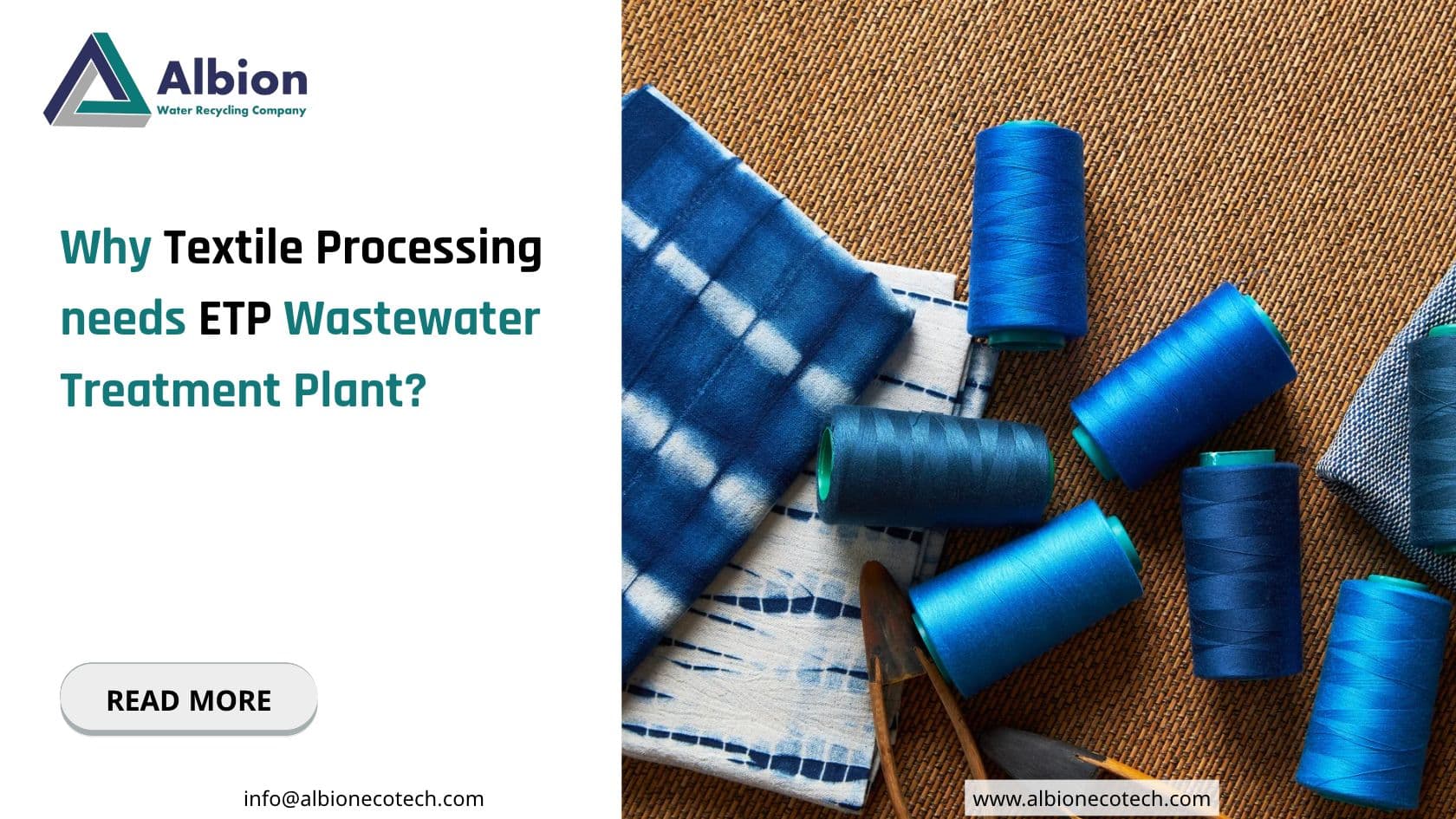
A bale of grey fabric goes in one end of a processing house and comes out the other as dyed, printed and finished cloth, and every stage in between sends its own kind of wastewater to the drain. Desizing sends starch and polyvinyl alcohol, scouring sends strong alkali and wax, bleaching sends peroxide, dyeing sends colour and salt, finishing sends softeners and resins. Each stream is different, they are discharged in turn through the day, and together they form one of the most variable industrial effluents. An effluent treatment plant (ETP) is what makes a textile processing unit able to discharge, reuse or dispose of this wastewater without harming land and water. This article walks through the process stage by stage to show why the sector needs one and what shapes its design. For a broader overview, see the guide for the textile and dyeing industry.

What each process stage sends to the drain
- Sizing and desizing: removes starch and synthetic sizes such as polyvinyl alcohol (PVA) and carboxymethyl cellulose from woven fabric. Desizing wastewater is high in BOD and COD, and PVA is slow to biodegrade.
- Scouring: hot caustic soda and surfactants strip wax, pectin and dirt from cotton. The liquor is strongly alkaline, very high in COD, and carries suspended solids and lint.
- Bleaching: hydrogen peroxide or hypochlorite. Residual peroxide kills the biomass in a biological reactor if it is not removed first, and chlorine-based bleaching can form chlorinated organic compounds.
- Mercerising: strong caustic treatment that sends a very alkaline wash stream, which is often worth recovering.
- Dyeing: the biggest contributor of colour and salt. Reactive dyeing of cotton uses large quantities of salt and alkali to drive the dye onto the fibre, and the unfixed share washes out as hydrolysed dye. Disperse dyeing of polyester uses dispersing agents, sometimes carriers, and a reduction clearing step with sulphur compounds. Sulphur and vat dyes add sulphide and reducing agents.
- Printing: thickeners, binders, urea, pigments and solvents in print paste washings and screen cleaning water.
- Finishing: softeners, resins, water repellents and other functional chemicals, with some that persist in the environment.
- Garment and denim washing: enzymes, bleaching and stone-wash chemicals, indigo and a lot of lint and fines.
- Utilities: boiler and cooling blowdown and softener or RO reject.
Why the combined effluent is difficult
- It changes all day. Alkaline scouring liquor, acidic neutralisation, salty dye baths and soapy washes follow one another through a shift, and each batch has its own shade and chemistry.
- Colour is persistent. Many dyes are made to resist fading, so they also resist biological breakdown.
- Salt does not degrade. Dissolved solids from dyeing and neutralisation pass through every biological stage and are the main reason clusters are pushed toward RO and zero liquid discharge.
- Hot, alkaline and chemically varied. Discharges can reach high temperatures and pH, and carry peroxide, sulphide and reducing agents that upset biology.
- Fibres and lint. Short fibres and fines block screens and pumps, and polyester processing adds oligomers that deposit on equipment.
Why an ETP is not optional
Regulatory consent. Textile processing is a regulated category in India. Units operate under consent from the State Pollution Control Board with limits on pH, BOD, COD, suspended solids, colour, oil and grease and dissolved solids, and in several clusters effluent must go to a common effluent treatment plant or the unit must run zero liquid discharge. Requirements differ by state, cluster and consent, so they should be confirmed with the Board before design.
Protecting rivers and groundwater. Coloured, salty effluent blocks light in rivers, strips oxygen and makes irrigation land saline. Unlined pits and drains let salt and chemicals into groundwater, which can make wells unusable.
Hazardous waste control. Sludge from dyeing and finishing effluent, and evaporator salts from ZLD, are often classified as hazardous waste and must go through authorised routes.
Buyer and brand requirements. Garment brands audit processors on wastewater quality, chemical management and water use, and a working ETP with records is a condition for many orders.
Water security and cost. Wet processing uses many tens of litres of water per kilogram of fabric, and clusters often sit in groundwater-stressed regions. Recovering water from effluent cuts intake cost and supply risk.
How a textile processing ETP is built
- Segregation and in-process recovery. Keep high-salt dye house streams apart from lightly loaded rinses, recover mercerising caustic, recover PVA from desizing with ultrafiltration where it is used, and recover heat from hot effluent. This cuts the load and the cost of everything that follows.
- Screening and lint removal. Fine screens and lint filters remove fibres before pumps and tanks.
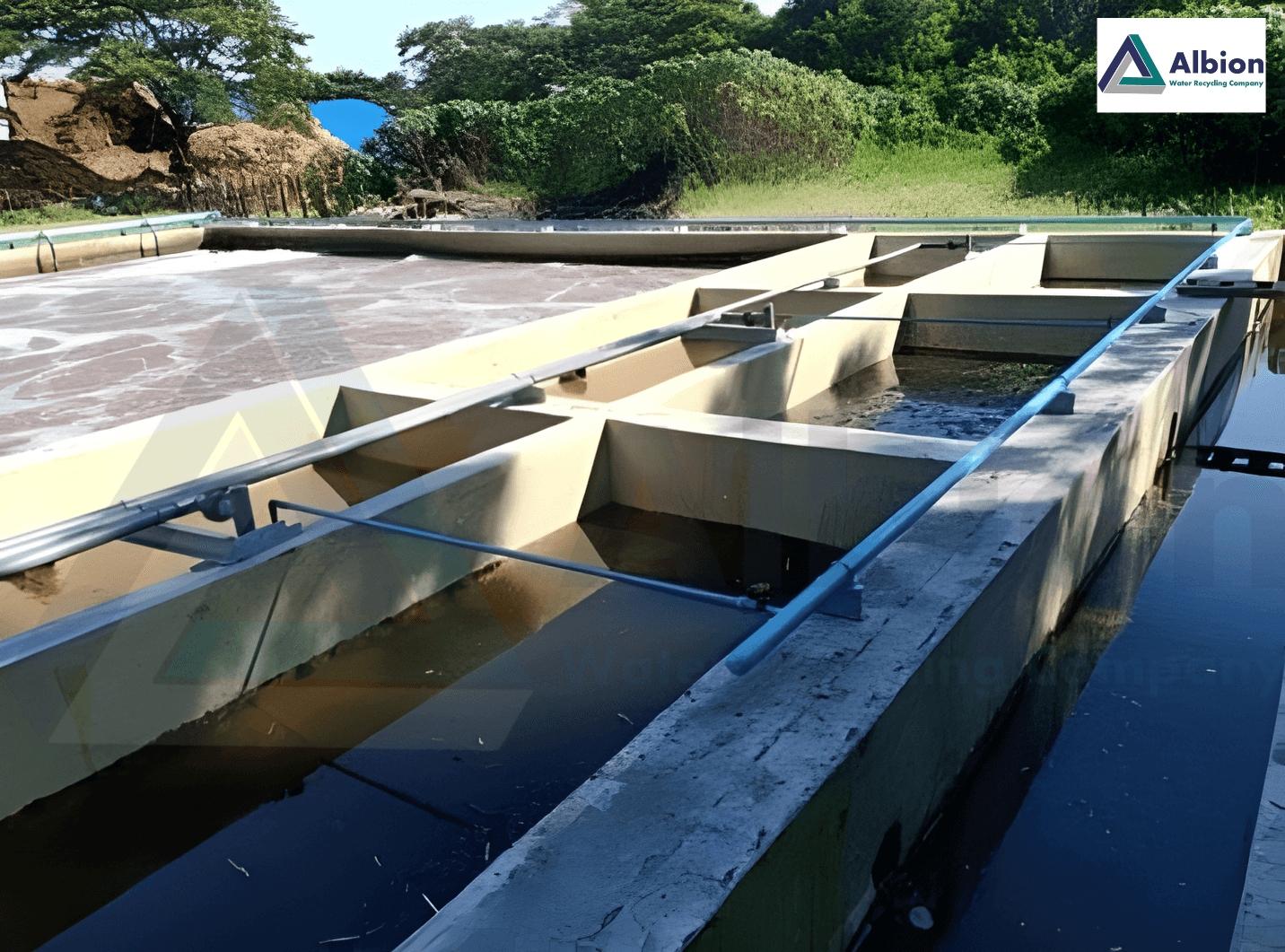
- Equalisation, cooling and pH correction. A mixed, aerated balancing tank blends the acidic, alkaline and coloured streams and brings temperature and pH into range. Residual peroxide is neutralised here.
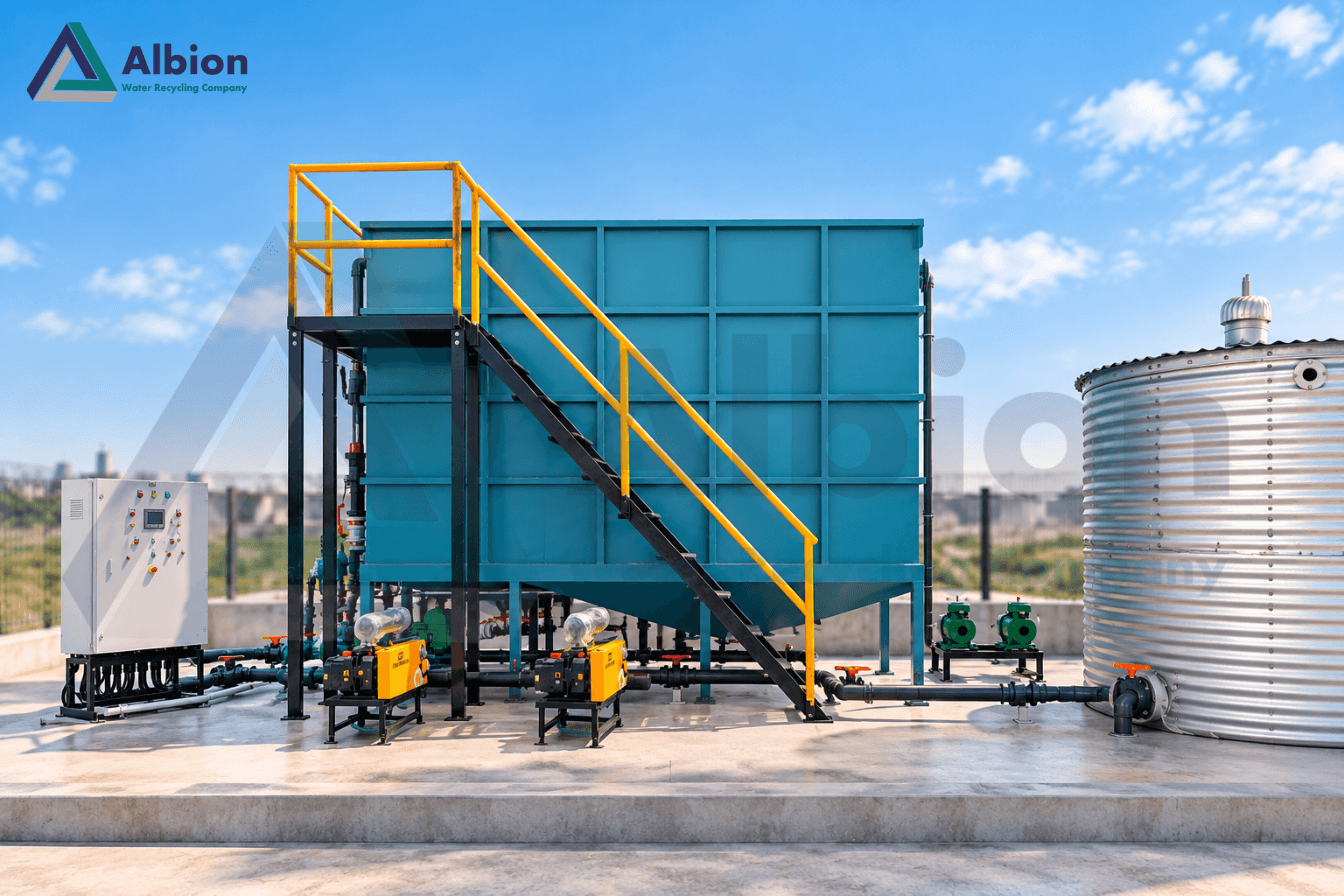
- Primary physico-chemical treatment. Coagulation and flocculation settle suspended solids and part of the colour, and protect the biology from inhibitory loads. The chemical sludge needs its own dewatering.
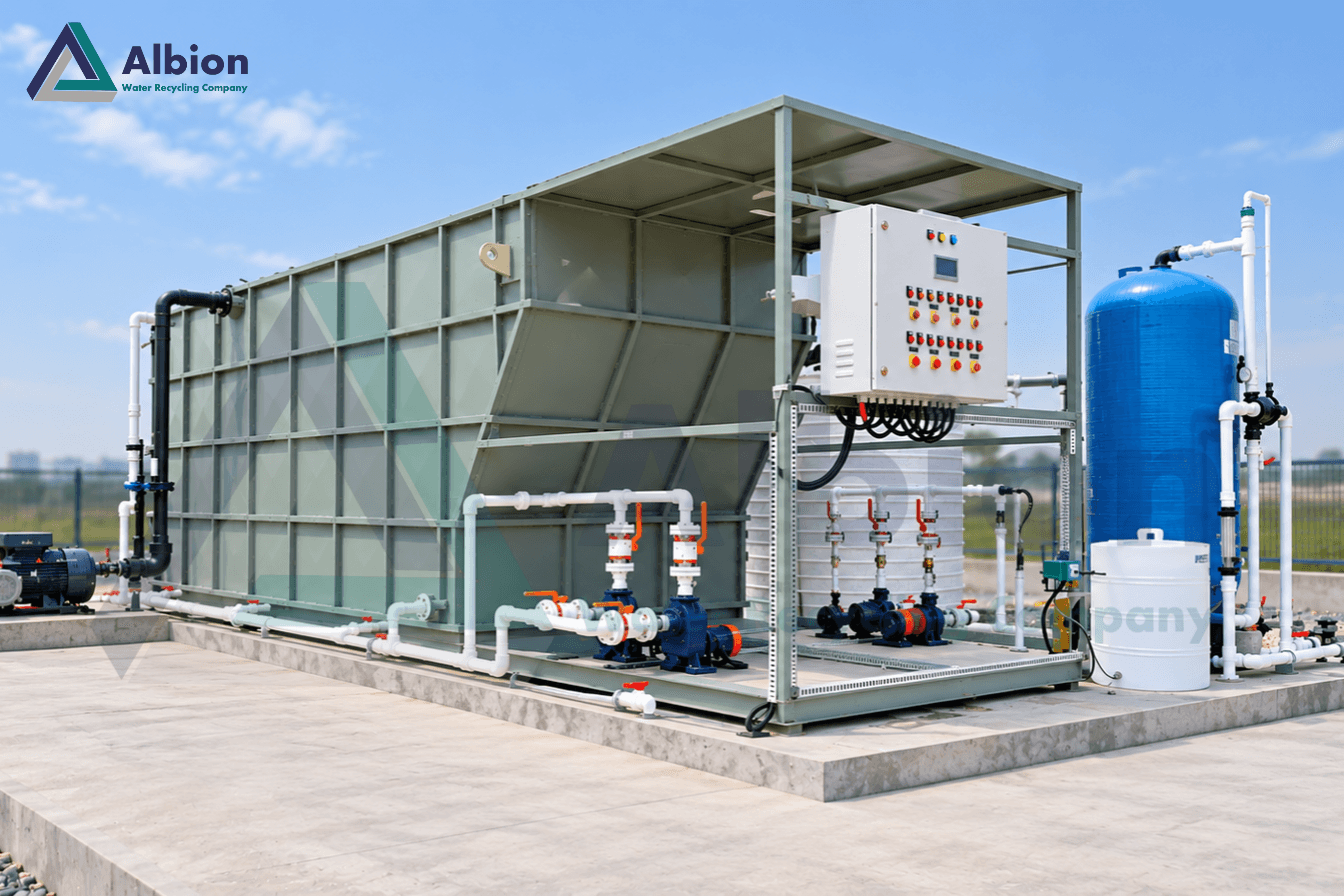
- Biological treatment. The biodegradable COD from sizes, surfactants and auxiliaries is treated with SBR, MBBR or MBR, or with a carrier-based process such as Albion Ecotech's M-Flocs AMBBR, which suits the batch variability and tight plots common in processing houses. Aeration should be designed on textile effluent oxygen-transfer data, not on domestic sewage assumptions.
- Colour polishing. Further coagulation, activated carbon or advanced oxidation, chosen by bench trial on the actual dye mix, take out the colour that survives biology.
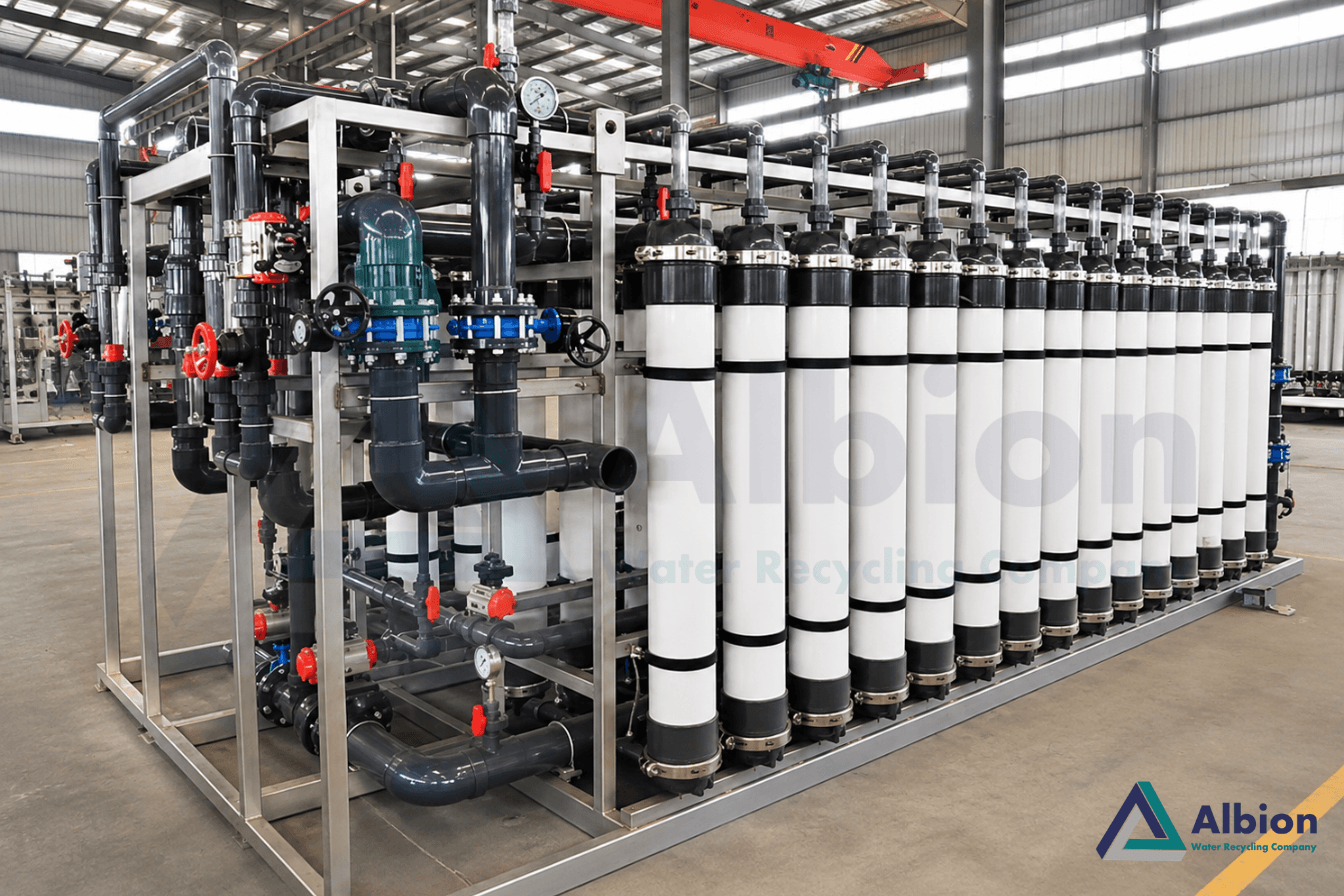
- UF, RO and ZLD. UF protects the RO membranes, and RO removes the salt and leaves reusable water and a concentrated reject. Where discharge is not allowed, the reject is evaporated and crystallised so that nothing leaves the site as liquid. This is the most energy-intensive stage, and the salt residue needs a disposal route.
- Sludge handling. Chemical and biological sludge are thickened and dewatered, typically in a filter press, and sent through authorised routes.
The technical case for each stage, including cost drivers and technology selection, is set out in the whitepaper on textile wastewater treatment and ZLD.
Reuse inside the processing house
Textile processing is one of the better candidates for reuse, since much of the water goes into rinsing and washing. RO permeate is soft and low in salt, which suits many steps, but hardness, residual colour and chlorides all affect shade, so reuse into critical steps should be agreed with the dye house and proved on trials. Lower-grade uses such as washing, cooling make-up and landscaping are easier starting points. Albion Ecotech sizes reuse around the quality each step needs, using U-Flocs UF and RO where the use justifies them, and ZLD where discharge is not permitted.
Reduce the load at the process
- Use enzymatic desizing and bio-scouring where the fabric allows, and use catalase to break down residual peroxide at source.
- Choose dyes with higher fixation, and use low-liquor-ratio machines to cut water, salt and chemicals per kilogram.
- Use counter-current washing and reuse final rinse water in the first rinse of the next batch.
- Recover mercerising caustic and PVA, and recover heat from hot effluent.
- Keep chemical choices under review, since a switch in auxiliaries can change the toxicity and biodegradability of a whole stream.
- Meter water by machine and by stage, so abnormal use is visible.
Common mistakes
- Sending bleaching liquor with residual peroxide straight into the biological stage.
- Sizing from one sample, when effluent changes with each batch and shade.
- Mixing high-salt dyeing effluent with light rinses, so RO and evaporators handle a larger volume than necessary.
- Choosing a colour removal method without a bench trial on the unit's own dyes.
- Underestimating lint and fibre, so screens and pumps clog.
- Leaving sludge and salt disposal until after commissioning.
Our approach to textile processing ETPs
Albion Ecotech designs effluent treatment plants for textile processing units from measured data: fabrics and processes run, dye classes and salt use, flow by stage, COD range across batches, temperature and pH, and the discharge or ZLD requirement that applies. Depending on the unit, the train may combine segregation and recovery, screening, equalisation, physico-chemical treatment, a biological stage selected from AMBBR or MBBR, SBR and MBR, colour polishing, UF and RO, and ZLD where needed. Sludge handling, energy-efficient equipment, PLC-based automation and post-commissioning support are part of the scope, and plants can be supplied in packaged or civil formats.
Frequently Asked Questions
Why does a textile processing unit need an ETP?
Each stage from desizing to finishing sends colour, salt, alkali, organics and chemicals to the drain. These harm rivers, soil and groundwater and are regulated under pollution control consent. An ETP treats the effluent and enables water reuse.
Which stage produces the most pollution?
It depends on the fabric and process. Desizing and scouring contribute most of the organic load and alkalinity, while dyeing contributes most of the colour and salt. The combined effluent is what the ETP has to handle.
Why does bleaching affect biological treatment?
Residual hydrogen peroxide or chlorine kills the microorganisms in a biological reactor. It is neutralised or broken down, for example with catalase or a reducing agent, before the effluent reaches the biological stage.
Is zero liquid discharge required for textile processing?
Not for every unit. Several clusters require ZLD or common effluent treatment, but it depends on the state, cluster and consent. The applicable conditions should be confirmed with the State Pollution Control Board.
Can treated water be reused in textile processing?
Yes, once quality is confirmed. RO permeate is soft and low in salt and suits many steps, but residual colour and hardness can affect shade, so reuse into critical steps should be agreed with the dye house and proved on trials.