
M-Flocs: Advanced Moving Bed Bioreactor (AMBBR) System
Membranes & Filtration MediaNext-gen biological treatment using proprietary high-surface-area carriers to maximize bacterial growth in minimal tank volumes.
Enquire about this product
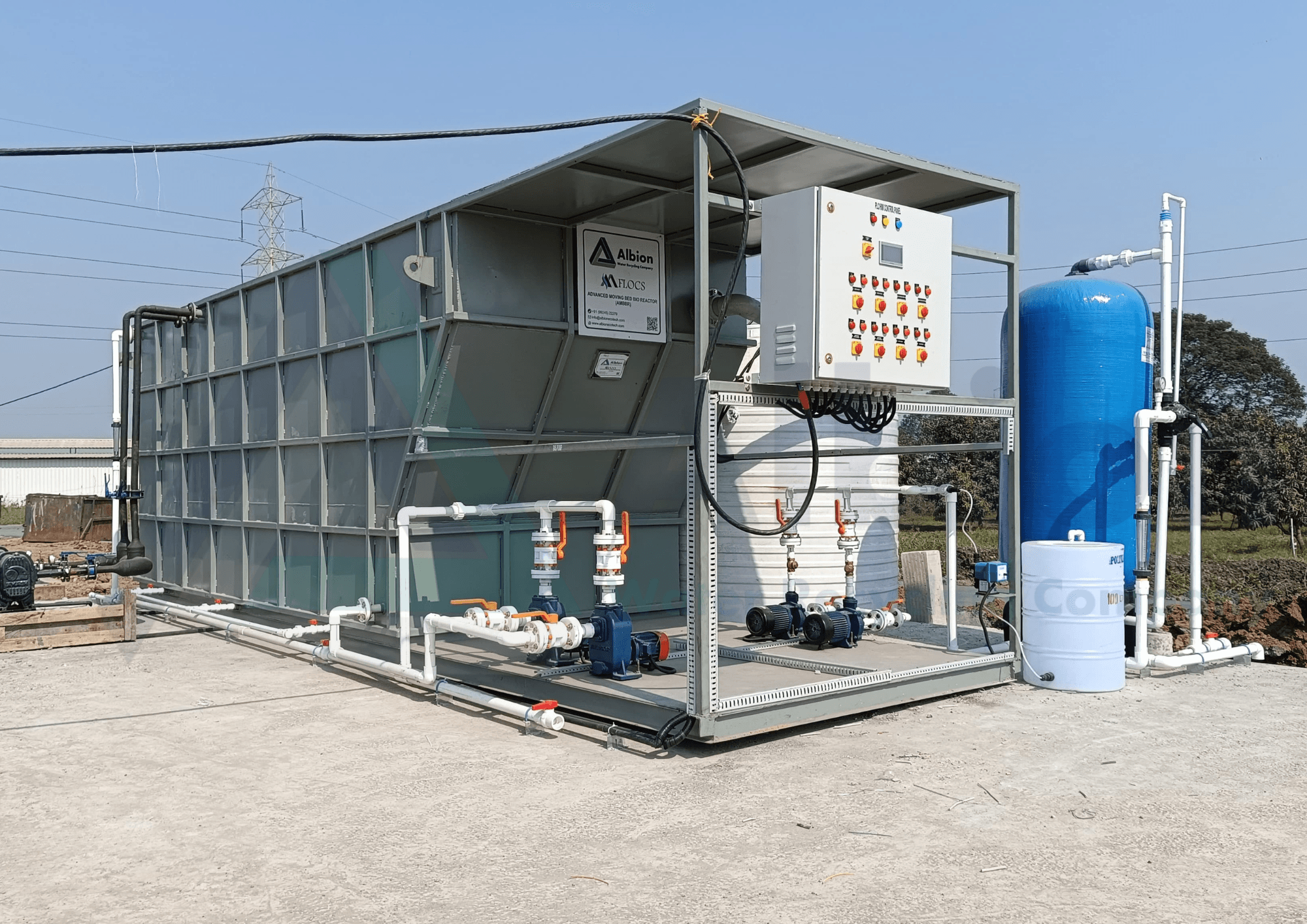
Specifications
- Process configuration
- Integrated Fixed Film Activated Sludge (IFAS) / AMBBR hybrid process
- Growth mode
- Suspended MLSS with attached-growth carriers in the aeration basin
- Return sludge operation
- Uses RAS (Returned Activated Sludge), as in conventional activated sludge systems
- Carrier properties
- Higher specific gravity, hydrophilic surface, fine pores, high porosity, rough and adsorbing surface
- Efficiency improvement
- 50-400 percent higher process efficiency compared to conventional technologies
- Industrial use cases
- Textile, pharmaceutical, automobile, sewage treatment, heavy metal removal, ammonia and nitrate removal, and existing-plant upgrades
Features
Hybrid AMBBR process
Combines suspended-growth activated sludge with attached-growth carrier media in the aeration basin.
High specific gravity carriers
Designed for easier mixing and fluidization with lower energy requirement.
Hydrophilic carrier surface
Supports quicker colonization, biofilm formation, better wetting, and faster media fluidization.
Fine pores and high porosity
Encourages faster colonization and protects biomass against shock loads.
Surface roughness and adsorption
Supports better diffusion gradients and development of specific biomass.
Lower degree of filling
Improves mixing, mass transfer, and carrier fluidization.
Outcomes
Smaller footprint and reduced CAPEX
Improves treatment performance while reducing space and capital requirements.
Strong shock-load stability
Maintains remarkable process stability against toxic shock loads.
Higher process efficiency
Provides 50-400 percent higher process efficiency compared to conventional technologies.
Lower energy consumption
Carrier properties support mixing and fluidization with lower energy demand.
Reduced sludge production
Helps reduce sludge generation in biological treatment.
Improved clarifier operation
Supports better downstream clarification performance.
Better performance under variation
Improves results under varying operating conditions.
About M-Flocs AMBBR
M-Flocs Advanced Moving Bed Bio Reactor System (AMBBR) is a next-gen biological treatment system using proprietary high-surface-area carriers to maximize bacterial growth in minimal tank volumes.
AMBBR carrier-based aerobic biological wastewater treatment is offered as an IFAS (Integrated Fixed Film Activated Sludge) process configuration. The process adds attached-growth media to the aeration basin while keeping MLSS in the suspended phase with RAS (Returned Activated Sludge), creating a hybrid system that brings together the advantages of suspended-growth and attached-growth treatment.
Process Advantages
The added carrier media increases available biomass in the aeration tank, enhancing treatment efficiency and helping plants handle higher loads, toxic shock conditions, and varying operating conditions. Carrier properties such as high specific gravity, hydrophilic surface, fine pores, high porosity, surface roughness, and lower filling degree support colonization, wetting, diffusion, mixing, mass transfer, and fluidization.
- Smaller footprint and reduced CAPEX
- Remarkable process stability against toxic shock loads
- 50-400 percent higher process efficiency compared to conventional technologies
- Lower energy consumption and reduced sludge production
- Improved clarifier operation and better results under varying operating conditions
Industrial Use Cases
M-Flocs is positioned for textile industries, pharmaceutical industries, automobile industries, sewage water treatment, heavy metal removal, ammonia and nitrate removal, and up-gradation of existing plants with minimal civil and mechanical modification.
How the Hybrid Process Works
M-Flocs uses an IFAS configuration: activated-sludge biomass remains suspended in the mixed liquor while a second biomass population develops as biofilm on carrier media. The two growth modes operate together in the biological reactor, increasing the biomass available for treatment without requiring a proportional increase in suspended solids.
The attached biofilm can retain slower-growing organisms, supporting nitrification performance where biological capacity is constrained by basin volume, temperature, or loading. Actual treatment performance is determined by influent characteristics, carrier selection, media fill, aeration, hydraulic conditions, and process controls.
Treatment Objectives and Upgrade Applications
IFAS is well suited to new plants and retrofit projects where an existing activated-sludge basin needs more biological capacity without building a new aeration basin. Carrier media can be retained across the whole basin or within selected zones, subject to the process design.
- Increase biological capacity within an existing aeration-basin footprint.
- Support ammonia oxidation and nitrification when an adequate aerobic environment is maintained.
- Support nitrogen-removal schemes when aerobic and anoxic zones, internal recirculation, and carbon availability are designed for the duty.
- Allow a plant upgrade to be evaluated around its existing civil structures, aeration capacity, and secondary clarification constraints.
Design and Operating Considerations
A successful M-Flocs application begins with a site-specific process assessment. Media retention screens or sieves, upstream screening to protect media surface area, basin mixing, oxygen transfer, and hydraulic flow paths should be designed together.
In aerobic IFAS zones, dissolved oxygen must be sufficient for the treatment objective and to reach the active biofilm layer. For nutrient removal, the arrangement of aerobic and anoxic zones, return flows, sludge age, temperature, pH, alkalinity, loading variation, and clarifier performance should be checked during design and commissioning.
Albion Ecotech can assess influent data, existing basin geometry, available aeration, discharge targets, and upgrade constraints to determine whether an IFAS/AMBBR configuration is appropriate.
Related
Discuss your project
Tell us about your effluent characteristics and treatment targets, and our engineers will recommend the right configuration.
Start a project enquiry