Textile Wastewater Treatment: Challenges, Technologies and Zero Liquid Discharge
Executive Summary
Textile effluent is among the more difficult industrial wastewaters to treat, combining high colour, variable organic load, elevated salinity and, depending on the process mix, traces of chemicals that resist biological breakdown. Many textile clusters in India also operate under zero liquid discharge (ZLD) mandates, which adds reject and salt management to the treatment problem. This whitepaper sets out why textile effluent behaves the way it does, how a multi-stage treatment train is typically built to handle it, where ZLD fits and what it costs to run, and a structured framework for selecting technologies and sizing a plant for a specific textile unit or cluster.
1. Why Textile Effluent Is Different
Textile wet processing involves sizing, desizing, scouring, bleaching, mercerising, dyeing, printing and finishing, and each step discharges a different effluent. Desizing wastewater carries starch and sizing agents with high BOD. Scouring and bleaching contribute alkalinity, surfactants and some colour. Dyeing is the largest contributor of colour and, depending on the dye class and fixation method, a meaningful share of applied dye that does not bind to the fibre and washes out. Printing and finishing add further organic load, residual chemicals and sometimes heavy metals from certain dye or pigment classes. Because these streams are usually combined before treatment, the resulting composite effluent is highly variable in colour, COD, pH and salinity, batch to batch and shift to shift.
Three characteristics drive most of the treatment design decisions that follow.
- Colour: many dye classes are specifically engineered to resist breakdown, since that is what makes them durable on fabric. This same stability means colour is poorly removed by biological treatment alone and generally needs dedicated physico-chemical or advanced oxidation steps.
- Salinity and TDS: reactive dyeing, in particular, uses large quantities of common salt or Glauber's salt to drive dye exhaustion onto the fabric, resulting in effluent with high total dissolved solids. This is the single biggest factor pushing textile clusters toward RO and ZLD, since high TDS effluent generally cannot be discharged to inland surface water and is difficult to reuse without desalination.
- Batch variability: dyeing and finishing run in batches, so effluent composition shifts with the colour, chemistry and fabric being processed at any given time. A treatment plant designed around a single average influent profile will struggle with the actual range it receives.
2. The Treatment Train, Stage by Stage
2.1 Equalisation
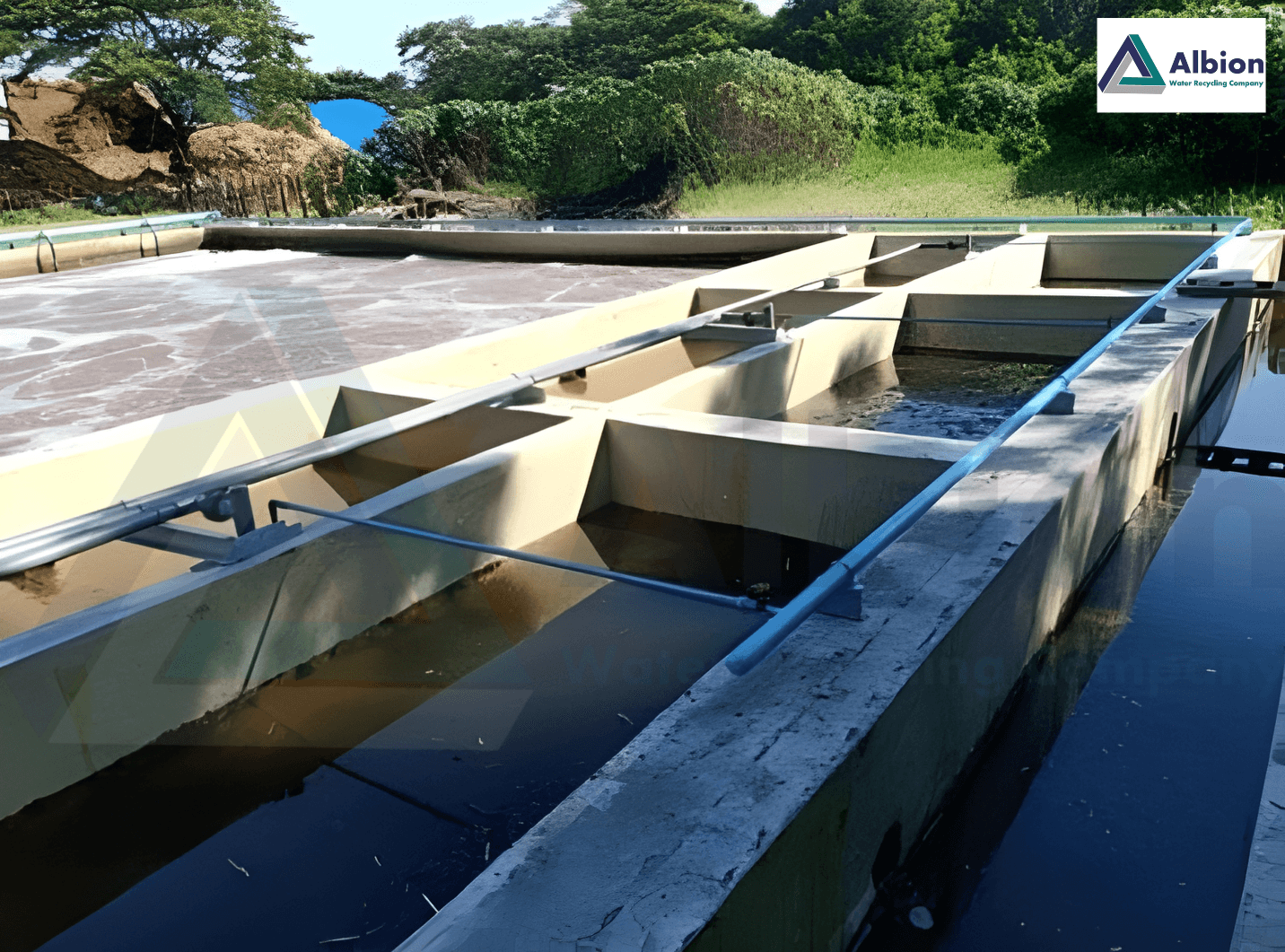
Given the batch-driven variability described above, equalisation is arguably the single most important early-stage investment in a textile ETP. A well-sized and well-mixed equalisation tank dampens swings in pH, colour intensity and organic load before they reach downstream biological and physico-chemical stages, which lets those stages be designed and operated closer to their intended point rather than constantly chasing a moving target.
2.2 Primary physico-chemical treatment
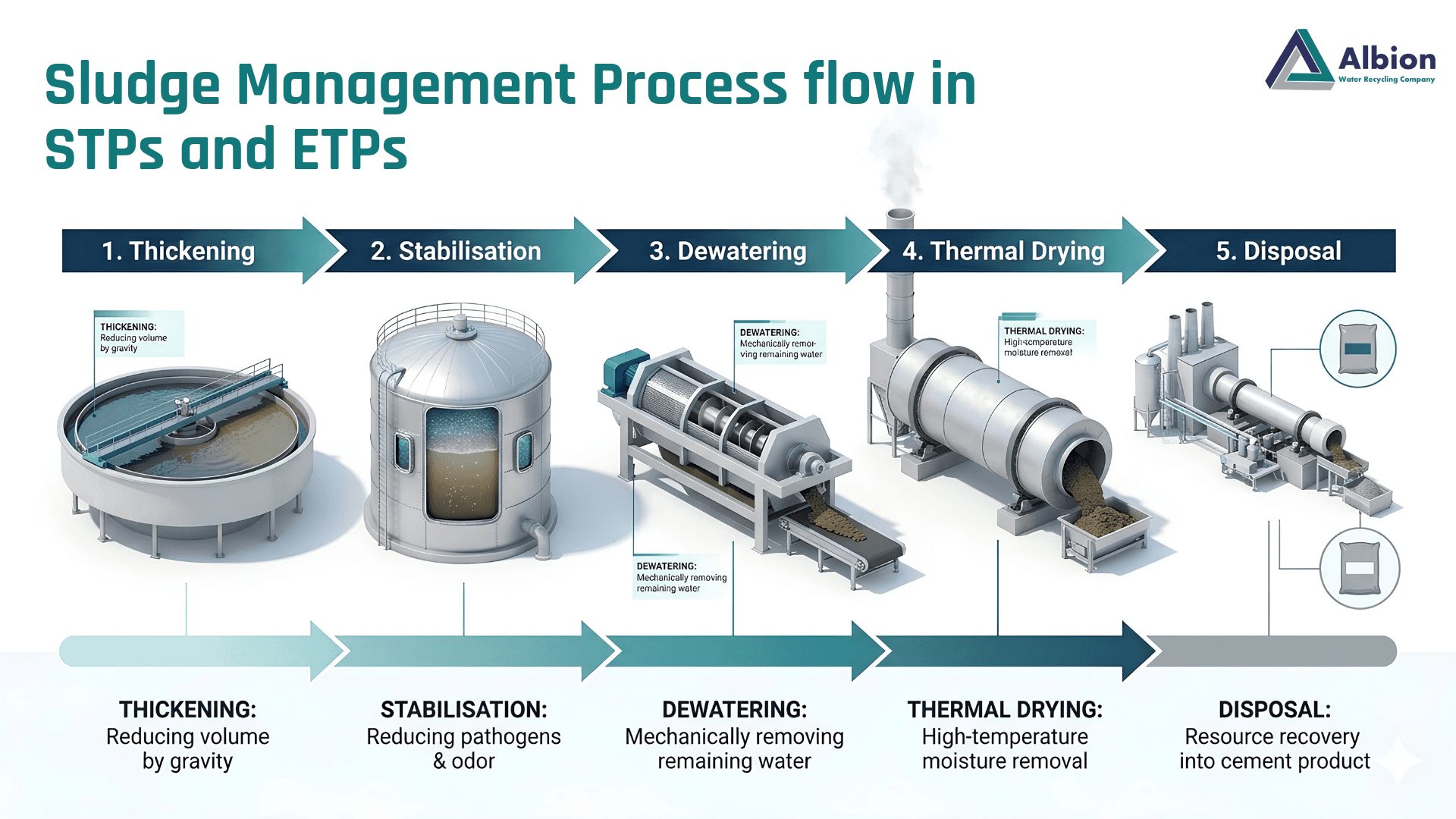
Coagulation and flocculation, typically with alum, ferric salts or polymeric coagulants, destabilise and settle a portion of the colour and suspended solids, particularly from dispersed and some reactive dyes, ahead of biological treatment. This stage also protects the biological process from colour and chemical loads that could otherwise inhibit microbial activity. The chemical sludge generated here needs its own thickening and dewatering path, distinct from biological sludge.
2.3 Biological treatment
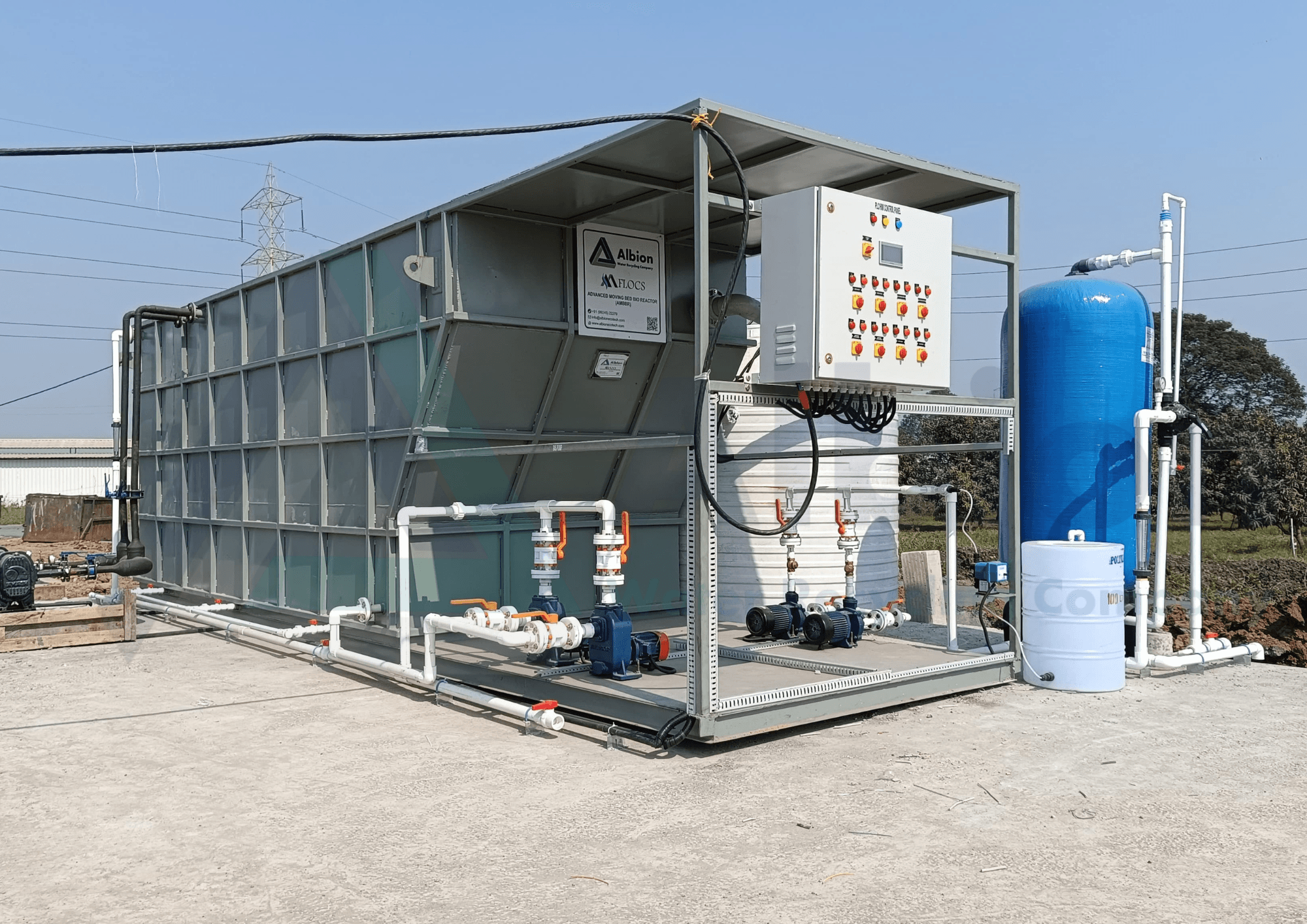
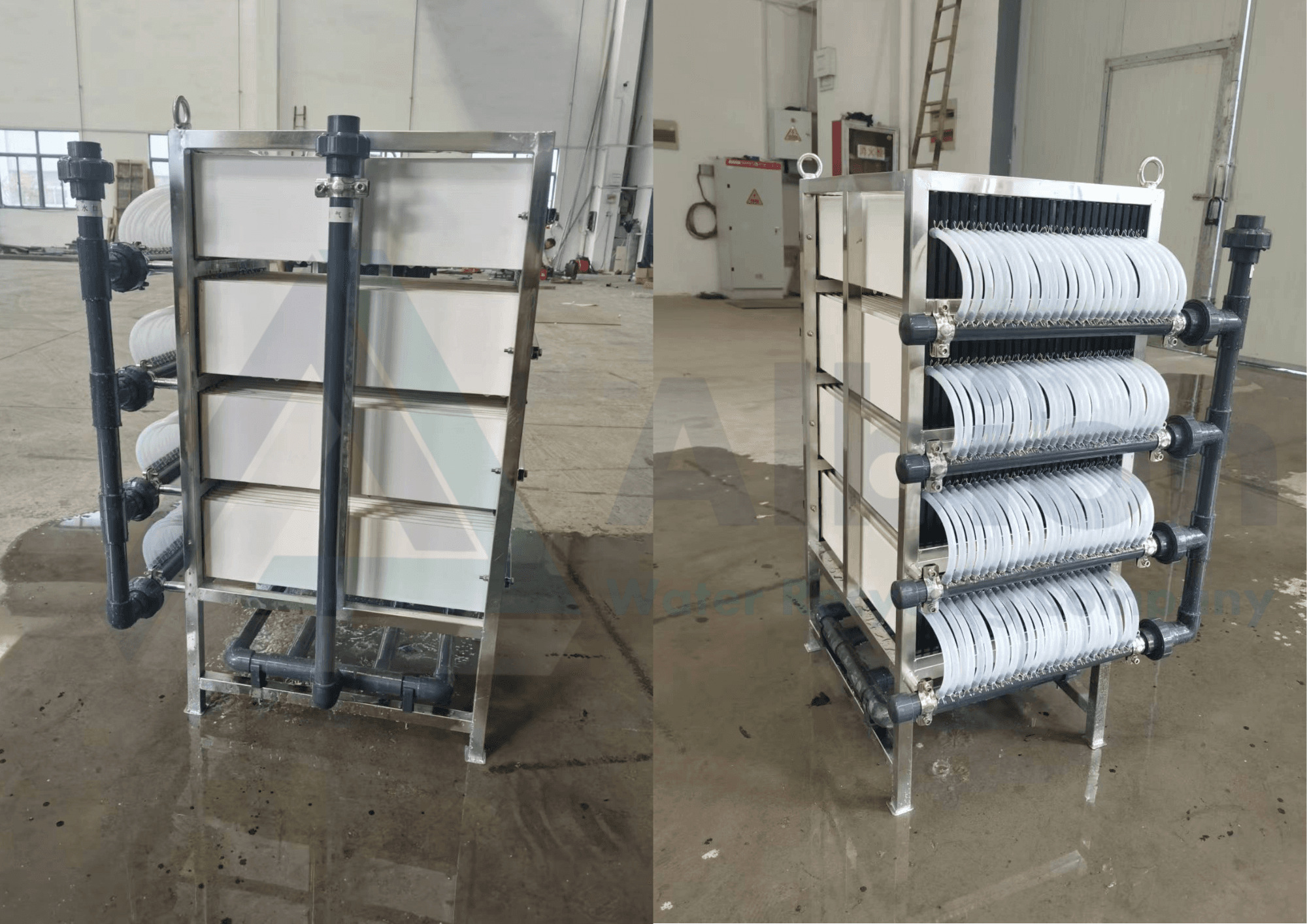
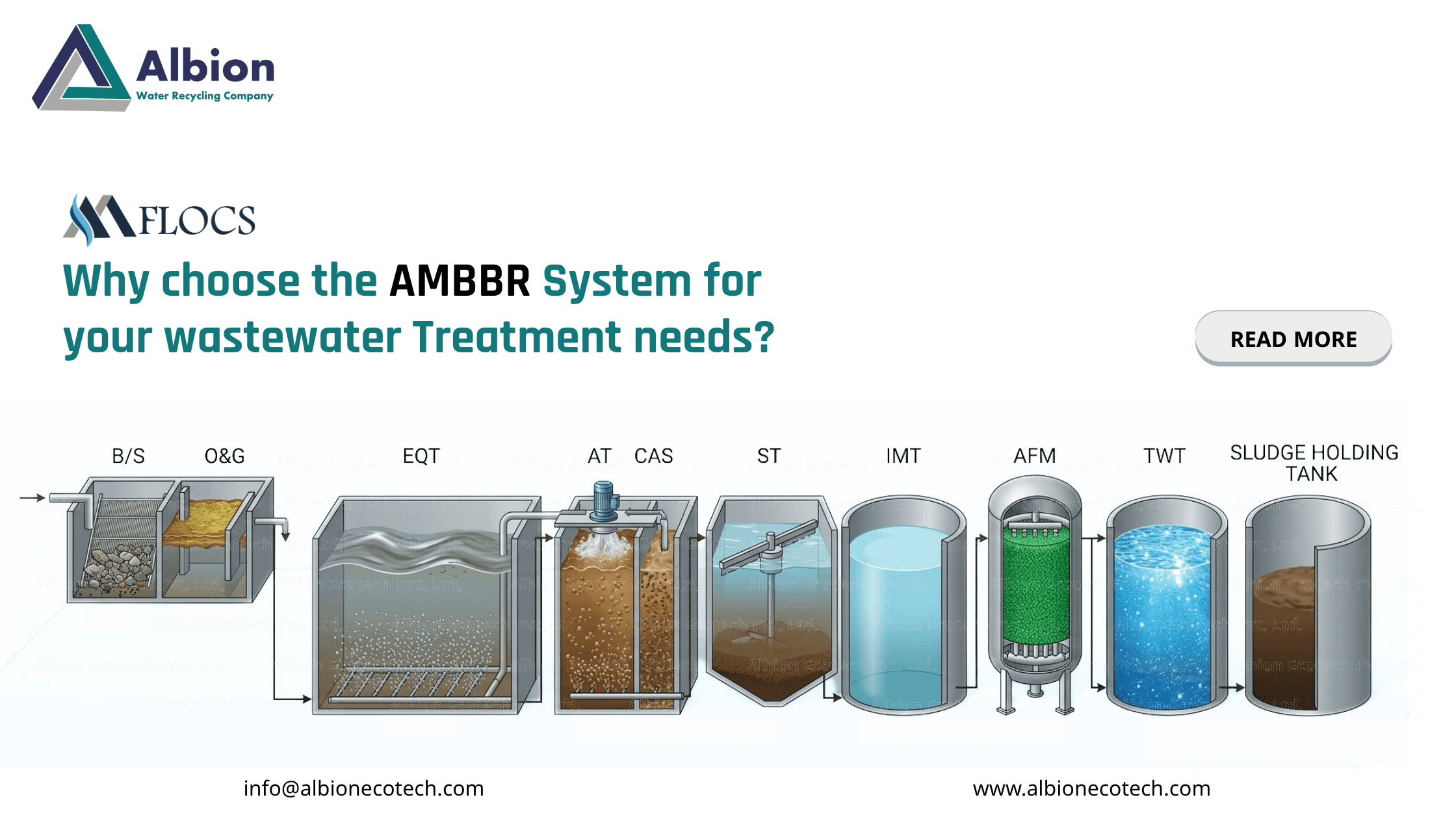
The biological stage targets the biodegradable organic load, mainly from sizing agents, surfactants and the fraction of dye and auxiliary chemicals that is biodegradable. SBR offers flexibility for variable batch loading within a single tank. MBBR and AMBBR give a compact, attached-growth alternative that tolerates load swings well, which suits the batch nature of textile discharge, and AMBBR in particular supports higher organic loading in a smaller footprint where plot area is tight, as is common on older textile sites. MBR can be used where a smaller footprint or a cleaner feed to downstream RO is the priority, though its membranes need protection from residual colour-stage chemicals and any oil or grease. Because textile effluent can carry salinity and chemical residues that depress biological activity, aeration and biomass should be designed using alpha factors and inhibition data appropriate to textile wastewater, not domestic-sewage assumptions.
2.4 Tertiary and colour-polishing treatment
Residual colour after biological treatment is common, since many dyes survive both physico-chemical and biological stages to some degree. Options include further coagulation-flocculation, activated carbon adsorption, and advanced oxidation processes (AOP) such as ozonation or Fenton's process, which break down dye chromophores directly. The right choice depends on the dominant dye classes used at the facility and the discharge or reuse colour target, and is often confirmed through bench-scale trials on the actual effluent rather than assumed from general dye-class behaviour.
2.5 Membrane treatment: UF and RO
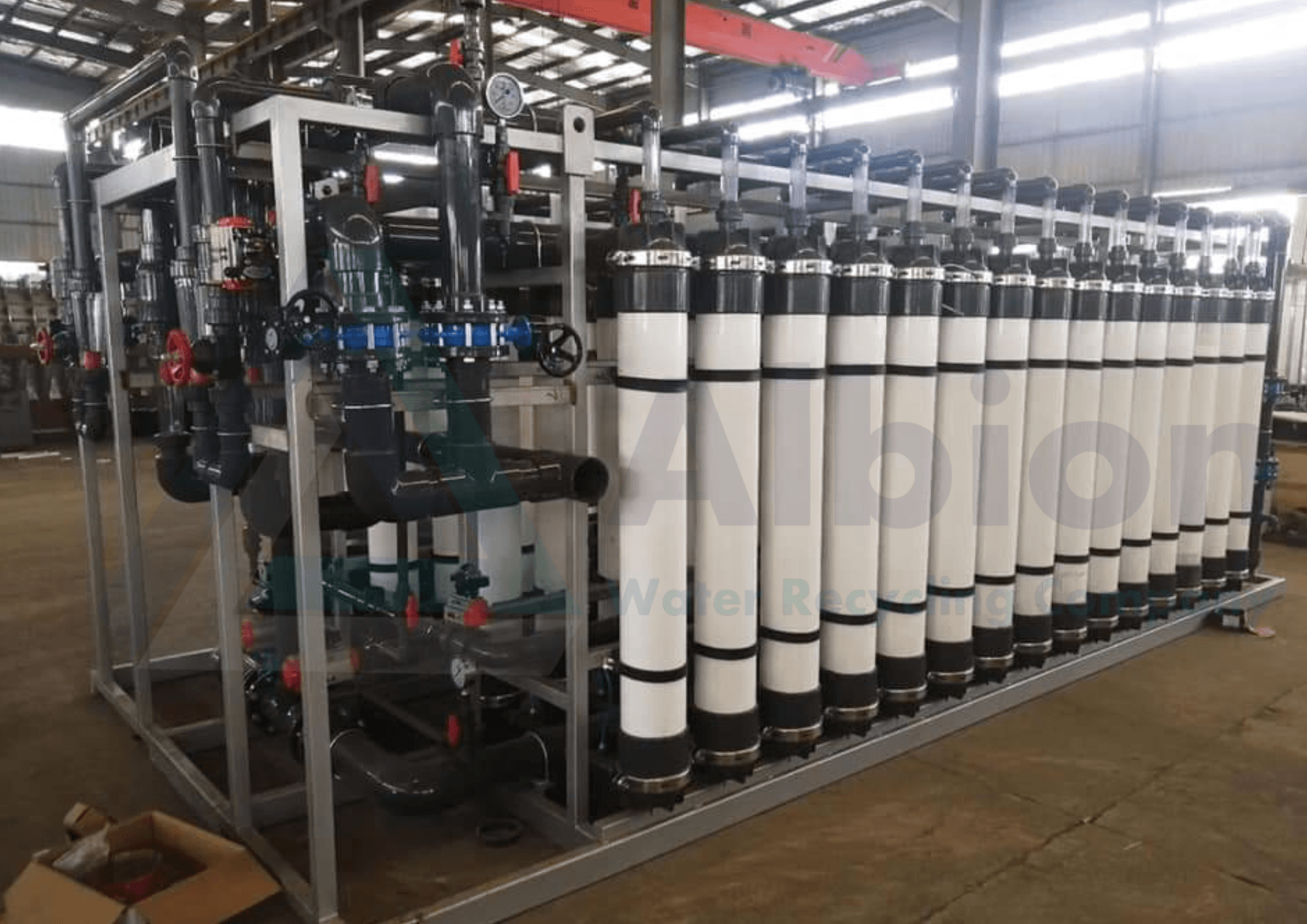
Ultrafiltration protects RO membranes from residual suspended solids and acts as a final polishing barrier. Reverse osmosis is the stage that actually addresses the salinity problem, separating a lower-TDS permeate, which can be reused in process or sent to further polishing, from a concentrated reject stream carrying most of the dissolved salts and residual colour. RO recovery in textile applications is often constrained by scaling from calcium, sulphate and silica, so antiscalant dosing and feed conditioning deserve as much design attention as the membrane stage itself.
3. Zero Liquid Discharge in Textile Clusters
Many textile dyeing and processing clusters in India operate under a ZLD requirement, driven by the high salinity of their effluent and the limited capacity of local water bodies to absorb it. In a textile ZLD train, the RO reject, already concentrated in salts and residual colour, is pushed further through high-recovery membrane stages and then thermal evaporation and crystallisation, producing a solid salt residue and recovered water. The salt recovered from textile ZLD often contains a mix of sodium chloride and sodium sulphate along with organic residues, which affects its purity and the viability of selling it back for reuse versus sending it for disposal; this should be assessed early, since the salt's fate materially affects the project's operating economics.
ZLD in textile applications is energy-intensive, largely because of the thermal stage, and salinity makes RO recovery harder to push than in less saline effluents, which increases the volume reaching the thermal units. For a cluster or large processing unit, a common-ETP-plus-ZLD model, where multiple units share a central facility, can improve the economics compared with each unit building its own small ZLD plant, since thermal equipment benefits from scale.
4. Source Reduction: Treating Less Is Cheaper Than Treating More
Because textile ETP and ZLD costs scale directly with salt and dye load, reducing that load at the process stage is often more cost-effective than building bigger treatment capacity to handle it.
- Dye selection and fixation efficiency: dyes and auxiliaries with higher fixation rates leave less colour and salt in the wastewater, directly reducing downstream treatment load.
- Bath reuse and counter-current washing: reusing dye bath liquor where feasible, and sequencing rinse water from cleaner to dirtier steps, reduces both the volume and the strength of effluent generated per unit of fabric processed.
- Segregating high-salinity streams: keeping high-TDS dyeing streams separate from lower-salinity washing and rinse streams lets the smaller, high-salinity volume go through RO/ZLD while the larger, cleaner volume is treated and reused more simply.
5. Economic Framework
A credible cost estimate for a textile ETP, with or without ZLD, should capture the following, each developed from the specific unit's or cluster's effluent data rather than generic figures:
- Capital cost: equalisation and physico-chemical tankage, biological reactor, colour-polishing stage, UF/RO skids, and, if applicable, evaporation and crystallisation equipment for ZLD.
- Operating cost: coagulant and flocculant dosing, aeration energy, AOP chemicals or power (for ozonation), RO pumping and antiscalant, thermal energy for ZLD, and chemical sludge and salt disposal or recovery logistics.
- Periodic cost: membrane replacement for UF and RO, and wear parts in thermal and crystallisation equipment.
- Avoided cost: fresh water for processing (where recovered water offsets intake), and the compliance risk of discharge excursions in a sector that receives close regulatory scrutiny for colour and TDS.
The salinity of the influent is the single biggest lever on this cost structure: a unit that reduces salt use at the dyeing stage, or segregates high-salinity streams, directly lowers both RO reject volume and the thermal load in ZLD, which is often a bigger cost saving than any single piece of treatment equipment.
6. Common Pitfalls in Textile ETP Design
- Sizing the plant from a single average effluent sample, when batch-to-batch variability is the defining characteristic of the discharge.
- Under-sizing equalisation to save cost, which then destabilises every downstream stage.
- Selecting a colour-polishing technology without bench trials on the actual dye mix used at the facility.
- Treating ZLD salt disposal as a problem to solve after commissioning rather than during design.
- Mixing high-salinity dyeing effluent with lower-salinity wash water before it is clear whether segregation would reduce overall ZLD cost.
- Designing biological aeration on domestic-sewage oxygen-transfer assumptions rather than textile-specific alpha factors.
7. A Decision Framework for Technology Selection
- Characterise the actual effluent: dye classes used, salt load, COD/BOD range across batches, and flow pattern through the day.
- Confirm the applicable discharge or reuse standard, and whether ZLD is mandated for the unit or cluster.
- Size equalisation to the actual batch variability observed, not a generic multiple of average flow.
- Select the biological process (SBR, MBBR/AMBBR or MBR) based on footprint, load resilience and whether the plant needs to feed a downstream RO/ZLD train.
- Bench-test the colour-polishing option against the facility's actual dye mix before committing to AOP, carbon or extended coagulation.
- Evaluate source reduction and stream segregation before finalizing RO and ZLD sizing, since these directly reduce the volume and cost of the most expensive stages.
8. Albion Ecotech's Perspective
As a wastewater treatment engineering company with textile and dyeing ETP experience, Albion Ecotech builds the treatment train around the specific dye classes, salinity and batch pattern of each facility rather than a standard design. This typically means a sized equalisation stage, physico-chemical pretreatment matched to the dominant colour chemistry, a biological stage selected from SBR, MBBR/AMBBR or MBR based on footprint and load resilience, and UF/RO sized around the facility's actual salt load. Where ZLD is mandated or chosen, Albion evaluates RO recovery optimisation and thermal sizing together, and looks at the resulting salt's purity and disposal or recovery route as part of the design, not an afterthought. Sludge management for both chemical and biological sludge, energy-efficient equipment selection, and post-commissioning support are included so the plant performs reliably against India's textile discharge and ZLD requirements over its operating life.
9. Conclusion
Textile effluent's combination of persistent colour, high salinity and batch variability means it rarely responds well to a generic ETP design. A treatment train built around the facility's actual dye chemistry and salt load, with equalisation sized to real variability and RO/ZLD engineered around measured recovery constraints, is what makes the difference between a plant that meets its targets reliably and one that fights its own influent every day. Source reduction and stream segregation, done before the treatment train is finalised, are often the most cost-effective levers available, since they reduce the load every downstream stage has to handle.
Frequently Asked Questions
Why is colour removal so difficult in textile effluent?
Many dyes are chemically engineered to be stable so they resist fading on fabric, and that same stability makes them resistant to biological breakdown. Effective colour removal generally needs physico-chemical treatment, adsorption, or advanced oxidation, rather than biological treatment alone.
Why does textile effluent often require ZLD?
Reactive dyeing uses large amounts of salt to drive dye uptake, producing effluent with high total dissolved solids that cannot be discharged to inland surface water in many locations. ZLD recovers water and concentrates the salt into a solid residue so no high-TDS liquid is discharged, and it is mandated for many textile clusters in India for this reason.
Can the salt recovered from textile ZLD be reused?
Sometimes, depending on its purity. Textile ZLD salt is often a mix of sodium chloride and sodium sulphate with organic residues, which can limit reuse options compared with a purer salt stream. This should be assessed for the specific facility rather than assumed.
Which biological process suits textile effluent best?
There is no single answer. SBR, MBBR/AMBBR and MBR can all work, and the choice depends on footprint, batch load variability, and whether the plant needs to produce a clean feed for downstream RO. AMBBR is often favoured where footprint is tight and loading is variable; MBR where a smaller footprint or cleaner RO feed is the priority.
What is the most cost-effective way to reduce textile ETP costs?
Reducing salt and dye load at the process stage, through higher-fixation dyes, bath reuse and segregating high-salinity streams, is often more cost-effective than building larger treatment capacity, since it directly lowers the volume and strength the RO and ZLD stages have to handle.