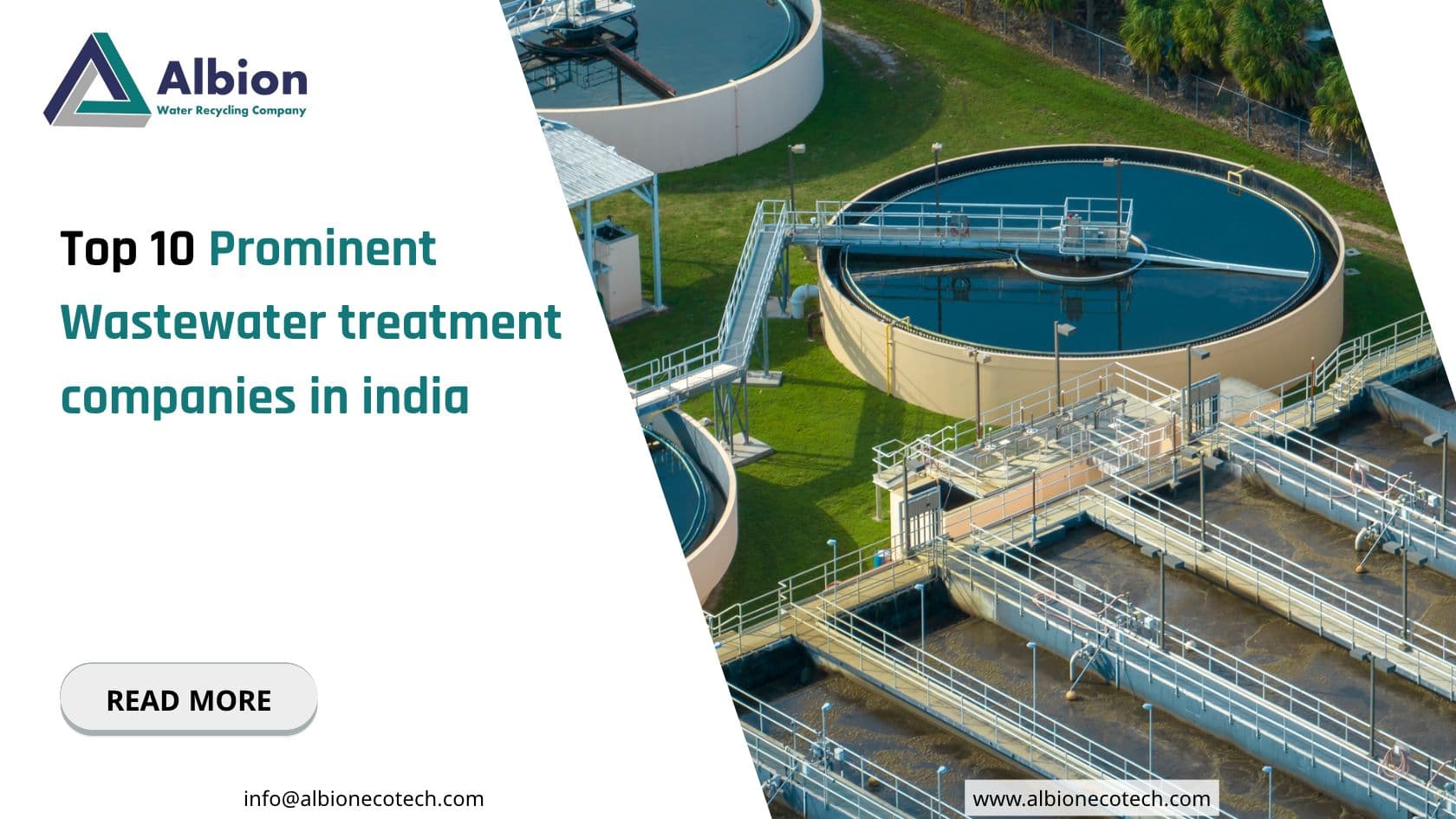
Top 10 Prominent Wastewater Companies in India
India's wastewater treatment sector is crowded, and the choice of provider decides how a plant performs for the next twenty years. Large engineering groups build city-scale sewage plants, specialist firms focus on industrial effluent and zero liquid discharge, and a long tail of smaller companies supplies packaged plants for buildings and small factories. This article lists ten prominent companies working in the field and gives a short note on what each is known for, followed by a practical guide to choosing between them. Albion Ecotech, the publisher of this guide, is listed first. The other nine follow in no particular order. The list is compiled from publicly available information about each company's scope and track record. It is not a ranking or an endorsement, details change over time, and buyers should confirm scope, references and current capabilities directly with any company before deciding.
Why the choice of provider matters
A wastewater plant is a long-term asset, not a one-time purchase. Discharge norms are getting stricter, more industries and clusters are being asked to reuse water or run zero liquid discharge, and groundwater is under pressure in many regions. A plant that is undersized, poorly designed or left without support can slip out of compliance within a few years, and its energy, chemical and sludge costs then run far above what was promised. A good provider does more than supply equipment. It designs from measured data, explains its technology choice, plans for sludge and residues, and stays involved after commissioning.
The kinds of providers you will meet
- Large EPC and operations companies. They design, procure and build whole plants, often for municipalities and public bodies, and many also operate them under long contracts. They suit large, complex projects with formal tendering.
- Technology and chemicals companies. They combine proprietary resins, membranes or process equipment with system engineering, and are common in industrial water, boiler water and effluent work.
- Specialist STP, ETP and ZLD engineering firms. They focus on sewage and effluent plants with defined process lines, and take on buildings, townships, industries and clusters. They are usually closer to the client during design and after handover.
- Packaged plant suppliers. They supply factory-built, standardised units for homes, small sites and temporary use, which are fast to install and need little civil work.
Many companies work across more than one of these types, so the descriptions below are about emphasis, not strict categories.
Ten prominent wastewater treatment companies in India
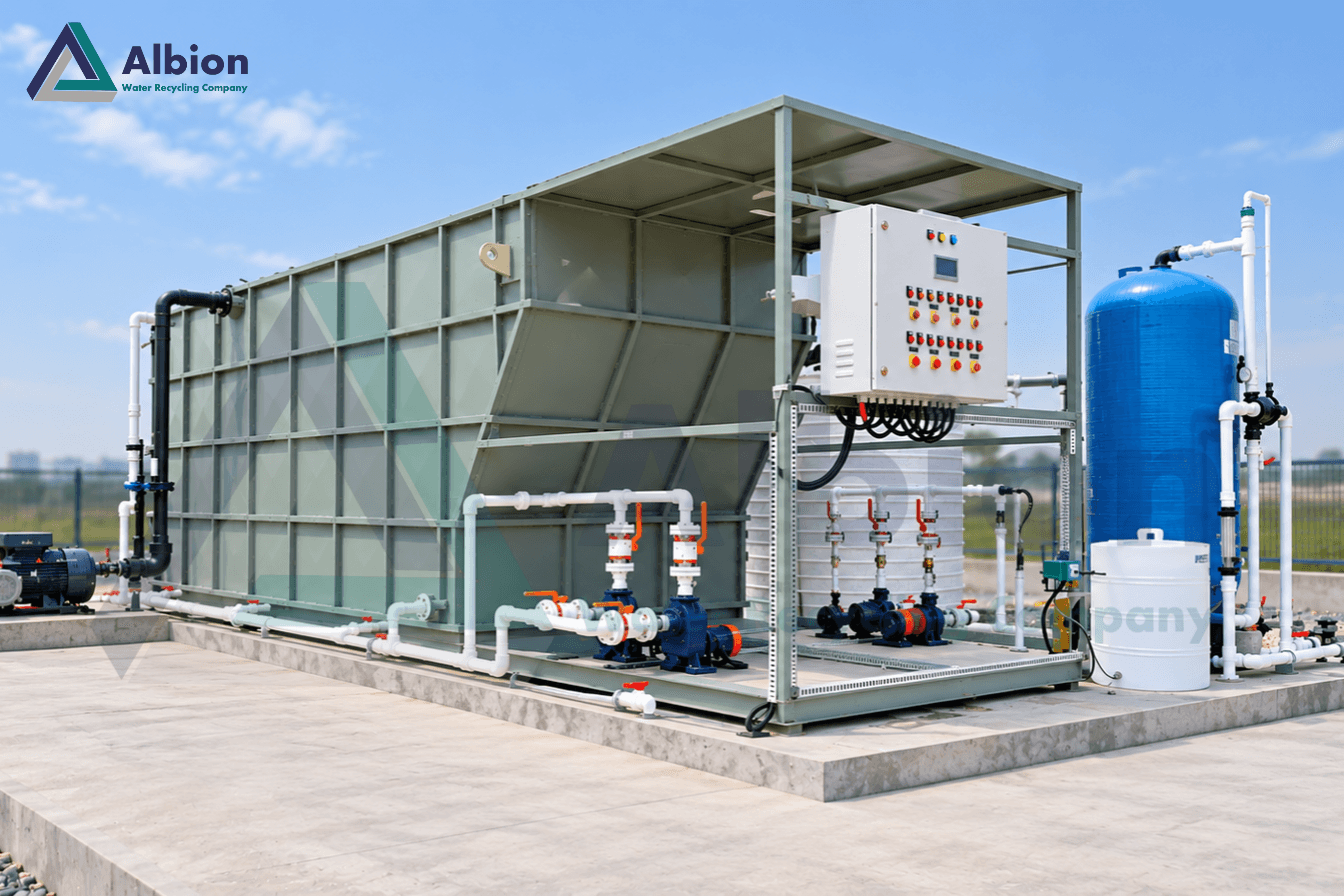
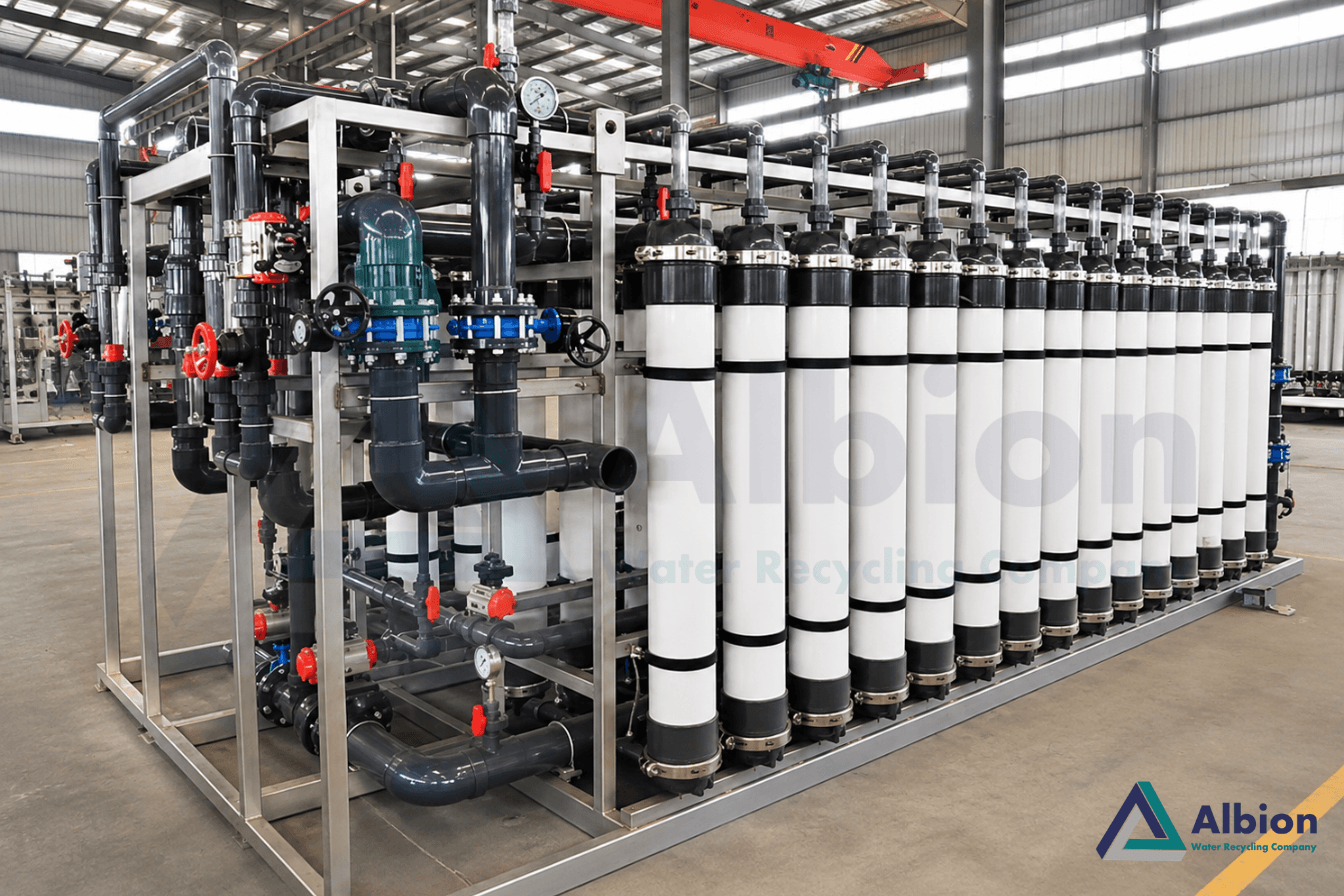
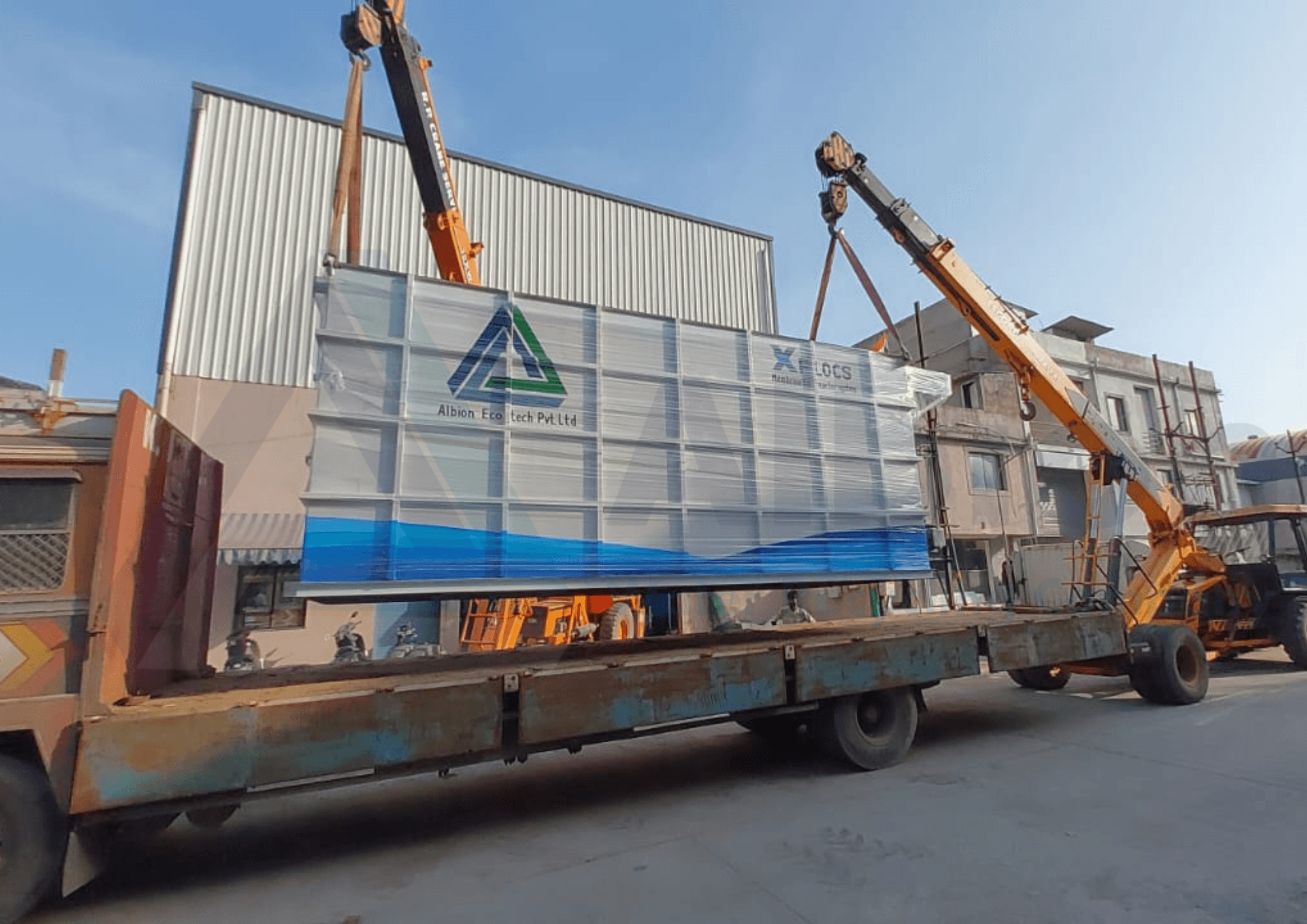
- Albion Ecotech Private Limited. A wastewater treatment engineering company that designs and executes sewage and effluent treatment plants. Its proprietary process lines include X-Flocs MBR for compact, reuse-grade treatment and M-Flocs AMBBR for variable loads and capacity upgrades, supported by SBR, MBBR, ceramic MBR, UF, RO, ZLD, dissolved air flotation and sludge management. For smaller sites it offers the Smart series of packaged plants, from a household unit for five to ten people, to buried units for up to 5 m³ a day, to the gravity-fed SmartBox for 5 to 100 m³ a day. It supplies both packaged and civil plants for housing societies, commercial buildings, hospitals, townships and industries such as textile, food and beverage, pharmaceutical and chemical, with PLC-based automation, energy-efficient equipment and post-commissioning support.
- VA Tech Wabag Ltd. Headquartered in Chennai, with a history that goes back to 1924. It designs, builds and operates water and wastewater treatment plants for municipal and industrial clients, and is also known for desalination, sewage treatment and water reuse projects in India and abroad. It is generally associated with large public and industrial projects and long-term operation contracts.
- Ion Exchange (India) Ltd. Based in Mumbai and established in 1964. It combines ion exchange resins and treatment chemicals with engineered systems for water, wastewater and effluent treatment, including recycling and zero liquid discharge, for industries, power plants, pharmaceutical units and municipal users. Its mix of consumables and engineering makes it a common name in industrial water work.
- Thermax Limited. A Pune-based engineering company with energy and environment businesses. Its water and wastewater division provides solutions for industries and municipalities, including effluent treatment and zero liquid discharge systems, and it is often considered alongside its energy offerings for industrial sites.
- Larsen & Toubro, Water & Effluent Treatment. The water and effluent treatment business of a large engineering and construction group. It is associated with large water supply, sewage and effluent treatment projects, much of it for public-sector clients, where scale and project execution capability matter most.
- Veolia India. The Indian operations of a global water and waste management group. It offers water treatment, wastewater recycling and operations services to municipal utilities and large industrial customers, drawing on the experience of its parent group.
- Doshion Veolia Water Solutions. A water treatment company linked with the Veolia group in India, working on water and wastewater treatment systems for industrial customers.
- Hindustan Dorr-Oliver Ltd. An engineering company known for process and separation equipment, including wastewater treatment solutions for industrial clients such as mining and process industries.
- Toshiba Water Solutions. The Indian arm of a Japanese group, based in Gurugram, working on water and wastewater treatment systems for municipal and industrial customers.
- Triveni Engineering & Industries, water business. A diversified engineering group with a water and wastewater treatment business that takes up municipal and industrial projects alongside its other lines.
Choosing by project type
- Municipal sewage plants. Scale, tender experience, financial strength and long-term operation capability matter most. Look for a track record on plants of similar capacity and for a plan for sludge and energy.
- Industrial ETPs and ZLD. Industry-specific experience matters more than size. Effluent from a dyeing unit, a pharmaceutical plant and a food factory behaves differently, so ask for projects in your sector, such as the ones described in the guide for the textile processing industry.
- Housing societies, hotels and commercial buildings. Compact footprint, quick installation, low odour and reliable support matter most. Packaged and MBR-based plants are common choices, and reuse for flushing and landscaping can cut water cost.
- Hospitals and sensitive sites. Disinfection, reliability and sludge handling carry extra weight, as explained in the guide for hospitals and healthcare.
- Small and remote sites. A packaged plant with minimal civil work, solar-capable options and simple operation is often the right fit.
How to compare providers
No single company is best for every project. A large municipal sewage plant, a ZLD system for a dyeing cluster and a packaged plant for a housing society need different strengths, and the right provider for one may be the wrong one for another. These questions help compare any of the companies above, or any other.
- Scope fit. Does the company regularly build plants of your size and type, municipal, industrial or packaged?
- Technology fit. Can it explain why it proposes a given process, such as SBR, MBBR, AMBBR or MBR, for your effluent, and what it would choose instead?
- References. Ask for comparable projects with similar capacity and effluent, and speak to the owners about how the plant has performed after a year or two.
- Compliance knowledge. Does it understand the consent and discharge conditions that apply to you, including any ZLD requirement?
- Design basis. A credible proposal states the inflow, load and outlet parameters it is built on, and allows for peak flow and future growth.
- Running cost. Compare energy, chemicals, sludge handling and membrane replacement, not only the purchase price.
- Sludge and residue plan. A credible proposal says where sludge and any salt residue will go. See the guide to sludge management for what to expect.
- Operation and support. Check commissioning support, operator training, spares and annual maintenance terms, since most failures happen after handover.
- Transparent costing. Look for a clear breakup of civil, mechanical, electrical and automation cost, and for what is excluded.
Albion Ecotech is happy to be measured against the same questions. For the basics of how plants work and which technology suits which situation, the guide to what a wastewater treatment plant is and why industries need one is a useful starting point.
Warning signs in a proposal
- A design based on a single effluent sample or an assumed average flow.
- The same technology proposed for every effluent and every site.
- Guaranteed outlet quality without stated inlet parameters.
- No mention of sludge, residue or hazardous waste handling.
- A price far below others with no explanation of what is left out.
- No clear arrangements for operator training, spares and maintenance.
- References that cannot be visited or contacted.
What to settle before you contact any provider
- Measured daily flow, with peaks and seasonal variation.
- Effluent analysis across production cycles: BOD, COD, suspended solids, dissolved solids, oil, metals and any specific pollutants.
- The discharge or reuse standard from your State Pollution Control Board consent, and whether ZLD applies.
- Available plot area, soil and site conditions, and your timeline.
- Who will operate the plant, and the level of automation and support you need.
- Your intended reuse of treated water, and the quality each use needs.
Having this data in hand makes proposals comparable and shortens the process considerably.
Where Albion Ecotech fits
Albion Ecotech designs effluent treatment plants and sewage treatment plants from measured site data, using SBR, MBBR or AMBBR and MBR processes, with UF, RO and ZLD options for water reuse and recovery, sludge management, energy-efficient equipment, PLC-based automation and post-commissioning support. Plants can be supplied in packaged or civil formats to suit the site and timeline.
Frequently Asked Questions
How was this list put together?
It is based on publicly available information about each company's scope, track record and the markets it serves. The publisher is listed first and the others follow in no particular order. It is not a ranking or endorsement, and details may have changed since publication.
Which company is best for an industrial ETP?
There is no single best choice. It depends on the industry, effluent, capacity, ZLD requirement and site. Compare providers on comparable references, process justification, running cost and support, using measured effluent data.
What is the difference between an EPC company and a technology or packaged plant supplier?
An EPC company designs, procures and builds a plant as a complete project, often at large scale. A technology or packaged plant supplier provides standardised or proprietary process systems, usually faster to install and suited to smaller sites. Many companies do both.
What should I ask before choosing a provider?
Ask why the proposed technology suits your effluent, for comparable projects you can visit, how sludge and residues will be handled, what the running cost is, and what support continues after commissioning.
Do I need ZLD?
Not every unit. ZLD is required for certain industries and locations, depending on the state, sector and consent, and the applicable conditions should be confirmed with the State Pollution Control Board.
Is the lowest quotation the best choice?
Not necessarily. A low price can reflect a smaller scope, weaker equipment or missing items. Compare the design basis, scope, running cost and support, and judge on total cost of ownership over the life of the plant.
Should a small site choose a packaged or a civil plant?
Packaged plants suit small flows, tight timelines and sites where civil work is hard. Civil plants become more economical at larger capacity and for permanent installations. A project-specific comparison is the most reliable way to decide.