Why Hospitals and Healthcare Need an ETP Wastewater Treatment Plant
A hospital is a small town that never sleeps. Patients, staff and visitors use water around the clock, and what leaves the building is not ordinary sewage. It can carry the bacteria and viruses of the people being treated, residues of antibiotics and other drugs, disinfectants, laboratory chemicals and, in some departments, metals and radioactive traces. Left untreated, that mixture protects no one: it reaches municipal drains, groundwater and rivers, exposes sanitation workers, and can help antibiotic-resistant bacteria spread. An effluent treatment plant (ETP), which in a hospital is a sewage treatment plant with extra safeguards, is how a healthcare facility keeps its own wastewater from becoming a public health problem. This article explains why hospitals need one and how it is designed.

Where hospital wastewater comes from
- Wards, toilets and bathing: the bulk of the flow, with human waste carrying pathogens and drug metabolites.
- Operation theatres and sterilisation: washdown with disinfectants such as glutaraldehyde, peracetic acid, chlorine and phenolic compounds.
- Laboratories and pathology: stains, solvents, formalin and reagents, along with specimens and cultures.
- Radiology and nuclear medicine: X-ray processing chemicals that contain silver, contrast media, and, in nuclear medicine, radioactive waste that must follow the atomic energy regulator's rules separately.
- Dialysis and treatment units: RO reject and disinfectant rinses from dialysis machines.
- Dental and equipment cleaning: mercury from amalgam and broken instruments if not controlled.
- Kitchen and laundry: fats, oils and grease, detergents and bleach.
- Utilities: cooling tower and boiler blowdown, plus water treatment reject.
What makes it different from ordinary sewage
- Pathogens. Bacteria, viruses and parasites are present in far greater variety than in household sewage, including organisms that cause serious infections.
- Antibiotic-resistant bacteria. Hospital wastewater is widely regarded as a hotspot for resistant bacteria and resistance genes, because antibiotics and bacteria meet there in high concentration.
- Pharmaceutical residues. Antibiotics, painkillers, hormones and, in cancer units, cytotoxic drugs pass through conventional treatment to varying degrees.
- Disinfectants and chemicals. These can kill the microorganisms that a biological treatment plant depends on if they arrive in slugs.
- Metals. Mercury, silver and other metals from dental, imaging and laboratory work.
- High, uneven flow per bed. A hospital uses far more water per person than a home, with peaks in the morning and during cleaning rounds, and flows that never stop.
- Tight sites and critical service. Plants are often in basements or small yards, close to wards, so odour, noise and reliability matter.
Why an ETP is not optional
Legal obligation. In India, healthcare facilities handle liquid waste under the bio-medical waste management rules and need consent from the State Pollution Control Board, which sets conditions for treated effluent and requires effluent to be treated before it is discharged. Larger hospitals, nursing homes, diagnostic centres and laboratories are covered, and the specifics depend on size, number of beds and location. The applicable conditions should be confirmed with the Board before design.
Infection control and public health. Untreated hospital wastewater puts sanitation workers, neighbouring residents and downstream communities at risk, and the practical lesson of recent outbreaks is that wastewater is part of the infection control chain.
Protecting water sources. Drug residues, disinfectants and pathogens reach rivers and aquifers that supply drinking water and irrigation.
Accreditation and reputation. Hospital accreditation standards, insurers and patients increasingly look at environmental and waste management, and a failure there makes news.
Water security and cost. Hospitals use large volumes and cannot run dry. Reusing treated water for flushing, gardening and cooling reduces dependence on tankers and municipal supply.
How a hospital ETP is built
- Segregation and pre-treatment at source. Radiology fixer goes to silver recovery, mercury is trapped at dental units, laboratory and formalin waste is neutralised or collected as hazardous waste, and kitchen water passes through a grease trap. Radioactive waste is held for decay under the regulator's rules, not sent to the ETP.
- Screening and equalisation. Bar screens catch wipes, dressings and plastics, and a mixed, aerated balancing tank smooths the daily peaks and dilutes chemical slugs.
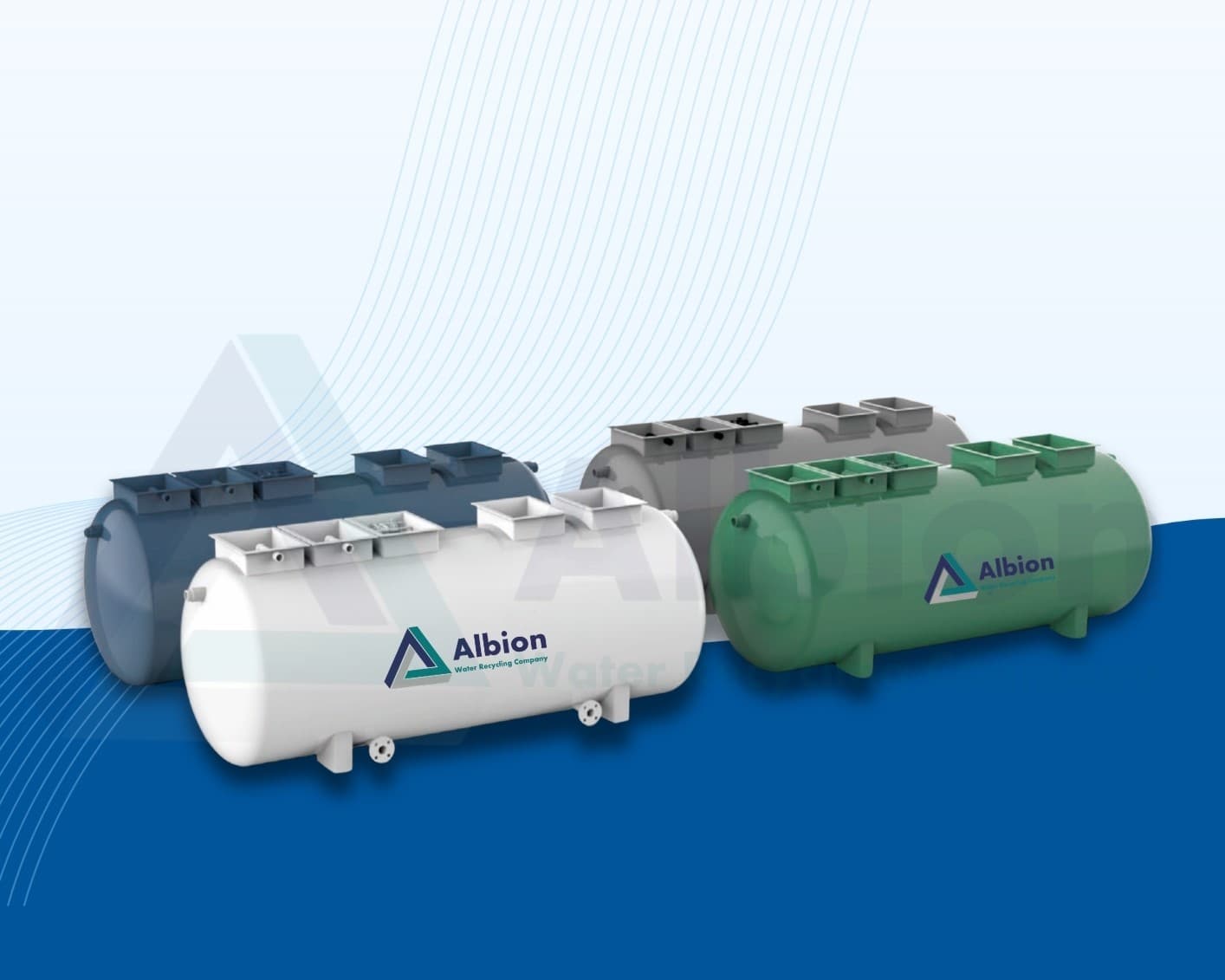
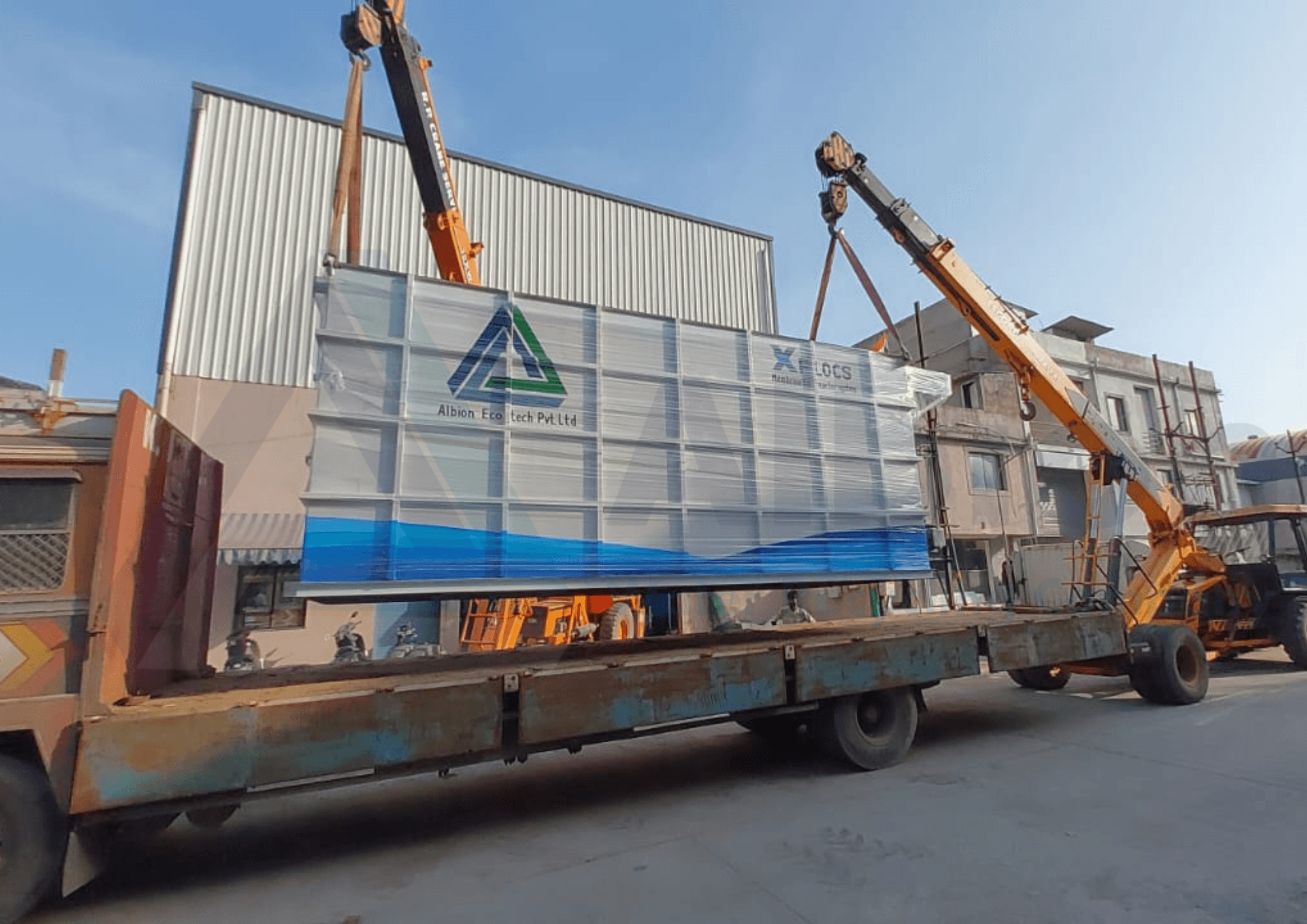
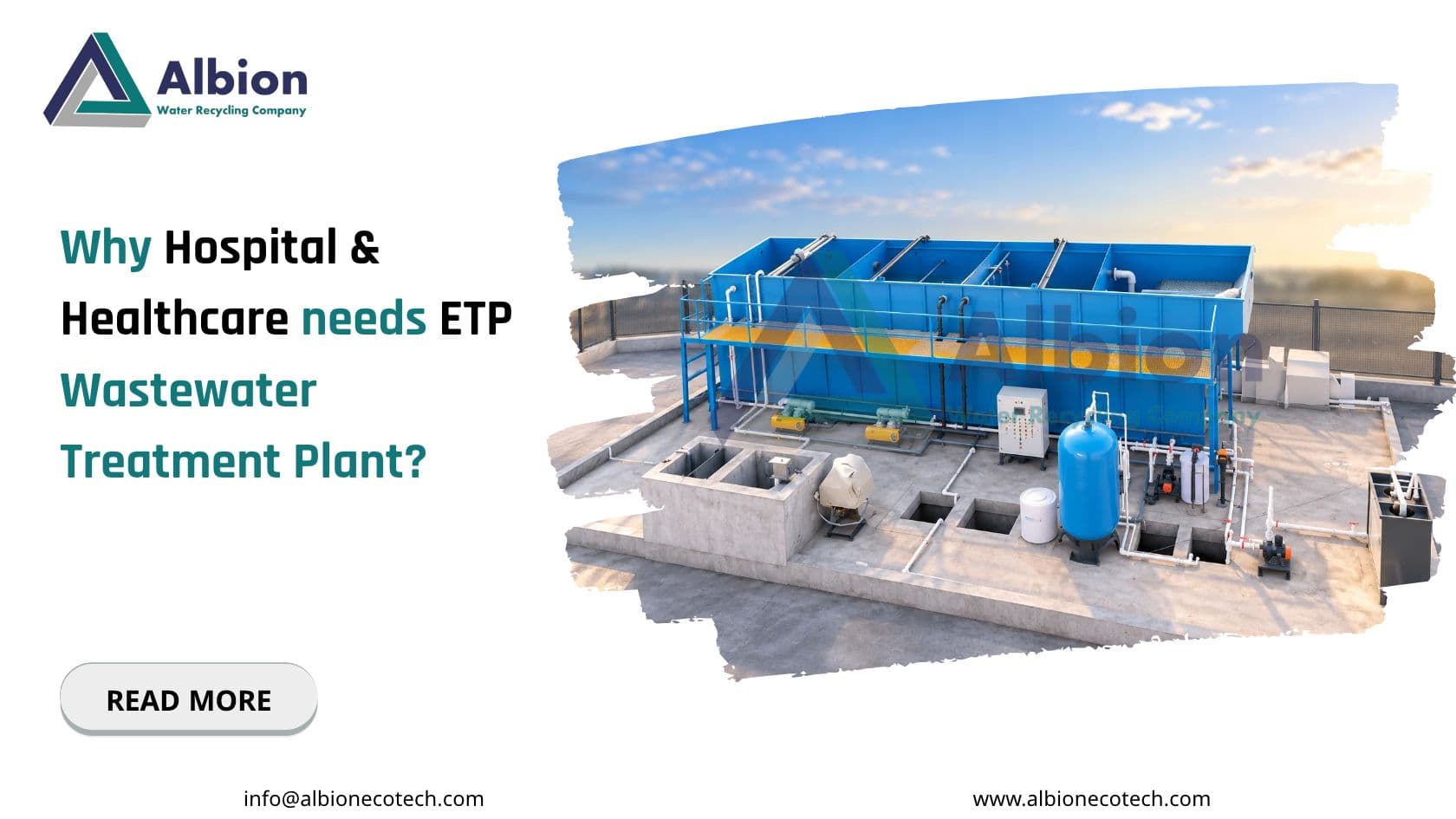
- Biological treatment. MBBR, SBR and MBR are all used. Albion Ecotech's SmartBox packaged MBBR plant is a compact gravity-fed option for smaller facilities, with disinfection built in. For larger hospitals or tight basements, X-Flocs MBR gives a very clean, solids-free effluent in a small footprint, and its membrane acts as a physical barrier to bacteria.
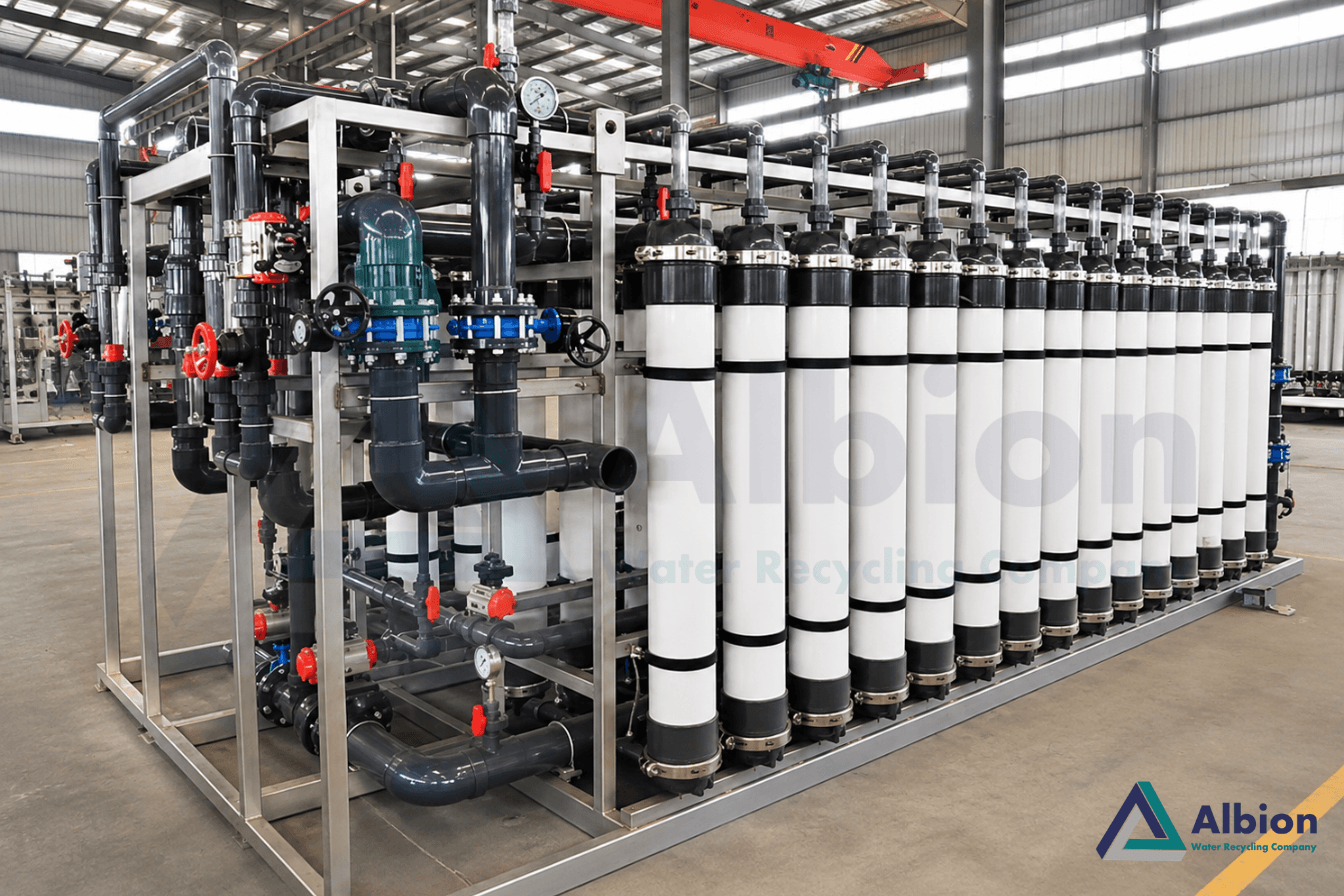
- Filtration. Pressure sand and carbon filters polish the water and help disinfection work. Ultrafiltration goes further, retaining bacteria and many viruses.
- Disinfection. Chlorination with adequate contact time and a monitored residual, UV, ozone or a combination. Chlorine is removed before discharge or reuse where needed. Disinfection is the step that makes the plant a safeguard, and it should be monitored online.
- Advanced treatment where needed. Activated carbon, ozone or advanced oxidation can reduce some pharmaceutical residues, but removal varies by compound and should be verified. Source control is more dependable than end-of-pipe treatment.
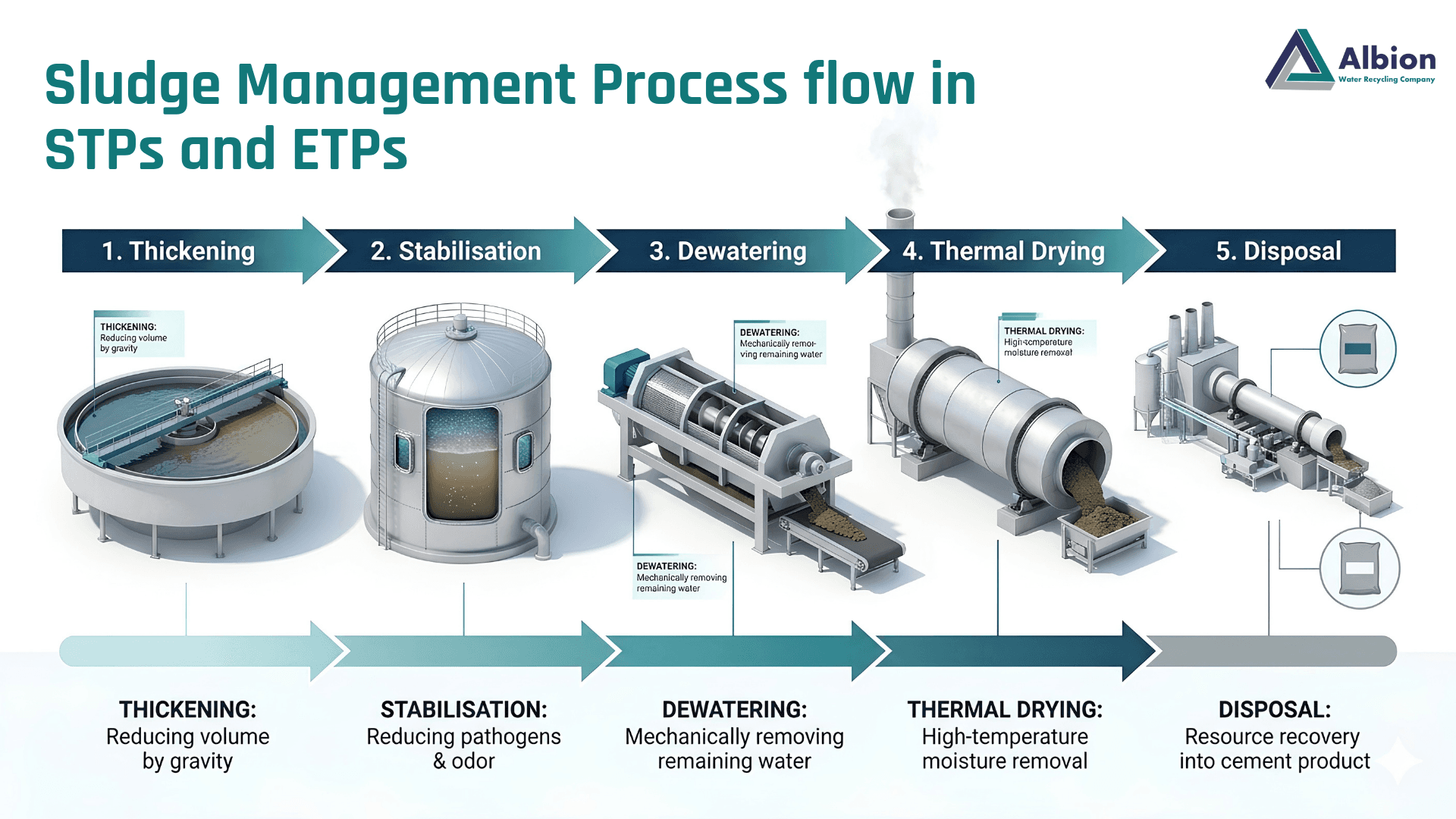
- Sludge handling. Sludge from a hospital ETP can carry pathogens and should be handled and disposed of as the bio-medical waste rules require, usually by disinfection and an authorised route. See the guide to sludge management for general options.
- Odour, safety and reliability. Covered tanks, odour control, standby pumps and blowers, backup power and automation keep the plant running without disturbing patients. Operators need training and protective equipment.
Reuse, with care
Treated water must never enter clinical use, sterile processing or any patient-contact application. Reuse is limited to non-clinical needs such as toilet flushing, landscaping, floor and vehicle washing and, with proper disinfection and water treatment control, cooling tower make-up. Cooling towers need particular attention to microbial control, since poorly managed water can grow harmful organisms. Albion Ecotech sizes reuse around what each use needs, and adds ultrafiltration or RO only where the use justifies it.
Reduce the load before the ETP
- Never pour unused drugs, cytotoxic waste, laboratory reagents or concentrated disinfectants down the drain. Collect them as bio-medical or hazardous waste.
- Fit mercury traps, silver recovery and grease traps at the source.
- Use disinfectants at the lowest effective dose, and avoid dumping used concentrates.
- Keep wipes, dressings and plastics out of toilets and drains.
- Fix leaks and meter water by block, so unusual use shows up.
Common mistakes
- Treating a hospital like an ordinary apartment complex and skipping disinfection or monitoring.
- Letting disinfectant slugs and chemical waste reach the biology.
- Sizing from bed count alone, without allowing for peak flow, outpatients and visitors.
- Having no standby equipment or backup power for a plant that must run continuously.
- Leaving sludge handling and operator safety as afterthoughts.
- Ignoring odour in a plant that sits next to wards.
Our approach to hospital ETPs
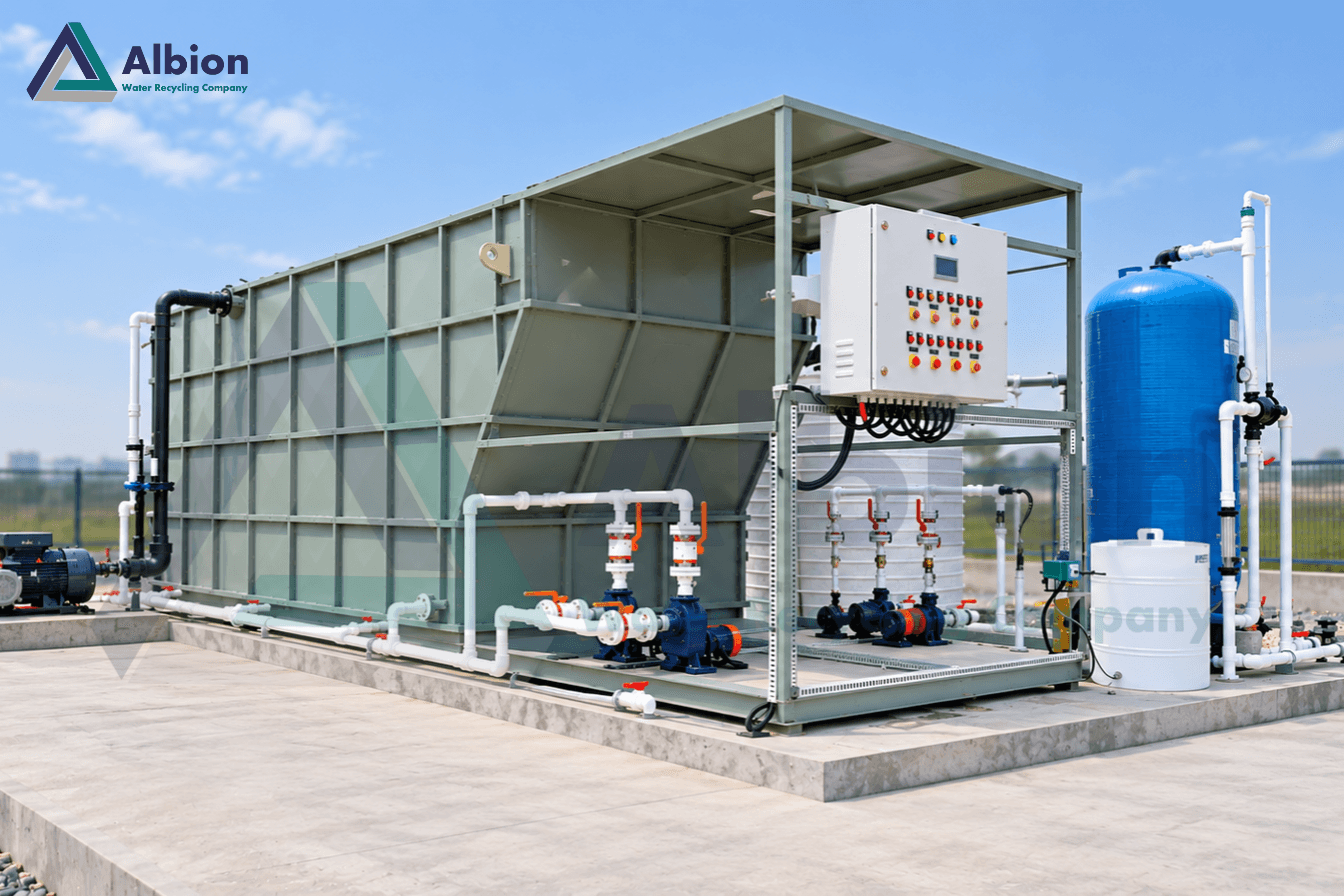
Albion Ecotech designs sewage and effluent treatment plants for hospitals and healthcare facilities from measured data: beds, departments, flow pattern, chemical and laboratory sources, space and the discharge or reuse target that applies. Depending on the facility, the train may combine source pre-treatment, screening, equalisation, a biological stage selected from MBBR, SBR and MBR, filtration or ultrafiltration, disinfection, and reuse of treated water for non-clinical uses. Sludge handling, odour control, energy-efficient equipment, PLC-based automation with online disinfection monitoring and post-commissioning support are part of the scope, and plants can be supplied in packaged or civil formats.
Frequently Asked Questions
Why does a hospital need an ETP?
Hospital wastewater carries pathogens, antibiotic-resistant bacteria, drug residues, disinfectants and laboratory chemicals. An ETP treats and disinfects it to meet bio-medical waste and pollution control conditions and to protect public health and water sources.
Is a hospital ETP different from an ordinary STP?
It uses the same biological treatment, but adds source pre-treatment for chemicals and metals, stronger disinfection with online monitoring, careful sludge handling and higher reliability, since the flow never stops and the risk is higher.
Which treatment process suits a hospital?
MBBR and SBR suit most facilities, and MBR suits tight basements or higher quality targets because its membrane retains bacteria. Filtration or ultrafiltration and disinfection follow in every case.
Can treated hospital water be reused?
Only for non-clinical uses such as flushing, landscaping, washing and cooling tower make-up with proper disinfection and microbial control, once quality is confirmed. It must never enter clinical or patient-contact use.
How should hospital ETP sludge be handled?
It can carry pathogens, so it should be handled with protective equipment and disposed of as the bio-medical waste rules require, normally after disinfection and through an authorised route. The route should be confirmed with the State Pollution Control Board.