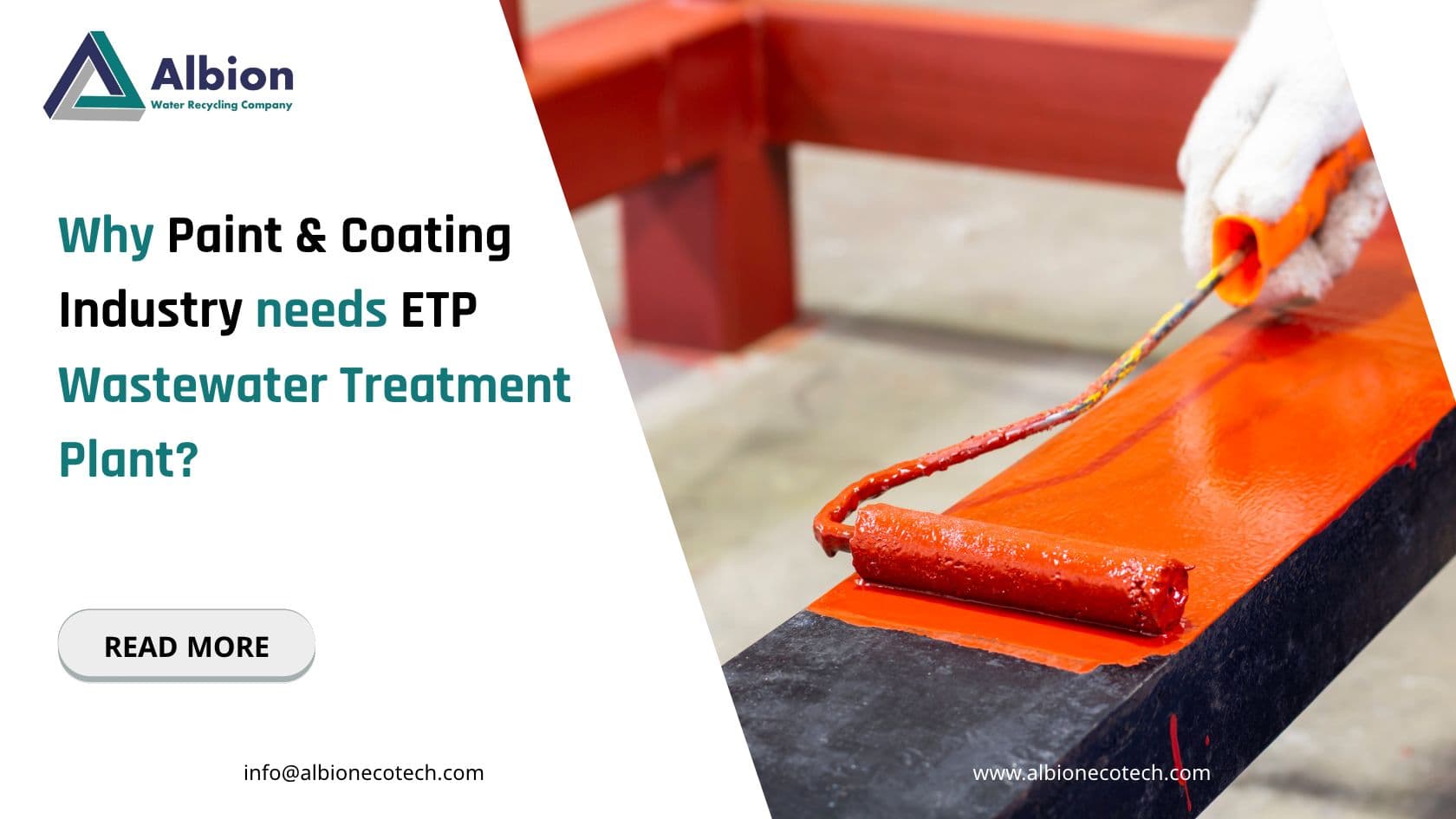
Why the Paint & Coating Industry Needs an ETP Wastewater Treatment Plant
A paint plant makes a product designed to stick to things, and the equipment that makes it is no exception. Every batch leaves pigment, resin and additives clinging to mixing tanks, dispersers, mills, pipes and filling heads, and every change of colour or product means washing it off. That wash water carries paint solids, polymer emulsions, solvents, preservatives and sometimes metals. It looks harmless when it is milky, but it blocks drains, poisons the microorganisms in a treatment plant, and leaves sludge that has to be handled as hazardous waste. An effluent treatment plant (ETP) is what makes it safe to discharge or reuse. This article explains why paint and coating manufacturers need one and how it is designed.
Where the wastewater comes from
- Equipment washing: by far the largest source in water-based paint plants. Tanks, mixers, mills, pipes and fillers are washed at every product or colour change, giving wash water full of pigment, extenders, latex and additives.
- Solvent-based lines: cleaned with solvents, not water, so the main concern is spent solvent, which should be collected and recovered or disposed of as hazardous waste, not sent to the drain.
- Resin and polymer synthesis: plants that make their own binders produce process water and condensate containing organic by-products, along with reactor and scrubber washings.
- Tinting, filling and laboratories: colorant residues, rinse water, spilled product and sample waste.
- Floor washing and utilities: spill clean-up, cooling and boiler blowdown, and sanitary wastewater.
Plants that apply paint, such as vehicle and appliance factories, produce a different effluent from booth water and pre-treatment baths, which is covered in the guide for automobile and engineering plants.
What makes paint wastewater hard to treat
- Fine suspended solids. Pigments such as titanium dioxide and extenders like calcium carbonate, clay and talc make the water opaque and settle slowly or not at all, since many are finely dispersed.
- Stable latex emulsions. Polymer particles in water-based paint are designed to stay suspended, so they do not settle on their own and have to be destabilised with coagulants.
- High COD from binders and additives. Resins, coalescing solvents, glycol ethers, dispersants and surfactants add organic load, and some of it is slow to biodegrade.
- Preservatives and biocides. In-can preservatives are made to kill microorganisms, and they can inhibit the biomass in a biological reactor.
- Metals. Some pigments, driers and additives contain zinc, cobalt, chromium or other metals that must be removed and kept out of the water.
- Colour, solvents and variable pH. Colour changes with each batch, solvents add toxicity and volatile emissions, and ammonia and amines used in water-based paint swing the pH.
Why an ETP is not optional
Regulatory consent. Paint and pigment manufacturing is a regulated category in India. Units operate under consent from the State Pollution Control Board, with limits on pH, suspended solids, COD, oil and grease, and, depending on the process, metals and phenols. Some units and clusters are required to run zero liquid discharge. Conditions differ by state, product and consent, so they should be confirmed with the Board before design.
Hazardous waste control. Paint sludge, spent solvents, ETP sludge from paint effluent and residues from production are generally classified as hazardous waste, depending on composition. They must be stored, transported and disposed of through authorised routes with records. Good sludge management in the ETP design keeps that volume down.
Protecting drains, water and soil. Paint solids coat and block drains, discolour water, smother river bed life and carry metals into sediment. Preservatives and solvents are toxic to aquatic organisms, and leaks to soil contaminate groundwater.
Municipal systems cannot take it. Biocides and solvents upset a sewage plant's biology, and solids and polymer build up in pipes and tanks, so factories have to pre-treat.
Product loss and water cost. Paint that goes to the drain is product lost. Washing also uses a lot of water, and recycling it cuts intake and the volume to be treated.
Customer and ESG expectations. Large buyers and lenders increasingly assess coatings suppliers on environmental and chemical management.
How a paint and coating ETP is built
- Segregation and solvent recovery. Solvent washings are collected separately for recovery or authorised disposal, and kept out of the water line. Water-based wash water is collected in its own line, away from clean cooling water and rainwater.
- Screening and equalisation. Screens remove skins and lumps of dried paint, and a mixed balancing tank evens out the batch-to-batch swings in colour, solids and pH.
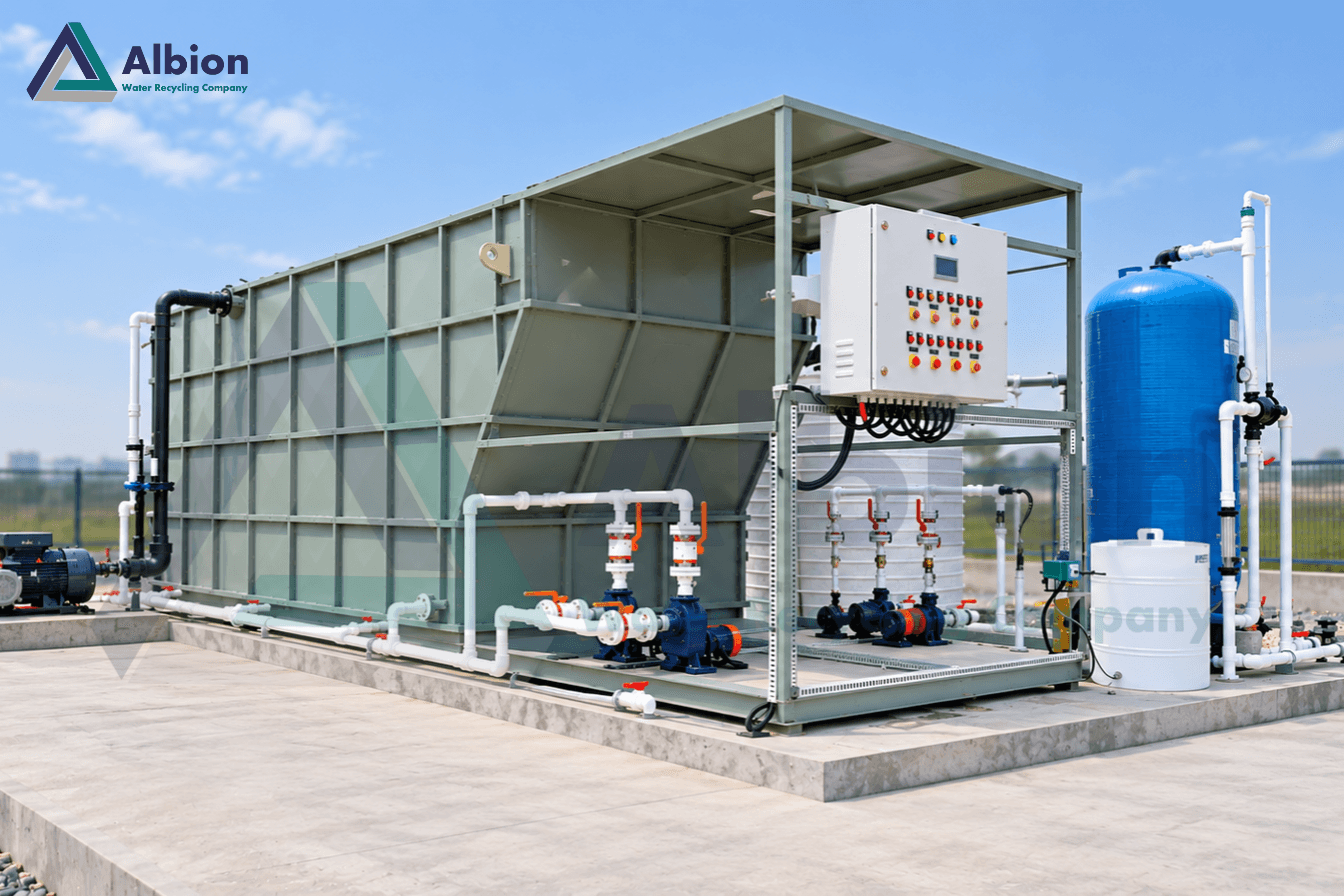
- Coagulation and flocculation. After pH adjustment, alum, ferric salts or polyaluminium chloride destabilise pigment and latex particles, and a polymer binds them into flocs. Jar tests on each wash-water type set the dose, since overdosing only makes more sludge.
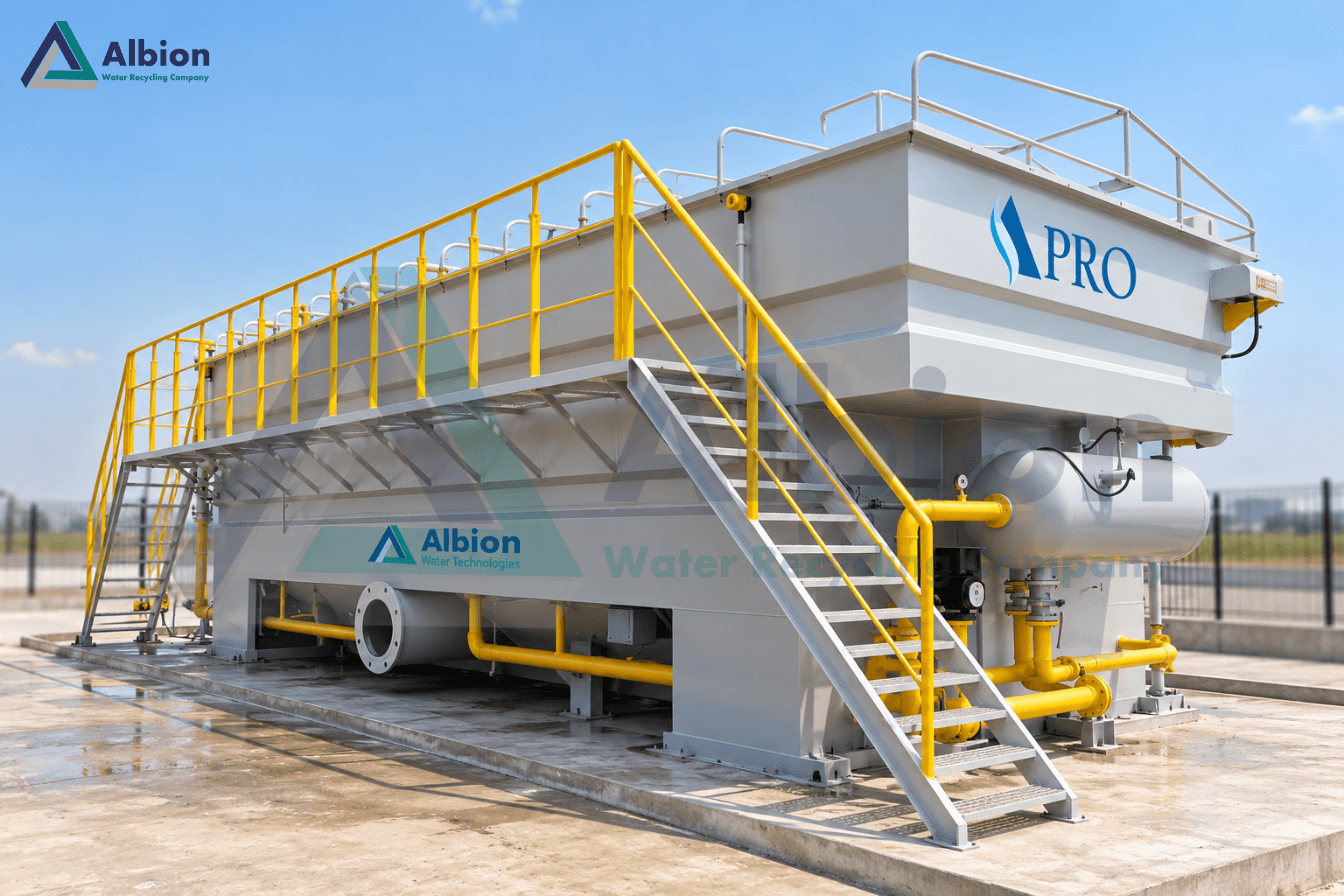
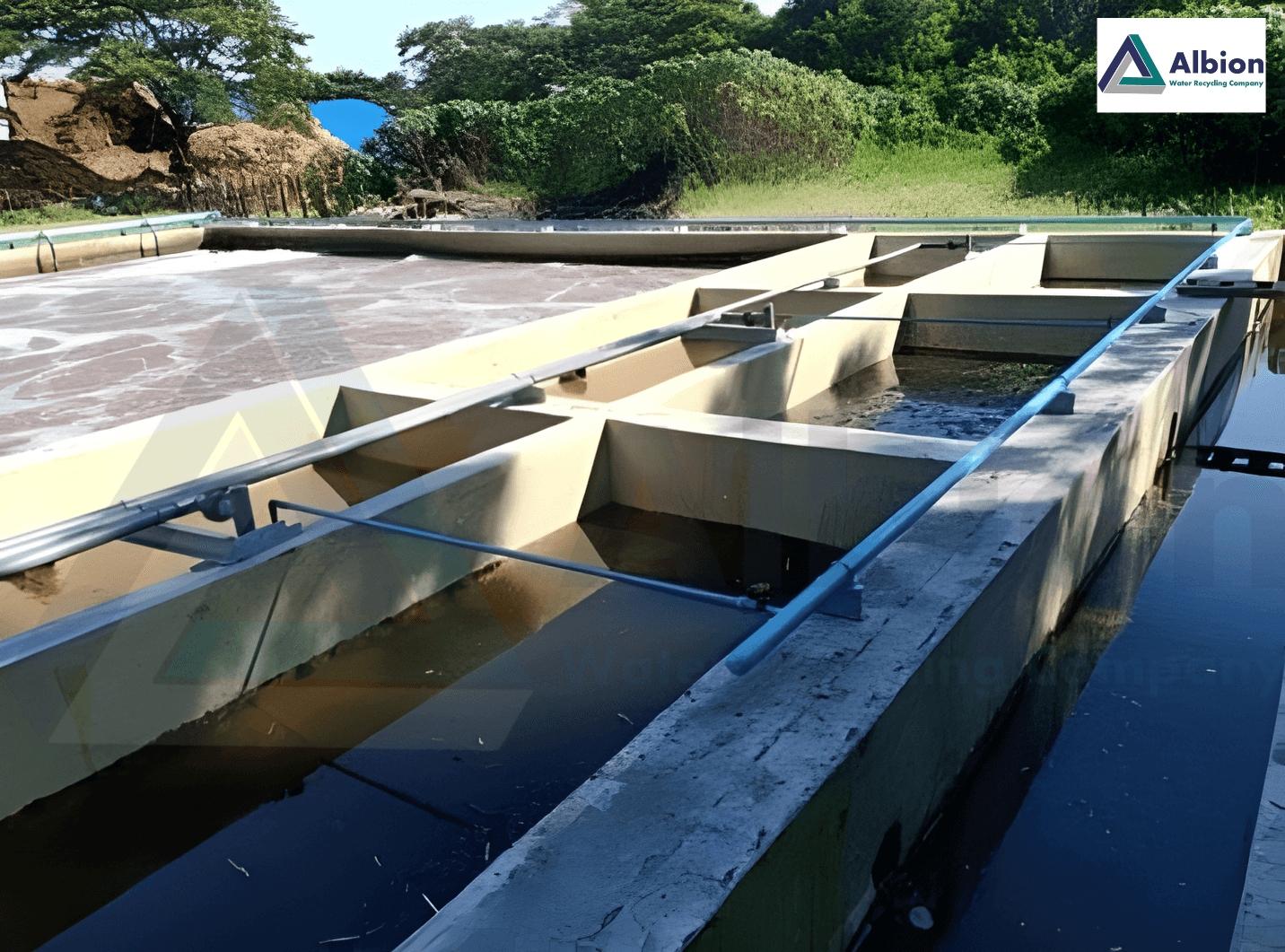
- Flotation or settling. The flocs are separated by settling or, because latex flocs are light, by dissolved air flotation, such as the A-Pro DAF system from Albion Ecotech. This stage removes most of the solids, colour and a large share of the COD.
- Biological treatment. Residual dissolved COD is treated with MBBR or AMBBR, SBR or MBR. Biocides and solvents can inhibit the biomass, so the biological stage is protected by the chemical stage ahead of it, acclimatised carefully, and checked with biodegradability tests before design.
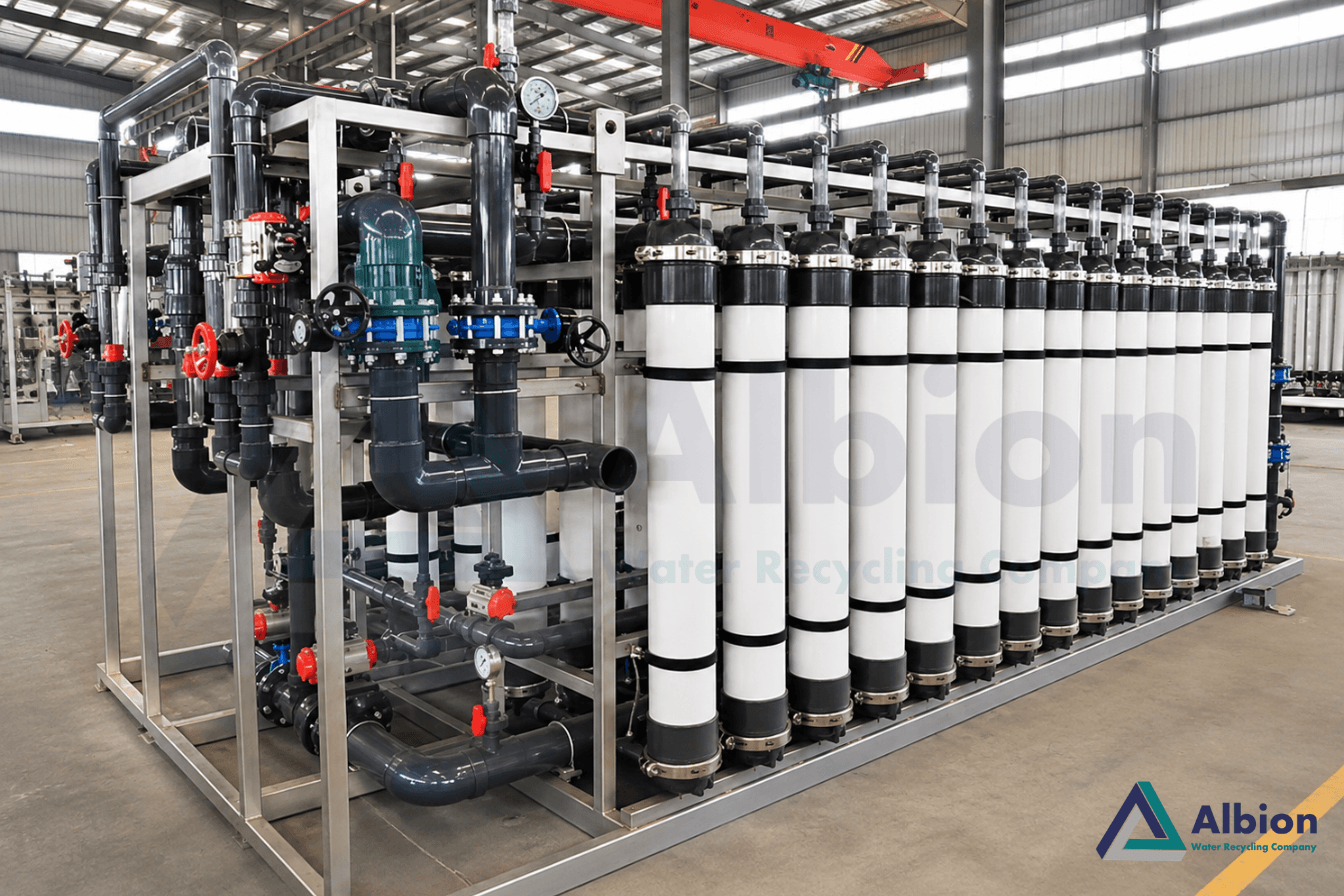
- Polishing. Activated carbon or advanced oxidation take out residual colour and refractory organics, and filtration, UF and RO prepare water for reuse. Very small flows are sometimes evaporated instead.
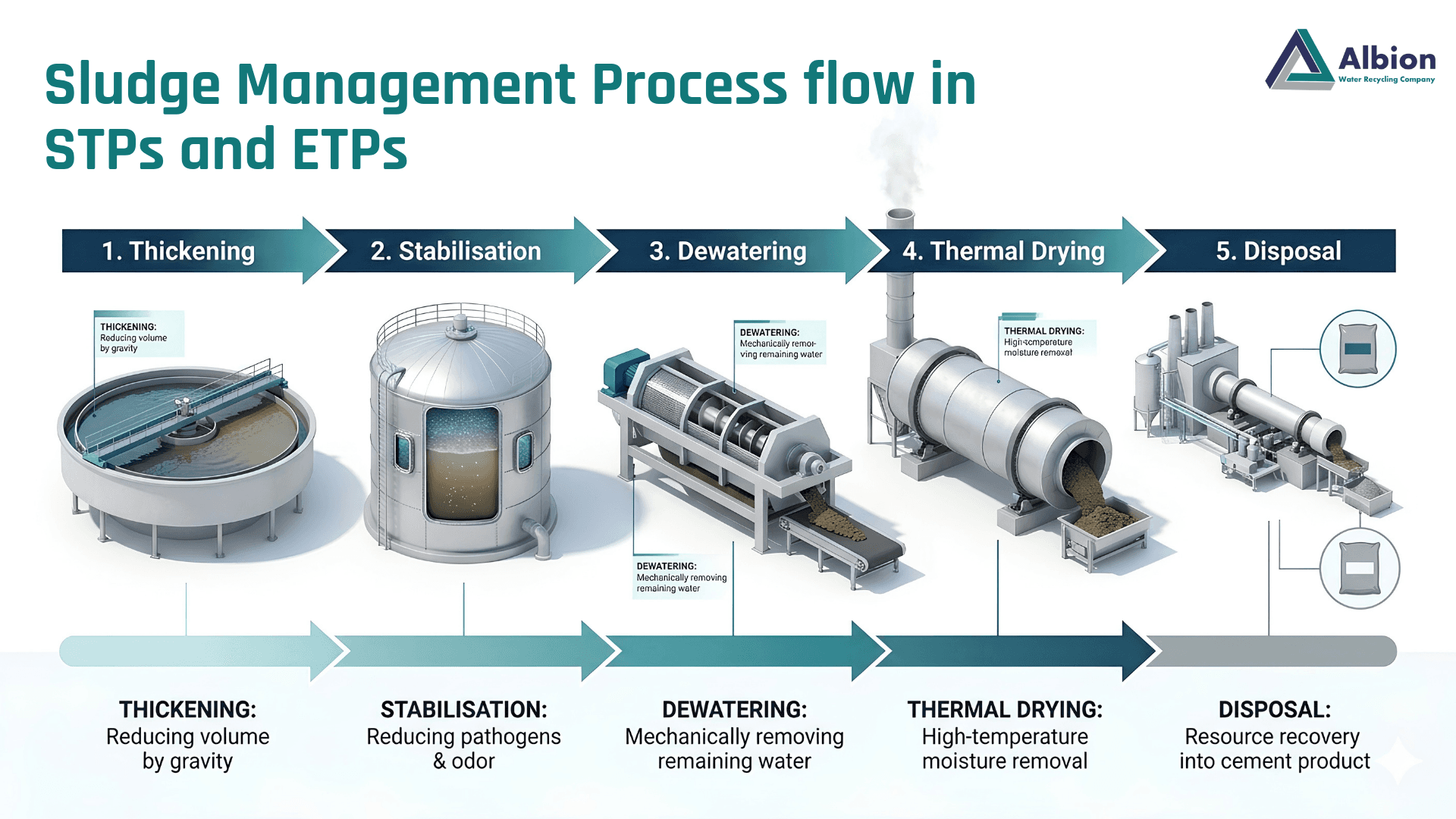
- Sludge handling. Paint sludge is dewatered, usually in a filter press, and sent through an authorised hazardous waste route, such as co-processing or an approved disposal facility. Cake dryness matters because disposal is charged by weight.
Reuse inside the plant
The most effective reuse in a paint plant happens before the ETP. Wash water can often be held and used as make-up water in the next compatible batch, for example from a light colour into a darker one, where the product specification allows. What remains goes to the ETP, and the treated water can supply cooling tower make-up, floor and equipment washing, boiler feed after RO and polishing, and landscaping once its quality is confirmed. Albion Ecotech sizes the treatment and reuse around what each use needs, adding UF, RO or ZLD only where water scarcity or discharge limits call for them.
Reduce the load before the ETP
- Schedule batches from light to dark and group similar products, so fewer washes are needed.
- Push product out of lines and tanks with pigs or scrapers, and scrape vessels before washing, so more paint goes into the product and less into the water.
- Recycle wash water into compatible batches, and use high-pressure, low-volume cleaning.
- Recover and reuse solvents by distillation where the quantities justify it.
- Use dedicated tanks and lines for the most colour-sensitive products, and meter water by area.
Common mistakes
- Sending wash water straight to a biological plant, where preservatives and solids foul and inhibit it.
- Expecting settling alone to remove latex and fine pigments.
- Mixing solvent waste into the water line.
- Setting coagulant doses once and never retesting as the product mix changes.
- Sizing from one sample, instead of several product changeovers.
- Leaving paint sludge disposal until after commissioning.
How Albion Ecotech approaches paint and coating ETPs
Albion Ecotech designs effluent treatment plants for paint and coating plants from measured data: wash volumes and changeover pattern, solids and colour, COD, preservative and solvent content, metals and the discharge or ZLD requirement that applies. Depending on the plant, the train may combine segregation, coagulation and flotation, a biological stage selected from MBBR or AMBBR, SBR and MBR, polishing with carbon, UF or RO, and ZLD where needed. Sludge handling, energy-efficient equipment, PLC-based automation and post-commissioning support are part of the scope, and plants can be supplied in packaged or civil formats. Resin and polymer units can also draw on the wider approach described for the chemical industry.
Frequently Asked Questions
Why does a paint plant need an ETP?
Equipment wash water carries pigment solids, latex emulsions, preservatives, solvents and sometimes metals, which harm drains, water and treatment plants and are regulated under pollution control consent and hazardous waste rules. An ETP treats it before discharge and enables reuse.
Why does latex paint not settle in wastewater?
Polymer particles in water-based paint are designed to stay suspended. They have to be destabilised with coagulants and flocculants before they can be separated by settling or flotation.
Can paint wastewater be treated biologically?
Only after chemical treatment has removed most solids and the biological stage has been checked against preservative and solvent toxicity. Biological treatment then handles the remaining dissolved COD.
How is paint sludge disposed of?
It is dewatered and sent through an authorised hazardous waste route, such as co-processing or an approved facility. Classification depends on composition, and the route should be confirmed with the State Pollution Control Board.
Can wash water be reused in paint making?
Often yes, as make-up water in a compatible next batch where the product specification allows, which cuts both water use and ETP load. Treated water can also serve utilities and washing once quality is confirmed.