Why the Oil & Lubricant Industry Needs an ETP Wastewater Treatment Plant
Oil does not mix with water, but a lubricant plant mixes the two all day long. Tanks are cleaned, blending vessels are washed between grades, drums and tankers are rinsed, floors are hosed, and rain washes over yards where drips and spills have collected. All of that water leaves the site carrying hydrocarbons, additives and solids. A film of oil on water cuts oxygen exchange and coats everything it touches, and the dissolved fraction is toxic to fish and soil life. Because oil is also flammable, the wastewater is a fire and safety concern before it is a pollution one. An effluent treatment plant (ETP) is what turns this water into something that can be discharged, reused or disposed of safely. This article explains why oil and lubricant businesses need one and how it is designed.
Where the wastewater comes from
- Blending and grease plants: washing of blending vessels, filters, lines and filling equipment between grades, with base oil, additives and cleaning chemicals in the rinse.
- Storage terminals and depots: tank water draining, tank bottom cleaning and washing of tankers and drum yards.
- Used oil collection and re-refining: water separated from waste oil, with emulsions, metals and contaminants from engines and industry.
- Packing, laboratories and workshops: cleaning of filling lines, sample disposal and equipment washing.
- Yard runoff and floor washing: rainwater and wash water that picks up drips, spills and sediment.
- Utilities: cooling and boiler blowdown, and sanitary wastewater from the staff.
What makes oily wastewater hard to treat
- Three forms of oil. Free oil floats and is easy to skim. Emulsified oil is held in tiny droplets by detergents and additives and does not separate by gravity. Dissolved oil and light hydrocarbons are in solution and need biological or adsorptive treatment. A plant has to handle all three.
- Emulsifiers make it worse. Cleaning detergents and additive packages stabilise emulsions. Washing a tank with strong detergent can turn oil that would have separated into oil that will not.
- High COD and toxic hydrocarbons. Aromatic compounds and other hydrocarbons are toxic to many microorganisms and resist breakdown.
- Metals and additives. Lubricant additive packages and used oil can bring zinc, copper and other metals into the wastewater.
- Solids and sludge. Tank bottoms and sediment form a heavy oily sludge that is hazardous to handle.
- Fire and explosion risk. Light fractions create vapours in sumps and tanks, so the plant has to be designed as a hazardous area.
Why an ETP is not optional
Regulatory consent. Units handling oil operate under consent from the State Pollution Control Board, with strict limits on oil and grease, COD, suspended solids, pH and sometimes phenols and sulphides, depending on the activity and the mode of disposal. Non-compliance can bring penalties and closure directions. The conditions differ by state, activity and consent, so they should be confirmed with the Board before design.
Hazardous waste control. Used oil, slop oil, oily sludge and ETP sludge from oil handling are generally classified as hazardous waste. They must be stored, transported and disposed of through authorised routes with records. Good sludge management in the ETP design keeps that volume as small as possible.
Protecting water and soil. A thin film of oil blocks oxygen exchange across a large water surface. Leaks from unlined drains and pits contaminate groundwater, and hydrocarbons in soil are slow and costly to clean up.
Safety. Oily water that reaches open drains can carry flammable liquid across a site and off it. Controlled collection and treatment reduces fire risk to the plant and its neighbours.
Oil recovery. Free and separated oil can often be reclaimed and reprocessed, which offsets some treatment cost, but only if it is collected before it is emulsified or diluted.
Customer and licensing requirements. Oil companies and large buyers audit blenders, packers and contractors on environmental and safety performance, and a working ETP is part of that.
How an oil and lubricant ETP is built
- Segregation. Oily process water, potentially contaminated yard runoff, clean rainwater and sanitary wastewater are collected separately. Keeping clean stormwater out of the oily line cuts plant size and cost.
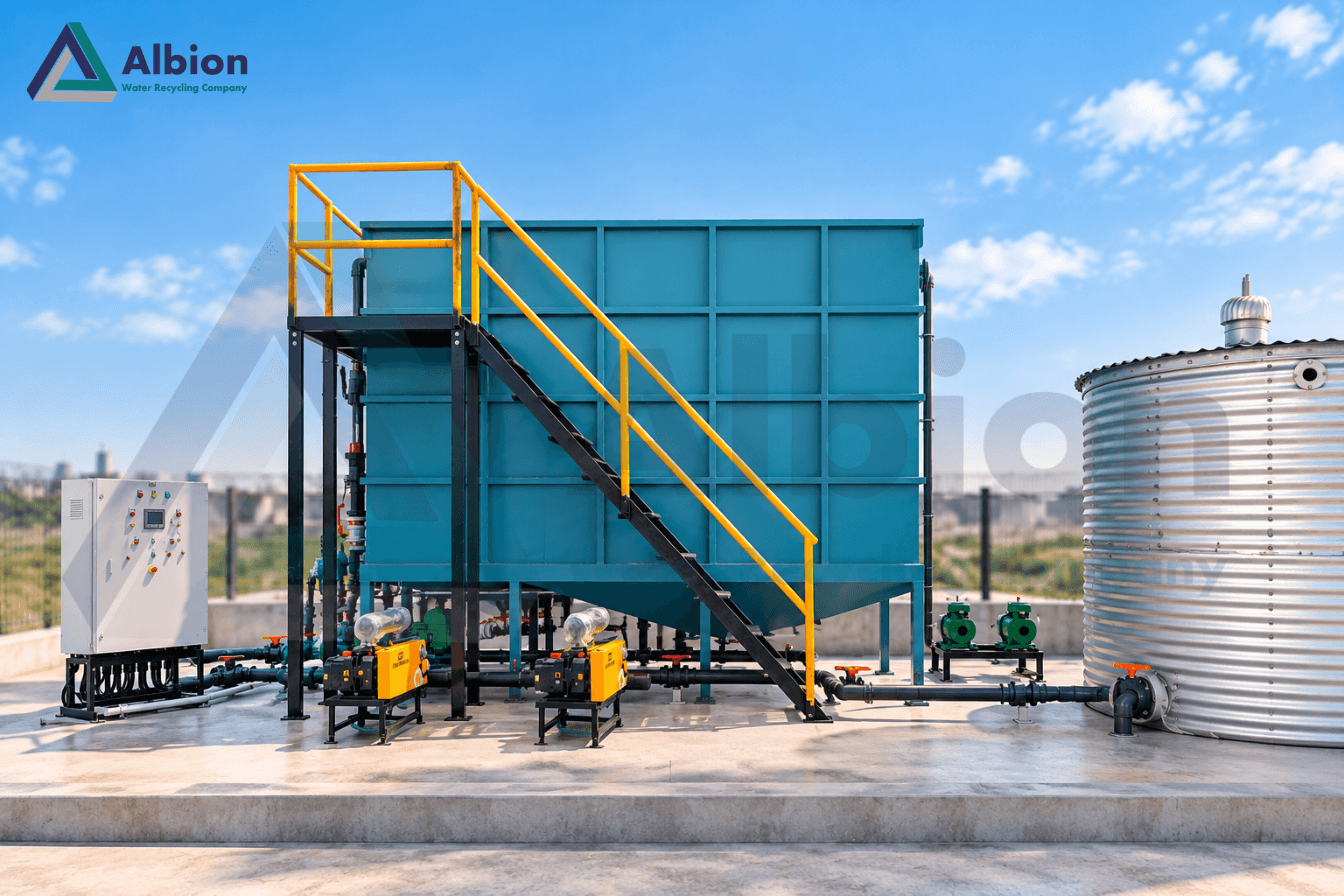
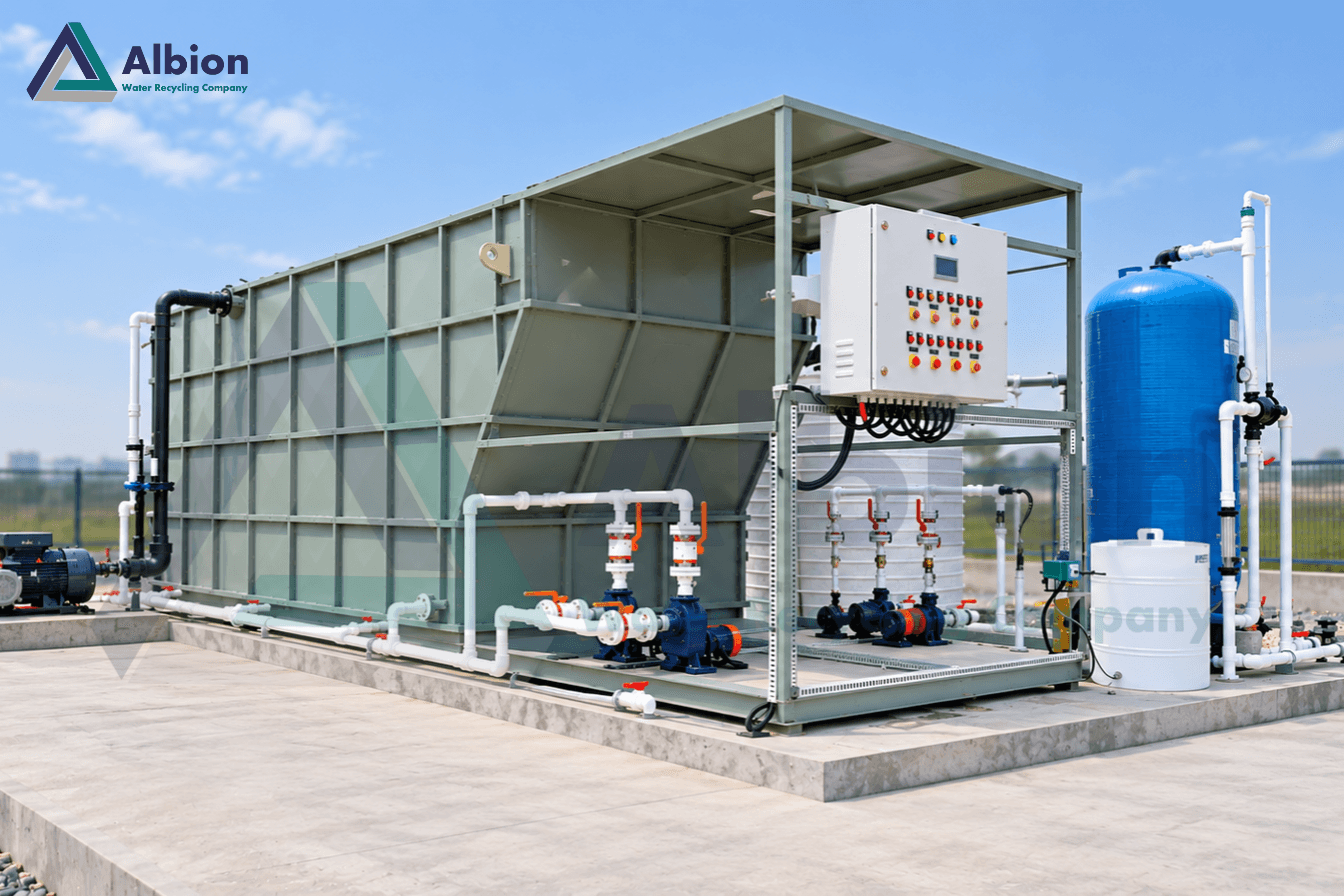
- Gravity separation. Oil traps, API-type separators or corrugated plate interceptors with skimmers remove free oil and settleable solids. Recovered oil is pumped to a slop tank.
- Equalisation. A mixed balancing tank evens out batch washing peaks.
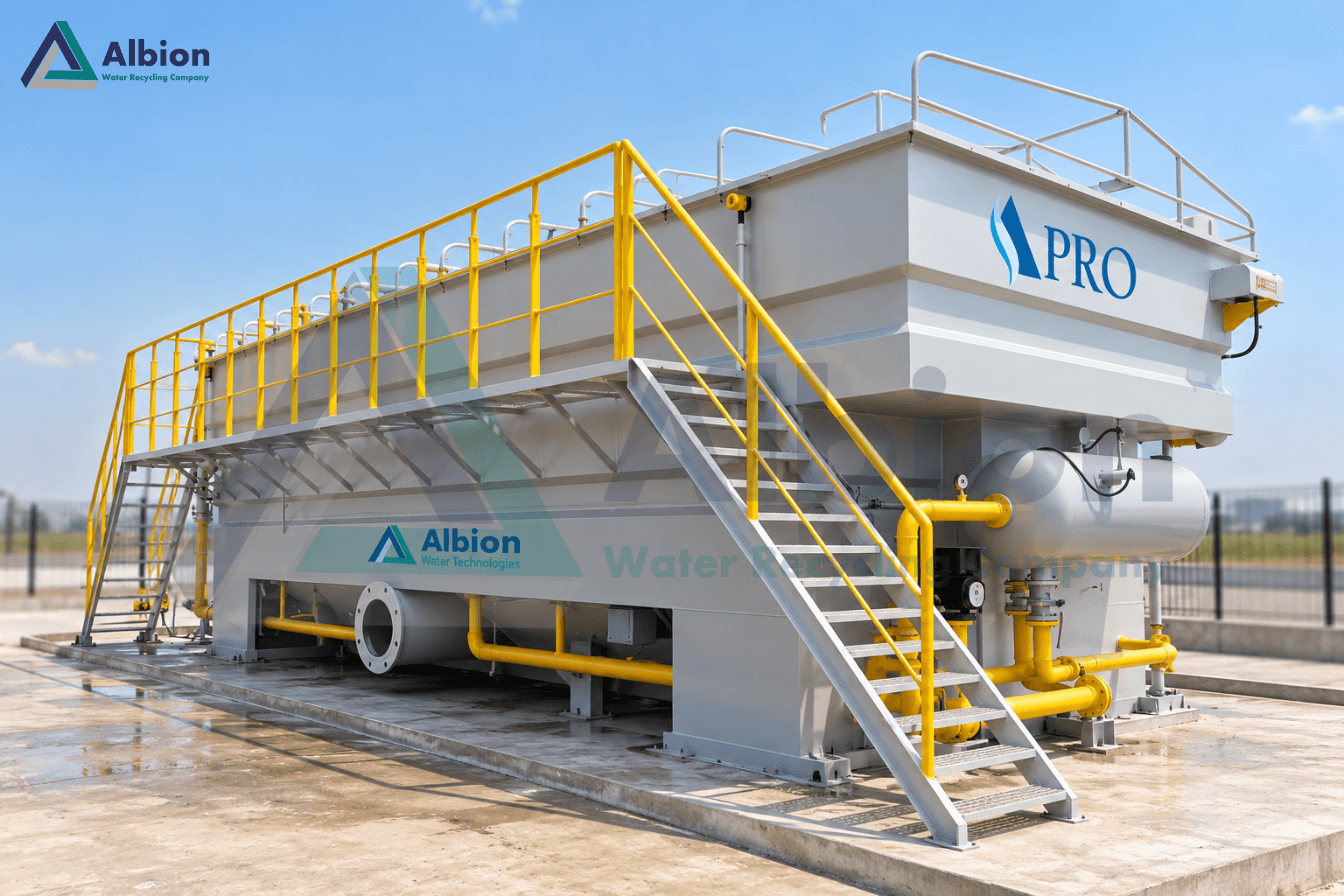
- Dissolved air flotation for emulsified oil. After pH adjustment and chemical conditioning, tiny air bubbles lift emulsified oil and fine solids to the surface. Albion Ecotech's A-Pro DAF system is designed for this duty. Strong emulsions may need acid, heat or demulsifier chemicals to split them first.
- Biological treatment. Once oil is brought down to a level biology can tolerate, MBBR or AMBBR, SBR or MBR remove dissolved hydrocarbons and COD. Attached-growth systems tolerate shock loads, which suits batch washing.
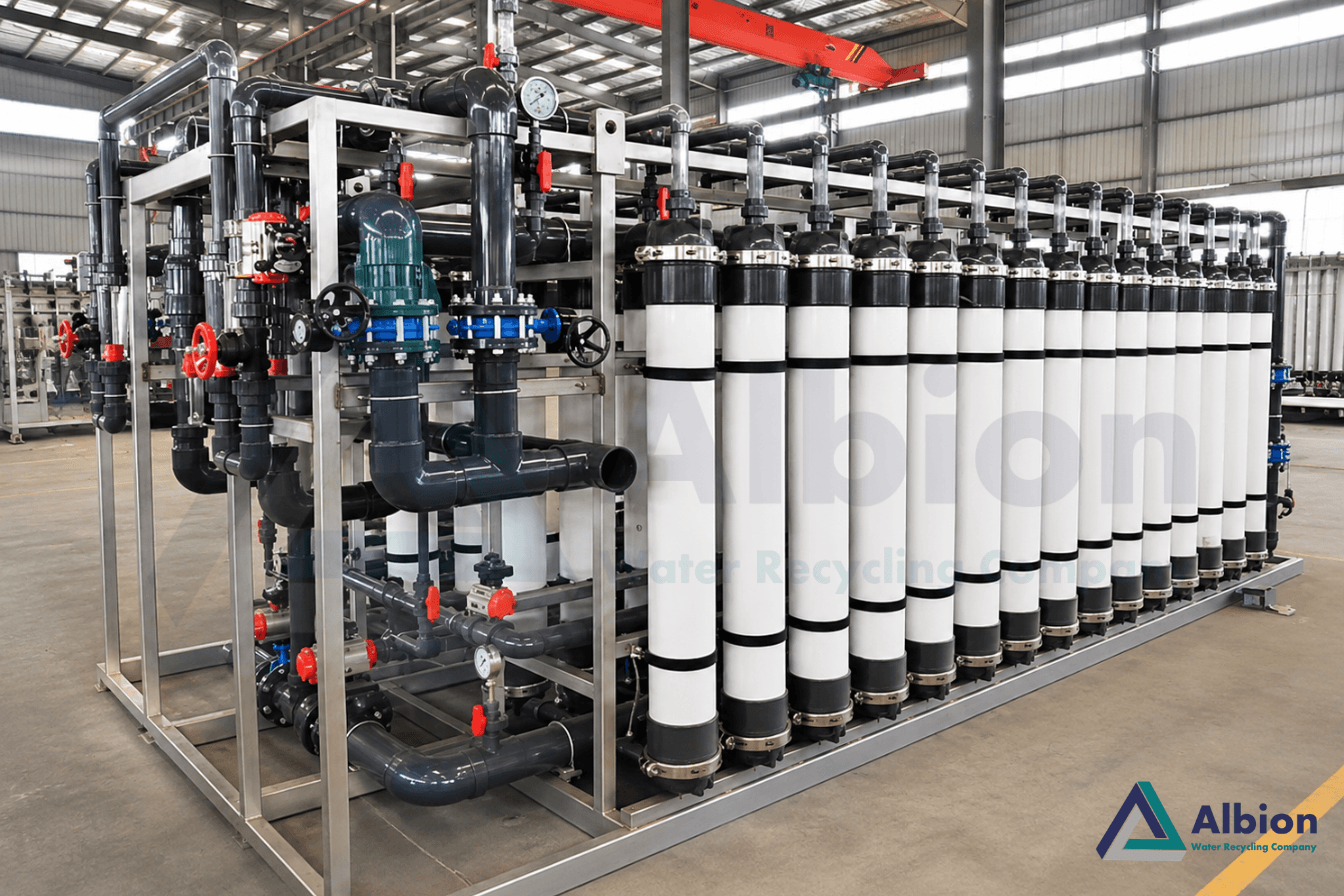
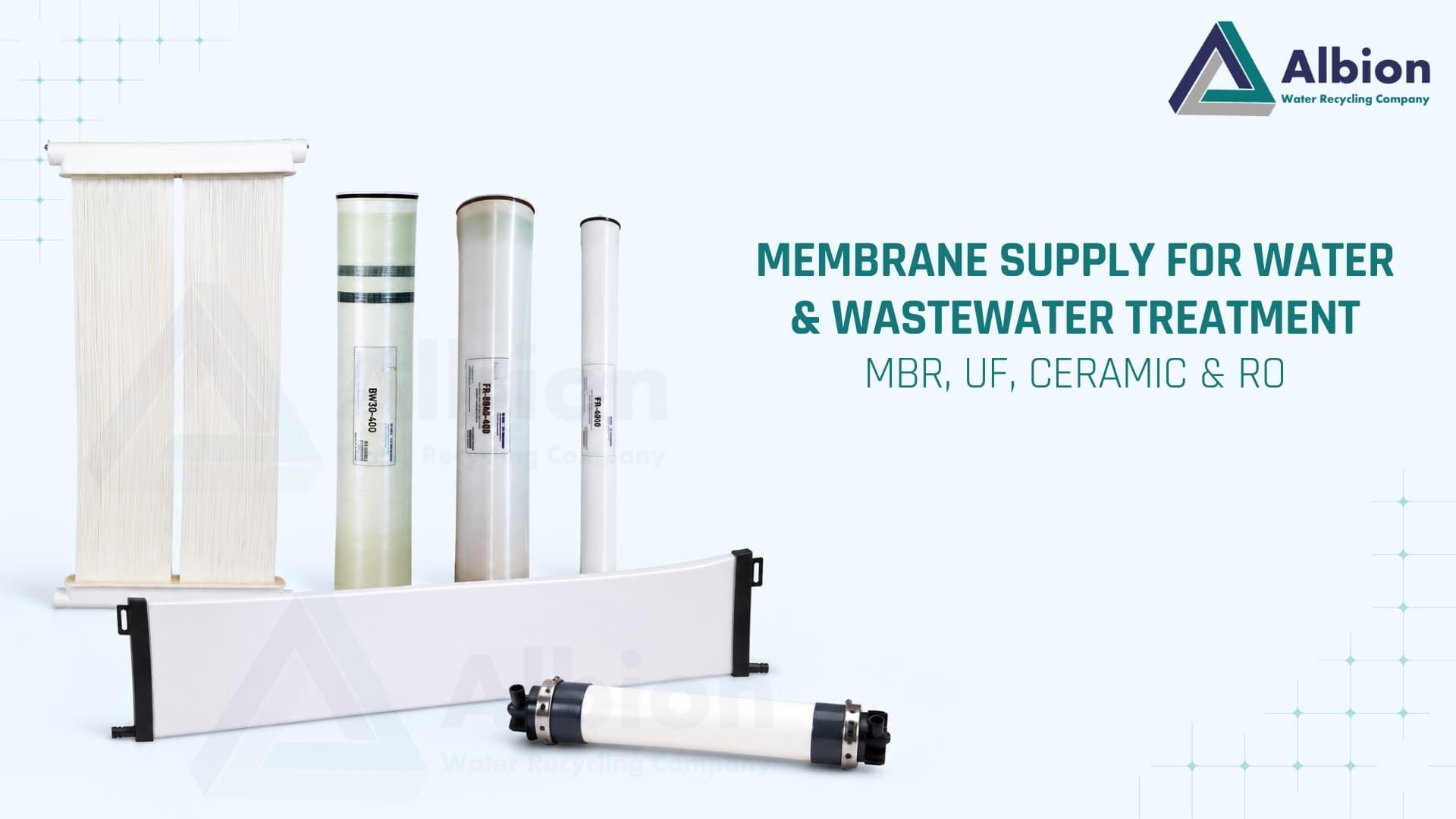
- Polishing. Activated carbon or filtration take out residual hydrocarbons. Ultrafiltration, including ceramic membranes such as C-Flocs, can handle emulsified oil directly and tolerate harsh cleaning, and RO is added where water is to be reused.
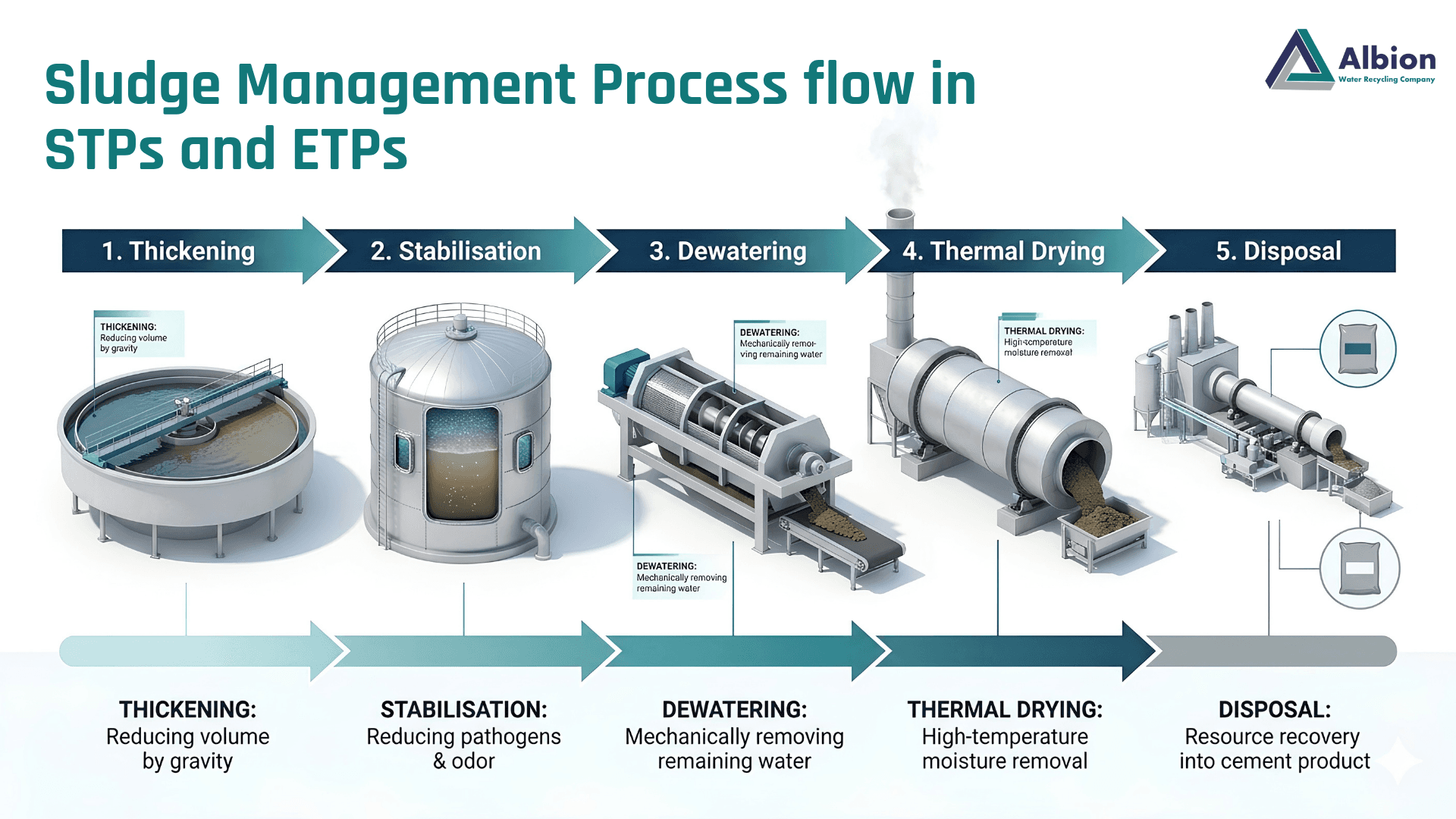
- Sludge handling. Oily sludge is thickened and dewatered, with the recovered oil returned to the slop tank, and the residue goes to an authorised hazardous waste route, for example co-processing or treatment at an approved facility.
Because the plant handles flammable liquid, it needs closed or vented tanks where vapours accumulate, flame arrestors, explosion-proof electrical equipment in classified areas, and a design reviewed for hazardous area rules. Machine shops face a related emulsion problem, which is covered in the guide for automobile and engineering plants.
Reuse and recovery
Treated water can supply cooling tower make-up, boiler feed after RO and polishing, floor and yard washing, fire-water top-up and landscaping, once its quality is confirmed. Tank and equipment washing is an easier target than blending, since trace oil and additives can affect product quality. Albion Ecotech sizes reuse around the quality each use actually needs, adding UF and RO only where it is required, and ZLD where discharge is not permitted. The reasoning behind that approach is set out in the whitepaper on water reuse and zero liquid discharge.
Reduce the oil load before the ETP
- Prevent spills and drips with drip trays, bunds and good housekeeping, and clean up with absorbents instead of washing oil to drain.
- Use low-emulsification cleaning methods and the minimum detergent, since strong detergents turn separable oil into emulsion.
- Drain tanks and lines fully into slop and recover product before washing, and plan tank cleaning to reduce volume.
- Keep clean rainwater and cooling water out of the oily drain, with covered or roofed oil handling areas where possible.
- Meter and record water use and oil recovered, so changes can be tracked.
Common mistakes
- Relying on a simple oil trap for emulsified oil.
- Sending too much oil to the biological stage, which coats biomass and chokes aeration.
- Letting clean stormwater flood the oily line, so the plant is oversized and costly.
- Ignoring vapour and ignition risk in sumps and tanks.
- Sizing from one sample, rather than from several wash cycles and rain events.
- Leaving oily sludge disposal until after commissioning.
How Albion Ecotech approaches oil and lubricant ETPs
Albion Ecotech designs effluent treatment plants for oil handling sites from measured data: the wash cycles and flows, oil content and emulsion stability, solids, COD, rainfall pattern and the discharge or ZLD requirement that applies. Depending on the site, the train may combine segregation, gravity separation, DAF, a biological stage selected from MBBR or AMBBR, SBR and MBR, polishing with carbon, UF or RO, and ZLD where needed. Sludge handling, energy-efficient equipment, PLC-based automation and post-commissioning support are part of the scope, and plants can be supplied in packaged or civil formats.
Frequently Asked Questions
Why does an oil and lubricant business need an ETP?
Its wastewater carries free, emulsified and dissolved oil, additives and oily sludge, which harm water and soil, create fire risk and are regulated under pollution control consent and hazardous waste rules. An ETP removes them before discharge and allows water reuse.
Why can't a simple oil separator treat all the oil?
Separators work on free oil that floats. Oil that is emulsified by detergents and additives stays as fine droplets, and oil that is dissolved stays in solution, so they need flotation, chemical splitting, membranes or biological treatment.
What is DAF and when is it used?
Dissolved air flotation releases fine air bubbles that attach to emulsified oil and fine solids and float them to the surface for skimming. It follows gravity separation and chemical conditioning, and protects the biological stage from oil.
How is oily sludge handled?
It is thickened and dewatered, any recoverable oil is returned to the slop tank, and the residue is sent through an authorised hazardous waste route. Classification and permitted routes should be confirmed with the State Pollution Control Board.
Can treated water be reused in a lubricant plant?
Yes, for cooling, boiler feed after RO, washing and landscaping once quality is confirmed. Use in blending or product contact needs care, since trace oil and additives can affect product quality.