Why the Automobile & Engineering Industry Needs an ETP Wastewater Treatment Plant
An automobile plant or engineering workshop does not look like a wastewater producer. There are no vats of dye or tanks of molasses, only machines, paint booths and assembly lines. Yet nearly every step from machining to final paint sends something to the drain: cutting-oil emulsions, degreasing washes, acid and alkali baths, phosphating and plating rinses, paint overspray and solvent residues, along with metals that do not break down in any treatment plant. Much of this is hazardous in its own right. An effluent treatment plant (ETP) is what keeps it out of the drain, the soil and the river, and what lets the factory recover water at the same time. This article explains why the sector needs one and how it is built.
Where wastewater comes from in an auto and engineering plant
- Machining and metal cutting: soluble-oil coolants that form stable oil-in-water emulsions, together with tramp oils, hydraulic oil leaks and metal fines. Spent coolant is one of the hardest streams to treat.
- Degreasing and cleaning: alkaline washes carrying oil, grease, detergents and suspended solids.
- Surface pre-treatment: acid pickling, phosphating and passivation baths and their rinses, which contain zinc, nickel, iron, phosphate and, in some processes, chromium and fluoride.
- Plating and metal finishing: rinse waters with dissolved metals such as chromium, nickel, zinc and copper, and in some older processes cyanide.
- Paint shop and electrocoating: booth wash water that captures paint overspray, solvents and resin, plus rinses and bleed from electrodeposition tanks.
- Heat treatment, forging and foundry: quench oils, scale, and, in foundries, sand and organic binders including phenolic compounds.
- Testing, washing and utilities: leak and water-test areas, vehicle washing, cooling tower and boiler blowdown, and RO reject from process water plants.
- Canteen and sanitary water: domestic sewage from a large workforce, which can be handled separately in an STP.
What makes this effluent hard to treat
- Stable oil emulsions. Emulsifiers in cutting fluids keep oil dispersed as tiny droplets, so a simple oil separator does not remove it. The emulsion has to be broken first, and it carries a high COD.
- Heavy metals. Metals do not degrade. They have to be converted to an insoluble form and removed as sludge, and some, such as hexavalent chromium, need a chemical reduction step first.
- Extreme and fluctuating pH. Acid and alkaline baths are dumped at intervals, so pH can swing across the full range.
- Solvents and paint solids. Paint resin and pigment are sticky, and solvents can be toxic to microorganisms and release volatile compounds.
- Incompatible streams. Mixing cyanide with acid releases toxic gas, and mixing oily streams with metal streams makes both harder to treat. Collection and segregation are safety and process issues.
- Variable batch discharge. Bath changes, coolant dumps and cleaning cycles create sharp peaks.
Why an ETP is not optional
Regulatory consent. Automobile manufacturing, metal finishing, plating and foundry operations are regulated categories in India. Units operate under consent from the State Pollution Control Board, with discharge limits on pH, oil and grease, suspended solids, COD and specific metals, and sometimes on cyanide and fluoride. Violations can lead to penalties and closure directions. Some units and clusters must run zero liquid discharge. The conditions differ by state, process and consent, so they should be confirmed with the Board before design.
Hazardous waste control. Used and waste oils, spent coolants, paint sludge, metal hydroxide sludge from plating and phosphating, and ETP sludge are often classified as hazardous waste. They must be stored, transported and disposed of through authorised routes with records. An ETP designed around segregation and dewatering keeps these volumes down.
Protecting water and soil. A film of oil blocks oxygen exchange in water, metals accumulate in sediment and food chains, and leaks from unlined pits and drains can contaminate groundwater for years.
Municipal systems cannot take it. Oil, metals and toxic compounds can upset a sewage treatment plant, coat its equipment and pass through untreated, so factories must pre-treat.
Customer and supply chain expectations. Vehicle makers audit their suppliers on environmental performance and often set their own water and discharge targets. A working, documented ETP is part of qualifying and keeping orders.
Water cost and security. Washing, testing, cooling and paint shop operations use a lot of water, and industrial clusters often face groundwater stress. Recovering water cuts intake and supply risk.
How an auto and engineering ETP is built
- Segregation at source. Separate lines for oily and coolant waste, metal-bearing pre-treatment and plating waste, chromium-bearing streams, cyanide where present, paint shop waste, utilities and sewage. This is the single most important design decision.
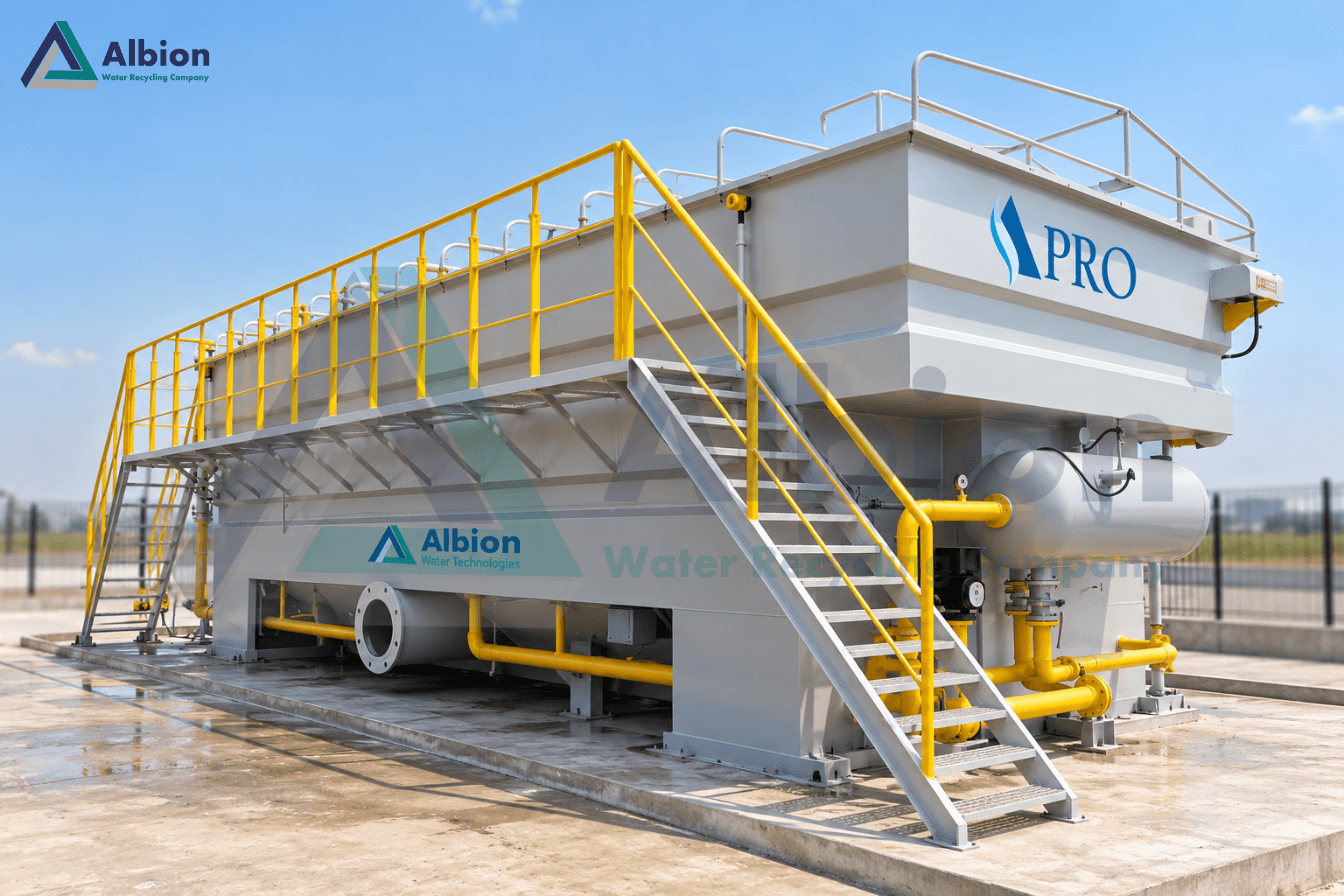
- Oil removal. Skimmers, oil traps and tilted-plate separators take out free oil, and dissolved air flotation (DAF) captures finer oil and suspended solids.
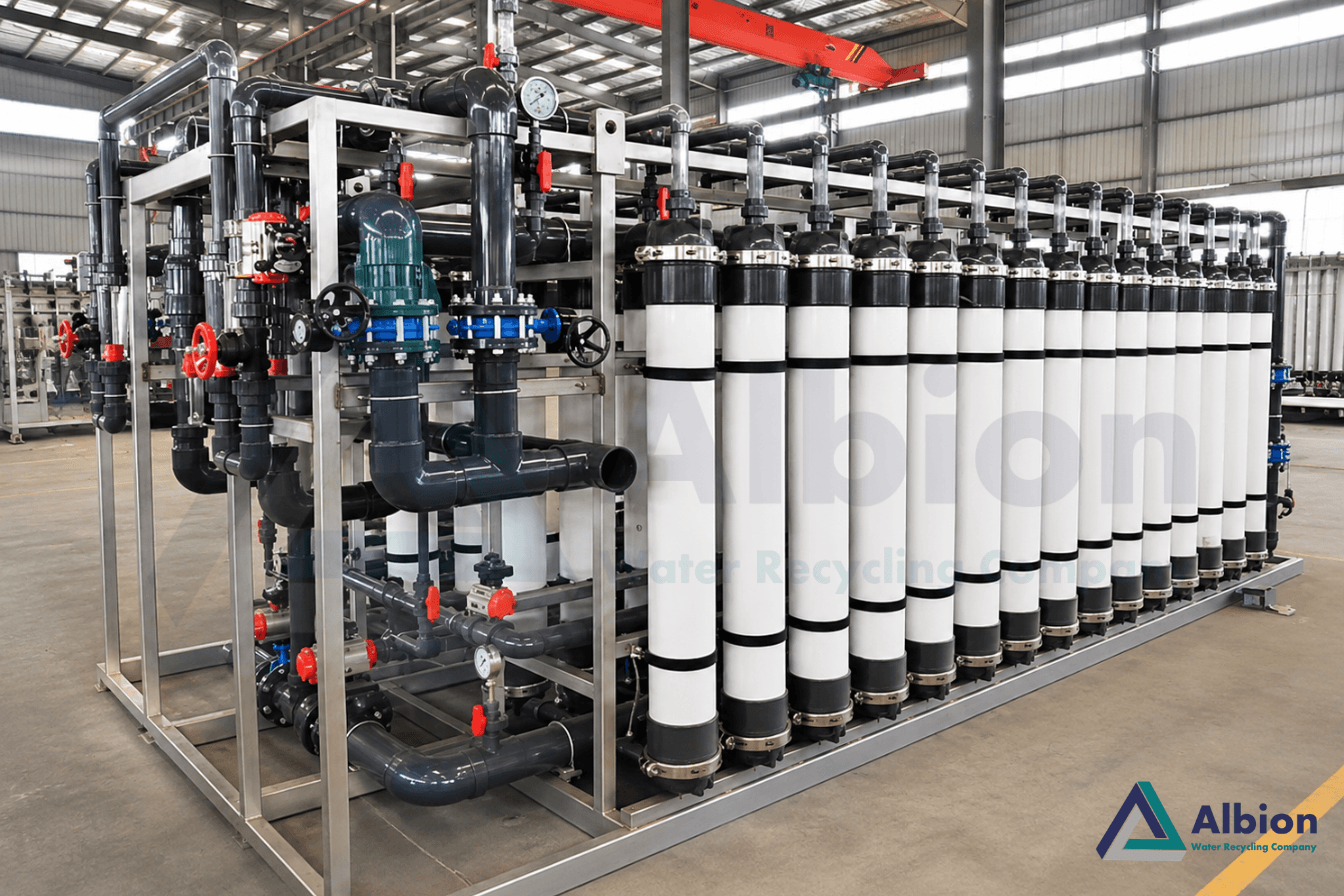
- Emulsion breaking. Spent coolant is split by acidification, coagulants, heat or demulsifier chemicals, and the oil layer is recovered. Ultrafiltration, including ceramic membranes, is an option for concentrating oil from emulsions, particularly where chemistry is aggressive.
- Chromium and cyanide treatment. Hexavalent chromium is reduced to trivalent chromium at low pH, and cyanide is destroyed by alkaline oxidation, before the streams join the metal removal stage.
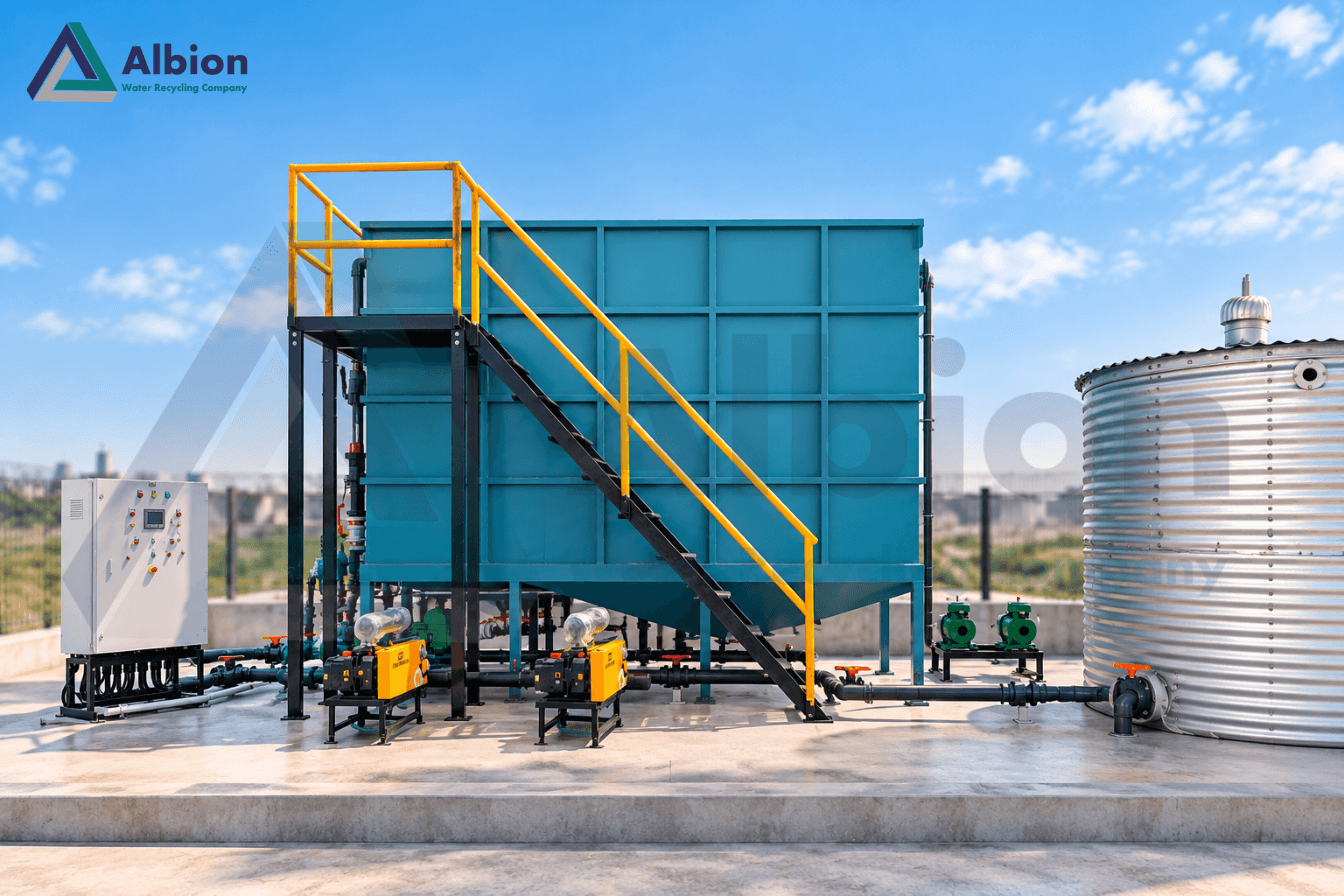
- Neutralisation and metal precipitation. Raising pH converts dissolved metals to insoluble hydroxides, or sulphide dosing is used for stricter limits. Coagulation and flocculation then settle the precipitate in a clarifier. Fluoride, where present, needs calcium dosing.
- Equalisation. A mixed balancing tank evens out batch peaks of flow, pH and COD.
- Biological polishing. After oil, metals and toxicity are managed, MBBR or AMBBR, SBR or MBR remove the remaining biodegradable COD. Attached-growth systems tolerate shock loads well, and MBR gives a clean feed for downstream membranes.
- Tertiary treatment and reuse. Filtration, activated carbon, UF and RO bring water to reuse quality, and ZLD concentrates reject for plants that must not discharge.
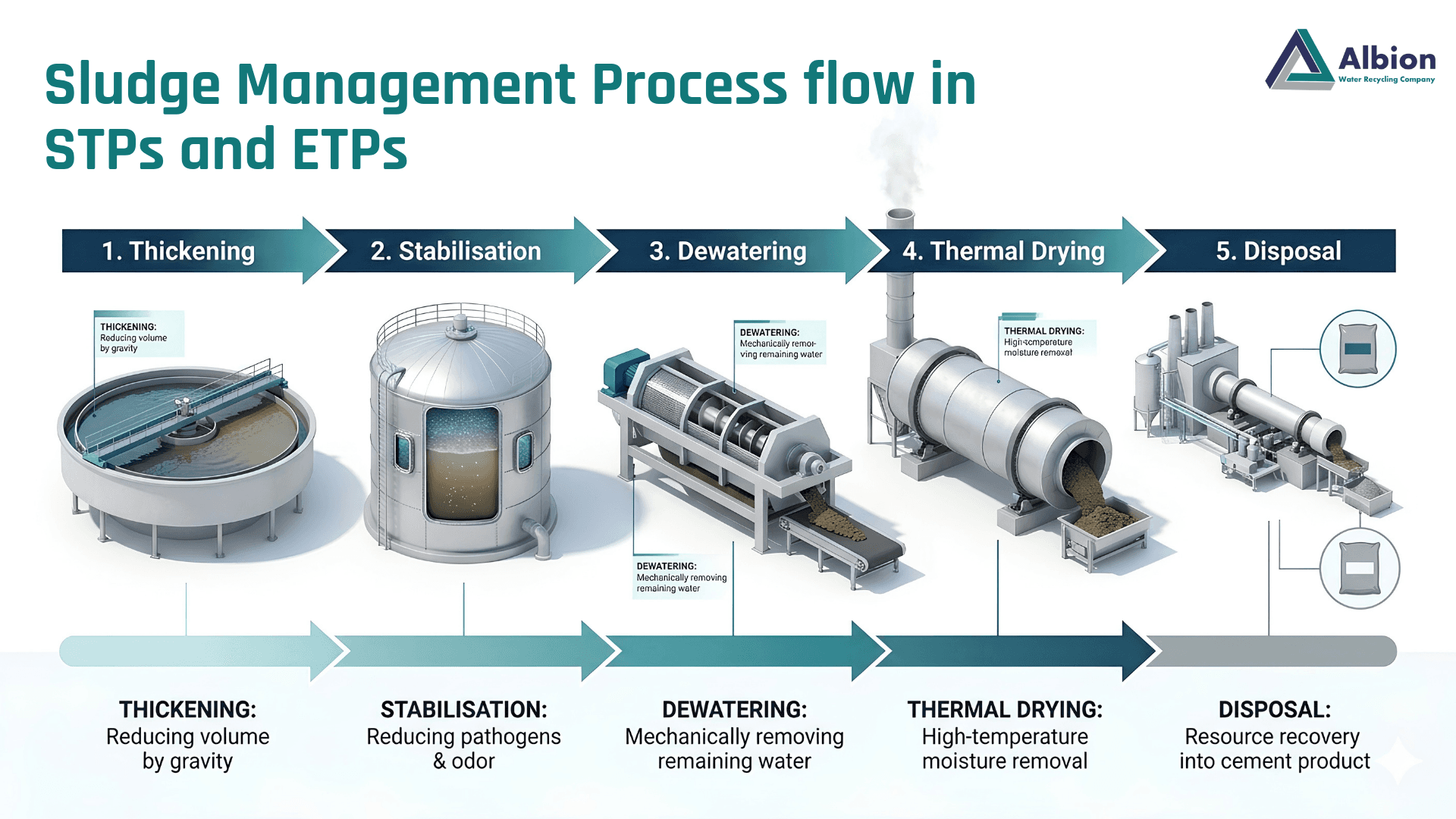
- Sludge handling. Metal hydroxide sludge, oily sludge and biological sludge are dewatered, typically with a filter press, and sent through authorised hazardous waste routes. Keeping them separate prevents the whole volume becoming hazardous.
Reuse in a vehicle or engineering plant
The easiest uses are cooling tower make-up, boiler feed after RO and polishing, washing, test-area water, landscaping and flushing. Higher-quality uses such as pre-treatment rinses and final rinses before paint need low hardness, salts and residual organics, because they affect coating quality, so they should be proven on trials before treated water is routed there. RO permeate is the main source of reusable water in a ZLD or high-recovery train.
Reduce the load before the ETP
- Extend coolant life by skimming tramp oil, filtering fines, controlling concentration and bacteria, so less spent coolant is dumped.
- Use counter-current or spray rinsing and drip-off time over plating and pre-treatment baths, and recover drag-out where possible.
- Consider process changes such as chrome-free passivation, subject to quality and customer approval.
- Recirculate paint booth water and remove solids continuously, and recover spent solvents.
- Stop leaks and drips of oil at the machine, and clean up with absorbents instead of washing oil to drain.
- Meter water by area to find the largest users.
Common mistakes
- Mixing oily, metal, cyanide and acid streams into one drain.
- Relying on a simple oil trap for emulsified coolant.
- Skipping equalisation, so batch dumps overwhelm the chemical dosing.
- Standard materials in acid and chromium service, leading to early corrosion.
- Sizing from one sample, instead of several production and cleaning cycles.
- Leaving hazardous sludge, oil and residue disposal until after commissioning.
How Albion Ecotech approaches auto and engineering ETPs
Albion Ecotech designs ETPs from the plant's own effluent data: stream characteristics by area, oil and metal content, pH swings, batch pattern and the discharge or ZLD requirement that applies. Depending on the plant, the train may combine segregation and equalisation, DAF-based oil removal, chemical and physico-chemical treatment, a biological stage selected from MBBR or AMBBR, SBR and MBR, and polishing with UF, RO or ceramic membranes, with ZLD where required. Sludge management, energy-efficient equipment, PLC-based automation and post-commissioning support are part of the scope, and plants can be supplied in packaged or civil formats.
Frequently Asked Questions
Why does an automobile or engineering plant need an ETP?
Its wastewater can contain oil emulsions, heavy metals, paint residues and cleaning chemicals, which are harmful to water and soil and are regulated under pollution control consent and hazardous waste rules. An ETP is needed to meet discharge limits and recover water.
How is spent cutting coolant treated?
The emulsion is broken using acid, coagulants, heat or demulsifiers, the oil is separated and recovered, and the remaining water goes on to further treatment. Ultrafiltration can also concentrate the oil, and the recovered oil and sludge are handled as hazardous waste.
How are heavy metals removed from plating and phosphating waste?
Metals are precipitated, usually as hydroxides, by raising pH, and settled with coagulants. Hexavalent chromium is reduced to trivalent chromium first, and the resulting sludge is dewatered and disposed of as hazardous waste.
Is zero liquid discharge required for automobile plants?
Not for every plant. It depends on the state, process and consent, and some units and clusters are required to run ZLD. The applicable conditions should be confirmed with the State Pollution Control Board.
Can treated water be reused in paint pre-treatment?
Only after trials. Pre-treatment rinses are sensitive to hardness, salts and residual organics, so RO permeate may be suitable, but it should be validated against coating quality before use. Utilities, washing and cooling are easier first targets.