Why Seafood and Fish Processors Need an ETP Wastewater Treatment Plant
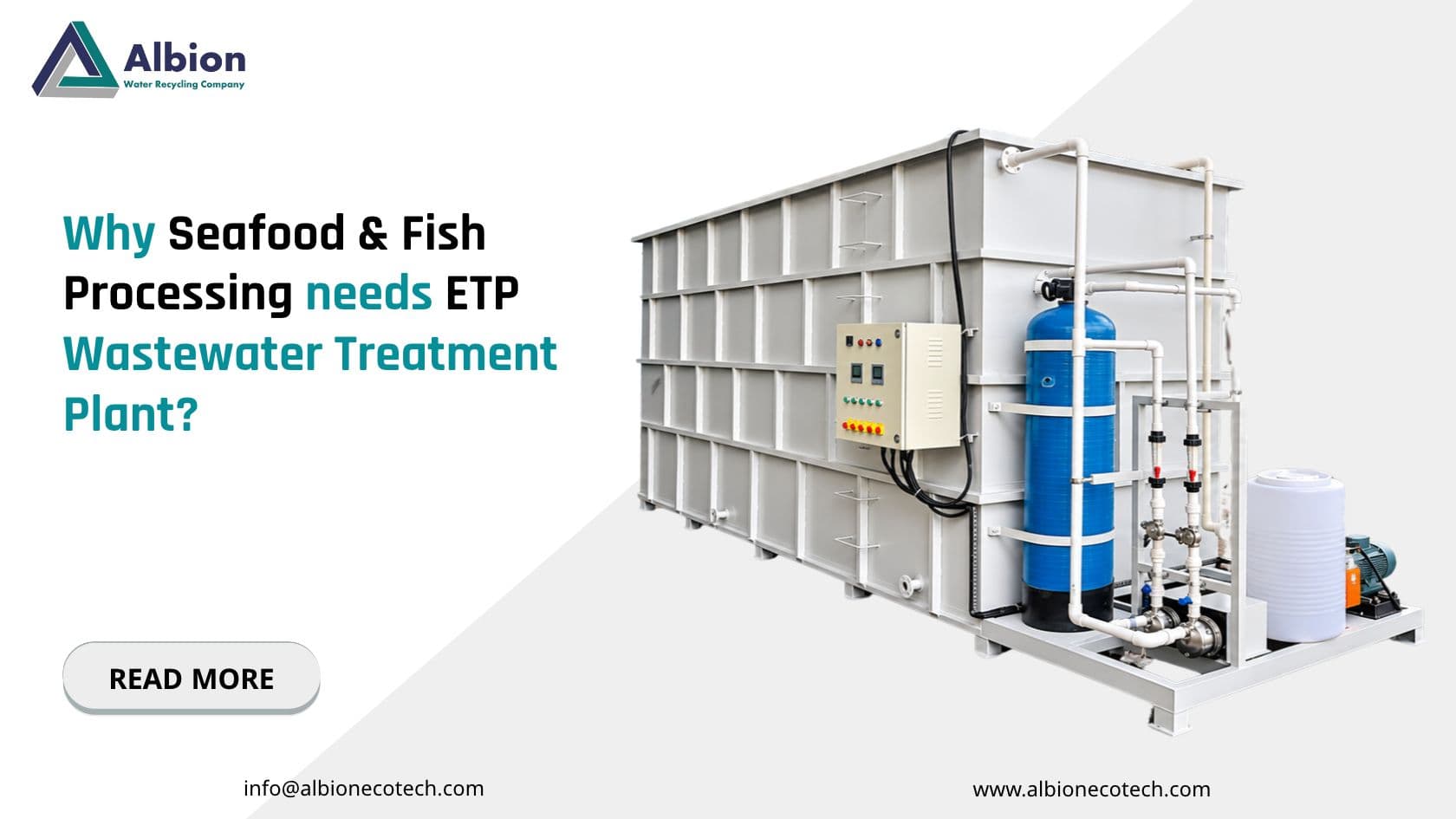
Fresh fish and shellfish spoil quickly, and so does the water that has touched them. Washing, thawing, peeling, filleting and cooking leave the wastewater loaded with protein, fat, scales, shells and brine, and within hours it gives off the sharp smell of ammonia, amines and hydrogen sulphide. Many seafood plants stand on the coast, close to estuaries, mangroves and fishing communities, where the receiving water is the same water the industry depends on. An effluent treatment plant (ETP) is what lets a seafood processor operate there without damaging the coast or its neighbours. This article explains why the sector needs one and how it is designed.
Where the wastewater comes from
- Receiving and washing: ice melt, slime, blood and dirt from landed catch, often washed with large volumes of water or seawater.
- Gutting, heading, peeling and filleting: viscera, scales, shells, heads, skin and flesh fragments, with the washings that carry them.
- Soaking and brining: salt solutions and, in shrimp processing, phosphate soaks that add salt and phosphorus.
- Cooking and canning: cook water, brine and oil that are rich in dissolved protein and fat.
- Surimi and fishmeal plants: wash water from surimi, and press liquor and stickwater from fishmeal and fish oil, which are among the strongest streams in the sector.
- Thawing, freezing and cold storage: large volumes of thaw water and ice, plus blowdown from ammonia refrigeration systems.
- Cleaning and sanitising: daily washdown with alkaline cleaners, acids, chlorine and other disinfectants.
What makes seafood wastewater hard to manage
- High protein and fat load. BOD and COD are far above domestic sewage, and fish oil coats pipes and tanks and interferes with aeration.
- Salinity. Brine, seawater washing and ice add chlorides that stress ordinary freshwater biology, slow nitrification and limit reuse and discharge options.
- Ammonia, amines and nutrients. Protein breaks down into ammonia and trimethylamine, which gives fish its smell, and phosphate soaks add phosphorus.
- Shells, scales and bone. Hard solids block screens and wear pumps.
- Odour. Among the most offensive of any food industry, and the main source of complaints from nearby communities.
- Cold, variable flow. Thaw and ice water are cold, which slows biological treatment, and flow follows landings and export orders, with peaks and quiet periods through the year.
- Disinfectant residues and pathogens. Chlorine and sanitisers can inhibit biological treatment, while marine bacteria and other pathogens call for disinfection of the final effluent.
Why an ETP is not optional
Regulatory consent. Seafood processing units operate under consent from the State Pollution Control Board, with limits on BOD, COD, suspended solids, oil and grease, ammoniacal nitrogen and pH, and conditions on where effluent may be discharged, such as to land, an inland water body, a sewer or a marine outfall. Coastal sites may also face coastal regulation conditions. Requirements differ by state, location and consent, so they should be confirmed with the Board before design.
Protecting the coast. Protein-rich discharge uses up oxygen in creeks and estuaries, and nitrogen and phosphorus feed algal blooms. Those same waters support fisheries, mangroves and aquaculture, which depend on water quality.
Export approvals and food safety. Seafood is a heavily exported product, and export approvals and buyer audits inspect water, drainage and effluent handling. A working ETP with records is part of keeping them.
Odour and neighbours. Complaints from coastal villages and housing are one of the commonest reasons for closure notices.
Water cost and by-products. Plants use large volumes of potable water for washing, ice and thawing, in places where supply is tight. Shells, heads, viscera and fat also have value as by-products when collected before they reach the drain.
How a seafood ETP is built
- By-product recovery and screening. Viscera, heads, shells and scales are collected dry for fishmeal, feed or chitin processing, and floor drains carry screens. Fine screens then take out remaining shell, scale and flesh.
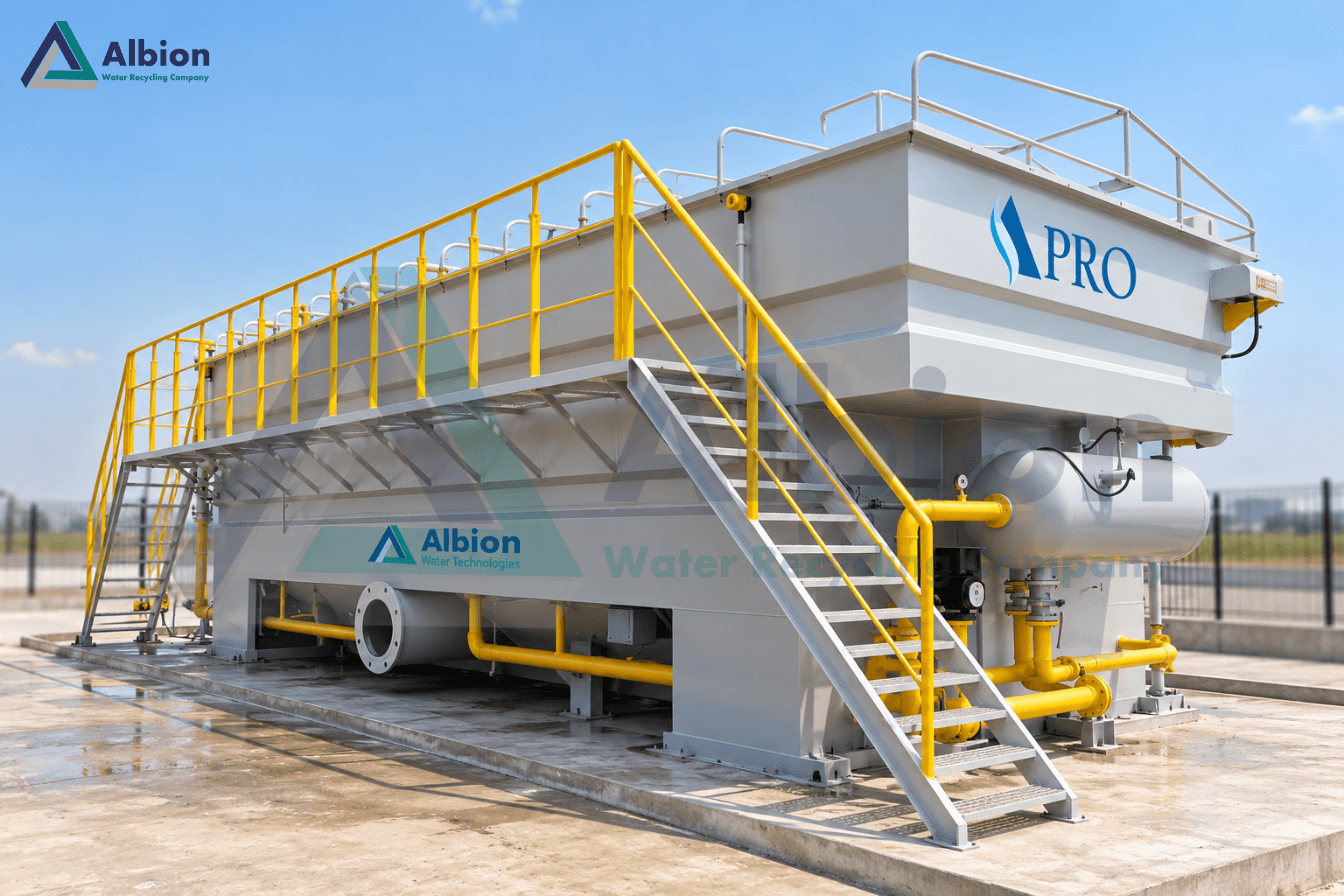
- Fat and oil removal. A fat trap takes out free oil, and dissolved air flotation with chemical conditioning, such as the A-Pro DAF system, captures emulsified oil, protein and fine solids, which protects the biological stage.
- Equalisation. A mixed, aerated balancing tank spreads out landing-driven peaks and stops the effluent turning septic.
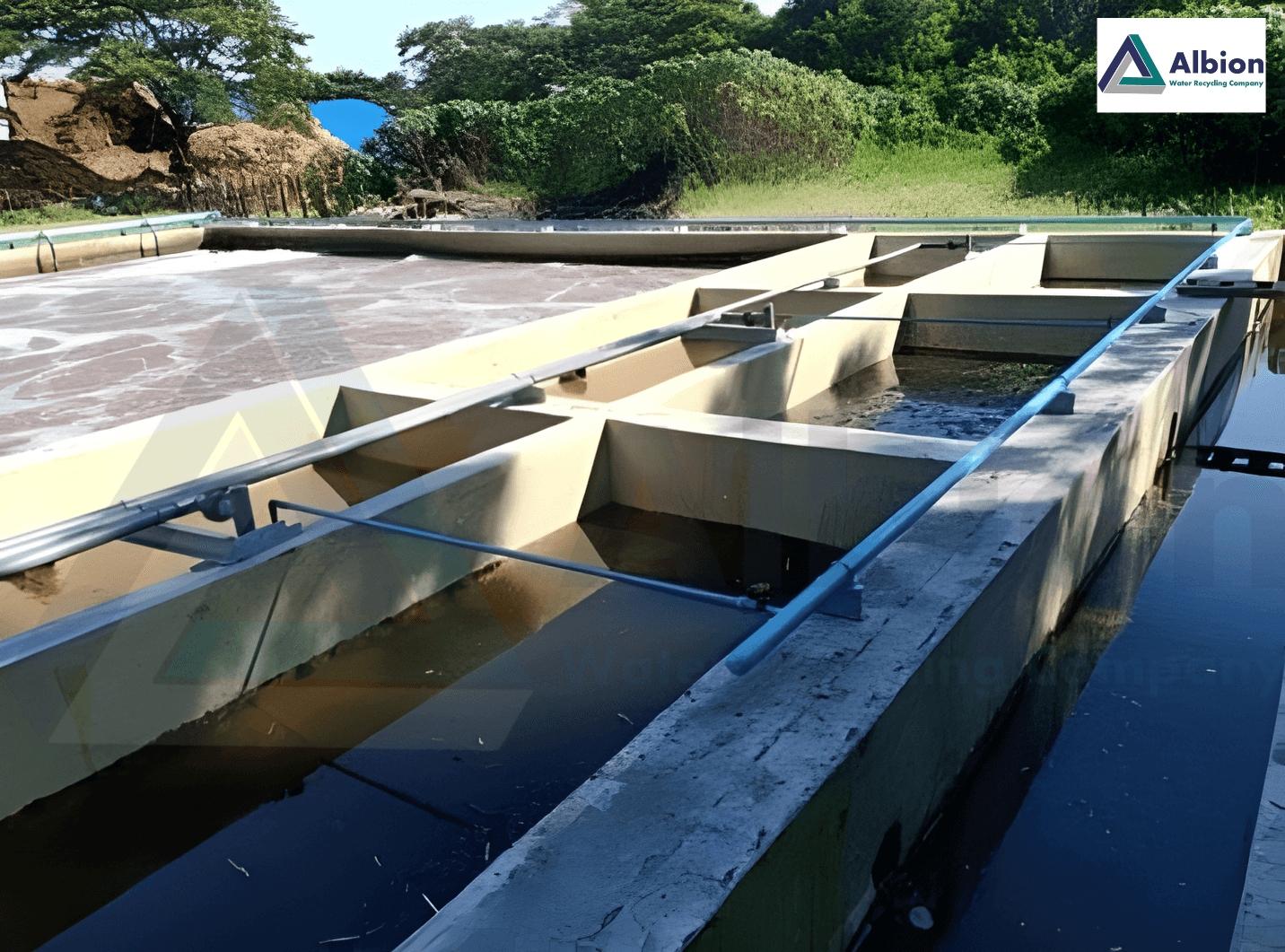
- Biological treatment for saline, cold effluent. Biomass has to be acclimatised to salt, and attached-growth systems such as Albion Ecotech's M-Flocs AMBBR tend to cope better with salinity swings and shock loads. SBR and MBR are also used, and nitrification needs extra volume or time because salt and low temperature slow it. Sulphate in seawater-washed effluent makes anaerobic stages prone to hydrogen sulphide, so they are used with care.
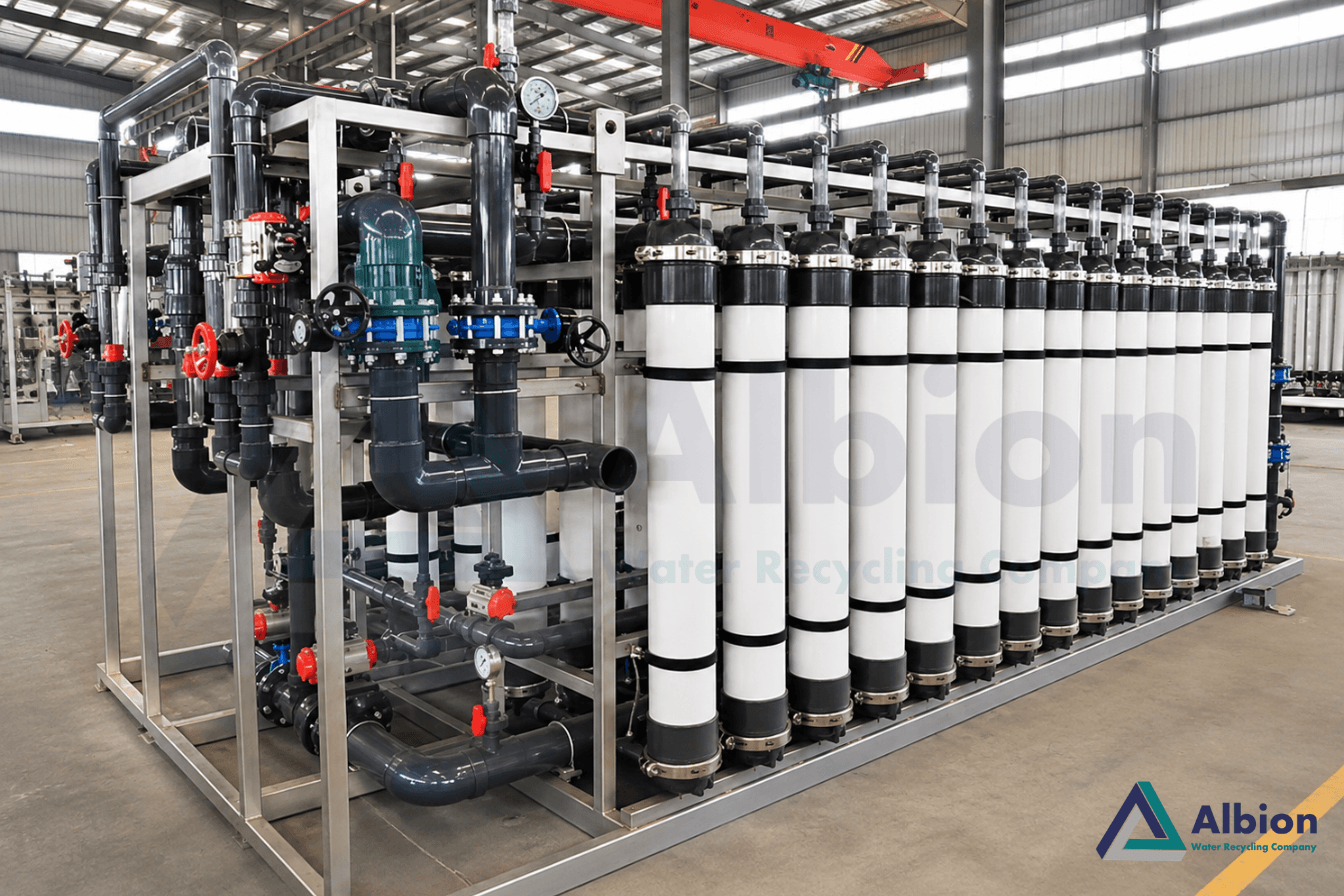
- Disinfection and polishing. Filtration and chlorination or UV deal with pathogens. UF and RO can polish water for reuse, though salinity makes RO costlier and should be weighed against the benefit.
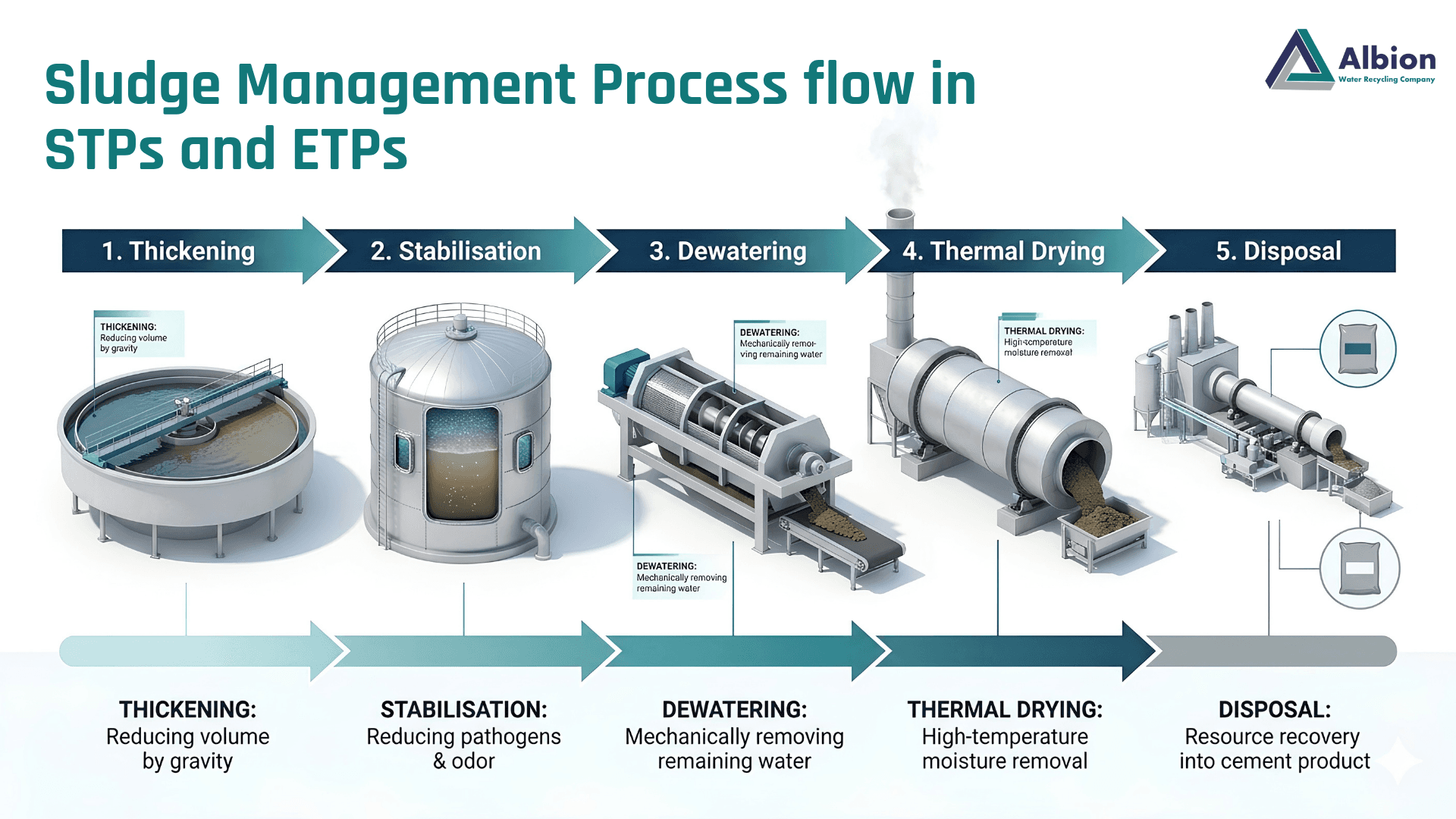
- Sludge handling. Flotation float and biological sludge are thickened and dewatered, and may go to rendering, composting or co-digestion where rules allow. The guide to sludge management covers the options.
- Odour control. Covered tanks and extracted air passed through an acid scrubber for amines and ammonia, and a biofilter or oxidising scrubber for sulphides, keep the smell inside the plant boundary.
Meat plants face closely related problems with blood, fat and odour, which are covered in the guide for slaughterhouses and meat processors.
Reuse, with limits
Water that touches fish or shellfish, and the ice that goes with them, must meet potable water and food safety requirements, and treated effluent should not be assumed to qualify. Realistic reuse covers cooling tower make-up, boiler feed after RO and polishing, vehicle and yard washing, and landscaping, once quality is confirmed. Albion Ecotech sizes treatment and reuse around what each use needs, adding UF or RO only where water scarcity or discharge limits justify it. Clean thaw and cooling water can often be separated and reused with light treatment before it ever reaches the ETP, subject to hygiene rules.
Reduce the load before the ETP
- Collect viscera, heads, shells and scales dry and send them to by-product use, instead of washing them to drain.
- Screen floor drains and use high-pressure, low-volume washing.
- Control thawing water volume, and keep clean cooling and ice melt out of the process drain.
- Dose phosphate soaks only as needed and recover brine where hygiene rules allow.
- Process fresh catch promptly, since spoiled fish produces more ammonia and amines.
- Meter water by area and per tonne processed.
Common mistakes
- Designing a freshwater biological plant for saline effluent.
- Letting shells, scales and fat reach the aeration tank.
- Sizing from average flow, without allowing for landing-season peaks.
- Expecting nitrification to run at design rate in cold, salty water.
- Specifying standard materials in salty, corrosive service.
- Ignoring odour until neighbours complain.
Our approach to seafood plant ETPs
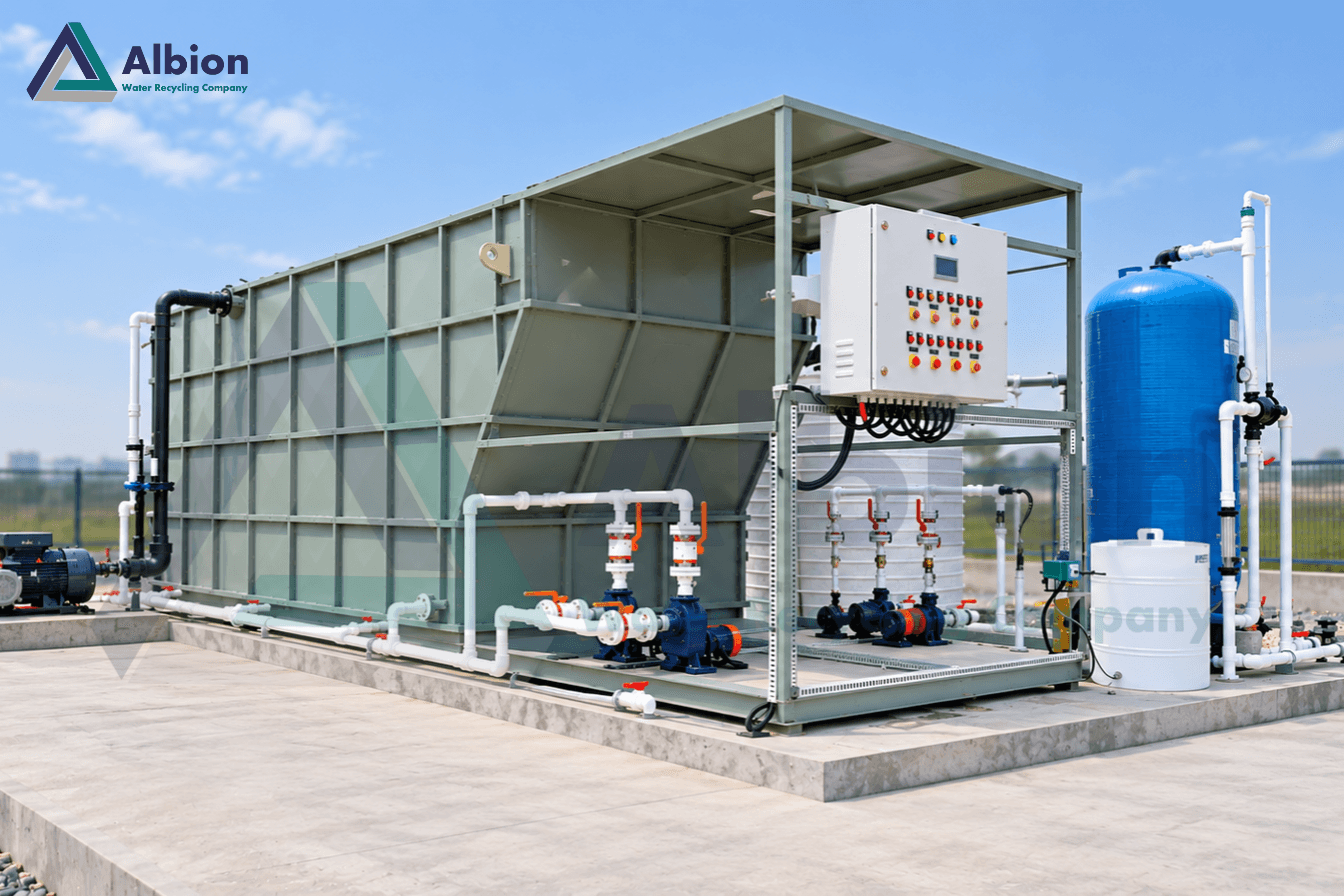
Albion Ecotech designs effluent treatment plants for seafood and fish processors from measured data: species and products handled, flow by stream, fat and solids, salinity, nitrogen, temperature, seasonal pattern and the discharge or reuse target that applies. Depending on the plant, the train may combine by-product recovery, screening, DAF, an aerated equalisation stage, a biological stage selected from AMBBR or MBBR, SBR and MBR, disinfection, and UF or RO where needed. Sludge handling, odour control, corrosion-resistant materials, PLC-based automation and post-commissioning support are part of the scope, and plants can be supplied in packaged or civil formats.
Frequently Asked Questions
Why does a seafood processing plant need an ETP?
Its wastewater carries protein, fat, ammonia, salt and solids at high strength, which harm coastal waters and cause strong odour. An ETP treats it to meet consent and export audit requirements and allows water reuse.
How does salinity affect seafood wastewater treatment?
Salt from brine, seawater washing and ice stresses ordinary biology and slows nitrification. Biomass has to be acclimatised, and attached-growth processes often cope better with salinity swings.
Why does fish processing wastewater smell so strong?
Fish protein breaks down quickly into ammonia, amines such as trimethylamine and hydrogen sulphide. Covered tanks, prompt treatment and scrubbers or biofilters on extracted air control it.
How is fat removed from seafood effluent?
A fat trap removes free oil, and dissolved air flotation with chemical conditioning removes emulsified oil, protein and fine solids before the biological stage.
Can treated water be reused in a seafood plant?
Yes for non-product uses such as cooling, boiler feed after RO, vehicle and yard washing and landscaping, once quality is confirmed. Water and ice that contact seafood must meet potable water and food safety requirements.