Why the Food & Beverage Industry Needs an ETP Wastewater Treatment Plant
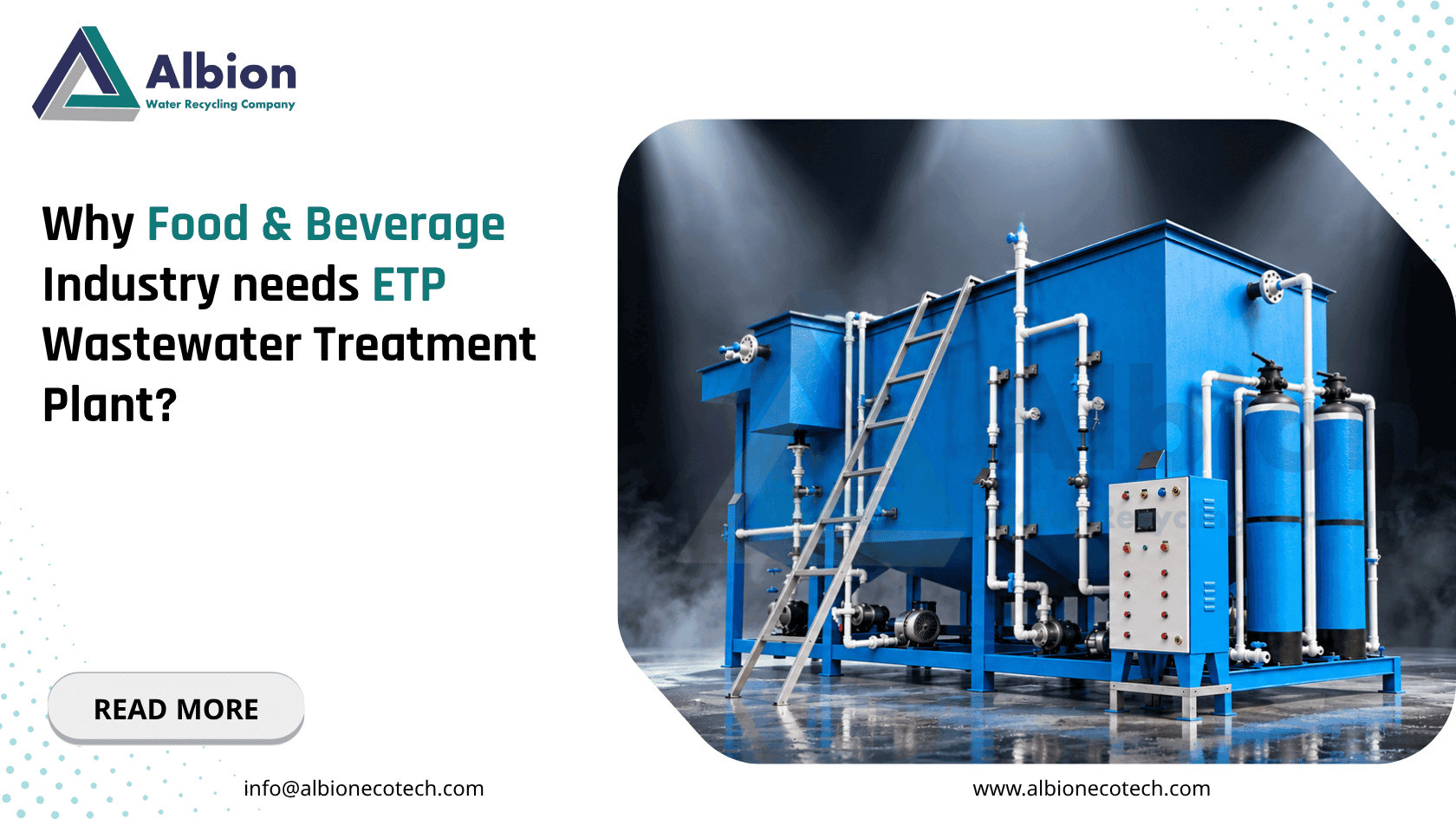
A dairy, a brewery and a fruit-processing line have little in common on the shop floor, but their drains share a problem. Food and beverage effluent is rich in biodegradable organic matter, often carries fats, oils and grease, and arrives in surges tied to production and cleaning schedules. Left untreated, it depletes oxygen in receiving water, turns septic and smelly within hours, and blocks sewers. An effluent treatment plant (ETP) is what keeps that load from becoming a compliance, cost and reputation problem. This article explains why the sector needs one, what makes its wastewater distinctive, and which treatment options fit different plants.
What is in food and beverage wastewater
- High organic strength. Sugars, starches, proteins and milk solids are readily biodegradable. COD in dairies and breweries commonly runs into the thousands of mg/L, well above the few hundred mg/L typical of domestic sewage.
- Fats, oils and grease (FOG). Meat and poultry processing, edible oil refining, dairy and bakery plants all discharge FOG, which coats pipes, floats in tanks and interferes with biological treatment if it is not removed early.
- Suspended solids. Peels, pulp, fibres, bones, yeast and trub add to the load and can clog screens and pumps.
- Swinging pH and cleaning chemicals. Cleaning-in-place (CIP) cycles send alkaline and acidic slugs and sanitisers into the drain, and fermentation or fruit processing can push pH low.
- Nutrients and, in some plants, salinity. Protein-rich streams carry nitrogen and phosphorus, while brining, pickling and some cleaning regimes raise dissolved solids.
- Variable flow and seasonality. Shift patterns, batch changeovers, harvest seasons and festival demand all change volume and strength through the day and the year.
The good news is that most of this matter is biodegradable, which is why biological treatment works well. The difficulty is that the load is heavy and uneven.
Why an ETP is not optional
Environmental impact. Microorganisms in a stream or lake consume dissolved oxygen as they break down organic matter. A concentrated discharge can strip a water body of oxygen, with fish kills, odour and loss of aquatic life as the result. Nitrogen and phosphorus feed algal growth. FOG forms films on the surface that further limit oxygen exchange.
Regulatory licence to operate. In India, industrial units need consent from the State Pollution Control Board, and that consent sets discharge limits for parameters such as BOD, COD, suspended solids, oil and grease and pH, depending on the sector and the mode of disposal. Plants that cannot meet them face notices, penalties and, in serious cases, closure directions or disconnection of utilities. The applicable standards differ by sector and state, so they should be confirmed with the Board for each unit.
Sewer and municipal limits. Even plants that discharge to a sewer usually have pre-treatment obligations, because a municipal STP is not built for dairy-strength or FOG-heavy wastewater.
Water security and cost. Food and beverage plants use large volumes for washing, cooling, conveying and, in beverages, as an ingredient. Treating effluent opens the option of reusing water for non-product uses, which cuts intake in places where groundwater is stressed or tanker water is expensive.
Customer and audit expectations. Retailers, brand owners and export buyers increasingly ask suppliers about wastewater management and water stewardship. A working ETP with records is part of passing those audits.
Energy and resource recovery. High-strength organic streams can be digested anaerobically to produce biogas, which some plants use to offset boiler fuel. That is only possible when the effluent is collected and treated in a controlled system.
How the picture differs by sub-sector
- Dairy: milk solids, whey and fat give high COD, with CIP chemicals and variable pH. Whey is the biggest single contributor when it is sent to drain instead of being recovered.
- Breweries and soft-drink bottling: sugars, yeast and spent grain residues give high soluble COD, with strong peaks during tank cleaning and bottle washing.
- Meat, poultry and fish processing: blood, fat, protein and solids, with strong odour potential and high nitrogen.
- Fruit, vegetable and snack processing: starch, sugars, peel and pulp, strongly seasonal, with soil and solids from washing.
- Bakery, confectionery and edible oil: fats, sugars and, in refining, soaps and oil-rich streams that need FOG removal before anything else.
What a food and beverage ETP typically includes
- Screening and solids removal. Coarse and fine screens take out peels, fibres, bones and packaging fragments before they reach pumps and tanks.
- FOG removal. Oil and grease traps for lighter loads and dissolved air flotation (DAF) where FOG and suspended solids are heavy. Removing FOG early protects everything downstream.
- Equalisation with pH correction. A mixed, aerated balancing tank evens out flow, strength, temperature and pH from CIP and batch discharges. This is the most important single step for stable operation.
- Anaerobic stage for very high strength streams. Where COD is high and largely soluble, anaerobic digestion can remove much of the load with less energy than aeration and generates biogas. It is usually followed by an aerobic stage, since anaerobic effluent still needs polishing.
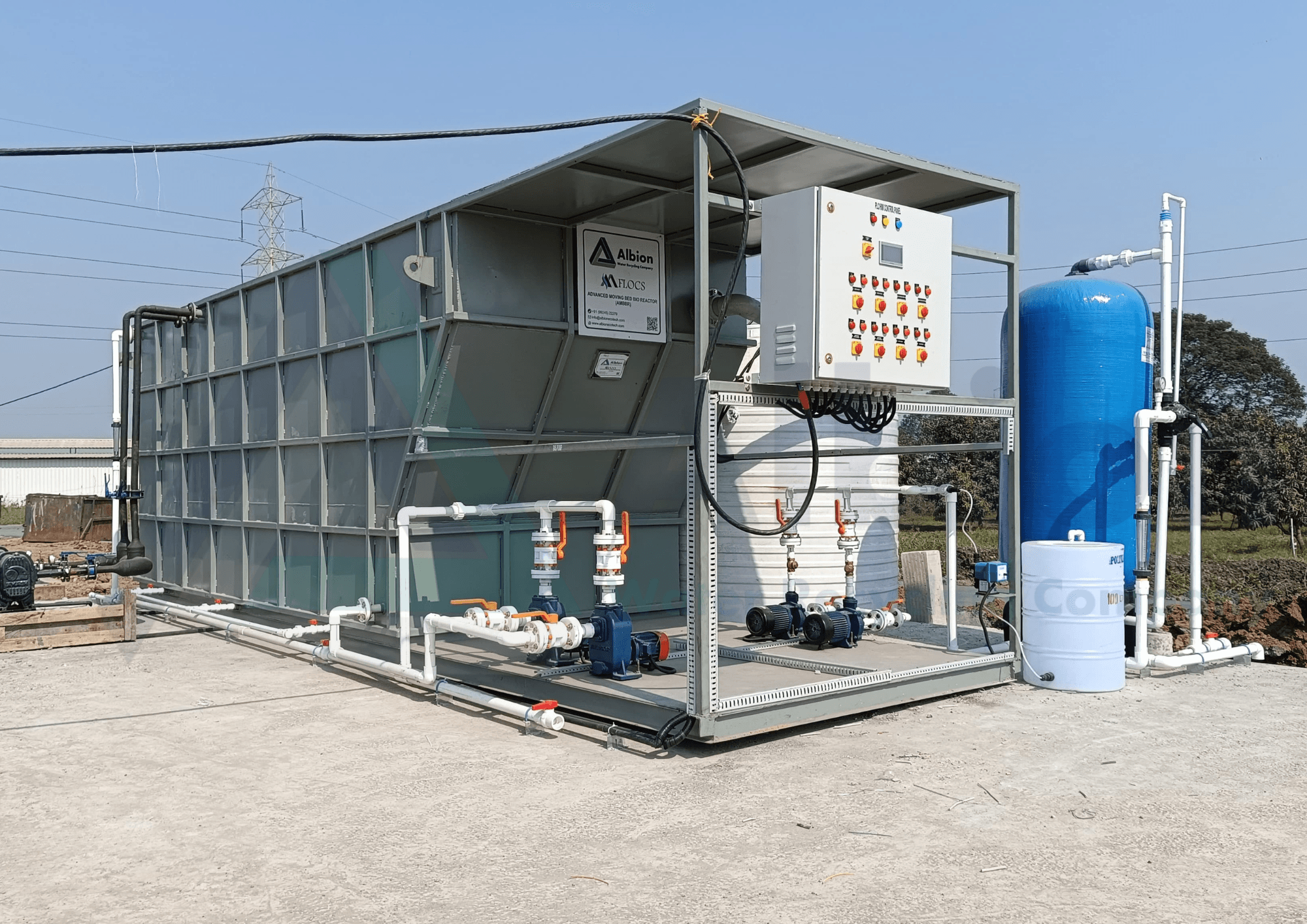
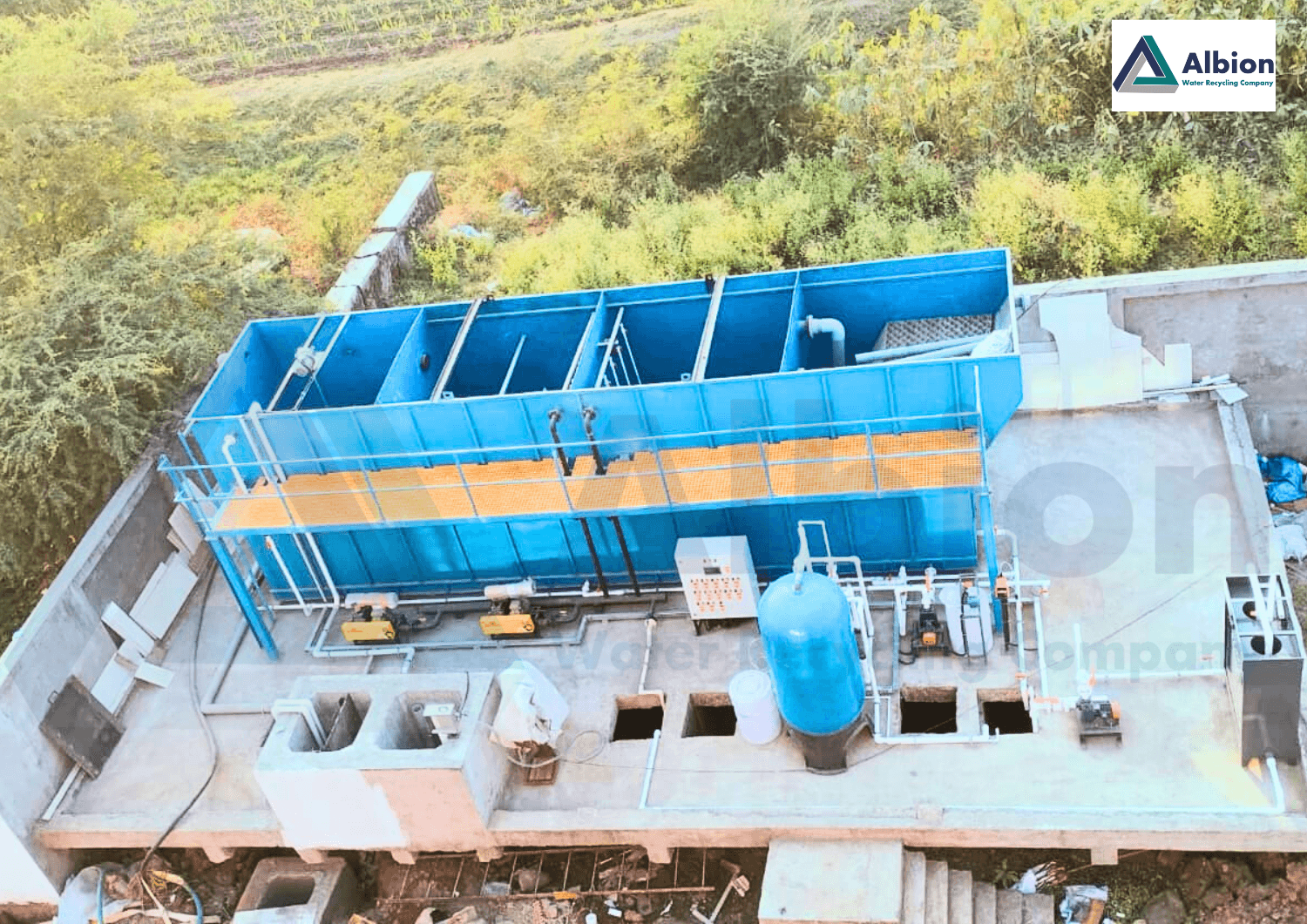
- Aerobic biological treatment. SBR, MBBR or AMBBR, or MBR, depending on load, footprint and the quality required. See the next section.
- Tertiary treatment. Clarification or filtration, disinfection, and UF and RO where the water is to be reused or the discharge standard requires it.
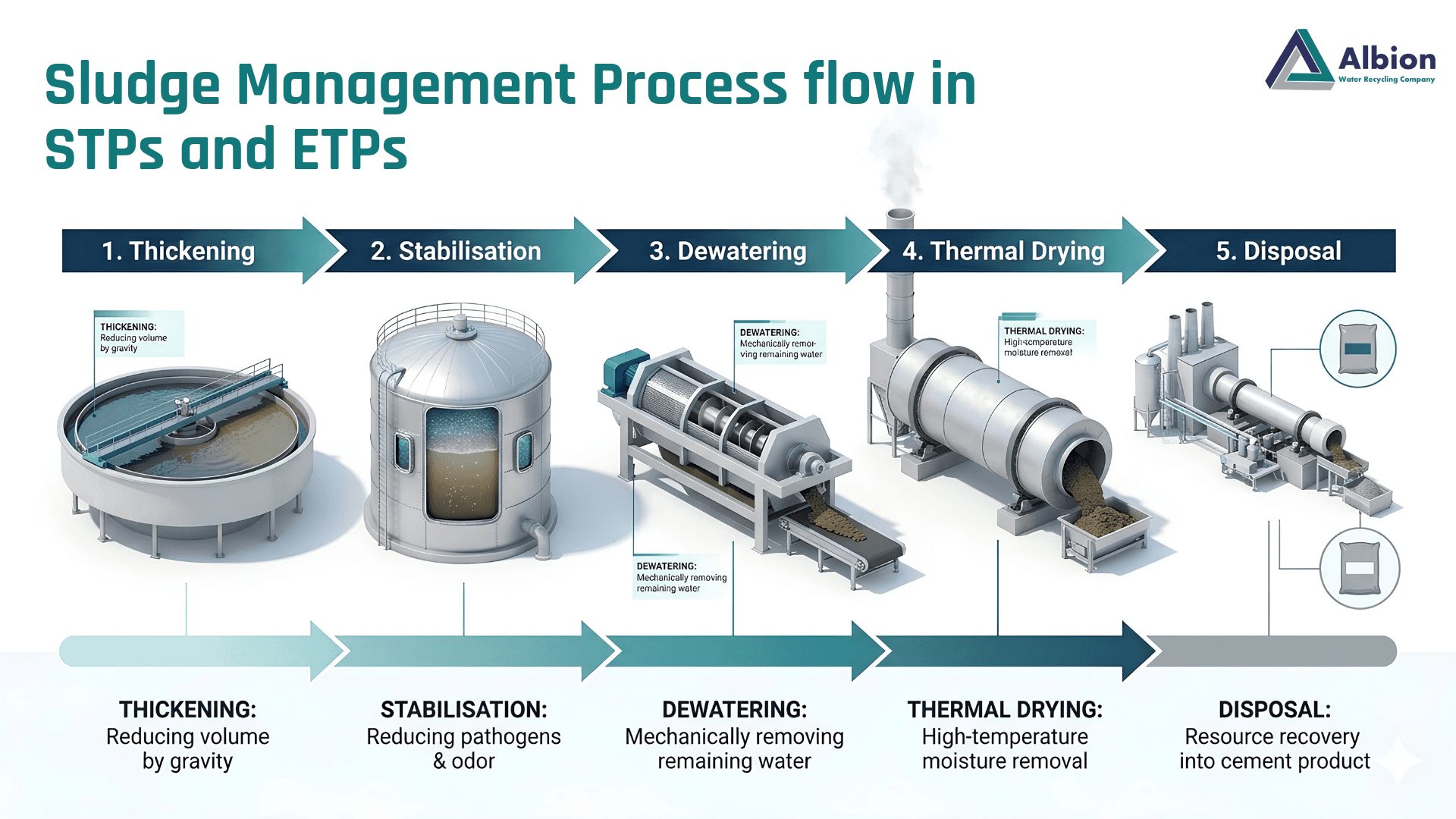
- Sludge handling. Thickening and dewatering of biological and DAF sludge, with a defined disposal or reuse route. Food-grade organic sludge is sometimes accepted for composting or as animal feed supplement only where rules and quality allow, so the route must be confirmed locally.
Choosing the biological process
- SBR suits plants with intermittent production, since cycle times can follow the load, and it can be tuned for nitrogen removal.
- MBBR and AMBBR suit strong, variable effluent and tight plots, because attached biomass tolerates shock loads and holds a high biomass density. They need a clarifier or filter afterward.
- MBR suits plants that want reuse-grade water or must fit a small footprint. FOG and fibres must be removed well ahead of the membranes, and the extra energy and membrane maintenance should be budgeted.
- Anaerobic plus aerobic suits very high COD streams where biogas recovery and lower aeration energy matter.
Water reuse in a food plant: what is realistic
Water that touches food or goes into a product has to meet food safety requirements for potable water, and treated effluent should not be assumed to qualify. Reuse is realistic for utilities and non-product uses: cooling tower make-up, boiler feed after RO and further polishing, yard and floor washing, vehicle washing, landscaping and flushing. Where a plant wants to go further, UF and RO can raise quality, and ZLD is an option for sites with restricted discharge or severe water scarcity, at a higher energy cost. Any use close to product should be cleared against the plant's food safety system and the applicable standards first.
Reduce the load before it reaches the ETP
- Dry-clean floors and equipment before washing, so solids go to a bin rather than the drain.
- Recover by-products such as whey, spent grain and trimmings instead of flushing them away.
- Collect first rinses and product changeover water separately from later rinse water, since the first rinse carries most of the load.
- Recover and reuse CIP solutions where the cleaning regime allows.
- Fit flow meters on the main process areas so water use per unit of product can be tracked.
Common mistakes
- Sizing the plant from one average sample instead of measured peaks across production and cleaning cycles.
- Leaving out FOG removal, then watching grease foul the biological stage.
- Skimping on equalisation, so that CIP slugs upset the process.
- Ignoring seasonality, so the plant is too small in peak season and starved in the off-season.
- Treating sludge and odour as afterthoughts, which tends to cause neighbour complaints and disposal problems.
How Albion Ecotech approaches food and beverage ETPs
Albion Ecotech designs ETPs around each plant's own effluent data: flow and strength across production and cleaning cycles, FOG and solids content, pH swings and the discharge or reuse target. Depending on the site, the biological stage may be SBR, MBBR or AMBBR, or MBR where a small footprint or reuse-grade water is needed, with FOG removal and equalisation ahead of it and UF, RO or ZLD behind it when reuse or recovery is the goal. Sludge management, energy-efficient aeration, PLC-based automation and post-commissioning support are part of the scope. Plants are available in packaged or civil formats to suit the site and timeline.
Frequently Asked Questions
Why is food and beverage wastewater harder to manage than domestic sewage?
It is usually much stronger in organic matter, often carries fats, oils and grease, and arrives in uneven surges linked to production and cleaning. Those peaks are what overwhelm plants that are designed on average flow alone.
Is an ETP legally required for a food processing unit?
Units generally need consent from the State Pollution Control Board, which sets discharge conditions. Whether and what treatment is required depends on the sector, size and mode of disposal, so the unit should confirm the conditions that apply to it with the Board.
Which treatment technology is best for a dairy or brewery?
There is no single best option. High COD often favours an anaerobic stage followed by SBR, MBBR or AMBBR, while plants that need compact footprint or reuse-grade water may choose MBR. Equalisation and FOG removal come first in every case.
Can treated effluent be used inside a food plant?
Yes for non-product uses such as cooling make-up, boiler feed after RO, washing yards and landscaping, once it meets the required quality. Water that contacts food or enters a product has to meet food safety requirements, and treated effluent should not be assumed to qualify.
How can a plant lower the cost of running its ETP?
Reduce the load at source through dry cleaning and by-product recovery, keep FOG out of the biological stage, control aeration from dissolved oxygen readings, and optimise dewatering and polymer use. Biogas from anaerobic treatment can offset fuel where the effluent is strong enough.