Why Hotels and Resorts Need an Sewage Wastewater Treatment Plant
A hotel or resort sells comfort, and comfort uses a great deal of water: long showers, laundered linen every day, kitchens that never stop at meal times, pools, spas and gardens. Almost all of it leaves the property as sewage. Unlike an office or an apartment block, the flow follows tourism, so it swings between a quiet weekday and a fully booked festival weekend with banquets running. Many resorts also stand where there is no sewer at all, beside a beach, a lake or a forest. A sewage treatment plant (STP) is what lets a hotel operate there without fouling the very setting its guests came for. This article explains why hotels and resorts need an STP, and what makes designing one different from other buildings.
Where hotel wastewater comes from
- Guest rooms: toilets, showers and wash basins, which make up the largest and most regular share.
- Kitchens and restaurants: fats, oils and grease, food solids and detergent, with sharp peaks at meal times and during banquets.
- Laundry: hot water with detergents, bleach and lint, often in large batches.
- Pools and spas: backwash and drain-down water that is chlorinated and can be salty.
- Staff areas and events: staff accommodation and canteen, plus weddings and conferences that bring hundreds of extra people for a day.
- Utilities: cooling tower and boiler blowdown, and air-conditioning condensate, which is clean and worth keeping apart.
How much sewage does a hotel produce?
Design codes assume a higher daily water use per guest for hotels than for homes, and the figure rises with the star category and the amenities on offer. About 80% of the water used leaves as sewage. As an illustration only, a 100-room resort with two guests per room at 300 litres per guest per day would use about 60 KLD, giving roughly 48 KLD of sewage before adding staff, restaurant covers, events and growth. The real figure should come from metered water use, or from the design code in force, and the plant must be checked against peak flow, which on a banquet day can be well above the daily average.

Why a hotel or resort needs an STP
Legal and approval requirements. Hotels and resorts operate under consent from the State Pollution Control Board, which sets conditions for treated wastewater. Many local bodies and tourism authorities also require an STP before a building is occupied or a licence is renewed, and coastal and eco-sensitive areas may carry stricter conditions. The specifics depend on the number of rooms, built-up area and location, so they should be confirmed with the Board and the local authority before design.
No sewer. Beach, hill and forest resorts rarely have a municipal sewer. Without treatment, wastewater goes to soak pits and drains that contaminate borewells, creeks and the sea.
Protecting the setting that guests pay for. Sewage reaching a lake, lagoon or reef causes algal growth, odour and visible pollution. A resort that fouls its own surroundings loses reviews and bookings quickly.
Water scarcity in tourist areas. Popular destinations often run short of water in the dry season, and tanker water is costly. Reusing treated water for gardens, flushing and cooling lowers both cost and risk.
Guest comfort and reputation. Odour near rooms, overflowing manholes and noisy equipment at night are all complaints that an STP designed for a hotel prevents.
Sustainability expectations. Travel companies, corporate bookers and green building and hospitality certifications increasingly ask about water management and reuse.
What makes a hotel STP different
- Turndown. Occupancy in a resort can fall to a fraction of its peak in the off-season, and biology starves when the load drops. The plant has to cope with a wide range, which usually means several smaller trains or a process that tolerates low load.
- Peaks. Weddings, conferences and festival weekends can double the load in a day, so equalisation matters.
- Kitchen fats. Fats and oils coat pipes, form scum and foul aeration if they are not removed first.
- Chlorine from pools and laundry. Pool backwash and bleach can kill the microorganisms in a biological plant, so they are managed rather than sent in slugs.
- Odour and noise sensitivity. The plant sits close to guests and must not be noticed.
- Remote locations. Skilled operators are hard to find on islands and hillsides, so the plant should run on automation and remote monitoring.
The treatment train
- Kitchen grease trap. Kitchen and restaurant wastewater passes through a trap before joining the main flow, and the trap is cleaned on a schedule.
- Screening and lint removal. Bar and fine screens catch solids, and laundry lint filters protect pumps.
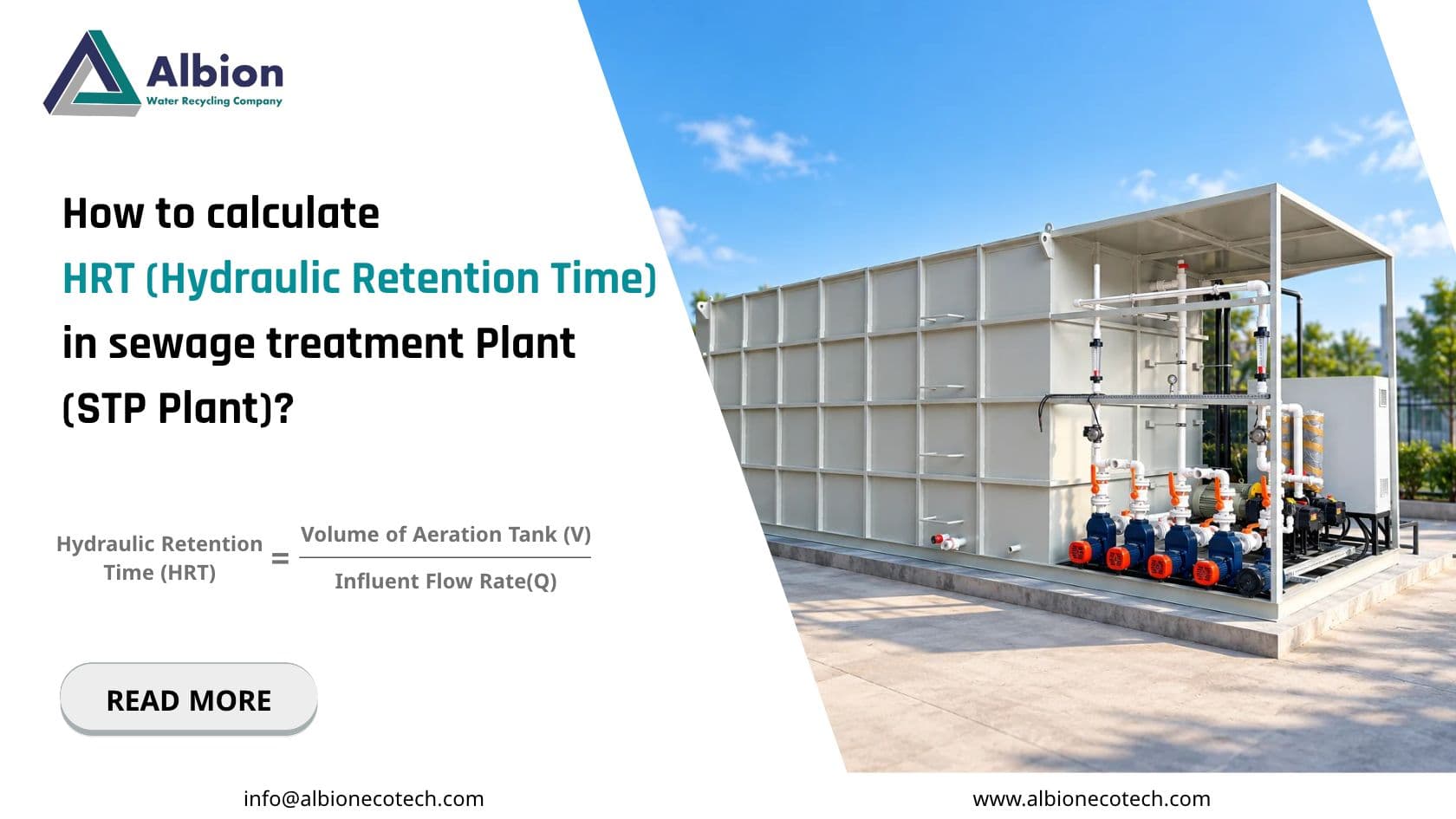
- Equalisation. A mixed, aerated balancing tank smooths the peaks and dilutes slugs of chlorine or detergent. For a 48 KLD plant, a 6-hour tank holds about 12 m³, and a larger volume gives more protection against event days. The method is covered in the guide on how to calculate HRT.
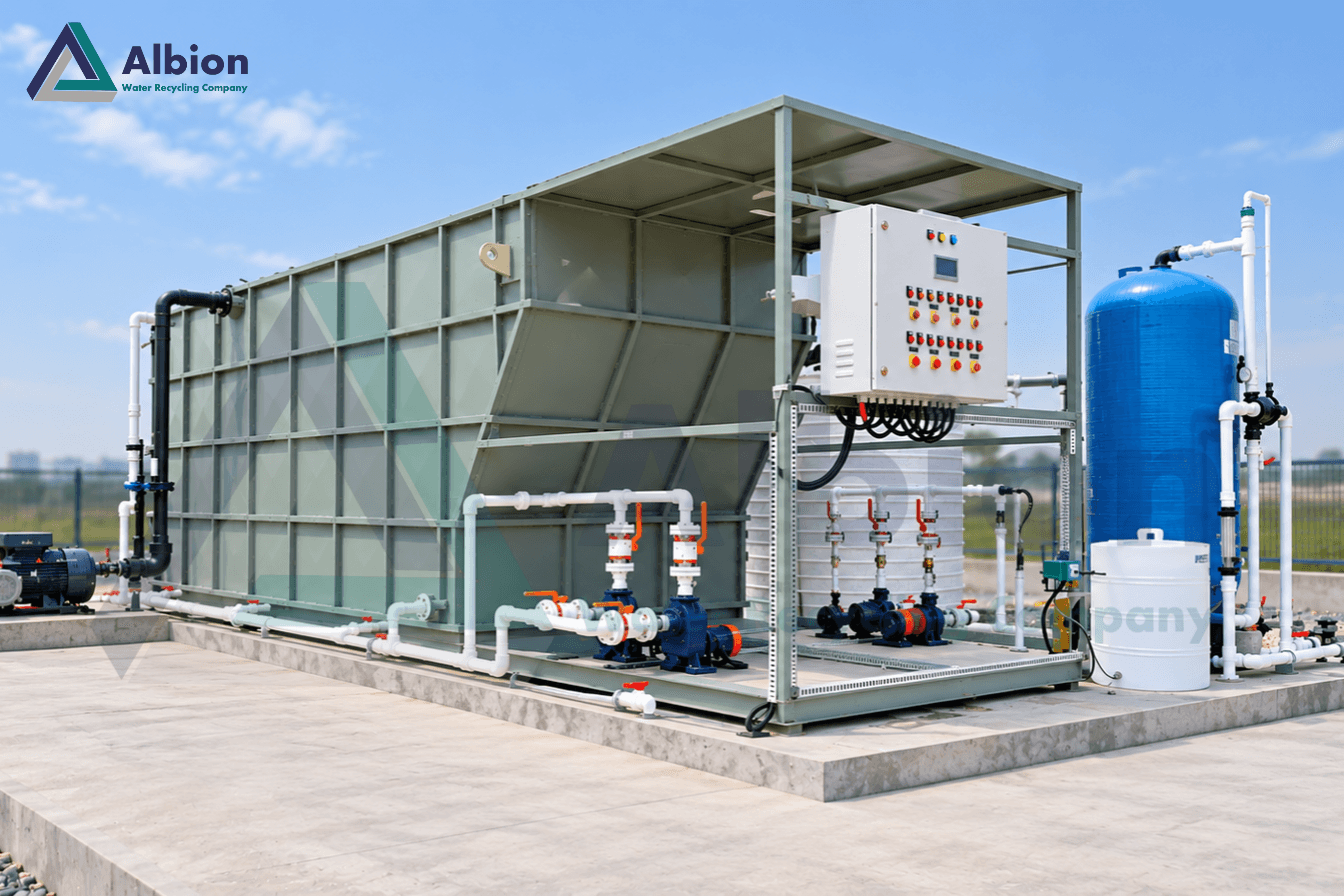
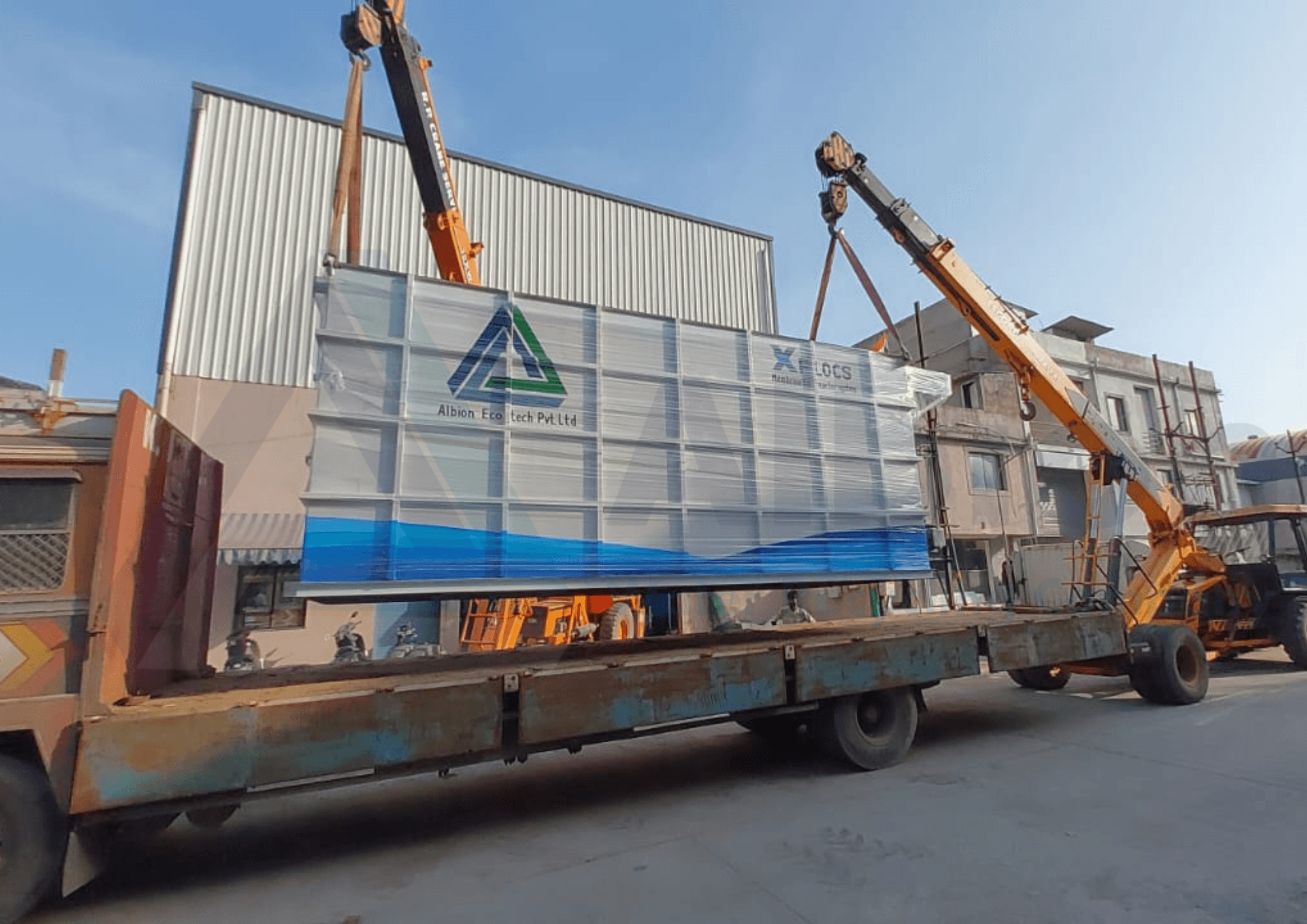
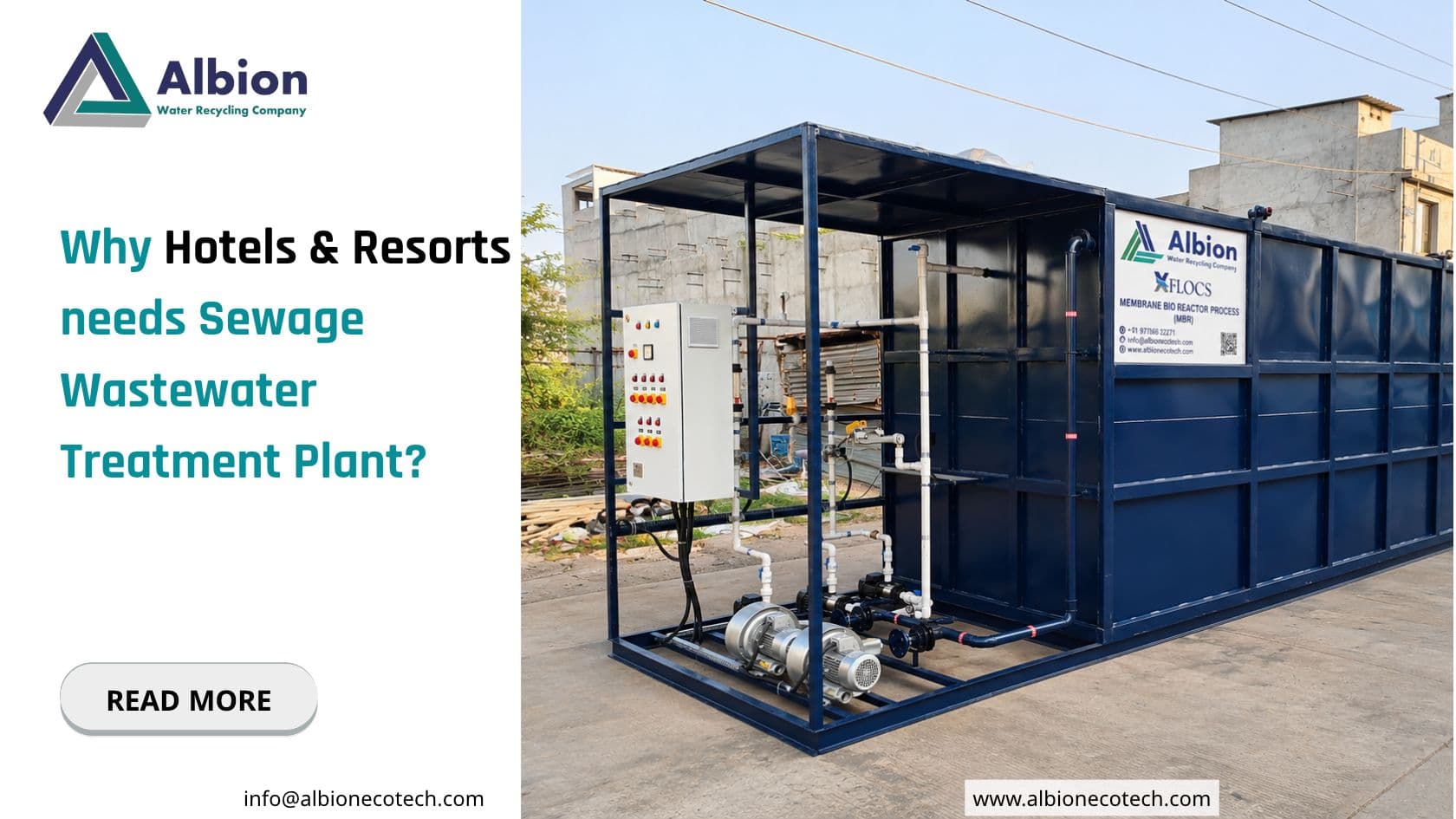
- Biological treatment. Carrier-based processes hold biomass as a biofilm that survives low-load periods well, which suits seasonal resorts, and Albion Ecotech's M-Flocs AMBBR is one example. SBR can adjust its cycles to the load, and MBR, such as X-Flocs MBR, gives a clean, reuse-grade effluent in a small footprint when land is limited or reused water is sprayed near guests.
- Filtration and polishing. Pressure sand and carbon filters remove residual solids, colour and odour so that reused water looks and smells clean, and UF can be added for higher quality.
- Disinfection. Chlorination or UV, so reused water is safe where guests and staff can come into contact with it.
- Odour control and sludge handling. Covered tanks and extracted air passed through a biofilter or scrubber, and sludge thickened and dewatered for authorised disposal, or for use as a soil conditioner where the rules allow. See the guide to sludge management for options.
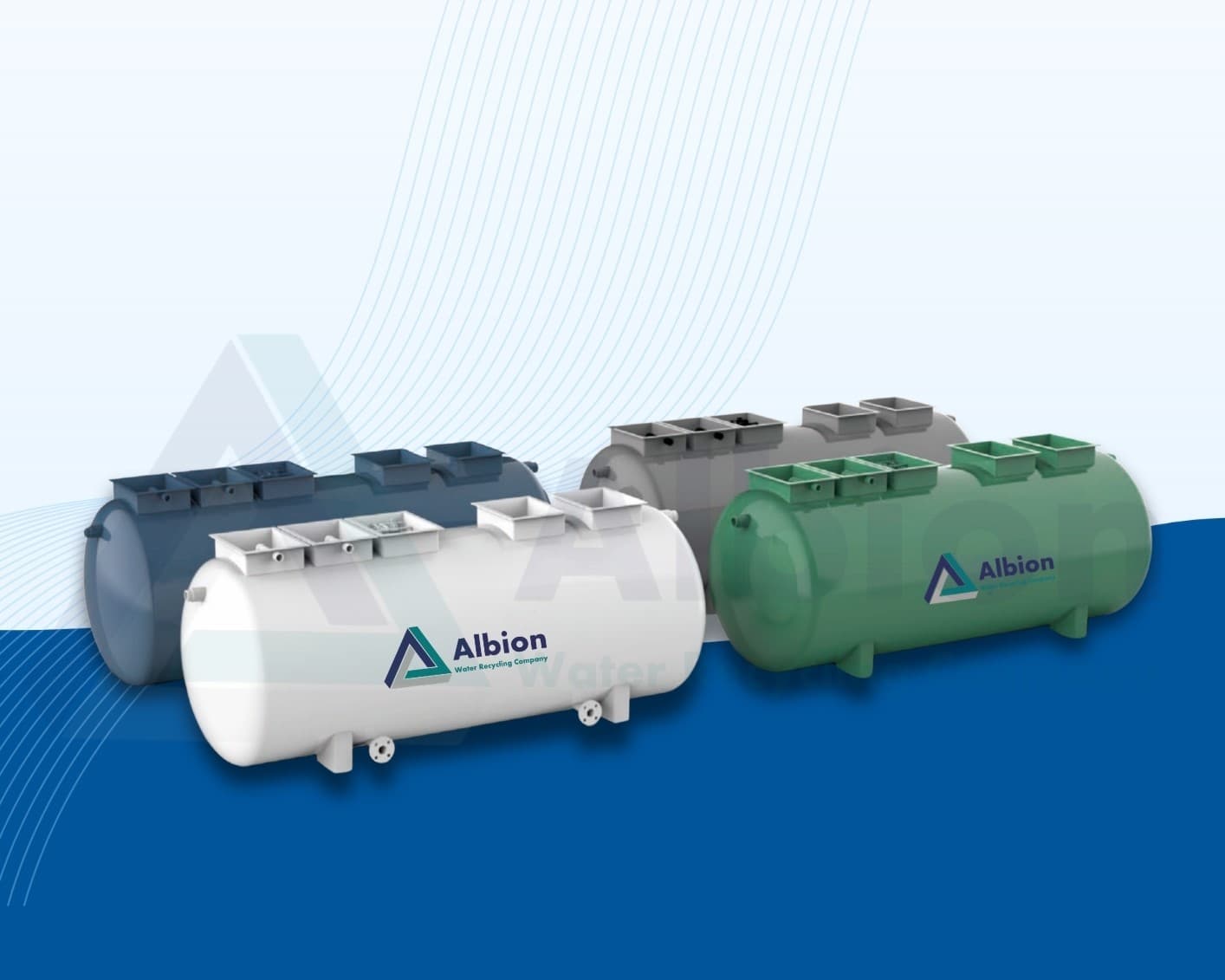
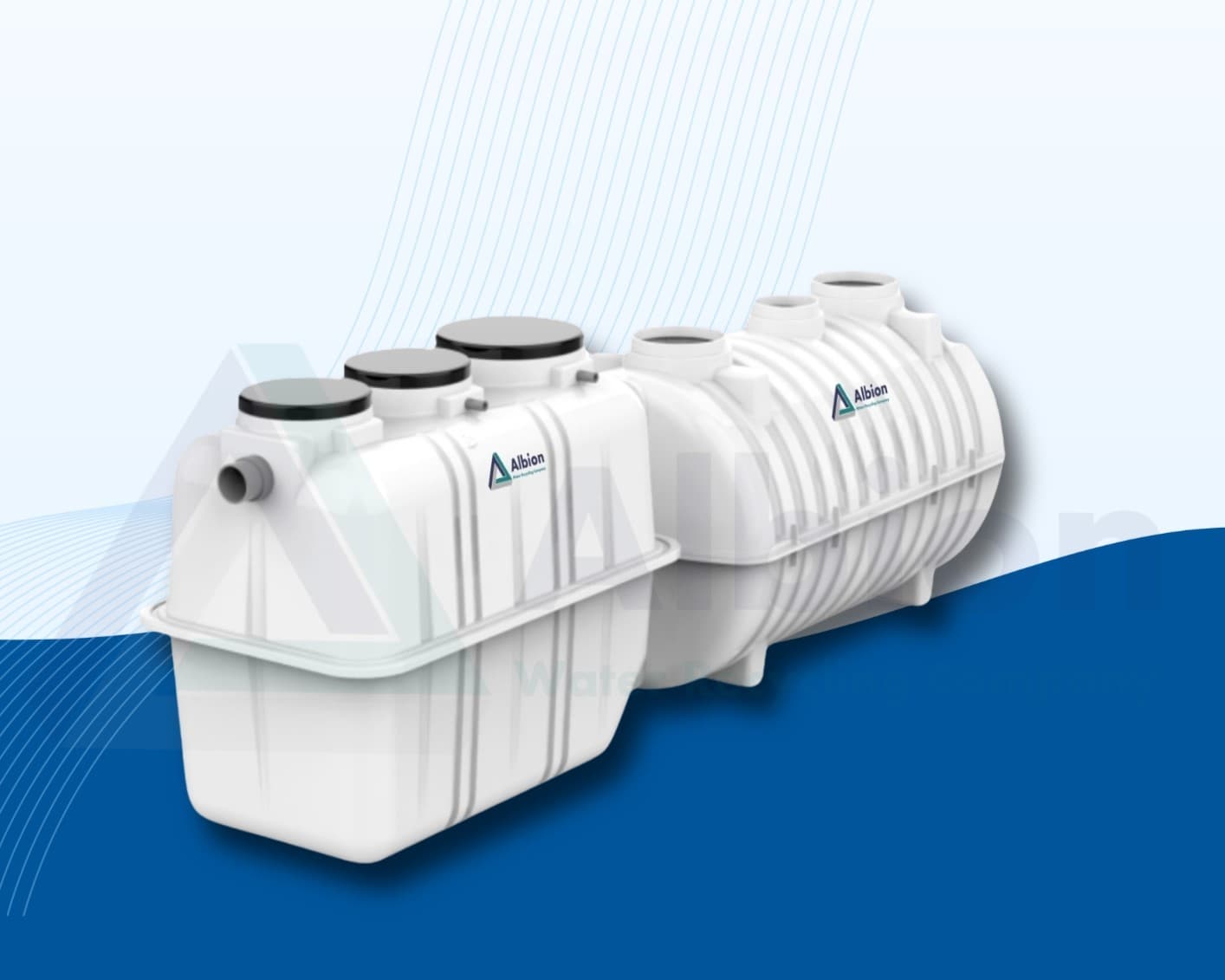
Packaged units suit smaller properties. A buried plant such as SmartAox treats 1 to 5 m³ a day for homestays and small cottages, and units can be combined as a property grows.
Reuse: where hotels save the most
Hotels have a large non-drinking demand, which is why reuse pays. Treated water can serve toilet flushing, landscaping and garden irrigation, golf courses, cooling tower make-up, vehicle washing and, with suitable polish, laundry of non-guest items such as housekeeping cloths. Pools should be filled with fresh water, not treated sewage. For irrigation near guests, disinfected water applied at night or by drip avoids spray exposure. Reuse is easiest to build in when dual plumbing for flushing and a treated water storage tank are included from the start, since retrofitting pipework into finished rooms is expensive. Pool backwash and laundry bleach should be dechlorinated or buffered before they reach the biology.
Design points for a guest-facing site
- Place the plant in a service area, downwind and away from rooms, restaurants and event spaces, and screen it with planting.
- Use modular trains or a process with wide turndown, so that off-season loads do not starve the biology.
- Enclose blowers and use low-noise equipment, since the plant runs all night.
- Provide standby pumps and blowers and backup power for remote or outage-prone sites.
- Specify automation with remote monitoring and alarms, and arrange an operator and maintenance contract.
- Plan for expansion if more rooms, villas or banquet halls are likely.
Common mistakes
- Sizing for peak occupancy with no allowance for the off-season, so the plant runs near empty for months.
- Leaving out the kitchen grease trap or never cleaning it.
- Sending pool backwash and bleach into the biological stage in one slug.
- Skipping reuse piping at construction, then finding it too costly to add later.
- Putting the plant beside guest rooms or the restaurant, then fighting odour complaints.
- Undersizing equalisation for banquet and event days.
- Relying on untrained staff with no remote monitoring or service contract.
Our approach to hotel and resort STPs
Albion Ecotech designs sewage treatment plants for hotels, resorts and hospitality projects from measured data: rooms and amenities, metered water use, occupancy pattern and events, kitchen and laundry loads, site constraints and the discharge or reuse target that applies. Depending on the property, the plant may combine grease removal, equalisation, a biological stage selected from MBBR or AMBBR, SBR and MBR, filtration, disinfection and reuse for flushing, landscaping and cooling. Odour control, energy-efficient equipment, PLC-based automation with remote monitoring and post-commissioning support are part of the scope, and plants can be supplied in packaged or civil formats.
Frequently Asked Questions
Why does a hotel or resort need an STP?
Hotels use a lot of water and often have no sewer. An STP treats sewage to meet consent and local approval conditions, protects the surroundings guests come for, prevents odour and allows treated water to be reused for flushing, gardens and cooling.
How is a hotel STP sized?
From metered water use or the design code's litres per guest per day, taking about 80% as sewage, plus staff, restaurant, event and growth allowances, and checked at peak flow. The plant should also be able to run at a low off-season load.
Which process suits a seasonal resort?
Carrier-based processes such as MBBR and AMBBR tolerate low and variable load well, SBR can adjust its cycles, and modular trains let units be shut in the off-season. MBR suits sites with little land or high reuse quality targets.
Can a hotel reuse its treated sewage?
Yes, for flushing, landscaping, cooling tower make-up, vehicle washing and similar non-drinking uses, once quality is confirmed and the water is disinfected. Dual plumbing and storage should be planned at construction.
How do you stop an STP smelling near guest areas?
Place it away from guest areas, cover tanks, extract air through a biofilter or scrubber, clean the grease trap regularly and manage sludge promptly. Good aeration and a properly run process keep odour low in the first place.