Why Hospitals and Healthcare Need an Sewage Wastewater Treatment Plant
Every hospital, nursing home and diagnostic centre produces a steady stream of sewage, day and night, from wards, toilets, bathing, kitchens, laundries and staff areas. Much of it carries pathogens that a household drain does not, and in many places there is no municipal sewer to take it. A sewage treatment plant (STP) is the part of the hospital's wastewater system that handles this bulk flow: it removes the organic load, kills the pathogens and makes the water safe to discharge or reuse. This article looks at the STP side of the problem, including how much sewage a hospital produces, what the plant has to do, which processes suit different sizes and sites, and what to watch in design and operation. For the wider picture, including laboratory, radiology and chemical wastewater, see the guide to hospital and healthcare ETPs.

How much sewage does a hospital produce?
A hospital uses far more water per person than a home. Design codes commonly assume several hundred litres per bed per day for a hospital, with the exact figure depending on size, whether laundry and kitchen are on site, and the code or guideline in use. Roughly 80% of the water used leaves as sewage. As an illustration only, a 200-bed hospital designed at 450 litres per bed per day would use about 90 KLD (200 × 450 = 90,000 litres), giving about 72 KLD of sewage before adding outpatients, visitors and staff. The real number should always come from metered water use or from the applicable design code, with an allowance for growth.
The flow is also uneven. It peaks in the morning during ward routines, around meal times and during cleaning rounds, and it never stops, since patients are in the building around the clock. Peak flow can be two to three times the average, which is why an STP sized only on the daily average tends to struggle at the busiest hours.
Why a hospital needs its own STP
Infection control and public health. Hospital sewage carries a wide range of bacteria, viruses and parasites, including drug-resistant organisms. Untreated, it exposes sanitation workers, neighbours and downstream communities, and it can contaminate borewells and rivers.
Legal and approval requirements. Healthcare facilities handle liquid waste under the bio-medical waste management rules and need consent from the State Pollution Control Board, with conditions on treated effluent. Many local bodies also require an STP for buildings above a set size before occupancy approval. The specifics depend on size, number of beds and location, so they should be confirmed with the Board and the local authority before design.
No sewer, or a sewer that will not take it. Where there is no connection, the hospital has to treat its own sewage. Where there is one, the municipal plant may not be built for hospital flows and often expects pre-treatment and disinfection.
Water security and cost. A hospital cannot run dry. Treated sewage reused for flushing, landscaping and cooling reduces dependence on tankers and municipal supply, and the saving continues every year.
Accreditation and reputation. Hospital accreditation standards, insurers and patients increasingly look at environmental management and waste handling, and a visible failure damages trust.

What the STP has to do
- Remove the organic load. Hospital sewage is usually in the same general range of strength as domestic sewage, though diluted by high water use, so biological treatment does the main work.
- Remove nitrogen where required. Many discharge and reuse standards limit ammonia and total nitrogen, which needs nitrification and denitrification.
- Kill pathogens. This is the step that sets a hospital STP apart. Disinfection must be reliable, monitored and not skipped when the plant is under load.
- Cope with disinfectants and chemicals. Cleaning chemicals reach the sewer from wards and theatres and can inhibit biology if they arrive in slugs, so equalisation and source control matter.
- Fit the site and run without fuss. Plants usually sit in basements or small yards beside wards, so odour, noise and reliability count as much as treatment quality.
The treatment train
- Screening. Hospital sewage carries wipes, dressings, gloves and plastics. Bar screens, ideally followed by a fine screen, protect pumps and blowers.
- Grease trap. Kitchen and canteen water passes through a trap before joining the main flow.
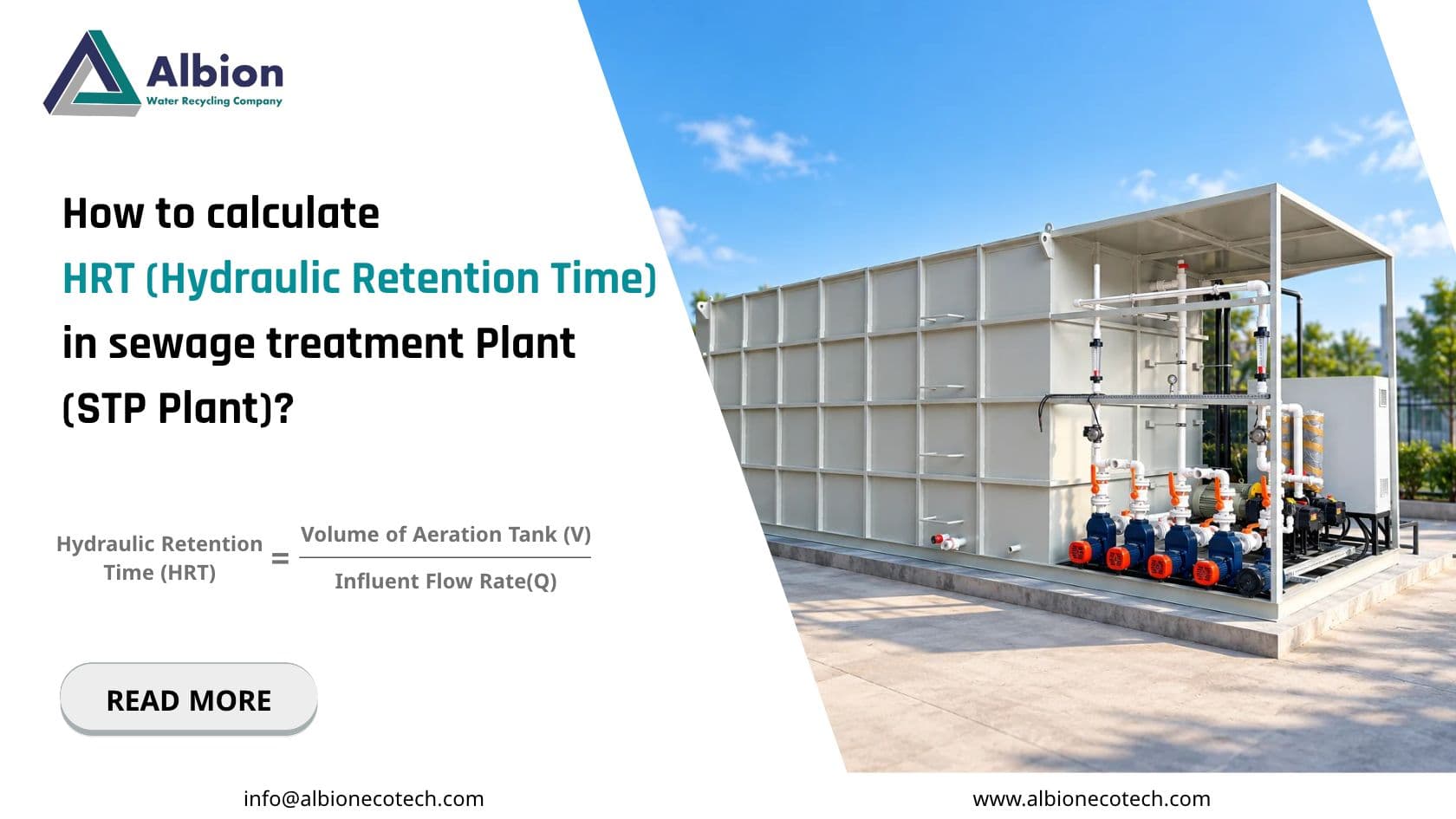
- Equalisation. A mixed, aerated balancing tank spreads the morning peak across the day and dilutes chemical slugs. As a worked example, a 72 KLD plant is 3 m³/h on average, so a 6-hour equalisation tank holds about 18 m³. The method is explained in the guide on how to calculate HRT.
- Biological stage. Options are compared in the next section.
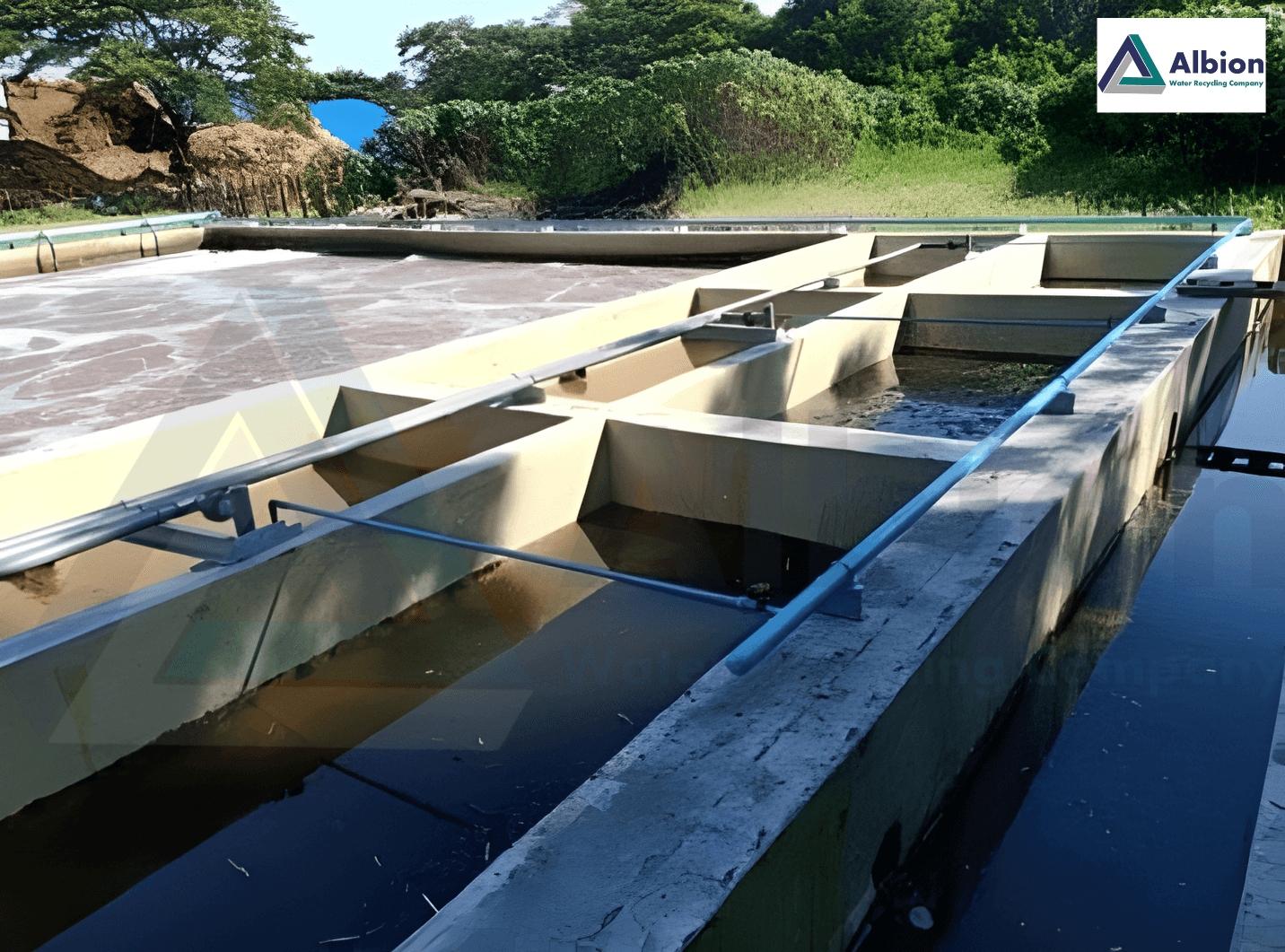
- Clarification or membrane separation. A clarifier or a membrane separates treated water from biomass.
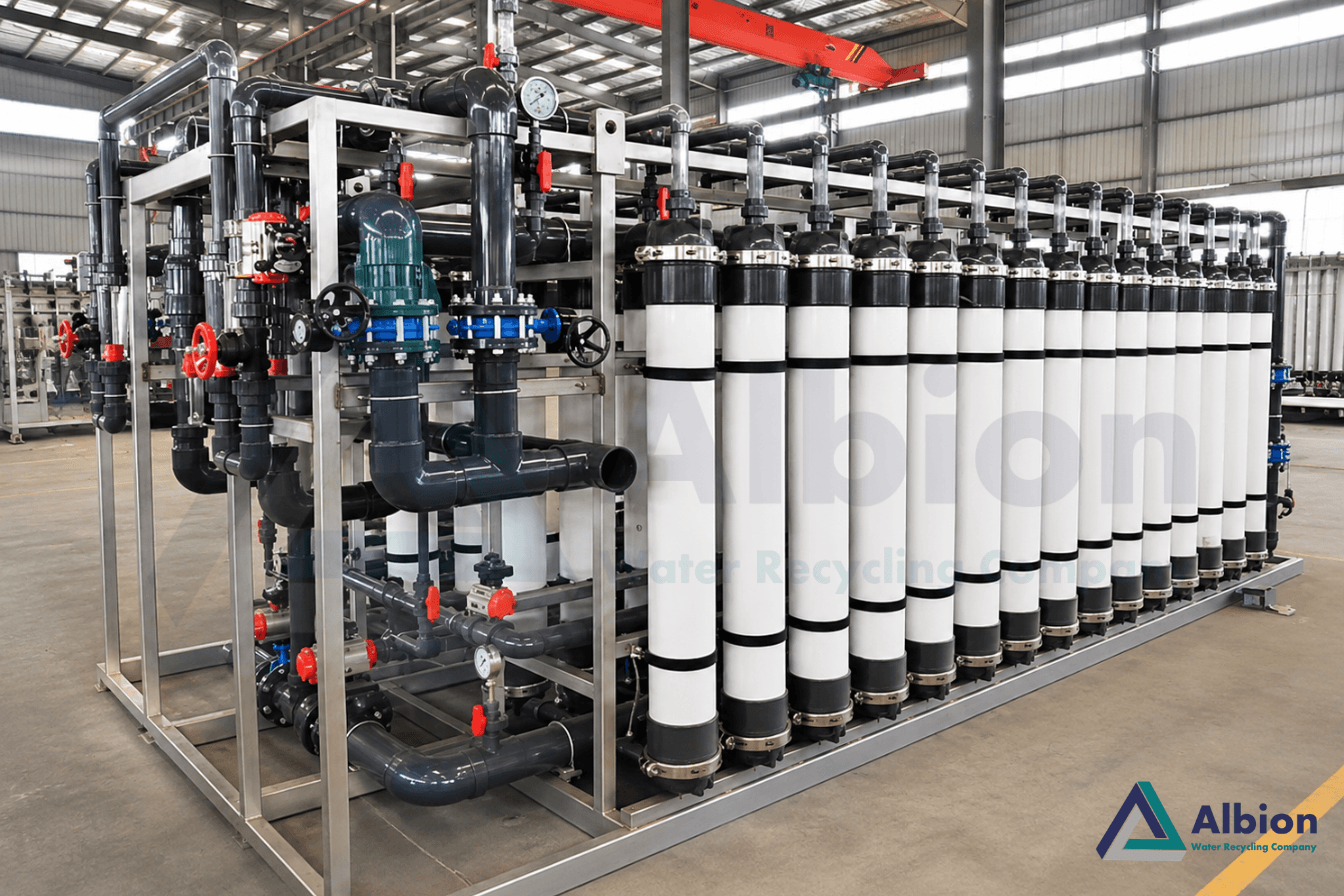
- Filtration. Pressure sand and carbon filters polish the water and make disinfection more reliable. Ultrafiltration goes further and retains bacteria and many viruses.
- Disinfection. Chlorination with adequate contact time and a monitored residual, UV or ozone, often combined. Chlorine is removed before discharge or reuse where the standard requires it.
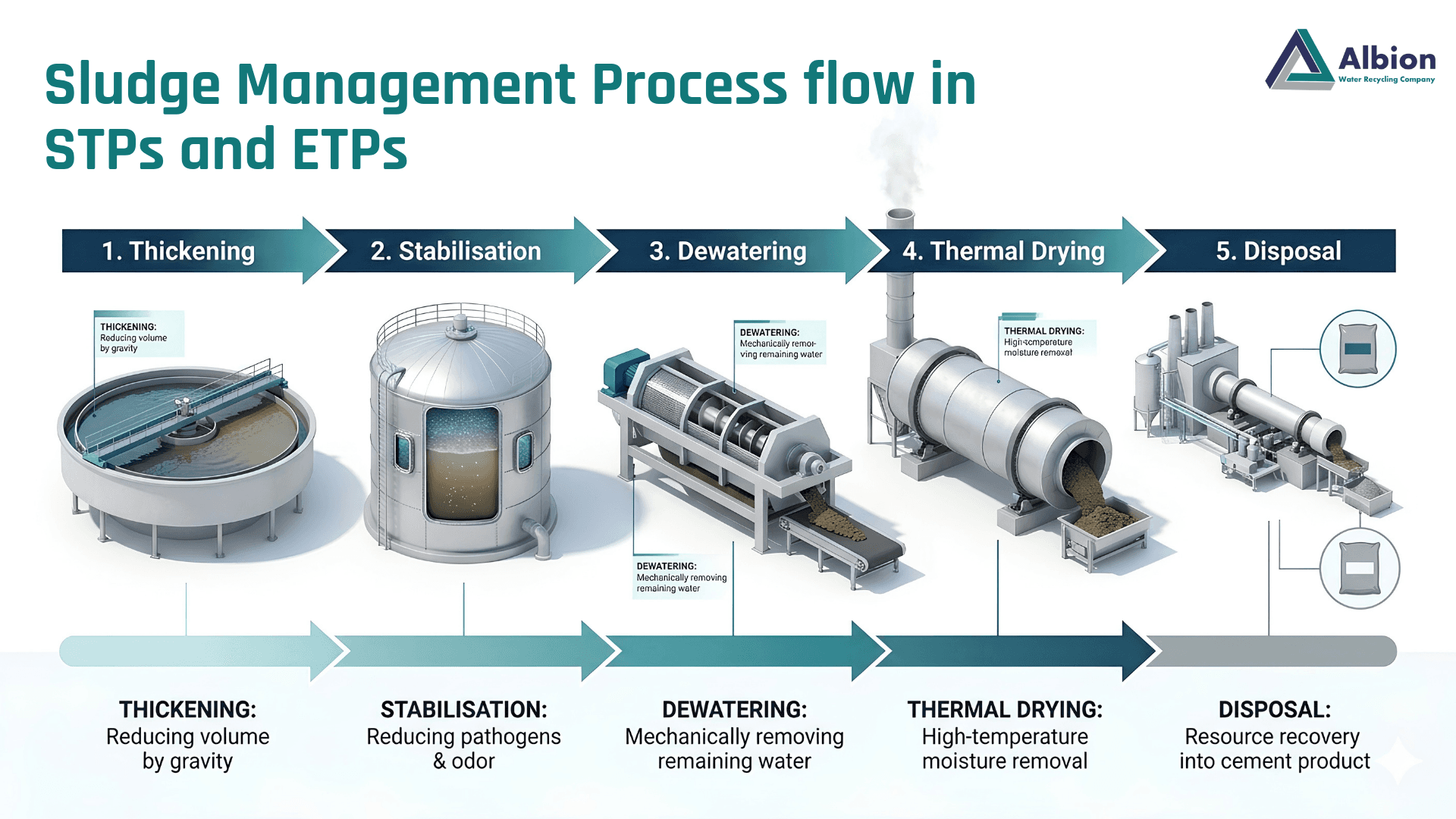
- Sludge handling. Sludge from a hospital STP can carry pathogens and should be handled and disposed of as the bio-medical waste rules require, usually after disinfection and through an authorised route. The guide to sludge management covers general options.
Which process suits which hospital
- Extended aeration. Simple and forgiving, with long retention that gives stable operation and low sludge. It needs a larger tank volume, which is hard in a basement.
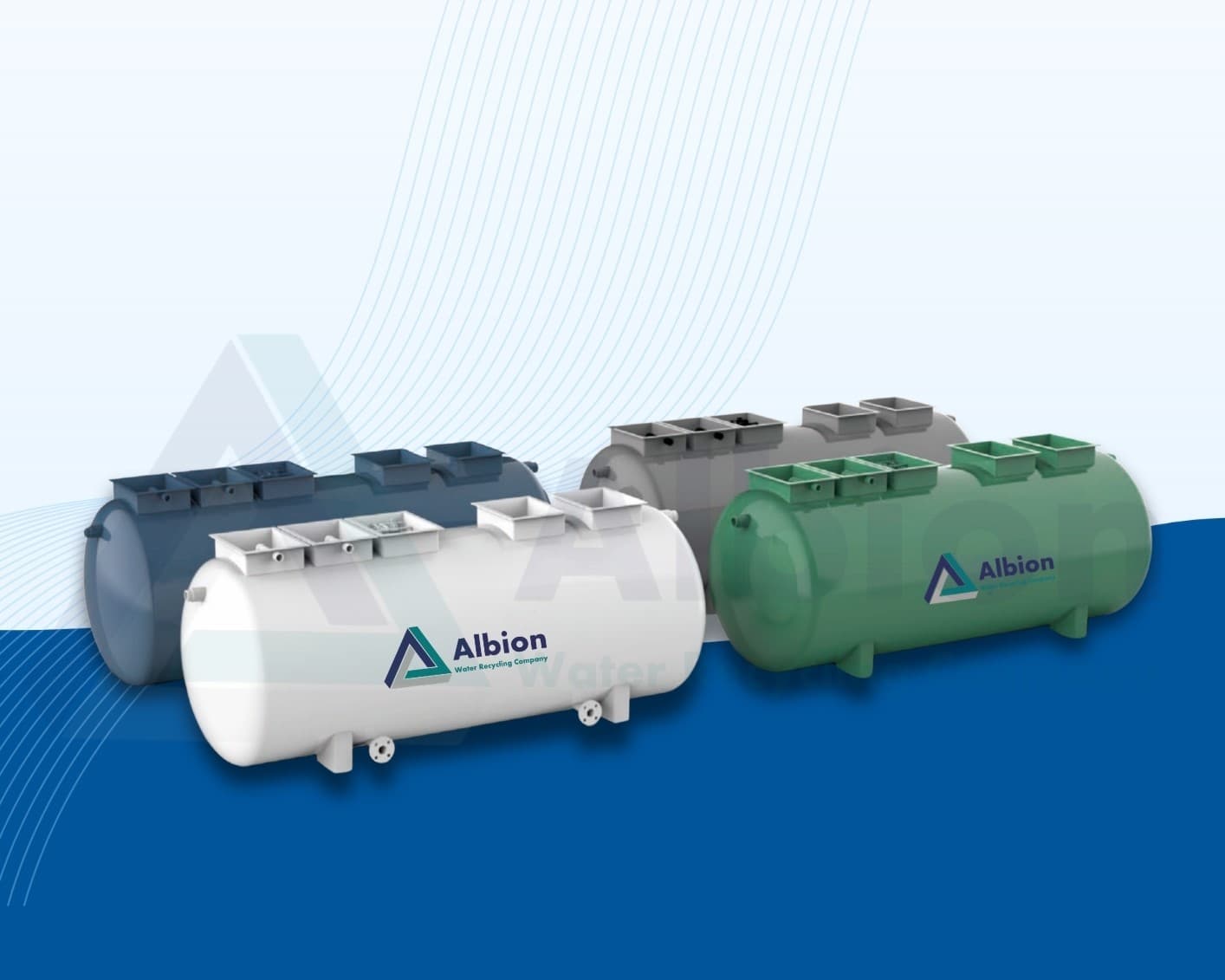
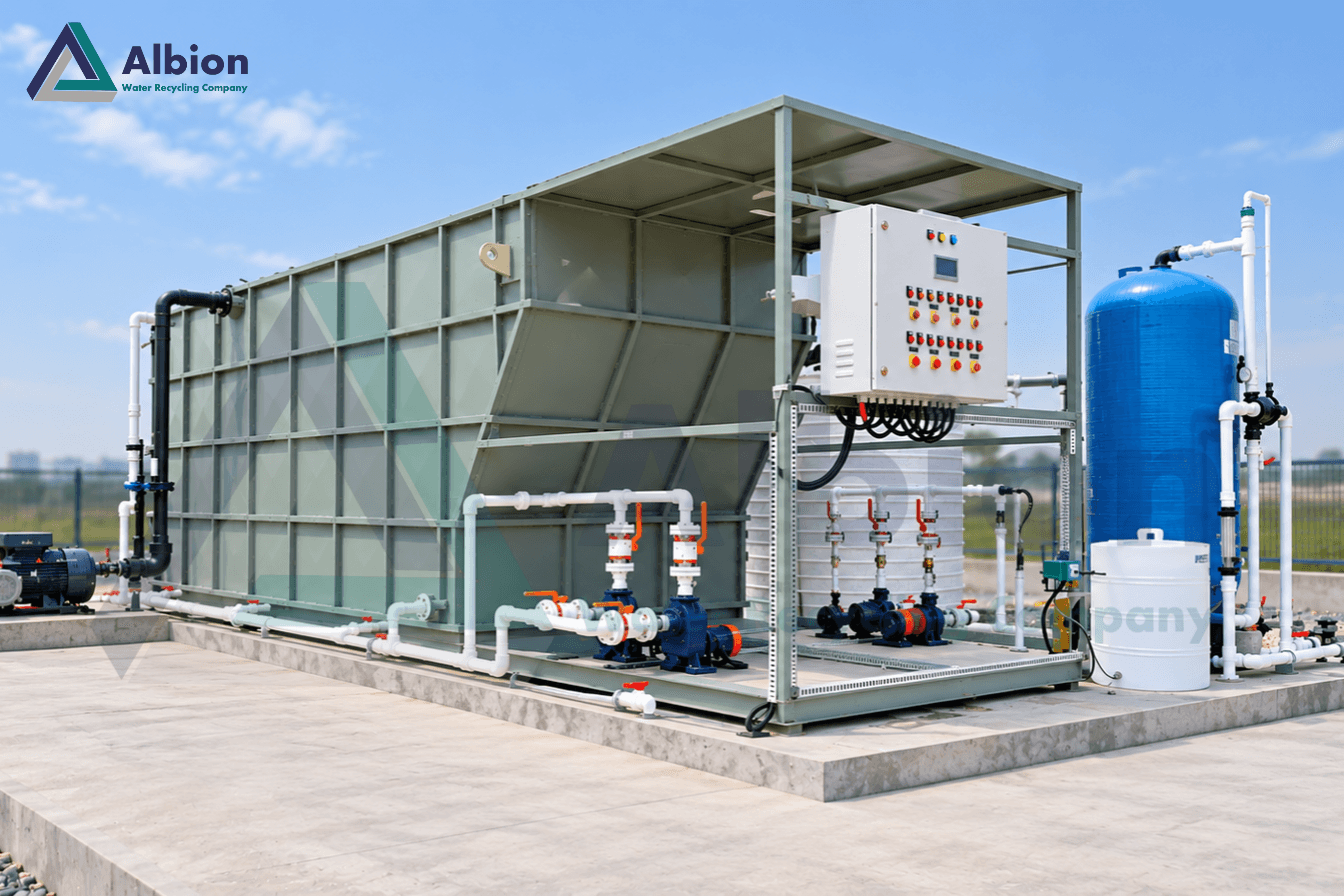
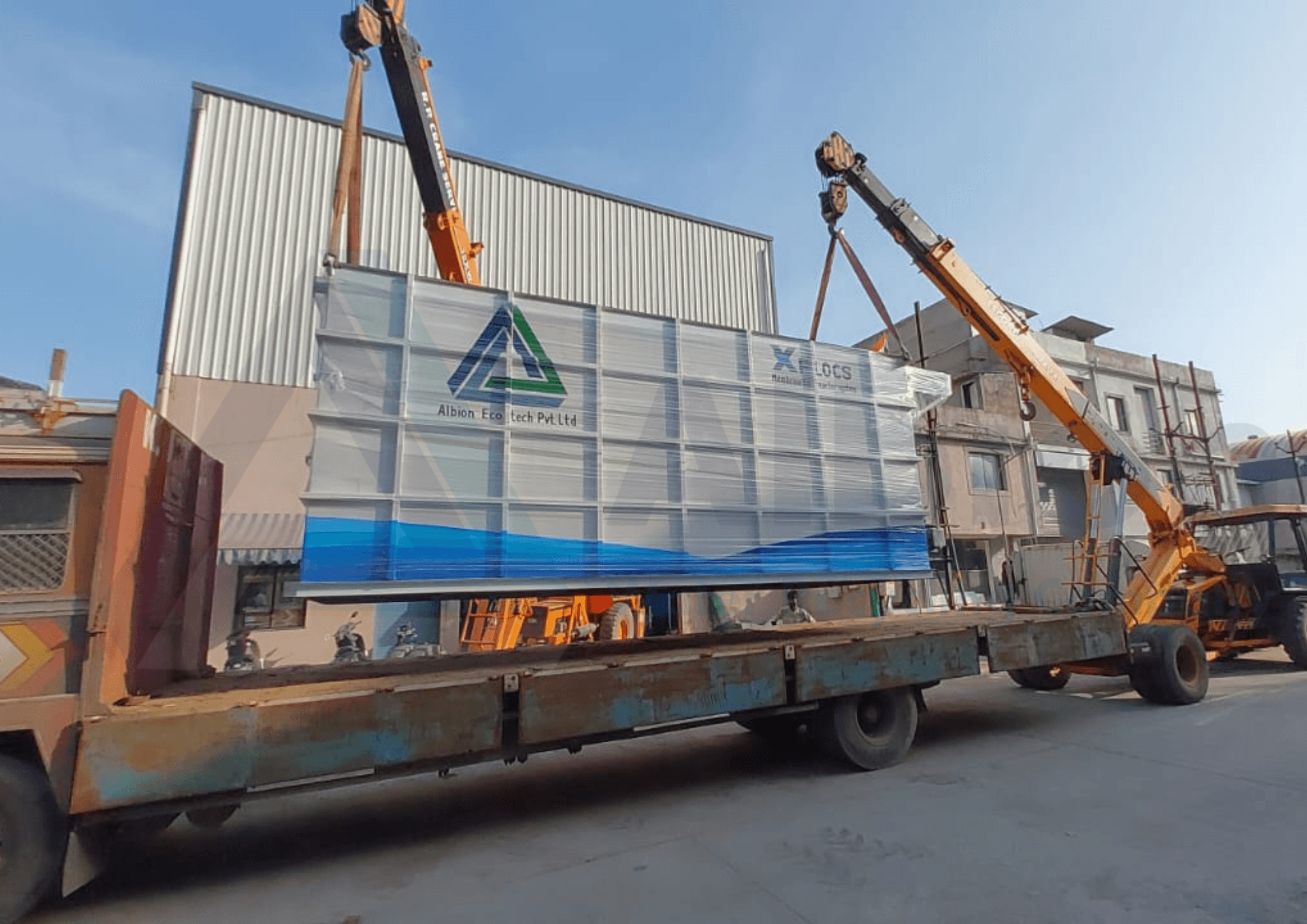
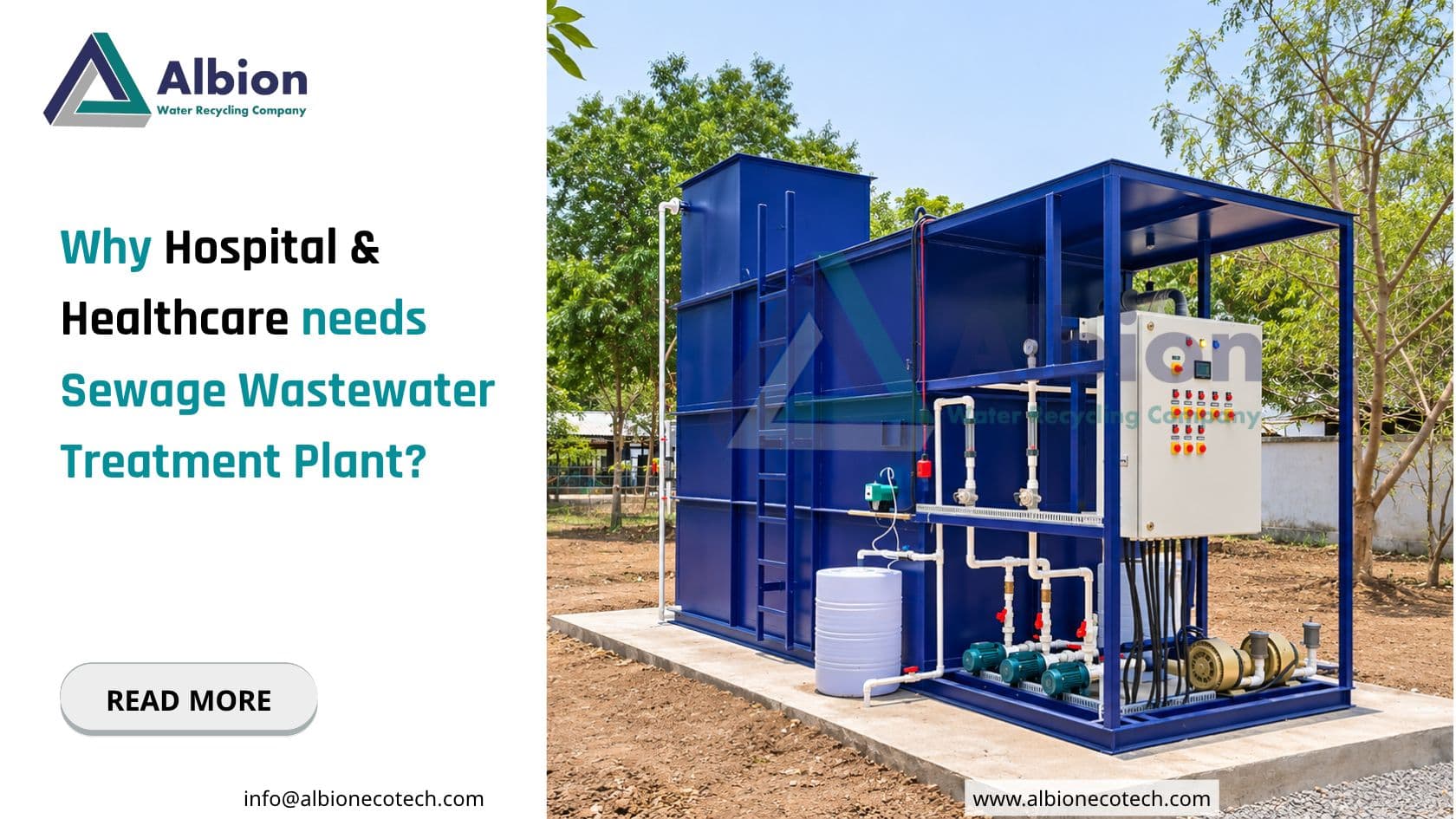
- MBBR. Biomass grows on carriers, so a smaller reactor handles the same load, and it tolerates peaks and chemical slugs well. It suits small and mid-sized hospitals. Albion Ecotech's SmartBox packaged MBBR plant covers 5 to 100 m³ per day, is gravity-fed with no internal lifting pumps, and includes a disinfection compartment.
- SBR. Runs aeration, settling and decanting in one tank in a timed cycle, and removes nitrogen well. It needs good automation and a design that allows for continuous inflow.
- MBR. A membrane bioreactor such as X-Flocs MBR gives a clean, solids-free effluent in the smallest footprint, and the membrane is a physical barrier to bacteria. It suits tight basements, higher quality targets and reuse, at the cost of more energy and membrane maintenance.
Designing for a basement or tight site
- Check headroom, access for equipment and sludge removal, and a safe route for chemicals.
- Cover tanks and extract air to an odour treatment unit, since the plant sits close to patients and staff.
- Ventilate for safety. Enclosed sewage tanks can build up hydrogen sulphide and other gases.
- Manage noise with enclosures for blowers and vibration isolation.
- Plan for flooding and drainage in the basement, and for power backup for blowers and pumps.
- Provide standby pumps and blowers, since the plant cannot be switched off for repairs.
Reuse, with care
Treated water must never enter clinical use, sterile processing or any patient-contact application. Reuse is limited to non-clinical needs, mainly toilet flushing, landscaping, floor and vehicle washing and, with proper disinfection and microbial control, cooling tower make-up. Cooling towers need particular attention, since poorly managed water can grow harmful organisms. The size of the saving depends on how much of the hospital's demand is non-clinical, which in many hospitals is a large share.
Operation: where hospital STPs fail
- No trained operator, so aeration, sludge wasting and disinfection dosing drift.
- Wipes and dressings blocking pumps because screens are neglected.
- Concentrated disinfectants poured into drains, killing the biology.
- Disinfection skipped or underdosed when the plant is busy, with no residual monitoring.
- Plant sized on bed count alone and overloaded once outpatients, staff and visitors are counted.
- No standby equipment or backup power for a plant that must run without a break.
- Sludge left to build up with no disposal route, so the plant becomes an odour source.
Our approach to hospital STPs
Albion Ecotech designs sewage treatment plants for hospitals and healthcare facilities from measured data: beds and departments, metered water use, flow pattern and peaks, site and basement constraints, and the discharge or reuse target that applies. Depending on the facility, the plant may combine screening, equalisation, a biological stage selected from MBBR, SBR and MBR, filtration or ultrafiltration, monitored disinfection, and reuse of treated water for non-clinical uses. Sludge handling, odour control, energy-efficient equipment, PLC-based automation with online disinfection monitoring and post-commissioning support are part of the scope, and plants can be supplied in packaged or civil formats.
Frequently Asked Questions
Why does a hospital need an STP?
Hospital sewage carries pathogens, including drug-resistant bacteria, and flows around the clock. An STP removes the organic load and disinfects the water to meet bio-medical waste and pollution control conditions, protect public health and allow reuse.
How is a hospital STP sized?
From metered water use or the design code's litres per bed per day, taking about 80% as sewage, plus allowances for outpatients, staff, visitors and growth, and checked at peak flow. Do not size on bed count alone.
What is the difference between a hospital STP and a hospital ETP?
The STP treats the main sewage flow. The term ETP is often used for the whole hospital system, which adds pre-treatment of laboratory, radiology and chemical waste and extra disinfection safeguards. In practice they are parts of one system.
Which process is best for a hospital STP?
MBBR and SBR suit most small and mid-sized hospitals, extended aeration suits sites with space, and MBR suits tight basements or higher quality targets. The choice depends on space, flow, quality target and operating skills.
Is disinfection necessary for a hospital STP?
Yes. Hospital sewage carries more varied and more dangerous pathogens than household sewage, so disinfection with chlorine, UV or ozone is essential and should be monitored online.
Can treated hospital water be reused?
Only for non-clinical uses such as flushing, landscaping, washing and cooling tower make-up with proper disinfection and microbial control, once quality is confirmed. It must never enter clinical or patient-contact use.