MBR vs AMBBR: A Technical and Economic Comparison for Wastewater Treatment Selection
Executive Summary
Membrane Bioreactor (MBR) and Advanced Moving Bed Bioreactor (AMBBR) technologies represent two distinct engineering answers to the same underlying constraint: how to achieve reliable biological wastewater treatment within a limited footprint. MBR replaces gravity clarification with a membrane barrier, delivering the highest and most consistent effluent quality available from a biological process, at a higher capital and energy cost. AMBBR refines attached-growth biofilm treatment through advanced carrier media and process control, delivering a compact, resilient, and operationally simpler alternative that falls short of membrane-grade effluent quality on its own. This whitepaper examines both technologies across technical, operational, and economic dimensions, and sets out a structured framework for selecting between them — including scenarios where the two are combined rather than treated as competitors.
1. Introduction and Purpose
As discharge norms tighten and water reuse becomes a design requirement rather than an optional add-on, project teams evaluating STPs and ETPs increasingly weigh MBR against advanced biofilm processes such as AMBBR. Vendor proposals can sometimes present these as directly interchangeable options, when in practice they solve different problems with different trade-offs. This document is intended to give engineers, facility owners, and project decision-makers a technically grounded basis for comparing the two, rather than relying on vendor-specific marketing claims.
2. Technology Overview
2.1 Membrane Bioreactor (MBR)
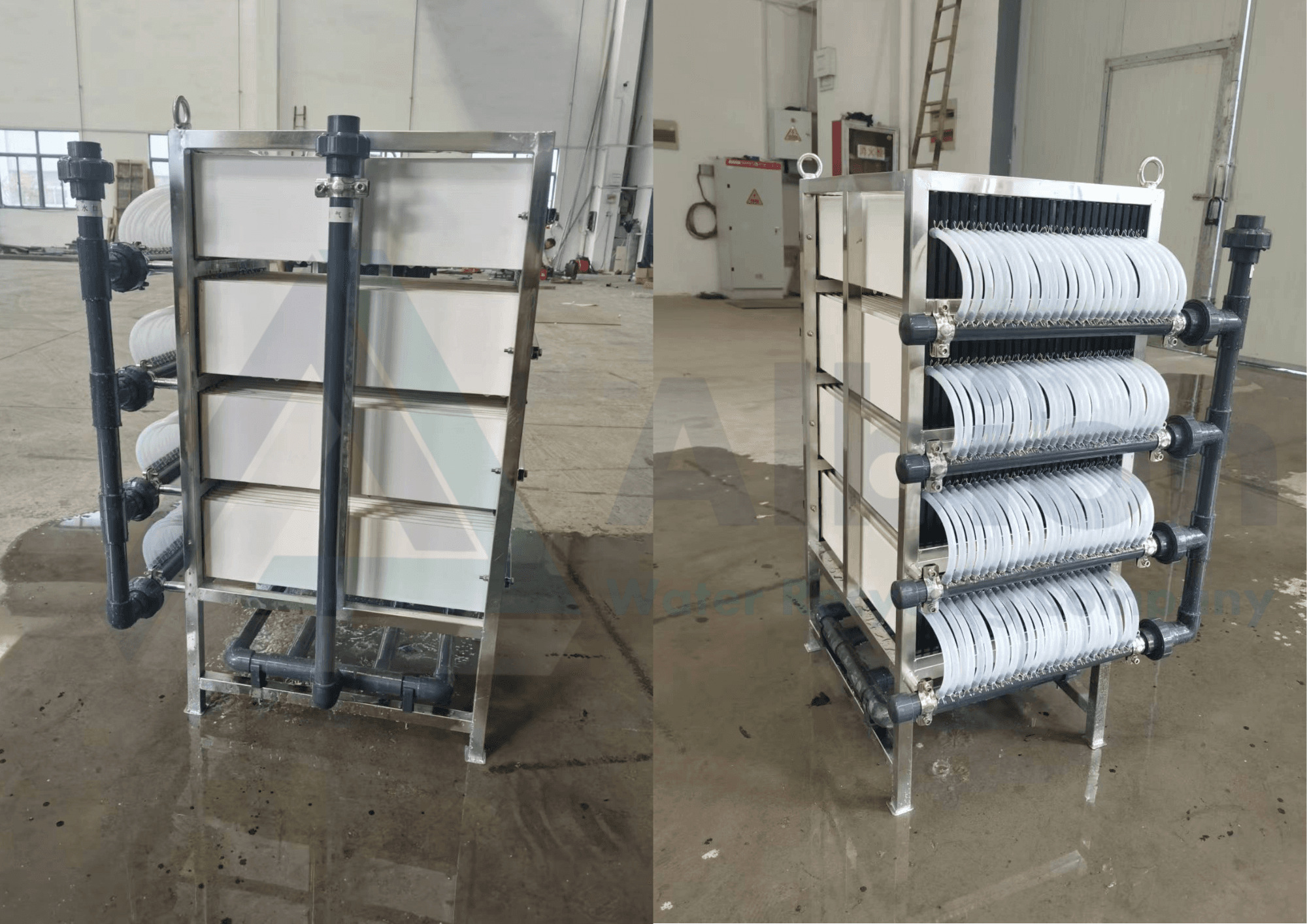
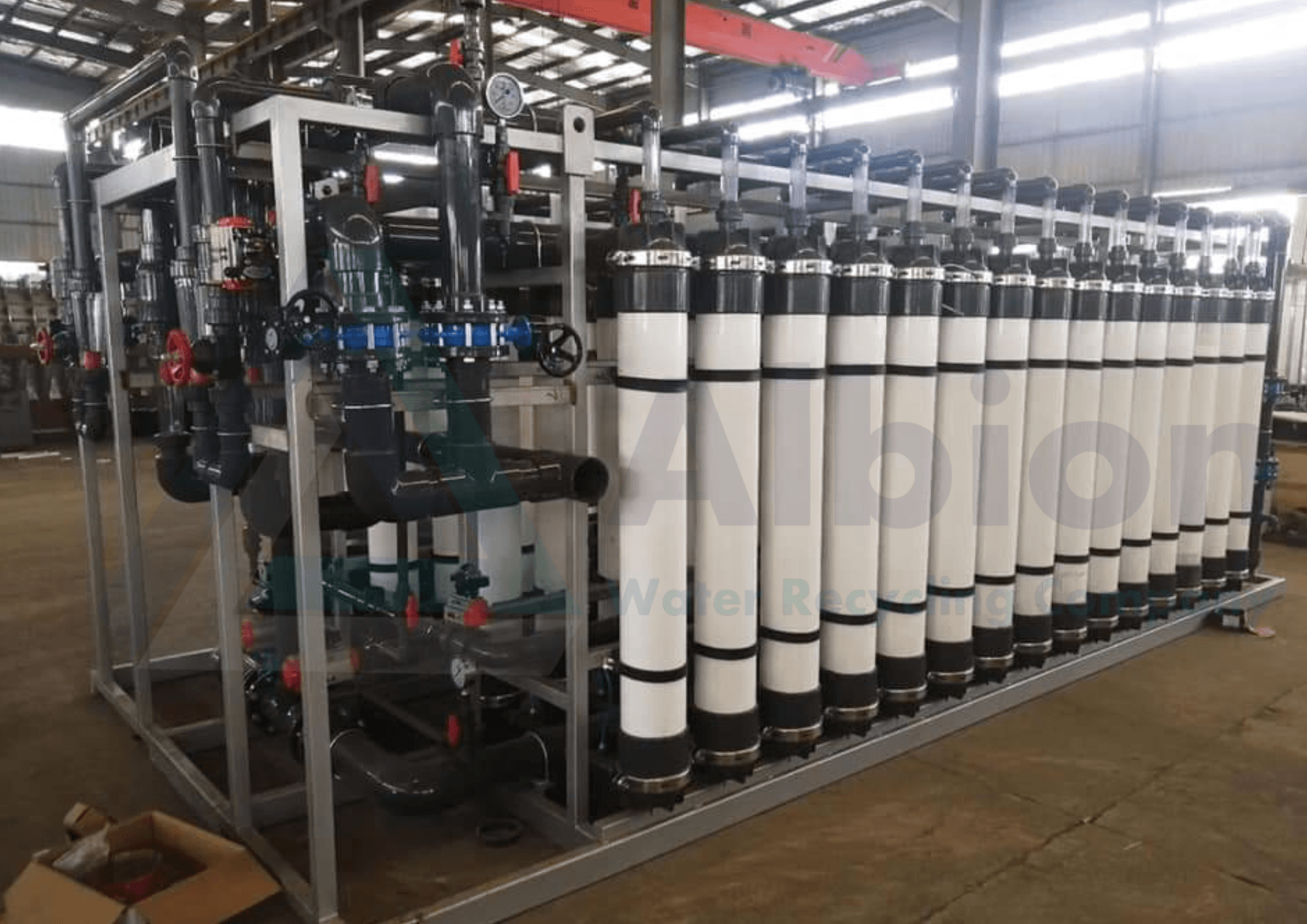
MBR combines a suspended-growth biological reactor with a membrane separation stage, typically ultrafiltration hollow-fibre or flat-sheet modules, either submerged in the aeration tank or housed externally. The membrane physically retains biomass, suspended solids, and most pathogens, allowing the biological reactor to operate at a substantially higher mixed liquor suspended solids (MLSS) concentration than a conventional activated sludge process, since solids separation no longer depends on gravity settling. This decoupling of biomass retention from sludge settleability is the defining technical feature of MBR, and it is what allows a smaller reactor to achieve a longer effective sludge retention time (SRT) at a shorter hydraulic retention time (HRT).
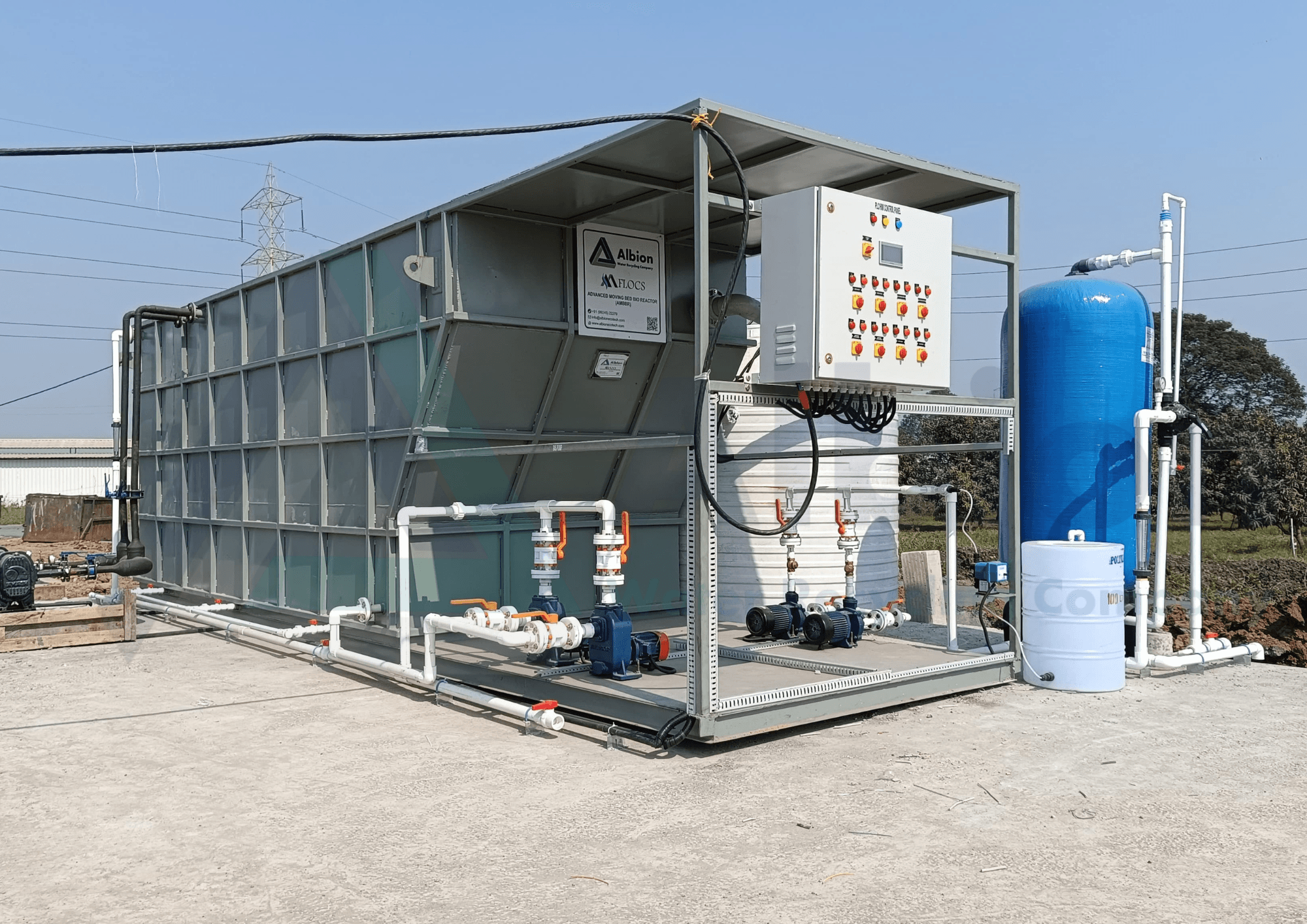
2.2 Advanced Moving Bed Bioreactor (AMBBR)
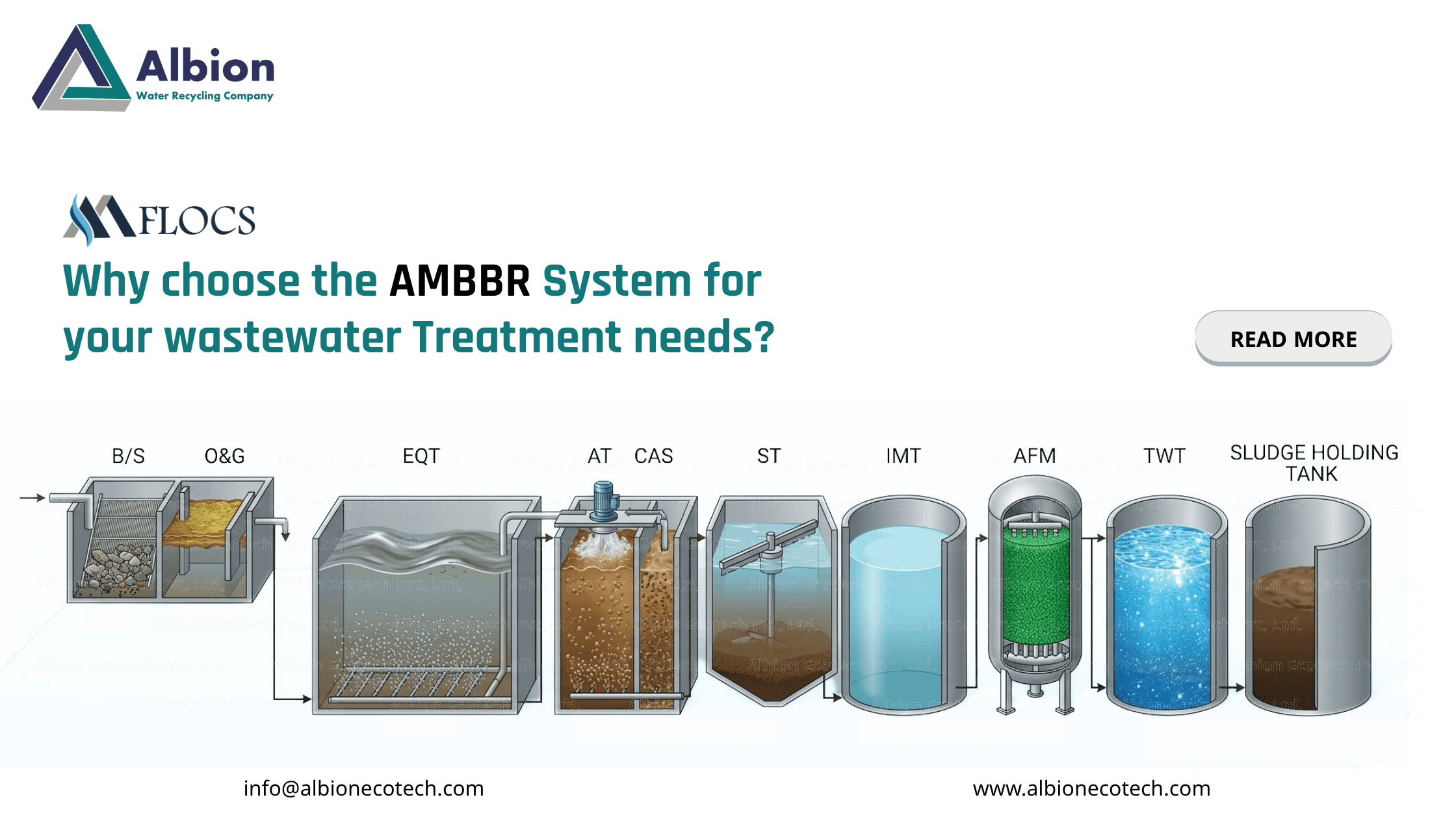
AMBBR grows biomass as a biofilm on the protected internal surfaces of free-moving plastic carrier media suspended in an aerated tank. Because the biofilm is physically attached to the carrier rather than freely suspended, biomass retention in AMBBR is independent of settling behaviour within the reactor, though a downstream clarification or filtration stage is still required to remove any biomass that sloughs off the carriers along with the treated water. AMBBR refines this principle beyond standard MBBR through carrier media engineered for greater protected surface area and more precise aeration control, supporting higher organic loading rates or a smaller reactor volume for an equivalent treatment duty.
3. Technical Comparison
3.1 Biomass Separation Mechanism
MBR uses a hard physical barrier (the membrane) to separate treated water from biomass, independent of any biological or physical settling process. AMBBR relies on attached growth for biomass retention within the reactor, but still requires downstream clarification or filtration for final solids separation, since the biofilm approach alone does not produce a membrane-grade barrier. This is the single most consequential technical difference between the two technologies, and it drives most of the downstream distinctions in effluent quality, footprint, and energy profile.
3.2 Effluent Quality and Consistency
MBR permeate is characteristically low in turbidity and suspended solids, and largely free of pathogens retained by the membrane, making it a strong feed for reuse applications with or without further polishing. AMBBR effluent quality, after appropriate downstream clarification, can achieve good BOD/COD removal, but turbidity and residual suspended solids are generally higher and more variable than MBR permeate, since the final barrier is gravity- or media-based rather than a membrane. For projects with strict reuse-grade turbidity or pathogen-removal requirements, MBR holds a clear technical advantage.
3.3 Footprint and Reactor Sizing
MBR's elevated MLSS operating range allows the smallest reactor volume of the two technologies for a given organic loading, since higher biomass concentration directly reduces the HRT needed to achieve target BOD/COD removal. AMBBR reduces footprint relative to conventional activated sludge through its attached-growth biomass density, but generally requires a somewhat larger reactor volume than an equivalent MBR system, plus the additional footprint of its downstream clarifier or filtration stage, which is not required in the same way for MBR since the membrane is typically integrated into or immediately adjacent to the bioreactor.
3.4 Energy Profile
Both technologies require aeration for biological treatment, but MBR carries an additional energy load for membrane scouring — aeration specifically intended to reduce fouling at the membrane surface — which is a significant and largely unavoidable component of MBR's operating energy profile. AMBBR's aeration demand is limited to biological treatment and keeping carrier media in suspension, generally resulting in a lower specific energy consumption per unit volume treated than MBR, though this advantage needs to be weighed against MBR's smaller overall reactor volume and the energy implications of any additional clarification stage AMBBR requires.
3.5 Operational Complexity and Skill Requirement
MBR operation requires ongoing monitoring of membrane-specific parameters — transmembrane pressure (TMP), permeability trends, and scheduled chemical cleaning (CIP) — in addition to standard biological process monitoring. This raises the skill and attention level required from operating staff relative to AMBBR, which does not involve a membrane stage and therefore avoids TMP monitoring and CIP scheduling, though it still requires attention to carrier fill ratio, retention screen condition, and downstream clarifier performance.
3.6 Fouling and Failure Mode Characteristics
MBR's primary long-term operational risk is membrane fouling — the gradual accumulation of biological and inorganic material on the membrane surface, which increases TMP over time and eventually requires chemical cleaning or membrane replacement. AMBBR's principal operational risks are different in character: carrier loss through damaged retention screens, uneven aeration leading to dead zones or carrier settling, and downstream clarifier performance if biomass sloughing increases. Neither risk profile is inherently more severe, but they require different monitoring disciplines and maintenance schedules.
3.7 Sludge Production and Management
MBR's higher MLSS operating range and extended SRT generally allow operation at a lower sludge yield (less excess sludge produced per unit of BOD removed) compared with conventional activated sludge, though this depends heavily on specific operating parameters chosen for a given plant. AMBBR's sludge production is primarily a function of organic loading and biofilm sloughing rate rather than a directly comparable MLSS-based relationship, and both technologies require dedicated thickening and dewatering infrastructure for excess biomass regardless of which process generates marginally less sludge in a specific case.
3.8 Resilience to Shock and Variable Loads
AMBBR's attached biomass is inherently resistant to washout during hydraulic surges, since it is not suspended freely in the water column. MBR is also resilient to hydraulic shock from a solids-separation standpoint, since the membrane barrier is not affected by short-term flow spikes the way a settling clarifier would be, but sudden organic load spikes can still stress the biological process and, in some cases, contribute to accelerated membrane fouling if biomass characteristics shift as a result.
3.9 Retrofit and Expansion Flexibility
AMBBR carrier media can often be introduced directly into an existing aeration tank to enhance capacity, making it a practical retrofit route for plants approaching their organic loading limit. MBR retrofits are generally more involved, since submerged membrane modules, permeate piping, and CIP infrastructure typically need to be engineered into the tank design from the outset, though external or side-stream MBR configurations can offer somewhat more retrofit flexibility than fully submerged designs.
4. Economic Analysis Framework
A rigorous economic comparison between MBR and AMBBR needs to go beyond quoted capital cost and evaluate total cost of ownership (TCO) across the plant's operating life. The framework below outlines the cost components that should be captured for each technology; actual figures are project-specific and should be developed through a detailed engineering estimate rather than generic benchmarks.
- Capital cost components: civil/tank construction, biological process equipment (aeration, mixing), membrane modules and associated CIP system (MBR only), carrier media and retention screens (AMBBR only), downstream clarification or filtration (AMBBR), automation and instrumentation.
- Recurring operating cost components: aeration energy (including membrane scouring for MBR), pumping energy, chemical consumption (CIP chemicals for MBR; coagulants or polymers for AMBBR clarification if used), sludge handling and disposal, operator labour, and routine maintenance.
- Periodic replacement costs: membrane module replacement on a multi-year cycle for MBR; carrier media top-up and retention screen replacement for AMBBR, generally on a longer and less capital-intensive cycle than membrane replacement.
- Risk-adjusted costs: potential compliance penalties from effluent quality excursions (a risk factor to weigh against AMBBR's less consistent turbidity performance), and potential downtime or remediation cost from process upsets in either technology.
In general terms, MBR tends to carry a higher capital and periodic replacement cost due to membrane investment, alongside a higher aeration energy demand, but can offer lower risk-adjusted cost where reuse-grade compliance is mandatory and quality excursions carry significant penalties. AMBBR tends to offer a lower capital cost and simpler periodic maintenance profile, but a project targeting reuse-grade water may still need to add membrane polishing downstream, which shifts some of MBR's cost profile back into the total picture rather than eliminating it entirely.
5. Decision Framework
5.1 Favour MBR When:
- Treated water reuse for flushing, gardening, cooling, or higher-grade applications is a primary project driver.
- Discharge norms are especially stringent on turbidity, TSS, or pathogen indicators.
- Plot area is the single most binding constraint, and the smallest achievable footprint is a priority even at higher capital and energy cost.
- The facility has, or can commit to, skilled operating staff capable of managing membrane-specific monitoring and maintenance.
5.2 Favour AMBBR When:
- Discharge norms can be met with conventional BOD/COD/TSS removal, without membrane-grade turbidity or pathogen requirements.
- Capital budget or energy cost constraints make MBR's higher upfront and operating cost difficult to justify.
- The project involves capacity enhancement of an existing tank where carrier retrofit is feasible and new membrane infrastructure is not.
- Influent is highly variable (batch industrial discharge, mixed CETP streams) and shock-load resilience is a priority.
- Operating staff availability or skill level makes membrane-specific monitoring impractical.
6. The Hybrid Approach: AMBBR as MBR Pre-Treatment
MBR and AMBBR are not always mutually exclusive choices. In projects with high organic loading and reuse-grade quality targets, AMBBR can be positioned as a pre-treatment stage that reduces organic and solids load ahead of a downstream MBR. This staged approach can reduce the fouling burden on the membrane, potentially allowing a smaller, less energy-intensive MBR stage than would be needed to treat raw influent directly, while still achieving membrane-grade final effluent quality. This hybrid configuration is worth evaluating specifically for high-strength industrial effluent or CETP applications where influent organic load is substantial and variable.
7. Regulatory and Reuse Considerations
Discharge and reuse standards set by the Central Pollution Control Board (CPCB) and relevant State Pollution Control Boards (SPCBs) vary by application and locality, and reuse-specific quality standards (for flushing, gardening, or industrial reuse) are generally more stringent on turbidity and pathogen indicators than standard discharge norms. Project teams should confirm applicable standards for their specific location and end use before finalizing a technology choice, since the gap between AMBBR-only effluent and reuse-grade requirements is often the deciding factor in whether membrane treatment is needed at all, and if so, whether as the primary process or as downstream polishing.
8. Albion Ecotech's Perspective
As a wastewater treatment engineering company offering both X-Flocs MBR and M-Flocs AMBBR, Albion Ecotech approaches this comparison as an engineering decision to be worked through project by project, rather than promoting one technology as universally superior. Albion evaluates influent characteristics, discharge and reuse requirements, footprint and budget constraints, and operating staff capability before recommending MBR, AMBBR, or a hybrid configuration combining the two. Where a hybrid approach is warranted, Albion designs the AMBBR pre-treatment stage and downstream MBR polishing stage as an integrated system, sized to reduce the fouling burden on the membrane while meeting the project's final effluent quality targets. Sludge management, energy-efficient equipment selection, and post-commissioning support are factored into the design regardless of which technology, or combination, is ultimately recommended.
9. Conclusion
MBR and AMBBR address the same broad challenge — compact, reliable biological wastewater treatment — through fundamentally different biomass separation mechanisms, with consequences that ripple through effluent quality, footprint, energy profile, operational complexity, and cost. Neither technology is categorically superior; each is the better engineering answer under a specific set of project constraints. A rigorous, project-specific evaluation across the technical and economic dimensions outlined in this whitepaper — rather than a generic preference for one technology — is the most reliable path to selecting the right treatment process, whether that turns out to be MBR, AMBBR, or a hybrid combination of both.
Frequently Asked Questions
Is MBR always the better choice for water reuse projects?
For most reuse applications requiring low turbidity and pathogen removal, yes, MBR (or a hybrid with AMBBR pre-treatment) is generally the more reliable technical choice, though the specific reuse-quality standard applicable to the project should be confirmed before finalizing the approach.
Can AMBBR effluent ever meet reuse-grade standards without a membrane stage?
This depends on the specific reuse-quality standard and downstream polishing (filtration, disinfection) applied. For less stringent reuse applications, well-designed AMBBR with adequate downstream treatment can meet requirements; for stricter standards, membrane treatment is typically necessary.
Which technology has a lower total cost of ownership?
There is no universal answer; it depends on the project's specific reuse requirements, energy costs, and risk tolerance for compliance excursions. AMBBR generally has a lower capital and maintenance profile, but if reuse-grade quality is ultimately required, adding membrane polishing downstream narrows or reverses this advantage.
Is a hybrid AMBBR-plus-MBR system more expensive than MBR alone?
Not necessarily. While a hybrid system adds an AMBBR stage, it can allow the downstream MBR to be smaller and less prone to fouling, which may offset the additional AMBBR cost, particularly for high-strength industrial effluent. A project-specific cost comparison is needed to confirm this for any given case.
How should a project team decide between MBR and AMBBR?
By working through the decision framework in this whitepaper — discharge and reuse requirements, footprint constraints, operating staff capability, and total cost of ownership — rather than defaulting to either technology, and by evaluating whether a hybrid configuration offers a better balance than either technology alone.