
Why Choose the AMBBR System for Your Wastewater Treatment Needs?
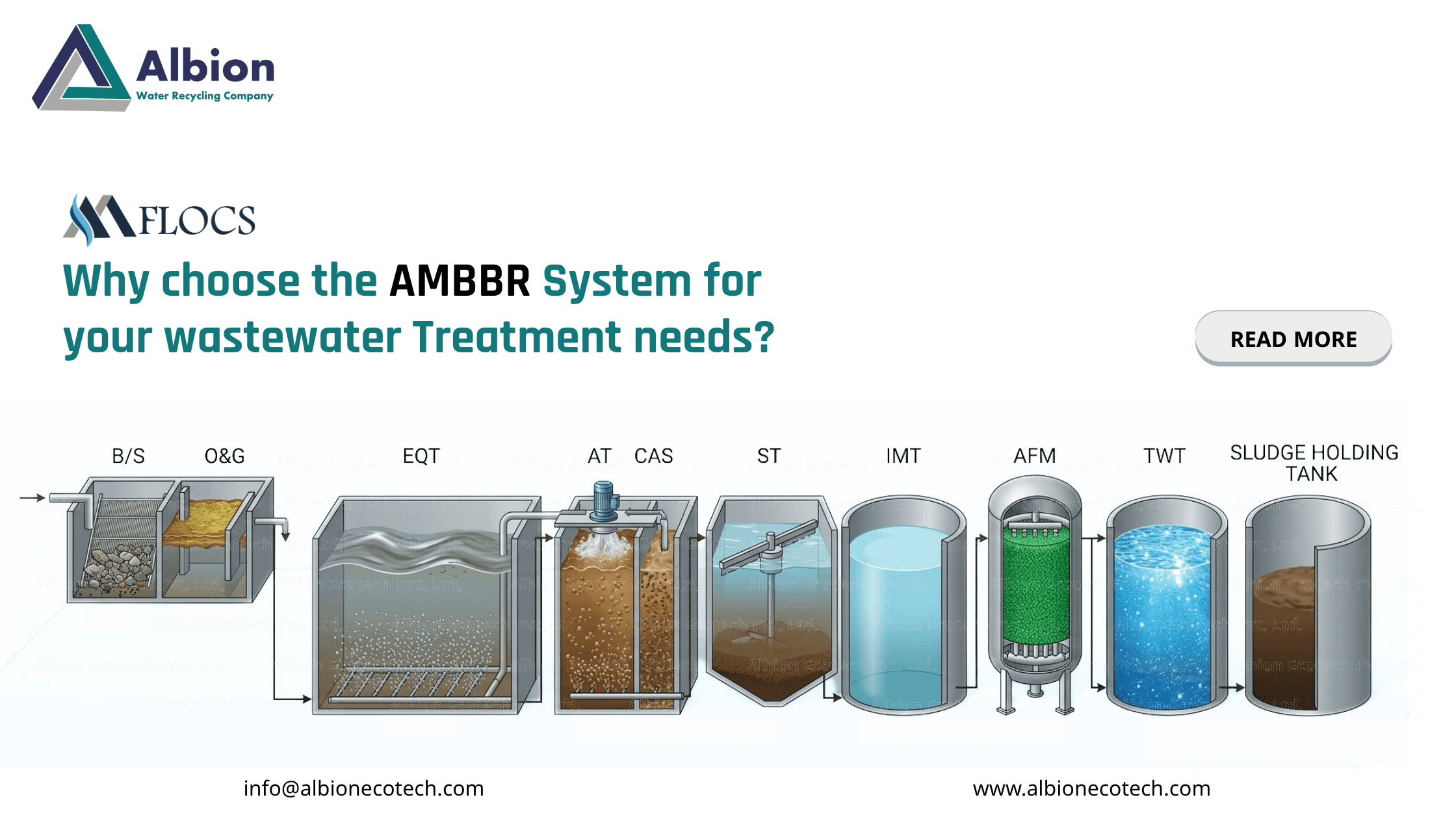
Choosing a biological treatment technology is one of the highest-impact decisions in any STP or ETP project — it shapes footprint, energy use, operational complexity, and how the plant performs under real-world variability, not just under design conditions. With conventional activated sludge (CAS), Sequencing Batch Reactors (SBR), standard MBBR, Advanced MBBR (AMBBR), and Membrane Bioreactors (MBR) all competing for consideration, this article works through why AMBBR is worth evaluating for many wastewater treatment applications, where it genuinely outperforms alternatives, and where it doesn't.
A Quick Map of the Technology Landscape
- Conventional Activated Sludge (CAS): suspended-growth biomass in an aeration tank, followed by a secondary clarifier and a return activated sludge (RAS) loop. Well understood, but footprint-heavy and sensitive to settling behaviour.
- Sequencing Batch Reactor (SBR): combines aeration and clarification in one tank through a timed batch cycle. Compact and automation-friendly, but decanting is intermittent and multi-tank designs are needed for continuous inflow.
- Standard MBBR: attached-growth biomass on carrier media suspended in an aerated tank, still requiring downstream clarification. Improves on CAS footprint but has a defined carrier design and loading envelope.
- Advanced MBBR (AMBBR): refines carrier design and process control beyond standard MBBR to support higher loading rates or a smaller reactor volume for an equivalent treatment duty.
- Membrane Bioreactor (MBR): replaces gravity clarification with a membrane barrier, achieving the highest and most consistent effluent quality of the group, at a higher energy and membrane maintenance cost.
Why AMBBR Stands Out: A Detailed Look
1. Footprint Efficiency Without Membrane-Level Cost
AMBBR occupies a useful middle ground: its attached-growth biomass supports a higher treatment capacity per unit tank volume than CAS or SBR, approaching some of the footprint efficiency associated with MBR, but without the capital cost, membrane replacement cycle, and higher aeration energy demand that come with a membrane barrier. For projects where MBR's effluent quality isn't strictly necessary, AMBBR can deliver much of the space saving at a lower total cost.
2. Resilience to Load and Flow Variability
CAS and SBR both depend, in different ways, on biomass that can be disturbed by hydraulic or organic shocks — CAS through washout of suspended solids, SBR through disrupted settling if a batch is upset. AMBBR's biomass stays attached to the carrier surface throughout, making it inherently more tolerant of batch discharges, seasonal flow swings, and the kind of variable industrial loading that is common in food and beverage, textile, and CETP applications.
3. Simpler Operation Than CAS or MBR
AMBBR eliminates the RAS loop that CAS depends on, and it avoids the membrane-specific monitoring (transmembrane pressure, permeability trends, CIP scheduling) that MBR requires. For sites without dedicated, highly trained process operators — common in mid-sized industrial plants and smaller municipal STPs — this operational simplicity can matter as much as raw treatment performance.
4. A Genuine Retrofit and Capacity Enhancement Path
Unlike SBR or MBR, which generally require dedicated tankage and equipment purpose-built for the process, AMBBR carrier media can often be introduced directly into an existing aeration tank that is nearing its organic loading limit. This gives AMBBR a distinct advantage for plants that need more capacity but cannot justify or accommodate new civil construction.
5. Lower Exposure to Sludge Bulking and Settling Failures
Filamentous bulking is a recurring operational problem in CAS and, to a lesser extent, SBR systems, where poor settling can push solids into the final effluent. Because AMBBR's biomass separation doesn't depend on settling within the reactor itself, this specific failure mode is largely avoided, though downstream clarification still needs to be properly designed for any biomass that sloughs off the carriers.
6. Favourable Total Cost of Ownership for Mid-Range Applications
For projects that don't need MBR-grade effluent for reuse, AMBBR often lands in a favourable cost position: lower capital cost than MBR (no membrane investment), lower footprint than CAS (less civil cost), and fewer moving parts than SBR's batch-cycle automation. This makes it a strong default consideration for many STP and ETP projects before evaluating whether a more specialized technology is actually justified.
AMBBR Head-to-Head: Where It Wins and Where It Doesn't
AMBBR vs Conventional Activated Sludge (CAS)
AMBBR generally wins on footprint, load resilience, and operational simplicity (no RAS loop, less exposure to bulking). CAS can still be competitive for very large, stable-flow municipal plants where decades of operating familiarity and lower carrier media cost are valued, and where plot area is genuinely not a constraint.
AMBBR vs SBR
AMBBR treats continuously rather than in batches, which can simplify downstream flow management. SBR, on the other hand, offers strong nutrient removal flexibility through its React-phase cycle tuning and doesn't require a separate clarifier at all. Sites with strict nitrogen removal targets, or where SBR's phased automation appeals for other operational reasons, may still prefer SBR over AMBBR.
AMBBR vs Standard MBBR
AMBBR is essentially a refinement of standard MBBR, so the comparison is less about fundamentally different technologies and more about carrier design and process control quality. For most new projects, there's little reason to choose standard MBBR over a well-engineered AMBBR system, unless the project's loading is modest enough that the added engineering refinement of AMBBR offers limited practical benefit.
AMBBR vs MBR
MBR wins decisively on effluent quality and consistency, particularly for reuse-grade water, since the membrane barrier removes suspended solids and pathogens independent of biological settling behaviour. AMBBR cannot match this on its own. Where reuse-grade quality genuinely is not the goal, or where AMBBR is used as a pre-treatment stage ahead of a smaller, more efficient downstream MBR or RO system, AMBBR is generally the more cost-effective choice.
Ideal Scenarios for Choosing AMBBR
- Plot area is a real constraint, but reuse-grade effluent quality is not the primary driver.
- An existing STP or ETP is approaching its organic loading limit and new civil construction isn't feasible or budgeted.
- Influent characteristics are variable — batch discharges, seasonal changes, or mixed streams from multiple sources, as in a CETP.
- The site lacks continuous, highly trained process supervision, favouring a technology with fewer operational failure modes.
- The plant needs to serve as a robust pre-treatment stage ahead of a downstream MBR or RO system, reducing the organic load those units need to handle.
When AMBBR May Not Be the Best Fit
- The project's discharge norms or reuse targets require the consistently low turbidity and pathogen removal that only a membrane barrier reliably delivers — MBR is the more appropriate primary choice here.
- Nutrient removal flexibility through phased anoxic/aerobic cycling is a priority, which SBR can offer more directly through its batch cycle design.
- The site has abundant, low-cost plot area and prioritizes decades of proven operating history over footprint or load-resilience advantages, which may favour a well-run CAS system.
Total Cost of Ownership: A Broader View
A fair comparison across technologies needs to look beyond initial capital cost. AMBBR's absence of a RAS loop reduces pumping infrastructure and associated maintenance; its resilience to load swings reduces the risk of compliance excursions and any associated penalty or remediation cost; and its retrofit potential can avoid the civil cost of a full capacity expansion. Against this, aeration energy for carrier suspension and periodic carrier or screen maintenance need to be factored in — a genuine cost that should be compared against the equivalent costs of CAS's clarifier maintenance or MBR's membrane replacement cycle, rather than assumed away.
Why Choose Albion Ecotech's M-Flocs AMBBR
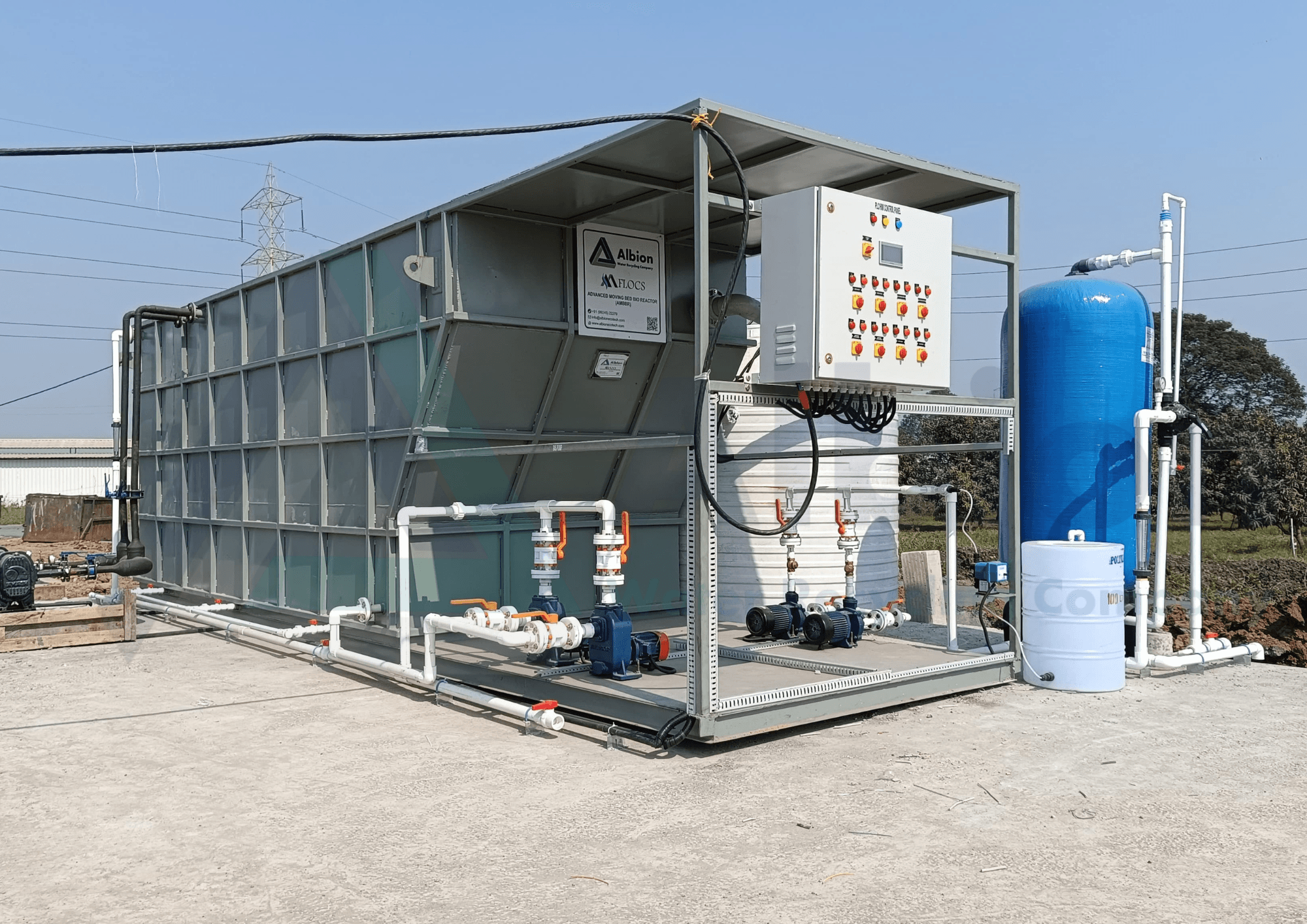
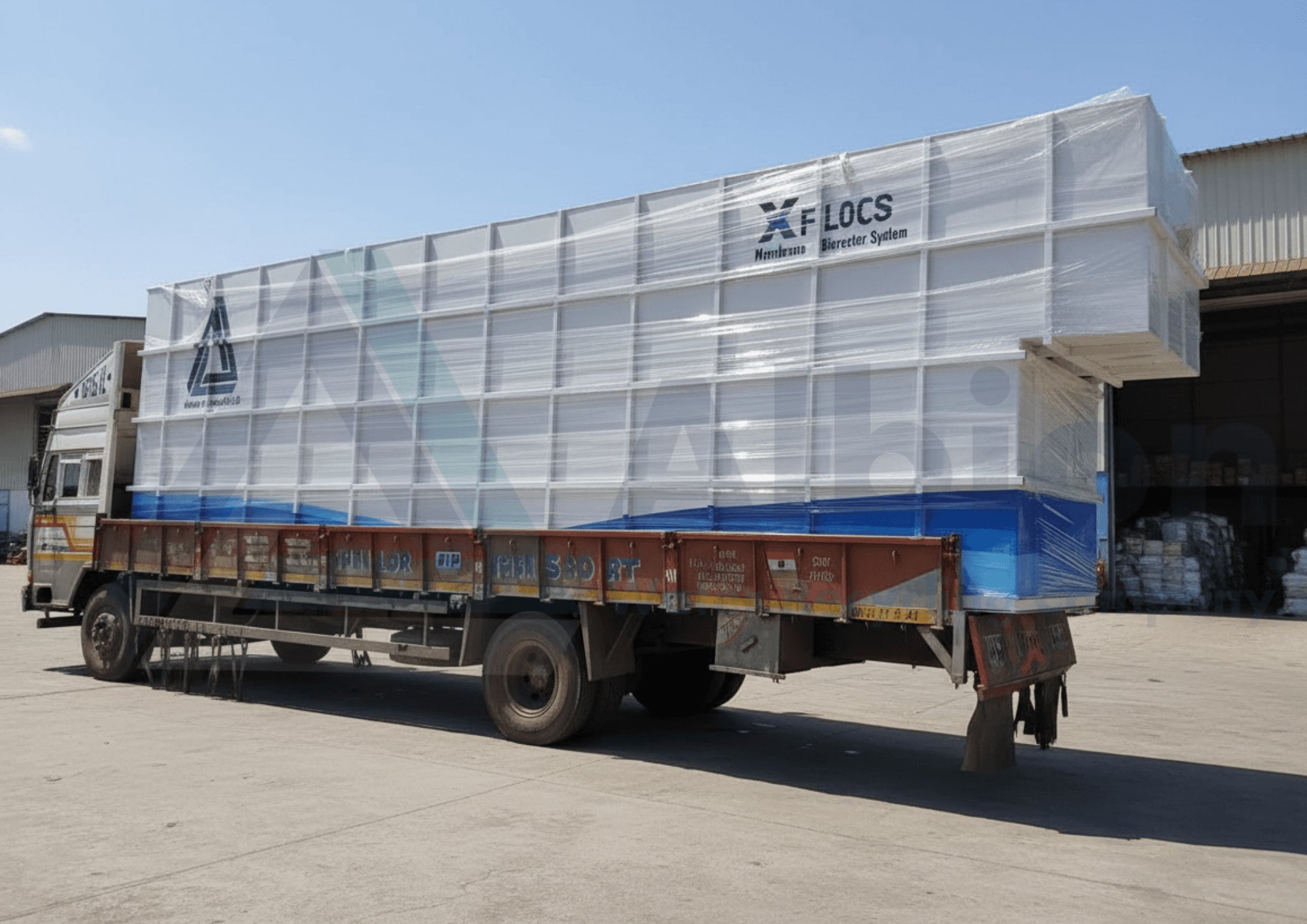
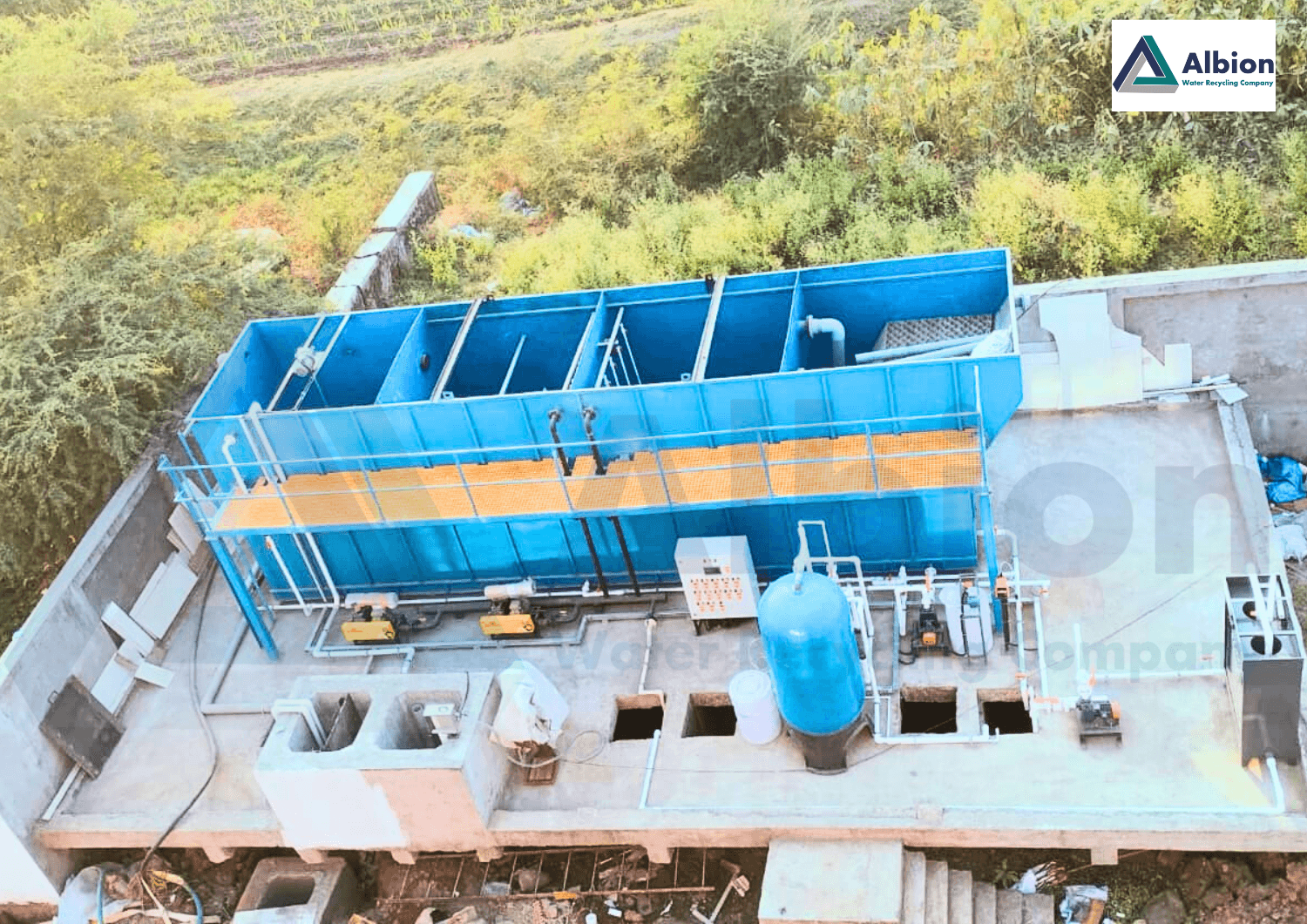
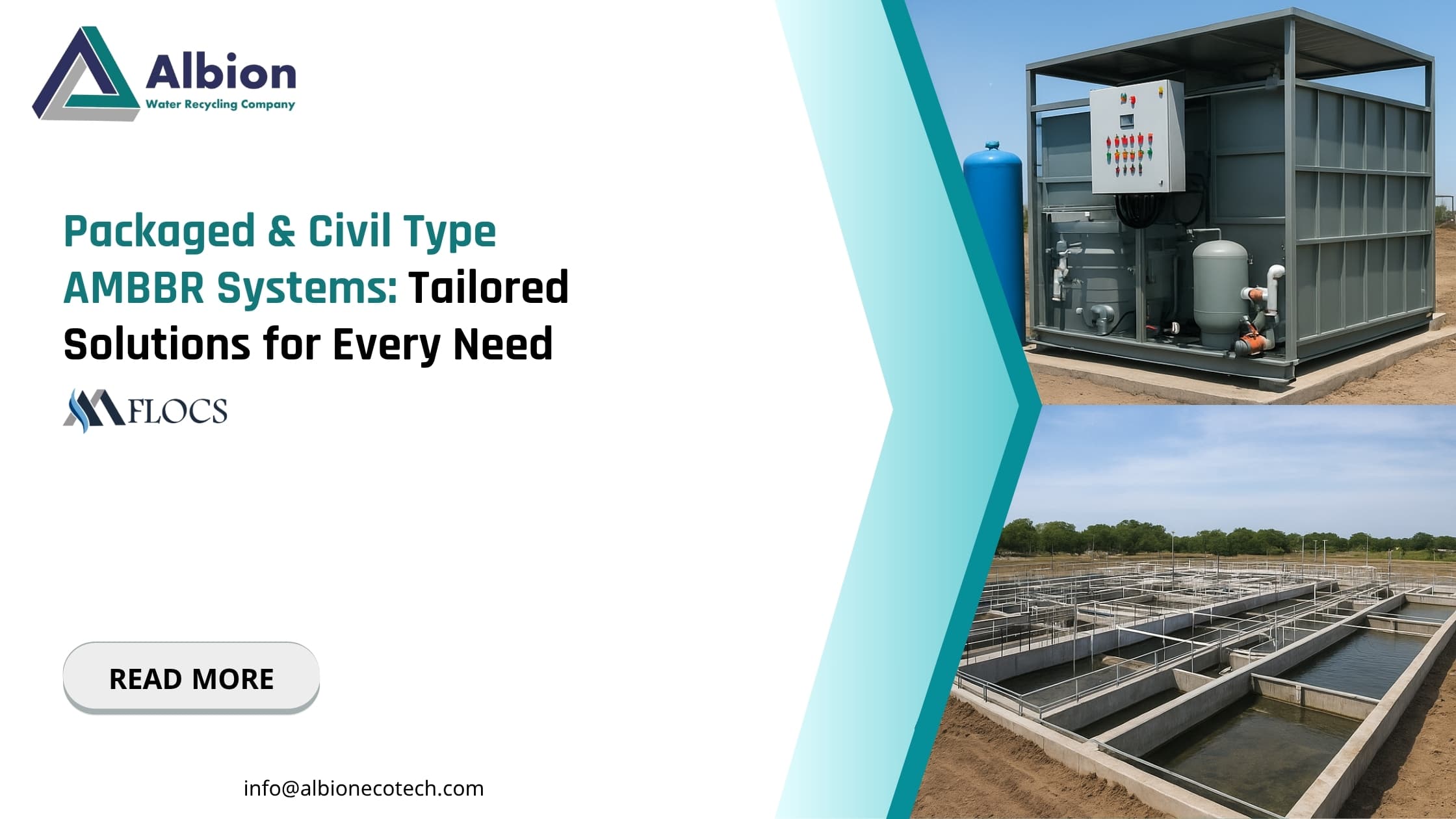
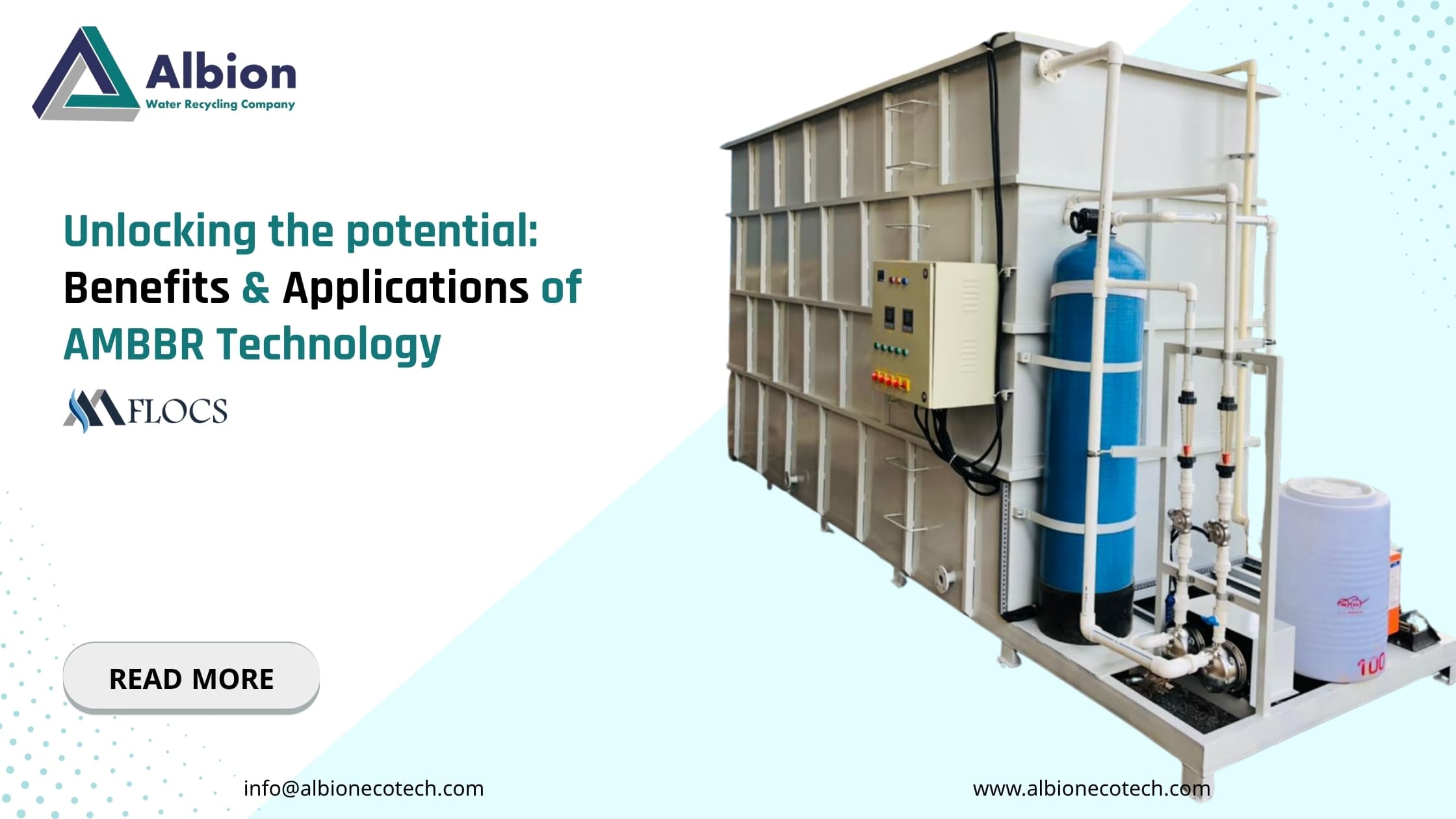
As a wastewater treatment engineering company, Albion Ecotech doesn't default to AMBBR for every project — it is recommended when a project's flow variability, footprint constraint, or retrofit need genuinely align with what the technology does well, based on the comparison above. Where a project's requirements are better served by SBR, MBR, or another process, Albion evaluates that instead. For projects where AMBBR is the right fit, Albion's M-Flocs system is engineered around the specific organic and hydraulic load of the site, available in both packaged and civil construction formats, and can be integrated with upstream or downstream technologies — including MBR, UF, and RO — where a project's water reuse or ZLD goals call for a multi-stage treatment train. Albion also plans sludge management and energy-efficient aeration equipment selection into the design, and supports clients through commissioning, operator training, and maintenance planning to sustain performance over the plant's operating life.
Conclusion
AMBBR earns its place as a strong default consideration for many STP and ETP projects because it addresses footprint, load resilience, and operational simplicity better than CAS or SBR in many scenarios, at a lower cost than MBR. It is not, however, a universal answer — projects with strict reuse-grade quality targets or specific nutrient removal needs may still be better served by MBR or SBR respectively. The right choice comes from matching the technology's genuine strengths and limitations to the project's specific flow, load, footprint, and quality requirements, rather than defaulting to any one process on reputation alone.
Frequently Asked Questions
Is AMBBR better than conventional activated sludge in every case?
Not in every case. AMBBR generally offers footprint, resilience, and operational advantages over CAS, but very large, stable-flow municipal plants with ample plot area may still find CAS competitive, particularly given its long operating track record.
Can AMBBR replace MBR for water reuse projects?
Generally not on its own. MBR's membrane barrier delivers a more consistent, low-turbidity effluent suited to reuse than AMBBR can achieve alone. AMBBR is often better used as a pre-treatment stage ahead of MBR or RO in reuse-focused projects.
How does AMBBR compare to SBR for nutrient removal?
SBR's phased batch cycle allows more direct tuning of anoxic and aerobic periods for nitrogen removal within a single tank. AMBBR can support nutrient removal with appropriate design, but SBR generally offers more built-in flexibility for this specific objective.
Is AMBBR a good choice for a plant with no dedicated process operator?
Yes, generally. AMBBR avoids the RAS loop management of CAS and the membrane-specific monitoring of MBR, making it comparatively easier to operate for sites without continuous, highly trained supervision — though basic aeration and screen maintenance are still required.
Does choosing AMBBR mean giving up the option to add MBR or RO later?
No. AMBBR effluent is a suitable feed for downstream MBR or RO polishing, so a project can start with AMBBR to meet current discharge norms and add membrane treatment later if reuse or ZLD goals emerge, provided this is planned into the original layout.
What should I ask a vendor to confirm AMBBR is the right choice for my project?
Ask them to justify the technology recommendation against your specific influent load, flow variability, footprint constraints, and discharge or reuse targets, and to explain why alternatives like SBR or MBR were not selected — a credible vendor should be able to walk through this comparison rather than defaulting to one preferred technology.
%20Technology.jpg&w=3840&q=75)