Packaged & Civil Type AMBBR Technology: Tailored Solutions for Every Need
Advanced Moving Bed Bioreactor (AMBBR) technology solves a biological treatment problem — how to fit more treatment capacity into less space while staying resilient to variable loads. But before any AMBBR system can start treating wastewater, a separate engineering decision has to be made: should the reactor itself be built as a factory-fabricated packaged unit, or as a site-built civil (RCC) structure? This decision shapes project timeline, capital structure, and long-term flexibility just as much as the biological process design does. This article takes a detailed look at packaged and civil construction formats for AMBBR, and how Albion Ecotech's M-Flocs AMBBR line applies both.
Two Decisions, Not One: Process and Construction Format
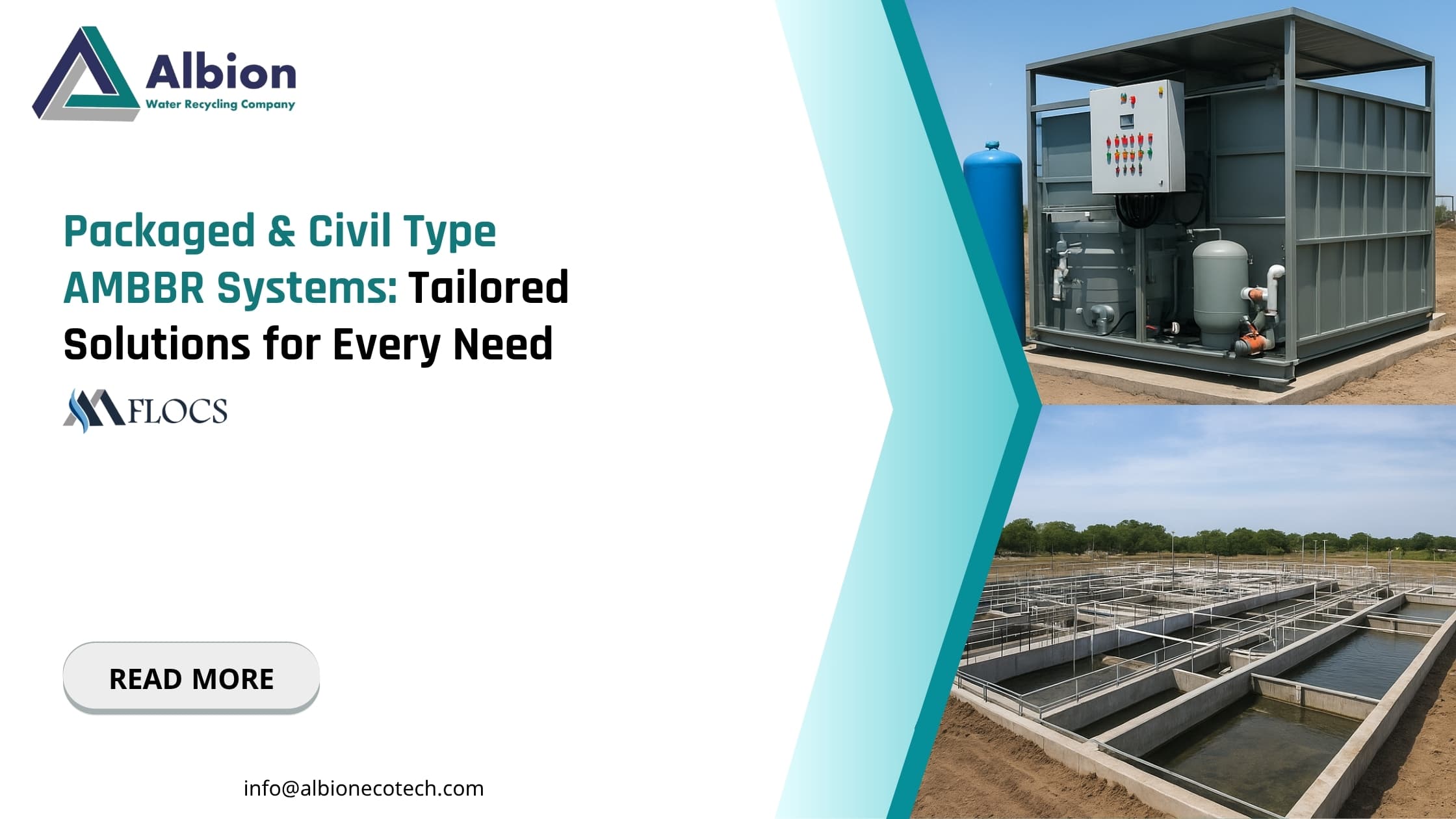
It helps to separate two questions that often get bundled into a single vendor conversation: which biological process fits the influent (in this case, AMBBR), and how should the tank housing that process be built. A packaged plant is fabricated off-site in MS (mild steel) or FRP (fibre-reinforced plastic) modules, then transported and installed with minimal civil work. A civil-based plant is constructed on-site in reinforced cement concrete (RCC), engineered to the project's specific layout and capacity. Both can house the same AMBBR process — attached-growth biological treatment on suspended carrier media — with construction format determining cost structure, schedule, and flexibility rather than treatment chemistry.
Packaged AMBBR Plants: A Closer Look
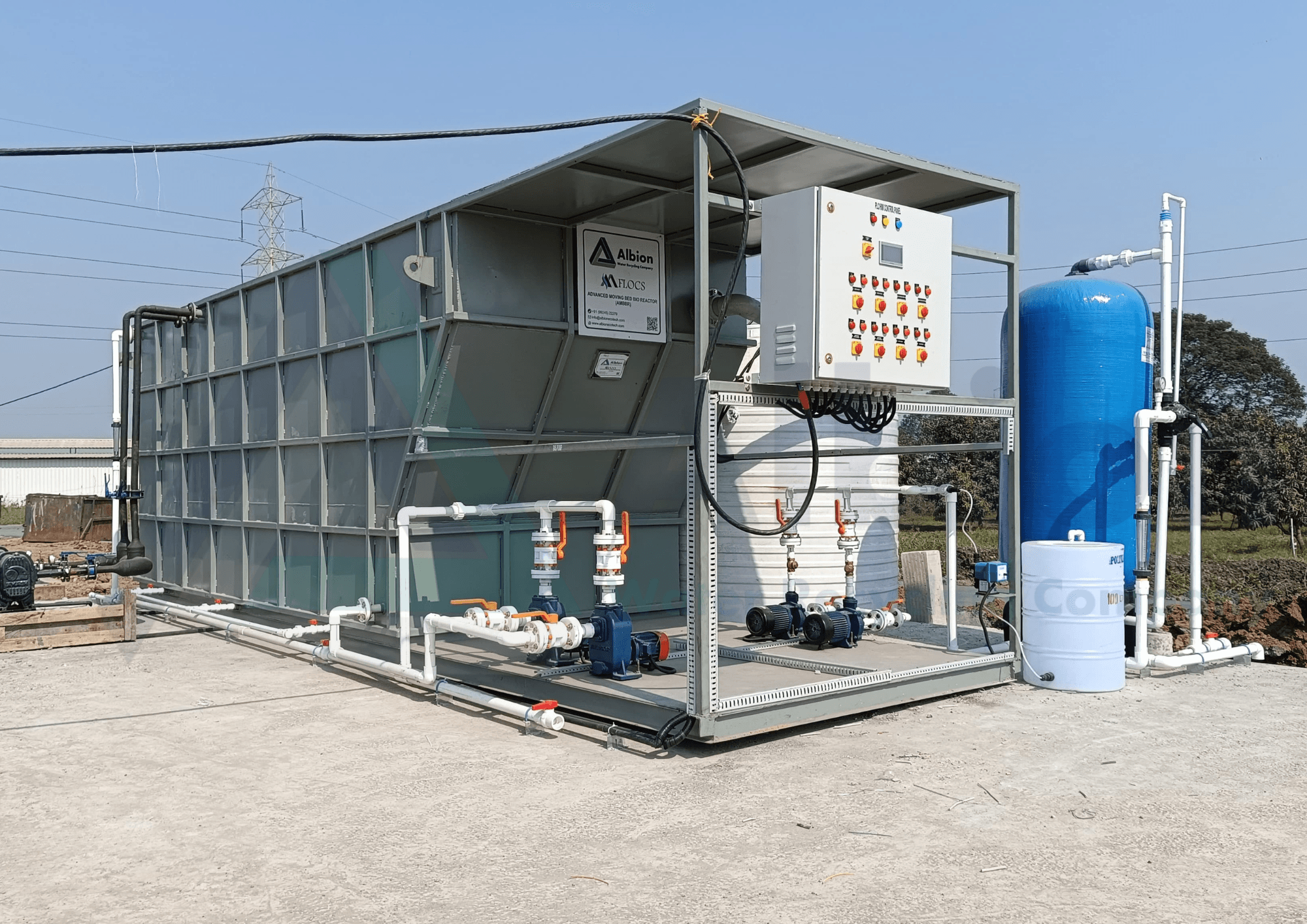
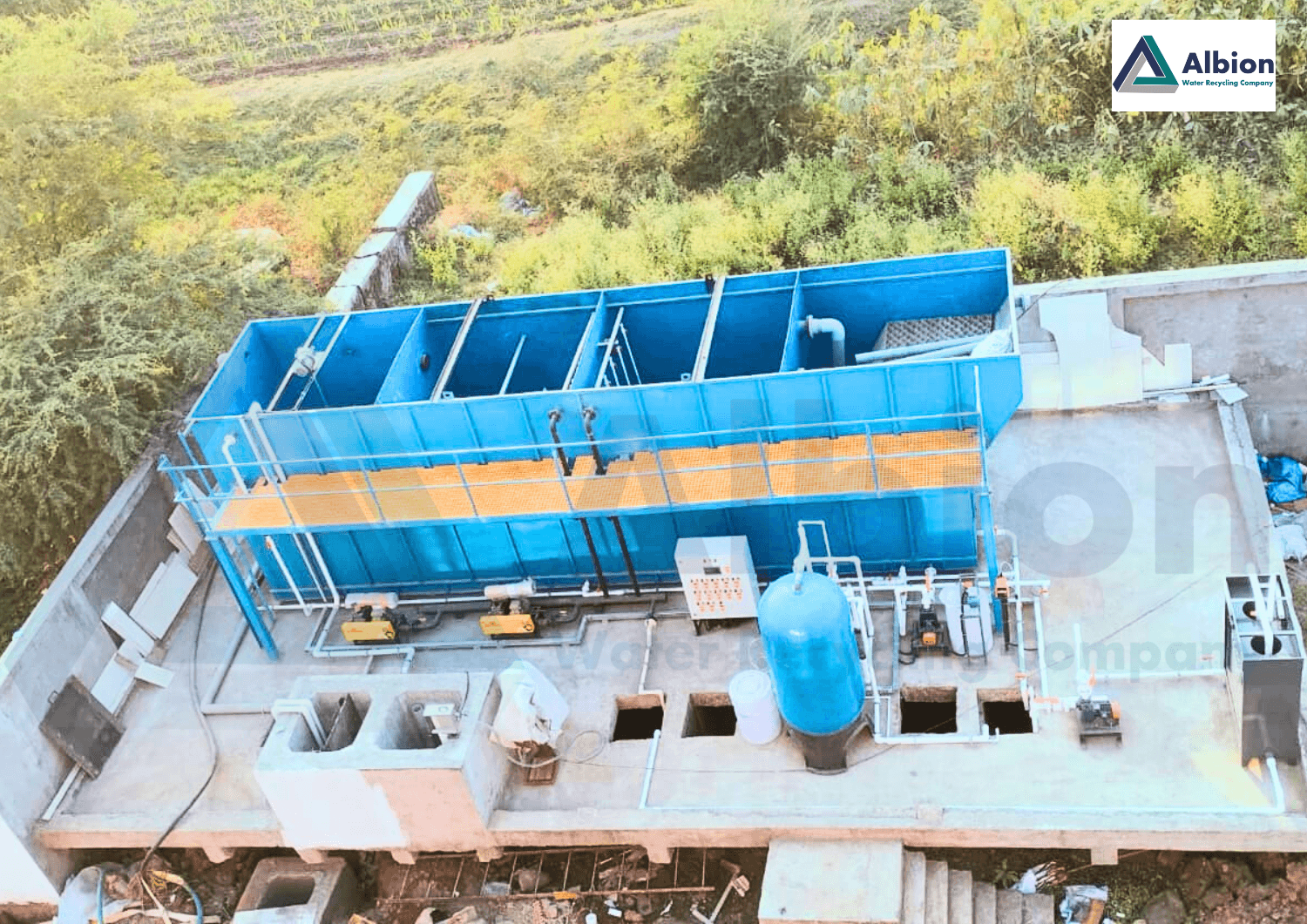
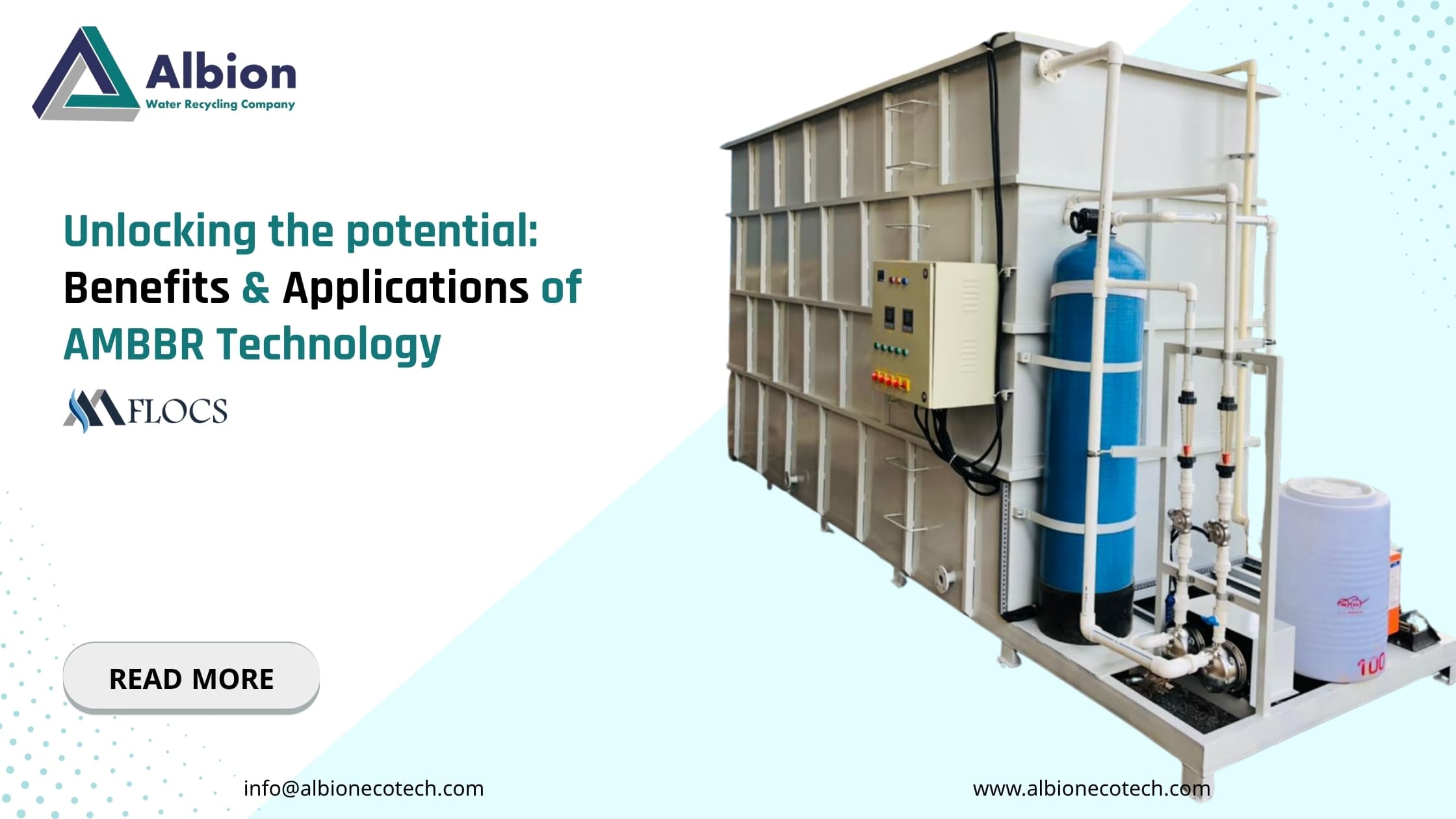
Packaged AMBBR plants are engineered as pre-designed skid or container-based modules, with the aeration tank, carrier media, diffusers, retention screens, and often the blower package pre-assembled and factory-tested before dispatch. Because most of the fabrication and quality control happens in a controlled factory environment rather than on an open construction site, packaged units tend to have more predictable build quality and shorter site installation windows.
Engineering Characteristics of Packaged AMBBR
- Foundation-only civil requirement: Typically only a level plinth or foundation slab is needed on site, rather than a full excavated and cast tank structure, which significantly reduces dependency on local civil contracting capacity.
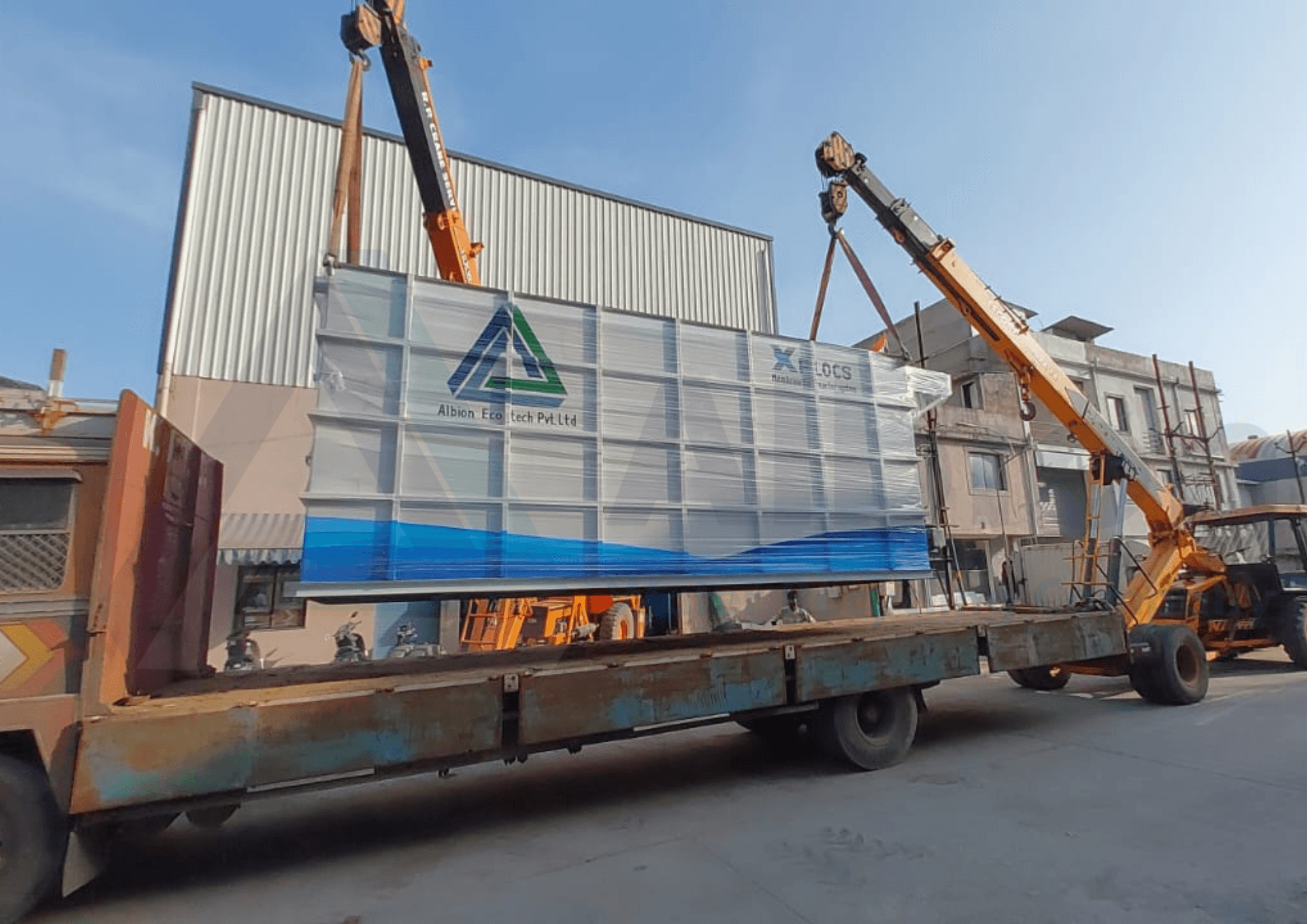
- Parallel-path scheduling: Fabrication happens off-site while foundation work proceeds at the project location, compressing the overall project timeline compared with sequential civil construction.
- Modular capacity addition: Additional packaged units, or additional carrier media within an oversized module, can often be added later to expand capacity without disturbing the original installation.
- Relocation potential: Because the tank and equipment are not embedded in the ground, packaged AMBBR units can potentially be disconnected, transported, and reinstalled at a new location — a genuine advantage for temporary or transitional sites.
- Corrosion and material selection: Since MS or FRP tanks are exposed to the effluent directly, material selection and internal coating quality matter more for long-term durability than in an RCC tank, and should be evaluated for the specific effluent characteristics.
Where Packaged AMBBR Fits Best
Packaged AMBBR plants suit sites with tight execution timelines, restricted access for heavy construction equipment, poor soil conditions or high water tables that complicate excavation, or applications with a defined operating horizon such as construction camps, temporary industrial facilities, or projects where future relocation is a real possibility rather than a hypothetical. Small to mid-sized housing societies, resorts, and standalone commercial buildings are also common fits, particularly where a compliance deadline (such as an occupancy certificate condition) makes installation speed a priority.
Civil-Based AMBBR Plants: A Closer Look
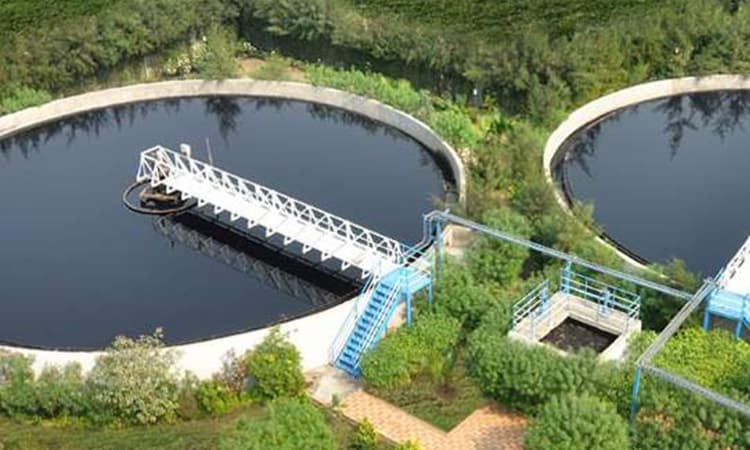
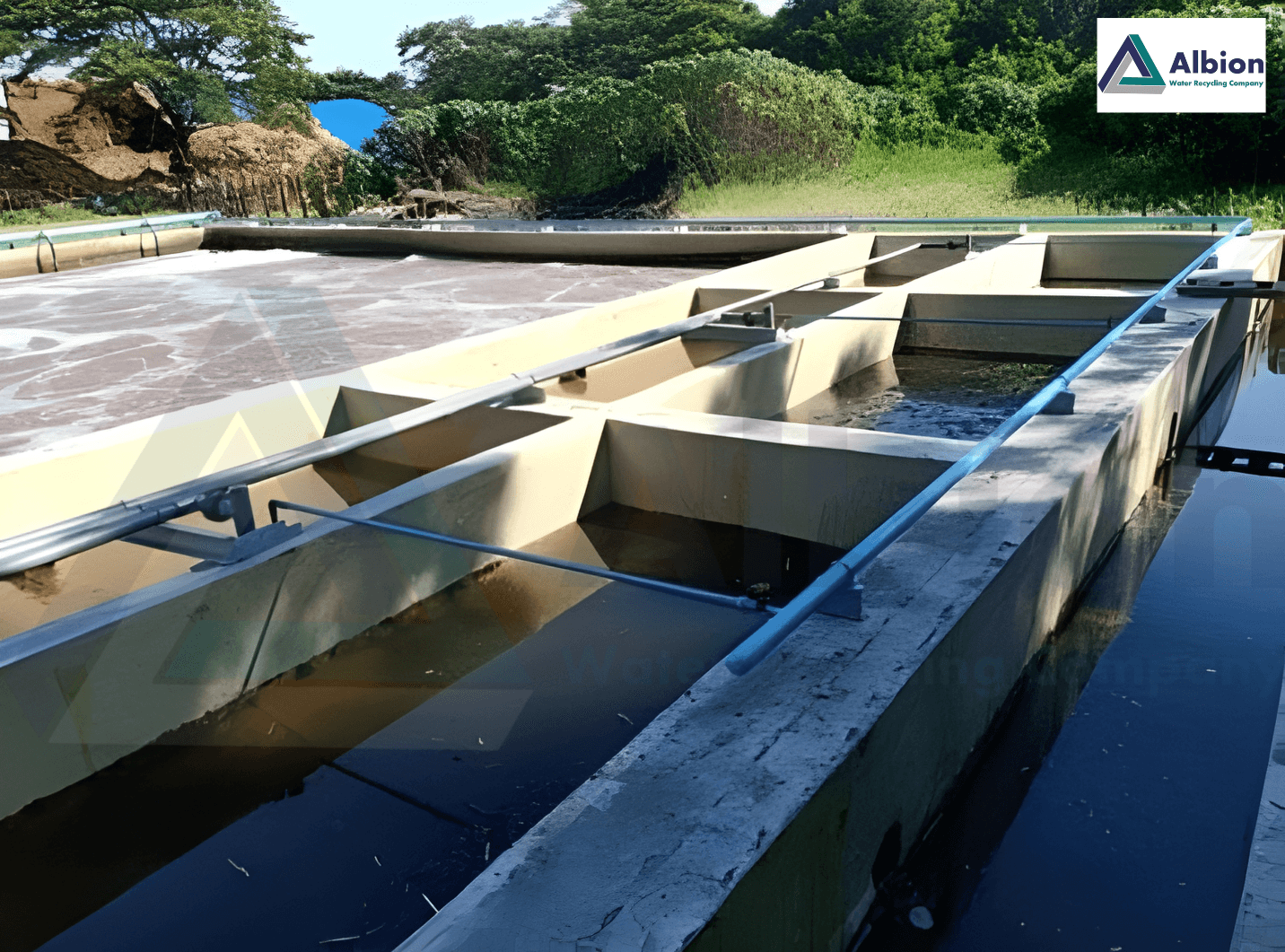
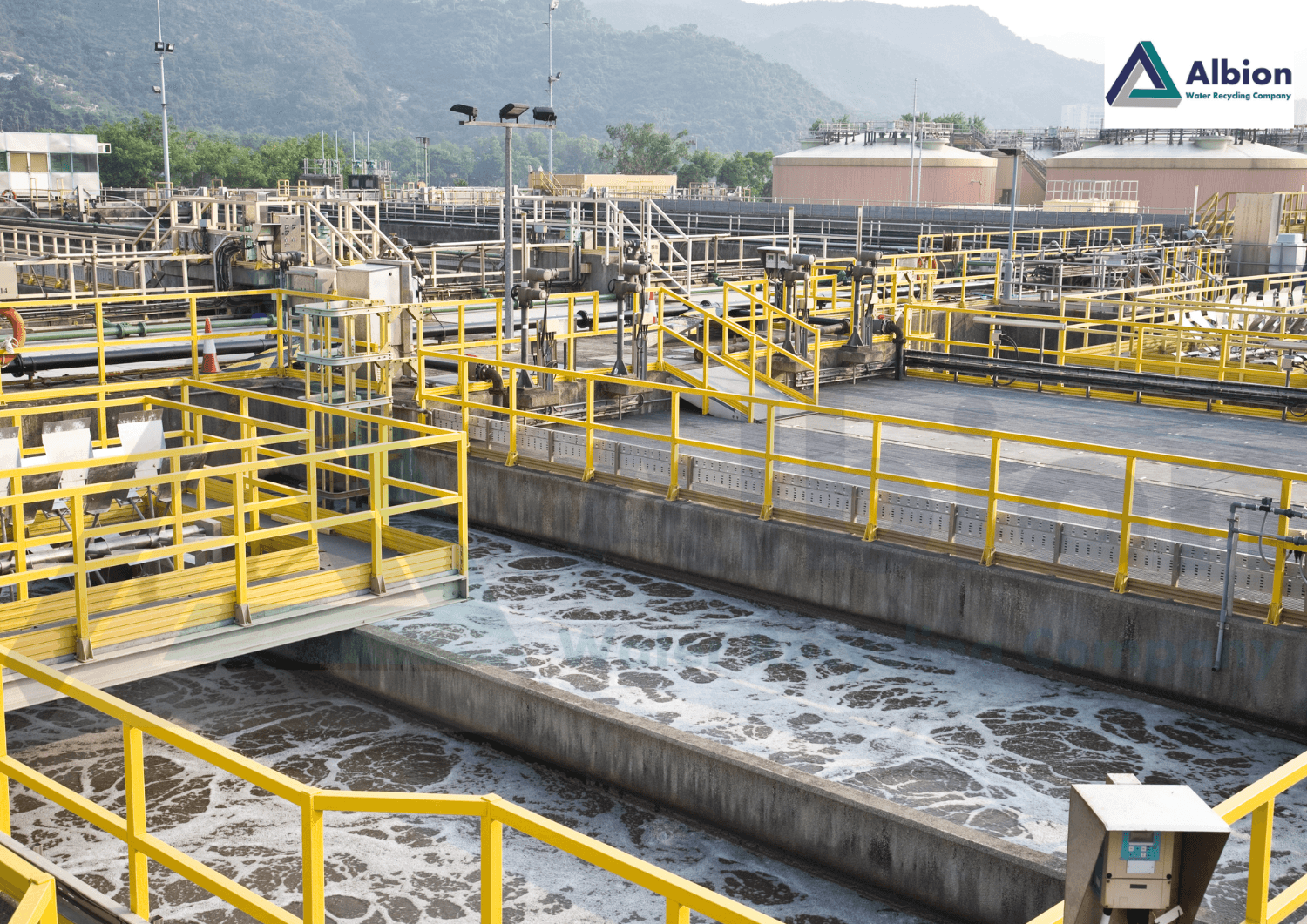
Civil-based AMBBR plants are built as purpose-designed RCC structures, with tank geometry, depth, and layout engineered specifically for the project's flow, site contours, and integration with surrounding infrastructure. This format is the long-standing default for large, permanent installations, and remains the more economical route once capacity crosses a certain scale.
Engineering Characteristics of Civil-Based AMBBR
- Scale economics: For large design flows, RCC construction generally achieves a lower cost per KLD of capacity than an equivalent packaged system, since the tank cost scales differently for concrete versus fabricated metal or FRP structures.
- Layout and geometry flexibility: Tank shape, depth, and internal baffling can be custom-designed to fit irregular plots, integrate with existing structures, or accommodate below-grade construction where surface land needs to remain usable.
- Long structural design life: Properly designed RCC tanks with appropriate lining for effluent exposure are generally built for a multi-decade service life, aligning with the planning horizon of municipal and large industrial infrastructure.
- Integration with wider site infrastructure: Civil construction allows the AMBBR tank to be built as part of a continuous treatment train — shared walls, common walkways, and integrated piping with adjacent clarifiers or filtration units — which can reduce overall site footprint compared with standalone packaged modules.
- Construction schedule dependency: Civil work is sequential — excavation, formwork, reinforcement, casting, curing — and is more exposed to monsoon delays, contractor availability, and site logistics than factory fabrication.
Where Civil-Based AMBBR Fits Best
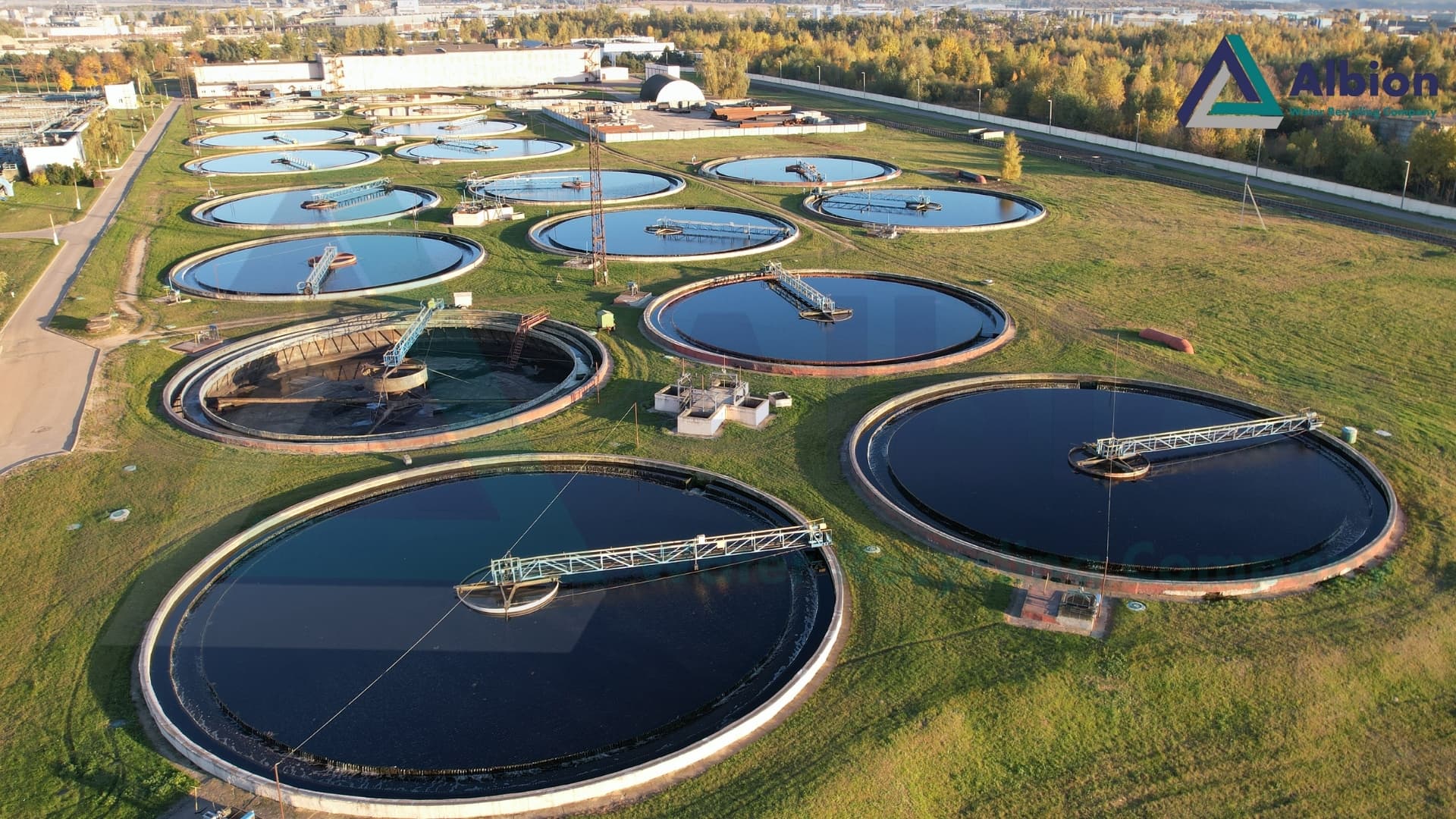
Civil construction is generally the preferred format for municipal and government STPs designed for a 20–30 year planning horizon, large townships, industrial ETPs with substantial and stable flow, and CETP projects where multiple member industries discharge into a shared, permanent facility. It also suits sites where below-grade construction is needed to preserve surface land use, such as underground STPs beneath landscaped or parking areas.
Detailed Comparison: Packaged vs Civil-Based AMBBR
- Installation timeline: Packaged plants install significantly faster since fabrication runs in parallel with site preparation; civil plants follow a longer, sequential construction schedule.
- Capital cost at scale: Packaged plants often cost less at small to mid-size flows due to lower installation effort; civil construction becomes more cost-effective as design capacity grows.
- Site dependency: Packaged plants reduce reliance on soil conditions, water table, and heavy civil contractor availability; civil plants require thorough geotechnical evaluation before construction begins.
- Mobility: Packaged plants can potentially be relocated; civil plants are permanent, site-specific structures with no relocation option.
- Layout customization: Civil construction allows tank geometry and site integration to be fully customized; packaged units follow standardized skid or module dimensions.
- Structural design life: RCC structures are generally designed for a longer service life than MS/FRP tankage, which is relevant for permanent, multi-decade installations.
- Expansion approach: Packaged plants expand through modular addition; civil plants expand best when growth is anticipated and built into the original layout, since retrofitting new civil bays later is more disruptive.
Why the AMBBR Process Performs Consistently in Both Formats
AMBBR's core treatment mechanism — biofilm growth on suspended carrier media, aeration to keep carriers in motion, and retention screens to hold carriers within the reactor — does not depend on whether the surrounding tank is MS, FRP, or RCC. What changes between formats is tank material, construction method, and how the reactor integrates with the rest of the site, not the biological treatment principle itself. This means the carrier fill ratio, aeration design, and screen sizing determined for a project's influent load can be engineered consistently whether the final tank is a packaged module or a civil structure, which is why construction format should be decided based on project logistics rather than any assumed difference in treatment outcome.
Hybrid and Phased Approaches
Some projects don't need to choose one format permanently. A site with an urgent compliance deadline but long-term growth plans can start with a packaged AMBBR unit to meet the immediate requirement, while a civil-based expansion is designed and constructed in parallel for eventual full capacity. Similarly, a civil-based plant that later faces unplanned inflow growth can sometimes add a packaged AMBBR module as interim capacity while a permanent civil expansion is engineered and built. These hybrid approaches require the initial process design to anticipate the transition, so that hydraulic tie-ins and control system integration don't become a retrofit problem later.
Applications by Industry, Mapped to Construction Format
- Municipal and government STPs: civil construction is the standard choice for large, permanent city or town-level plants; packaged units suit smaller municipal or peri-urban applications with tighter budgets or timelines.
- Residential and commercial complexes: packaged AMBBR is common for housing societies and standalone commercial buildings due to fast installation and minimal civil disruption to an occupied or nearly-complete site.
- Food and beverage plants: either format can apply, but permanent, high-throughput facilities often favour civil construction for long-term cost efficiency, while smaller or expanding units may start packaged.
- Pharmaceutical and textile ETPs: typically civil construction, given the permanence of manufacturing sites and the need for tight integration with multi-stage physico-chemical and biological treatment trains.
- CETP projects: generally civil-based given scale and permanence, though phased capacity additions using packaged modules can bridge the gap as new member industries connect.
- Construction camps and temporary sites: packaged AMBBR is the practical default, given the need for relocation or decommissioning once the project phase ends.
Key Questions to Work Through Before Choosing a Format
- What is the design flow capacity today, and how significantly is it expected to grow over the next 5–10 years?
- Is this a permanent installation, or could the site need to relocate, downsize, or decommission within its planning horizon?
- How constrained is the site — soil conditions, water table, access for heavy equipment, and available civil contracting capacity?
- Is there a hard compliance or occupancy deadline, and how much schedule risk can the project realistically absorb?
- Is the budget a single upfront capital allocation, or can it be phased across capacity additions over time?
- Does the effluent's corrosivity or temperature profile favour RCC over MS/FRP tank material, or vice versa, for long-term durability?
Albion Ecotech's Approach: M-Flocs AMBBR in Either Format
As a wastewater treatment engineering company, Albion Ecotech offers M-Flocs AMBBR in both prefabricated packaged formats and civil (RCC) construction, and works through the project variables above with clients before recommending a format, rather than defaulting to one approach. The underlying AMBBR process design — carrier fill ratio, aeration system, and retention screening — is engineered consistently for the project's specific organic and hydraulic load regardless of construction method. For projects considering a phased or hybrid approach, Albion designs the initial installation with future tie-in points in mind, so a packaged module and a later civil expansion, or vice versa, can be integrated without major rework. Where reuse or capacity-enhancement goals are part of the project, Albion evaluates downstream polishing (UF, RO) and sludge management planning within the total cost and layout comparison for both formats, and factors energy-efficient equipment selection into the design regardless of which construction method is chosen. Post-commissioning, Albion supports clients through operator training and maintenance planning to help sustain performance over the plant's operating life.
Conclusion
Packaged and civil-based AMBBR plants deliver the same underlying treatment principle through very different construction paths — one optimized for speed, flexibility, and minimal civil dependency, the other for scale economics, design flexibility, and long structural life. Rather than treating this as a binary preference, the more useful approach is to work through flow projections, site constraints, timeline pressure, and budget structure for each specific project, and let those variables point to the format — or the hybrid path — that actually fits.
Frequently Asked Questions
Is packaged AMBBR suitable for large municipal STPs?
It can be, for smaller municipal or peri-urban applications, but civil construction is generally the more economical and durable choice for large, permanent city-level STPs due to scale economics and long structural design life.
Does construction format affect AMBBR treatment performance?
No. The AMBBR process — carrier fill ratio, aeration, and retention screening — is engineered the same way regardless of whether the tank is packaged (MS/FRP) or civil (RCC). Construction format affects cost, timeline, and site fit, not the underlying biological treatment principle.
Can a packaged AMBBR plant be expanded later?
Yes, packaged AMBBR plants can generally be expanded by adding further modules or carrier media, provided this is planned into the original design so downstream units and hydraulics can accommodate the added capacity.
Which format is more durable in corrosive or high-temperature effluent?
This depends on material selection and lining quality in both cases. RCC tanks with appropriate lining, and MS/FRP tanks with suitable coatings or resin selection, can both be engineered for corrosive or high-temperature effluent — the specific effluent characteristics should be evaluated before finalizing tank material.
Can a project start with a packaged AMBBR plant and move to civil construction later?
Yes, this hybrid approach is used when a project needs to meet an early compliance deadline while planning for larger future capacity, but it needs to be factored into the original design so the transition doesn't require major rework of hydraulics or controls.
What is the typical installation time difference between the two formats?
Packaged plants generally install faster since fabrication happens off-site in parallel with foundation work, while civil construction follows a longer, sequential schedule of excavation, formwork, casting, and curing. Exact timelines vary by project scale and site conditions.