Why the Distillery Industry Needs an ETP Wastewater Treatment Plant
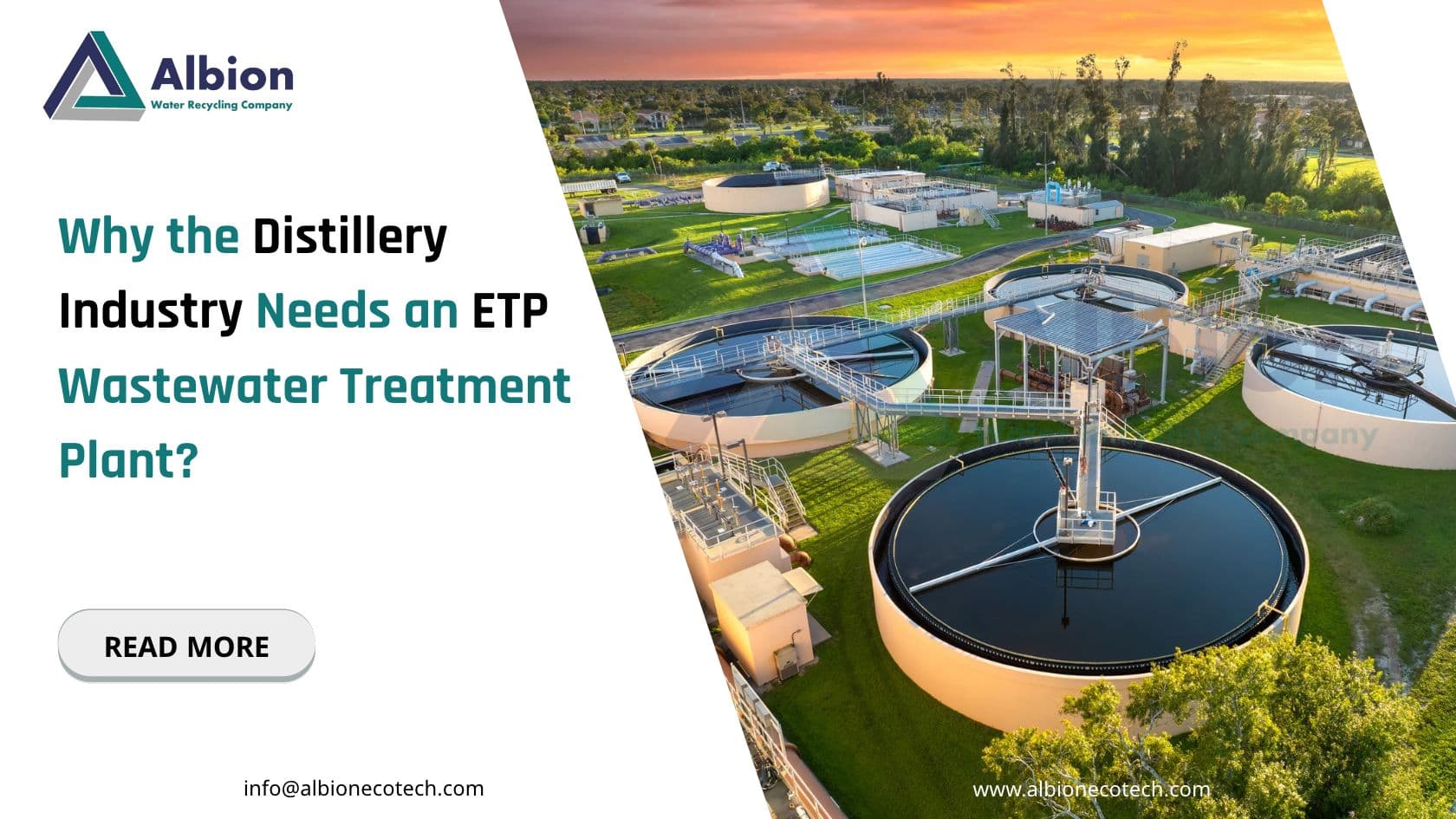
A distillery turns sugar or starch into alcohol, and what is left behind is some of the strongest wastewater any industry produces. The liquid that leaves the still, called spent wash or vinasse, is hot, acidic, dark brown and loaded with dissolved organic matter and minerals. Released untreated, it kills aquatic life, depletes oxygen over long stretches of a river, taints groundwater and gives off a heavy odour. A distillery therefore cannot run without an effluent treatment plant (ETP), and in most cases without a full water recovery system. This article explains why, and what a well-designed distillery ETP involves.
Where distillery wastewater comes from
- Spent wash or stillage: the residue from the distillation column after alcohol has been separated from the fermented wash. This is the dominant stream by far. A molasses-based distillery can generate roughly 8 to 15 litres of spent wash for every litre of alcohol, depending on the process.
- Spent lees and fermenter washings: from the rectification columns, yeast handling and cleaning of fermentation tanks.
- Condensates: from evaporators and process steam, carrying lower but still significant organic load.
- Utilities: cooling tower and boiler blowdown, and water treatment reject.
- Floor and equipment washing: a smaller, variable stream with solids and cleaning chemicals.
What makes spent wash so difficult
- Extreme organic strength. Molasses spent wash commonly has COD in the range of tens of thousands of mg/L, often 80,000 to 100,000 mg/L or more, with BOD also very high. Grain-based spent wash is generally lower but still far above domestic sewage.
- Dark colour from melanoidins. These pigments form during heating of sugars and amino compounds. They resist biological breakdown, which is why colour and residual COD persist after conventional treatment.
- Low pH and high temperature. Spent wash is acidic and leaves the column hot, which demands corrosion-resistant materials and cooling before biological treatment.
- High dissolved solids. Potassium, sulphate, chloride and other salts from the raw material remain in the liquid. Salinity limits biological performance, irrigation use and discharge.
- Sulphate and odour. Sulphate is reduced to hydrogen sulphide under anaerobic conditions, which is toxic, corrosive and foul-smelling and must be managed in any digester.
- Large volume relative to product. Because several litres are generated per litre of alcohol, even a medium distillery produces a great deal of liquid every day.
Why an ETP is not optional
Regulatory requirement. Distilleries fall in a heavily polluting category and operate under consent from the State Pollution Control Board. Many are required to run zero liquid discharge, meaning no process effluent leaves the site. Requirements depend on the state, feedstock and consent conditions, and should be confirmed with the Board before design. Failure to comply can lead to penalties, closure directions and loss of the licence to operate.
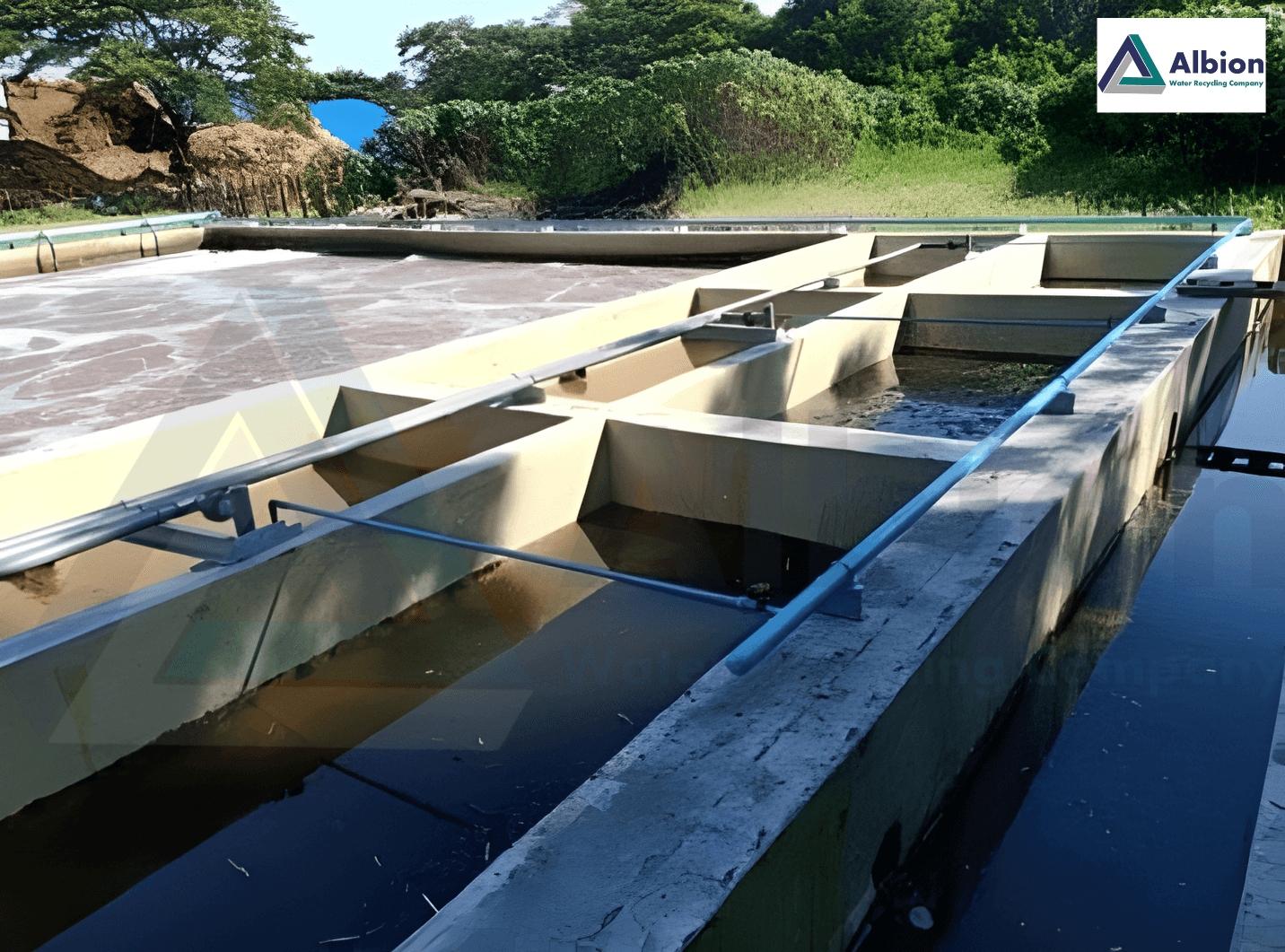
Protecting rivers and groundwater. A small leak or release of spent wash can strip a watercourse of oxygen over long distances and cause fish kills. Unlined storage lagoons can contaminate groundwater with salts and organics.
Water security. Distilleries draw large amounts of water, and many sit in sugarcane belts where groundwater is under pressure. Recovering condensate and treated water for reuse reduces intake and the risk of abstraction limits.
Energy and resource recovery. Spent wash is rich in organic matter that can generate biogas and, once concentrated, be burned as fuel, and in some routes mineral content is recovered as potash. These benefits only arise when the effluent is collected and treated in a controlled system.
Community and customer expectations. Odour and river pollution draw complaints quickly, and brand owners and fuel buyers increasingly ask about environmental compliance.
How a distillery ETP is built
Distillery treatment is usually a chain of stages, because no single process can take spent wash from tens of thousands of mg/L of COD to a state fit for discharge or reuse. The chain depends on the feedstock and on the zero liquid discharge route the plant follows.
- Cooling and conditioning. Spent wash is cooled, and pH and nutrients are adjusted for the biological stage.
- Anaerobic digestion (biomethanation). The strongest stage for taking out organic load. Anaerobic reactors remove a large share of the COD with little energy input and produce biogas that can fuel boilers. Digester effluent still carries high COD, colour and salts, so it needs further treatment. Sulphide in the biogas must be managed.
- Concentration by evaporation. Multiple-effect evaporators concentrate spent wash, either raw or after digestion, to a thick syrup. The syrup may be burned in an incineration boiler, with the ash recovered as potash, or dried, or blended into compost in some routes. Evaporation also releases condensate, which is recovered as water.
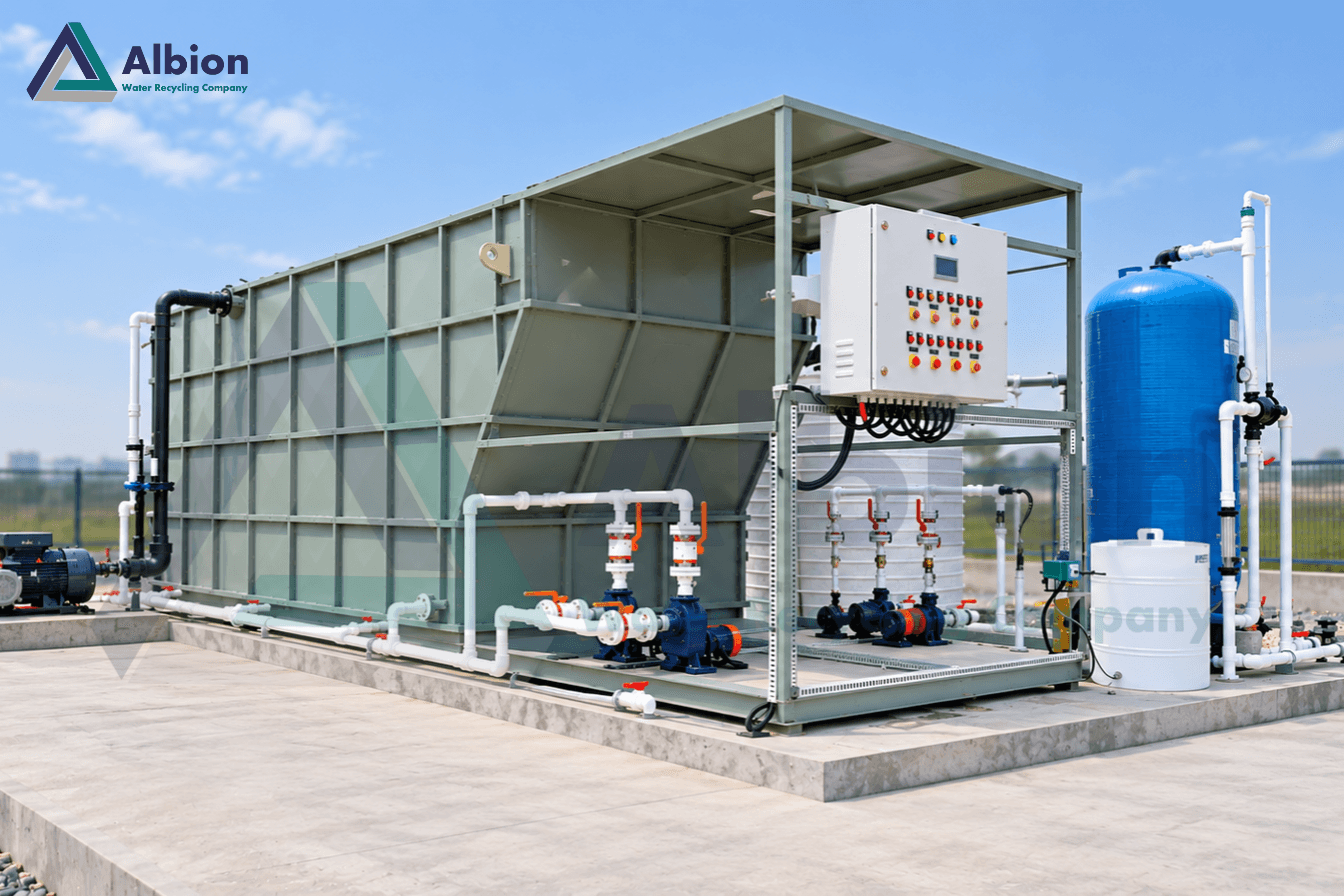
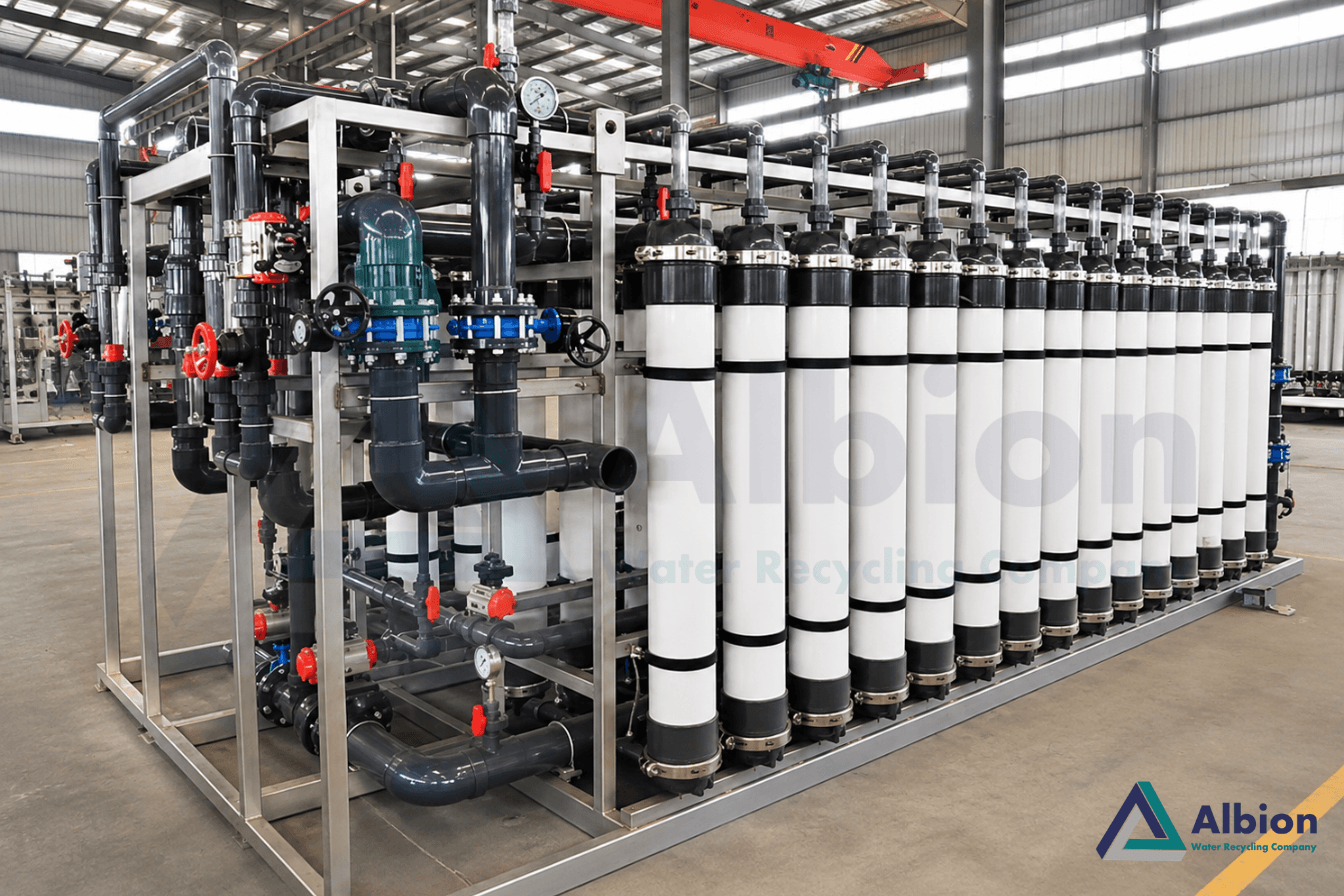
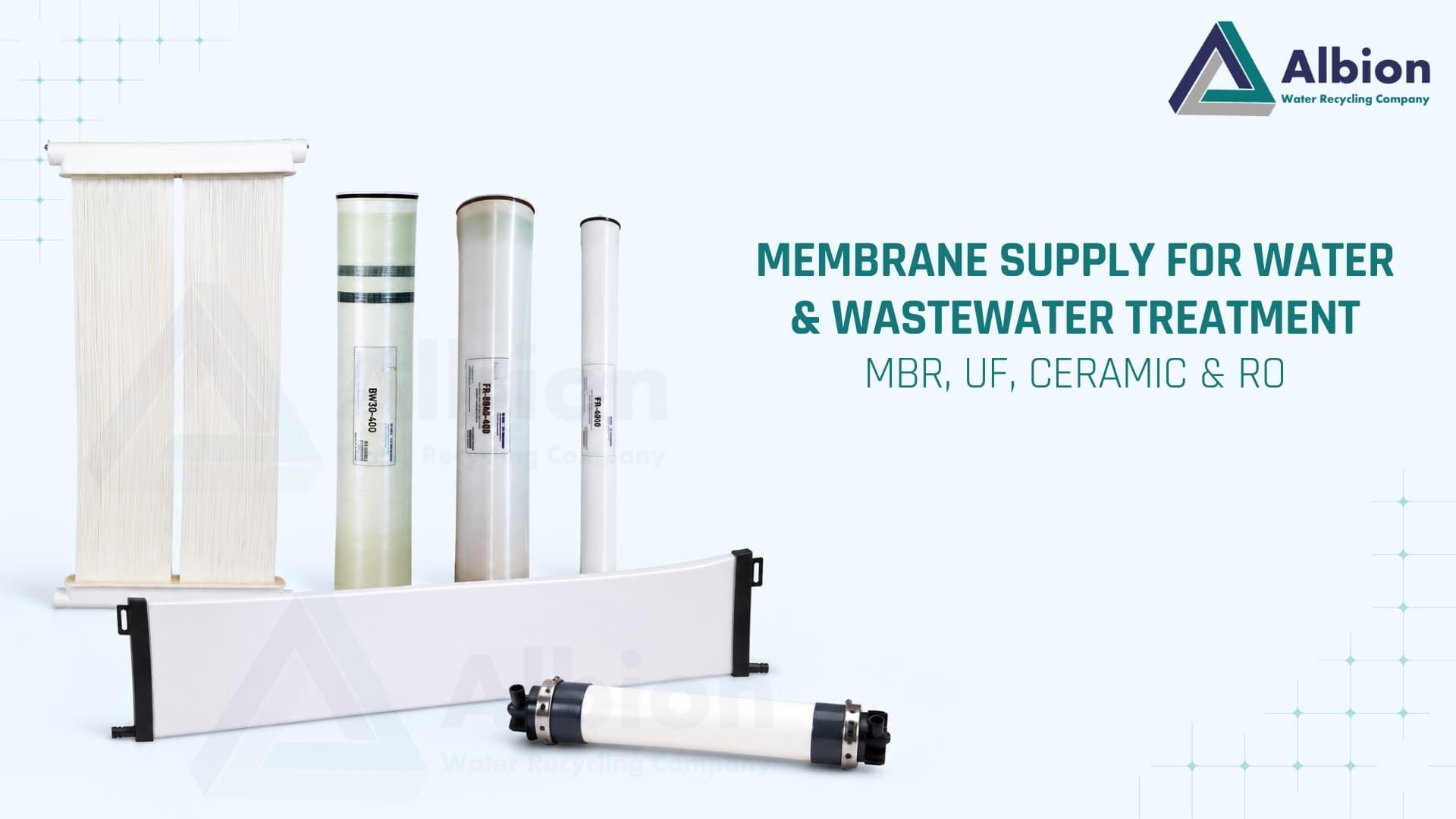
- Condensate polishing. Evaporator condensate still carries organic matter, volatile acids and traces of colour, so it is treated in a condensate polishing unit. This usually combines a biological stage, such as MBBR or AMBBR, SBR or MBR, followed by UF and RO to produce water suitable for reuse in cooling and utilities.
- Utility and general effluent treatment. Washings, blowdown and RO reject are collected, equalised and treated, with reject concentrated in the evaporation system so that nothing leaves the site as liquid.
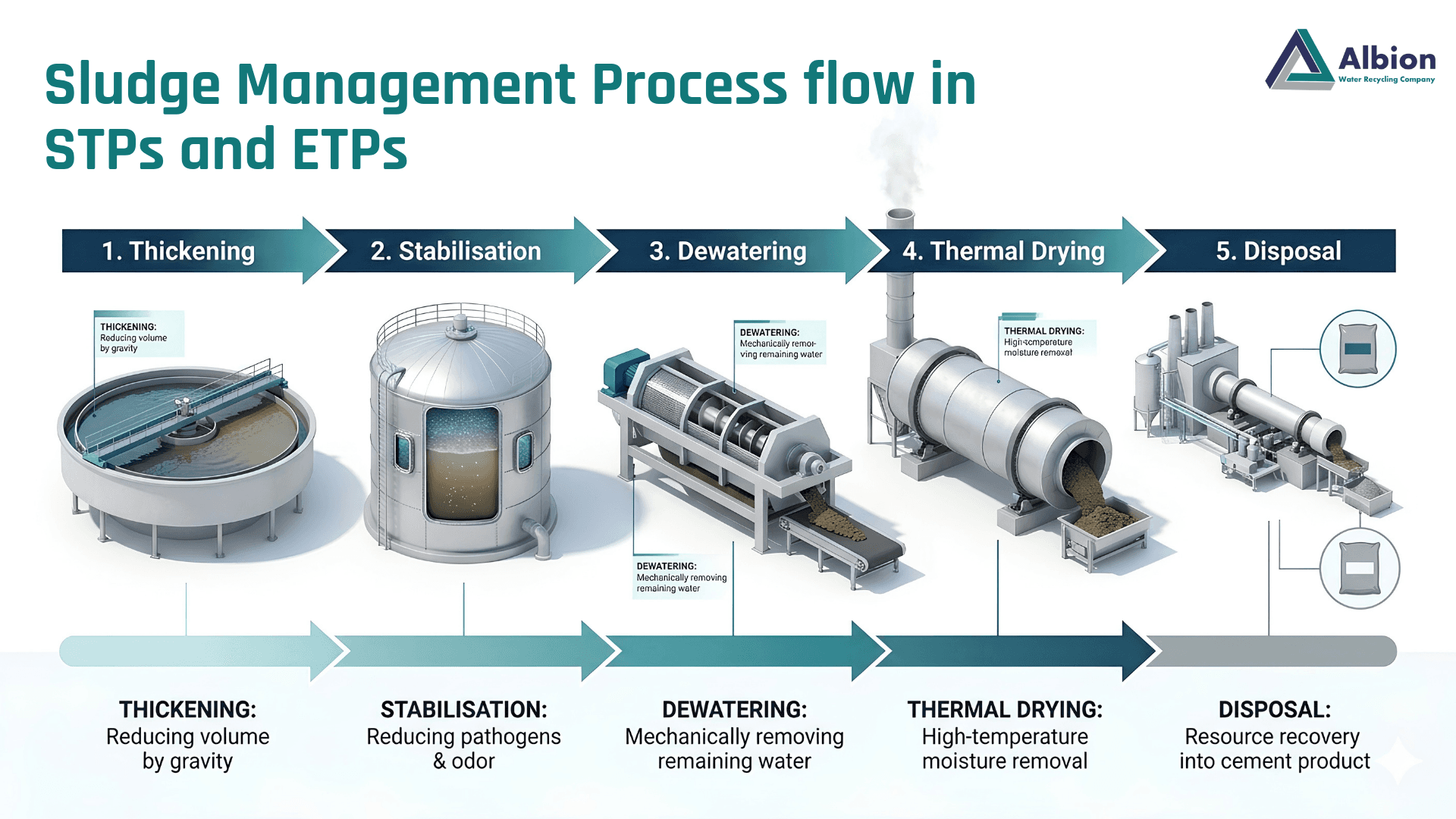
- Sludge and ash handling. Biological sludge from digesters and aerobic stages is thickened and dewatered, and ash from incineration is handled by an approved route.
Grain-based distilleries differ in one important way. Whole stillage is separated into wet grain and thin stillage, the solids are dried into distillers grains for animal feed, and part of the thin stillage is recycled into fermentation as backset, which cuts both fresh water use and effluent volume. The remaining thin stillage is evaporated, and the condensate is polished in the same manner.
Reuse and water recovery
Condensate and treated water are the main sources of reusable water, and the usual destinations are cooling tower make-up, boiler feed after RO and polishing, washing and gardening. Use in the fermentation or process side has to meet the plant's own quality requirements, and the effect on yeast and product should be checked on trials before treated water is routed there. Closing the water loop also concentrates salts in the cooling and RO systems, so blowdown and reject have to be planned into the evaporation capacity.
Reduce the load at source
- Improve fermentation and distillation efficiency, since higher alcohol concentration in the wash means less spent wash per litre of product.
- Recycle part of the stillage as backset in grain-based plants.
- Keep cooling tower and boiler blowdown separate from spent wash, so the cleaner stream does not add to the evaporation duty.
- Recover heat from hot spent wash and condensate before treatment.
- Meter water and spent wash volumes at each stage so losses and leaks are visible.
Common mistakes
- Storing spent wash in unlined or uncovered lagoons, which risks groundwater pollution and odour.
- Expecting biological treatment alone to deliver colour removal or discharge-grade quality.
- Underestimating corrosion and specifying standard materials for hot, acidic, saline liquids.
- Ignoring sulphide in biogas, which damages engines, boilers and pipework.
- Sizing the condensate polishing unit for design condensate quality, then receiving worse during upsets and start-ups.
- Leaving ash, sludge and RO reject routes undefined until after commissioning.
How Albion Ecotech approaches distillery effluent
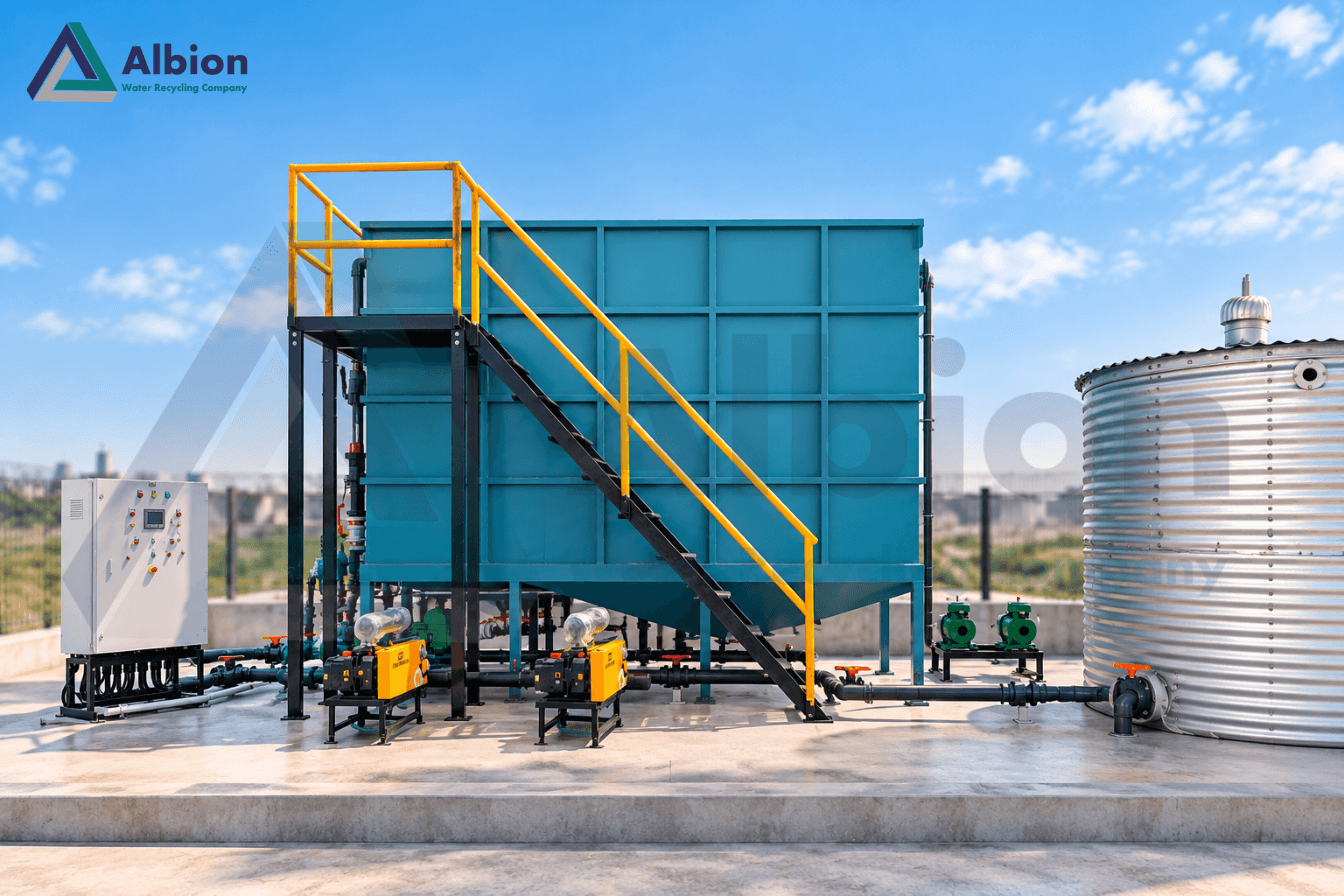
Albion Ecotech designs treatment for the parts of a distillery's water system that determine whether zero liquid discharge actually works: condensate polishing, utility and general effluent treatment, and water recovery. Depending on the plant, that can mean a biological stage selected from MBBR or AMBBR, SBR and MBR, UF and RO to bring condensate to reuse quality, and ZLD with evaporation for reject streams. Sludge management, energy-efficient aeration and pumping, PLC-based automation and post-commissioning support are part of the scope, and plants can be supplied in packaged or civil formats. Design starts from measured flows and quality for each stream and from the zero liquid discharge route the plant has chosen.
Frequently Asked Questions
What is spent wash?
It is the liquid residue left after alcohol is distilled from fermented wash. It is hot, acidic, dark in colour and extremely high in COD and BOD, which makes it one of the most polluting industrial wastewaters.
Is zero liquid discharge mandatory for distilleries?
Many distilleries are required to run zero liquid discharge, but conditions depend on the state, feedstock and consent. The applicable requirement should be confirmed with the State Pollution Control Board.
Why is distillery wastewater coloured?
The dark brown colour comes mainly from melanoidins, pigments formed from sugars and amino compounds during processing. They resist biological breakdown, so colour often remains after biological treatment.
What is a condensate polishing unit?
It is a treatment plant for the water condensed from evaporators. Because that condensate still carries organics and volatile acids, it goes through a biological stage followed by UF and RO so the water can be reused in cooling and other utilities.
Can treated distillery water be reused?
Yes, mainly for cooling tower make-up, boiler feed after RO and polishing, washing and gardening. Use on the process side should be checked against the plant's quality needs before it is adopted.