
Packaged & Civil Type X-Flocs MBR Plants: Efficiency Meets Flexibility
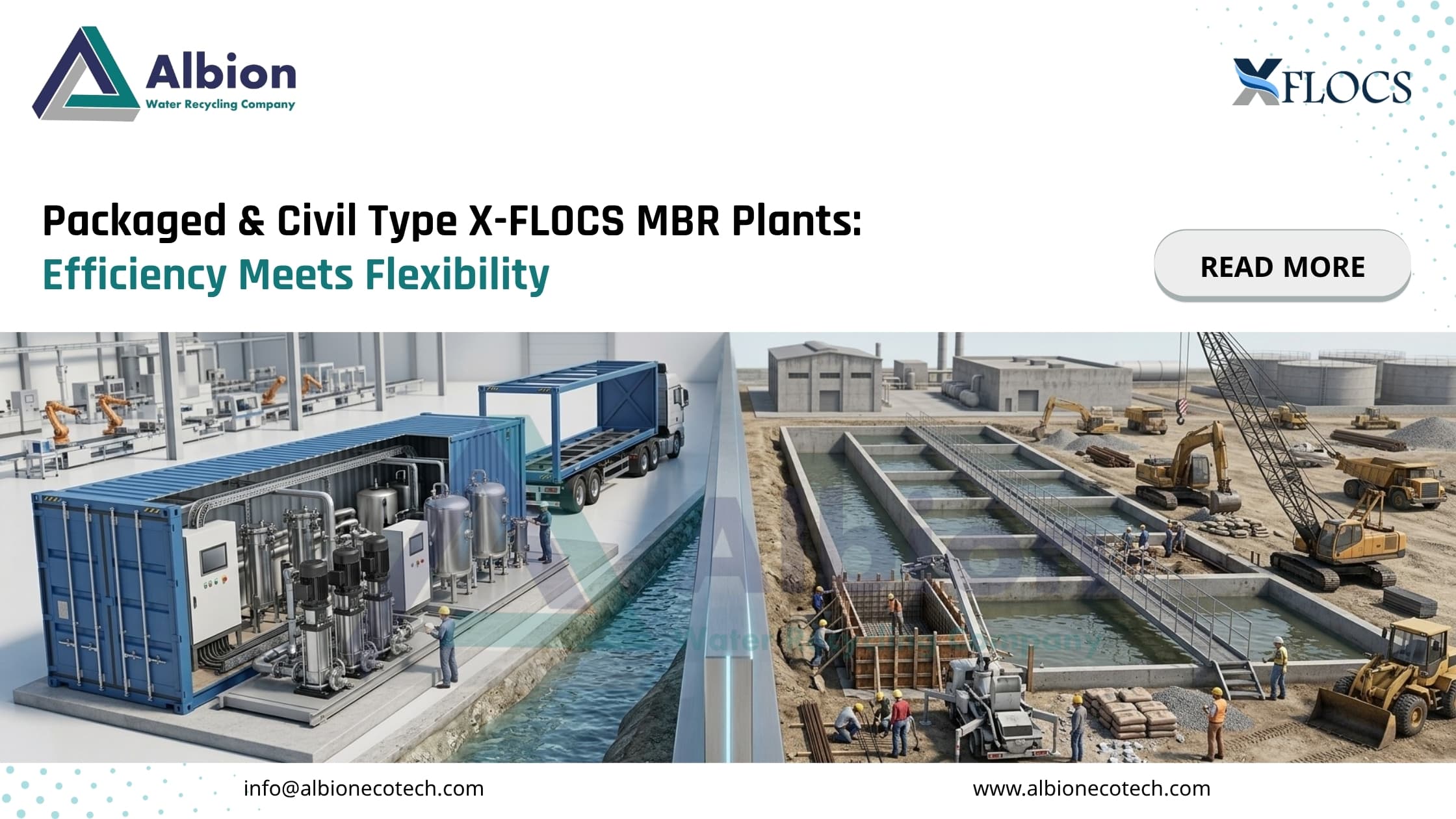
One of the earliest decisions in any STP or ETP project is not which biological process to use, but how the plant itself should be built: as a prefabricated packaged unit, or as a conventional civil (RCC) structure. This choice affects project timelines, capital cost structure, site suitability, and how easily the plant can be relocated or expanded later. This article looks at packaged and civil construction formats for Albion Ecotech's X-Flocs MBR technology, and how each fits different project needs.
Packaged vs Civil Construction: The Core Difference
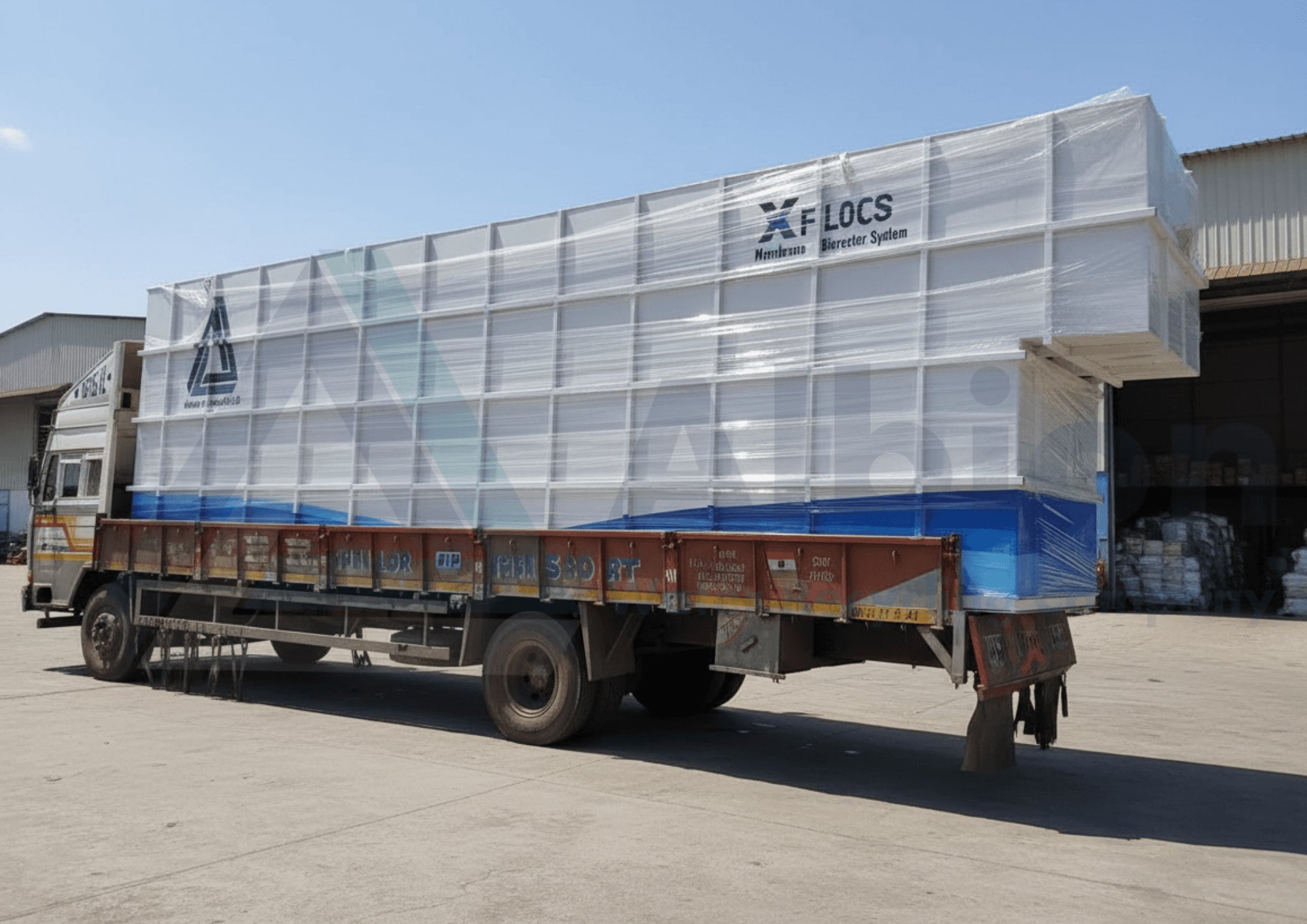
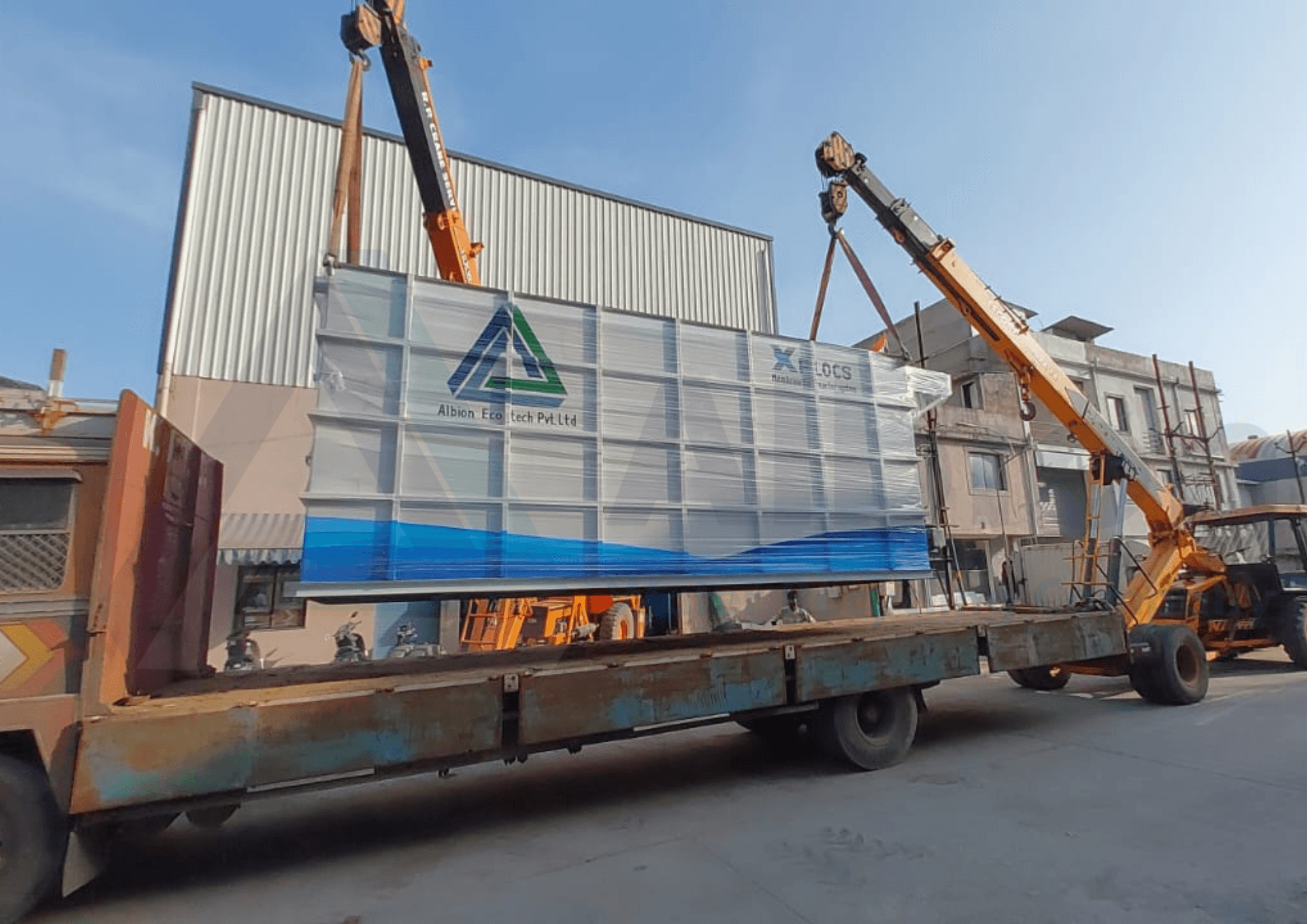
A packaged plant is a factory-fabricated, skid- or container-mounted treatment system built off-site in MS (mild steel) or FRP (fibre-reinforced plastic) tanks, then transported and installed at the project location with minimal civil work. A civil construction plant, by contrast, is built on-site using reinforced cement concrete (RCC) tanks and structures designed specifically for the project's flow and layout. Both formats can house the same X-Flocs MBR process — biological treatment combined with membrane filtration — the difference lies in how the plant is fabricated, installed, and, in some cases, how it can be moved or expanded later.
Packaged X-Flocs MBR Plants: Where They Fit
Packaged MBR plants are pre-engineered and largely factory-tested before dispatch, which shortens on-site installation time considerably compared with a civil structure built from scratch. This format suits projects with tight execution timelines, sites where heavy civil work is difficult (congested urban plots, hilly or remote locations), or applications such as construction camps, small townships, and temporary or semi-permanent facilities where the plant may eventually need to be relocated or resized.
- Faster deployment: Fabrication happens in parallel with site preparation, and installation is largely mechanical and electrical rather than civil, reducing overall project timelines.
- Minimal civil dependency: Only a foundation or plinth is typically required, which helps on sites with poor soil conditions, high water tables, or limited civil contracting capacity.
- Relocatable and modular: Well suited to projects where the plant may need to move with the site, such as construction camps, or where capacity needs to be added in discrete modules over time.
- Quality consistency: Factory fabrication allows tighter quality control on tank fabrication, piping, and equipment mounting than is sometimes achievable with on-site civil work.
Civil Construction X-Flocs MBR Plants: Where They Fit
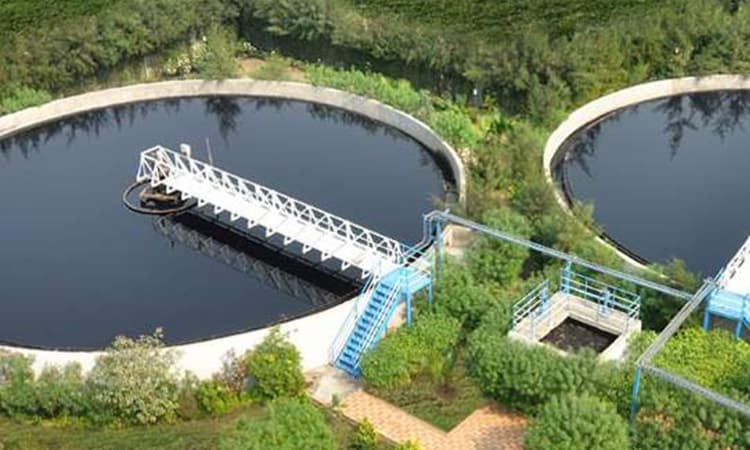
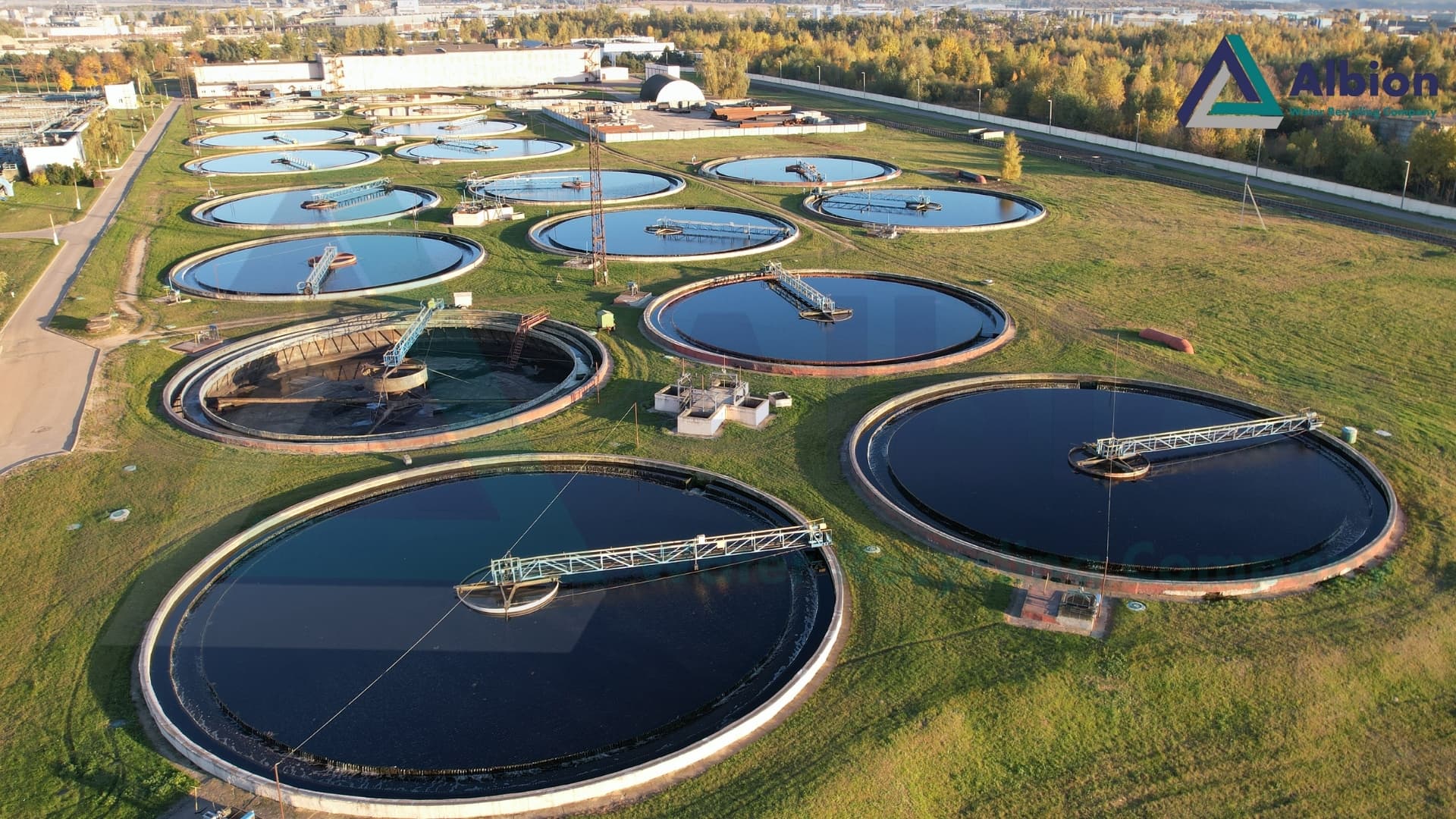
Civil construction plants are generally the preferred format for larger, permanent installations — municipal STPs, large townships, and industrial ETPs — where flow capacity, layout, and long design life justify a purpose-built RCC structure. Because the tanks are cast to the exact process geometry required, civil plants offer more flexibility in customizing tank shapes, walkways, and integration with other site infrastructure, and they are generally the more economical route at larger capacities.
- Higher capacity economics: For large flow volumes, RCC construction generally offers a lower per-KLD cost than an equivalent packaged system built in MS or FRP.
- Design flexibility: Tank geometry, depth, and layout can be tailored to the site and integrated with existing structures, drainage, and future expansion plans.
- Long design life: RCC structures are generally built for a longer service life, making this the standard choice for permanent municipal and large industrial installations.
- Below-grade construction: Civil tanks can be built partially or fully below ground level, which is useful where surface land use needs to be preserved, such as landscaped areas above underground STPs.
Packaged vs Civil: A Quick Comparison
- Installation time: Packaged plants install faster since fabrication happens off-site in parallel with site prep; civil plants take longer due to sequential construction activities.
- Capacity range: Packaged units generally suit small to mid-size flows; civil construction becomes more cost-effective as capacity scales up.
- Mobility: Packaged plants can potentially be relocated; civil plants are permanent, site-specific structures.
- Site dependency: Packaged plants reduce dependency on heavy civil work and site soil conditions; civil plants require proper geotechnical evaluation and construction management.
- Customization: Civil construction allows more layout and tank-geometry flexibility; packaged units follow standardized skid or module configurations.
Why the X-Flocs MBR Process Works in Both Formats
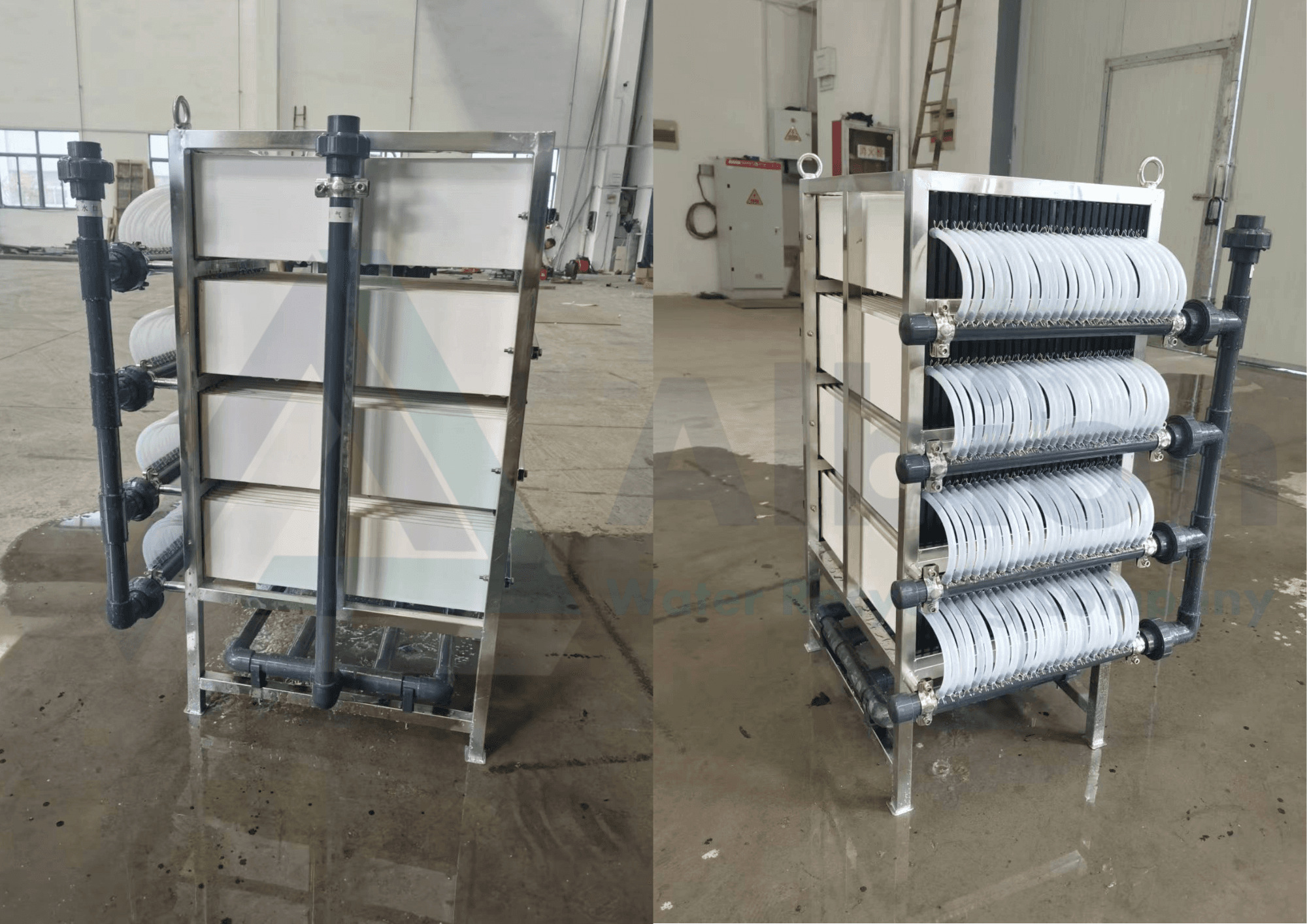
Because X-Flocs MBR relies on membrane filtration rather than gravity settling for solids separation, the process itself is largely independent of tank construction method. The same biological treatment principle, floc conditioning approach, and membrane configuration can be housed in a packaged skid or a civil RCC tank — what changes is the construction format, timeline, and cost profile, not the underlying treatment performance target. This makes it possible to start with a packaged unit for an initial phase and later transition to, or supplement with, civil construction as flow requirements grow, provided this is planned into the process design from the outset.
Applications and Industries
- Packaged X-Flocs MBR: construction camps and labour colonies, small housing societies and gated communities, resorts and remote hospitality projects, temporary or phased-capacity industrial sites.
- Civil construction X-Flocs MBR: municipal and government STPs, large townships, CETP projects, pharmaceutical and food and beverage ETPs with permanent, high-capacity requirements, textile and dyeing effluent treatment at scale.
Albion Ecotech's Approach: Matching Format to Project Needs
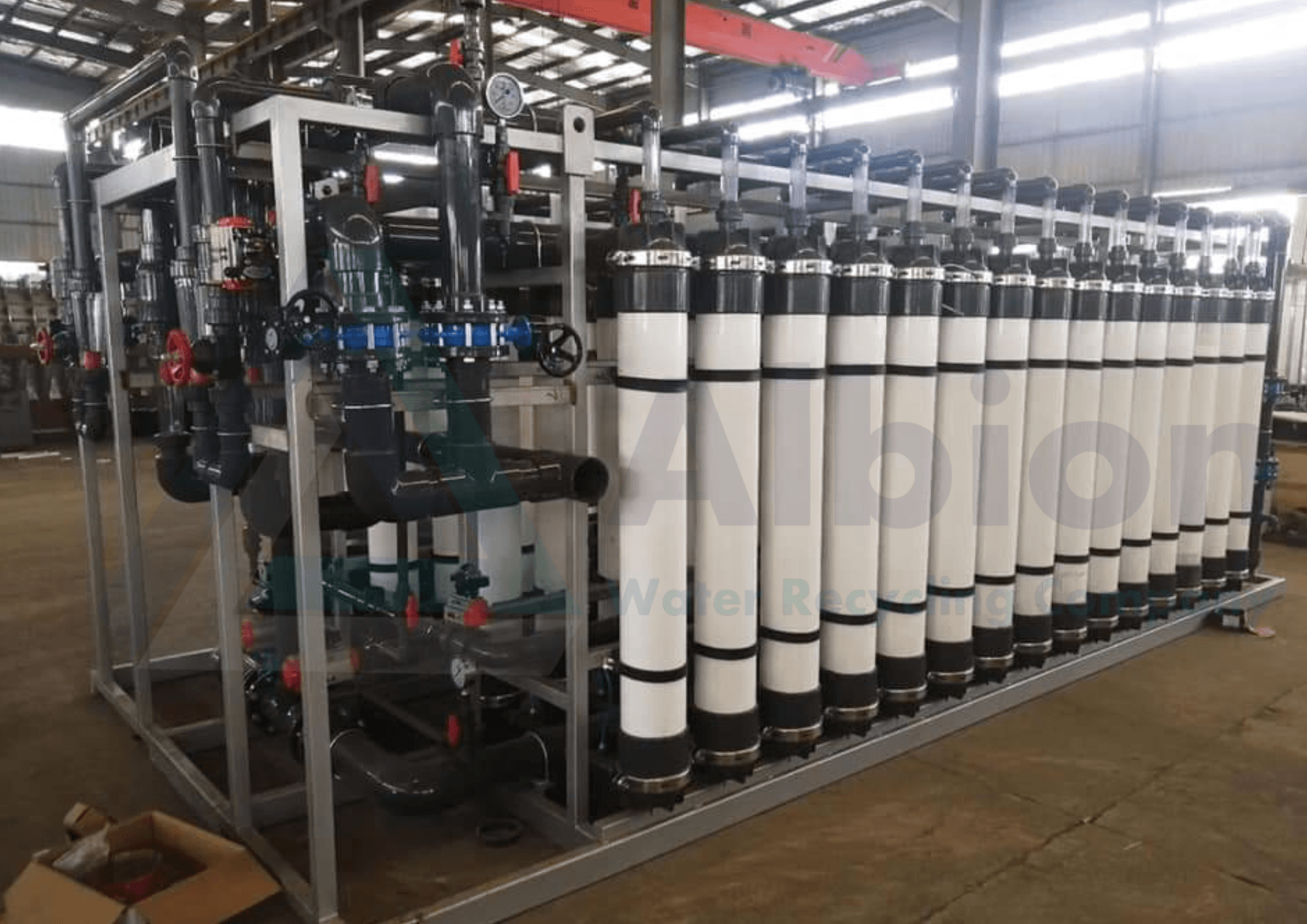
As a wastewater treatment engineering company, Albion Ecotech offers X-Flocs MBR in both packaged and civil construction formats, and recommends the format based on site conditions, project timeline, budget structure, and future expansion plans, rather than defaulting to one approach. For projects with reuse or recovery goals, Albion integrates downstream polishing such as UF or RO in either format, and plans sludge management to handle the biomass generated by the process regardless of construction type. Energy-efficient blower and pump selection is considered in both formats to help manage long-term OPEX, and Albion supports clients through commissioning, operator training, and maintenance planning to help sustain compliance and performance over the plant's operating life.
Conclusion
Choosing between a packaged and a civil construction X-Flocs MBR plant is less about which is “better” and more about which fits the project's timeline, capacity, site conditions, and long-term plans. Packaged plants offer speed, minimal civil dependency, and flexibility; civil construction offers scale economics, design flexibility, and long design life. Evaluating these factors early, alongside the treatment process itself, helps ensure the chosen format supports the project rather than constraining it later.
Frequently Asked Questions
Which is cheaper: a packaged or a civil construction MBR plant?
It depends on capacity. Packaged plants are often more economical at small to mid-size flows due to lower installation effort, while civil construction generally becomes more cost-effective at larger capacities. A project-specific cost comparison is the most reliable way to decide.
Can a packaged X-Flocs MBR plant be relocated later?
Packaged plants are generally designed with relocation or modular expansion in mind, which makes them a practical option for temporary sites such as construction camps, though relocation feasibility should be confirmed at the design stage.
Does the treatment quality differ between packaged and civil formats?
No. The X-Flocs MBR process — biological treatment plus membrane filtration — is the same in principle in both formats. Construction method affects installation, cost, and site fit, not the underlying treatment technology.
Is civil construction always required for municipal STPs?
Civil construction is the more common choice for large, permanent municipal STPs due to scale economics and long design life, but packaged units can be suitable for smaller municipal or peri-urban applications depending on flow and site constraints.
Can a project start with a packaged plant and expand with civil construction later?
This is possible when planned in advance as part of a phased capacity strategy, but it needs to be factored into the original process design so that the two formats can be integrated without major rework.
%20Technology.jpg&w=3840&q=75)
%20Wastewater%20Treatment%20%20How%20It%20Works.jpg&w=3840&q=75)