What Is a Sequencing Batch Reactor (SBR)? Working, Advantages & Applications Explained
%20Technology.jpg&w=3840&q=75)
Municipalities and industries alike face growing pressure to treat wastewater efficiently within limited land, capital, and operating budgets, while still meeting increasingly strict discharge norms. Among the biological treatment technologies available today, the Sequencing Batch Reactor (SBR) has become one of the most widely adopted solutions for sewage treatment plants (STPs) and effluent treatment plants (ETPs) that need to handle variable flows without a large civil footprint. This article explains what SBR technology is, how it works, and where it fits within a modern wastewater treatment strategy.
What Is a Sequencing Batch Reactor (SBR)?
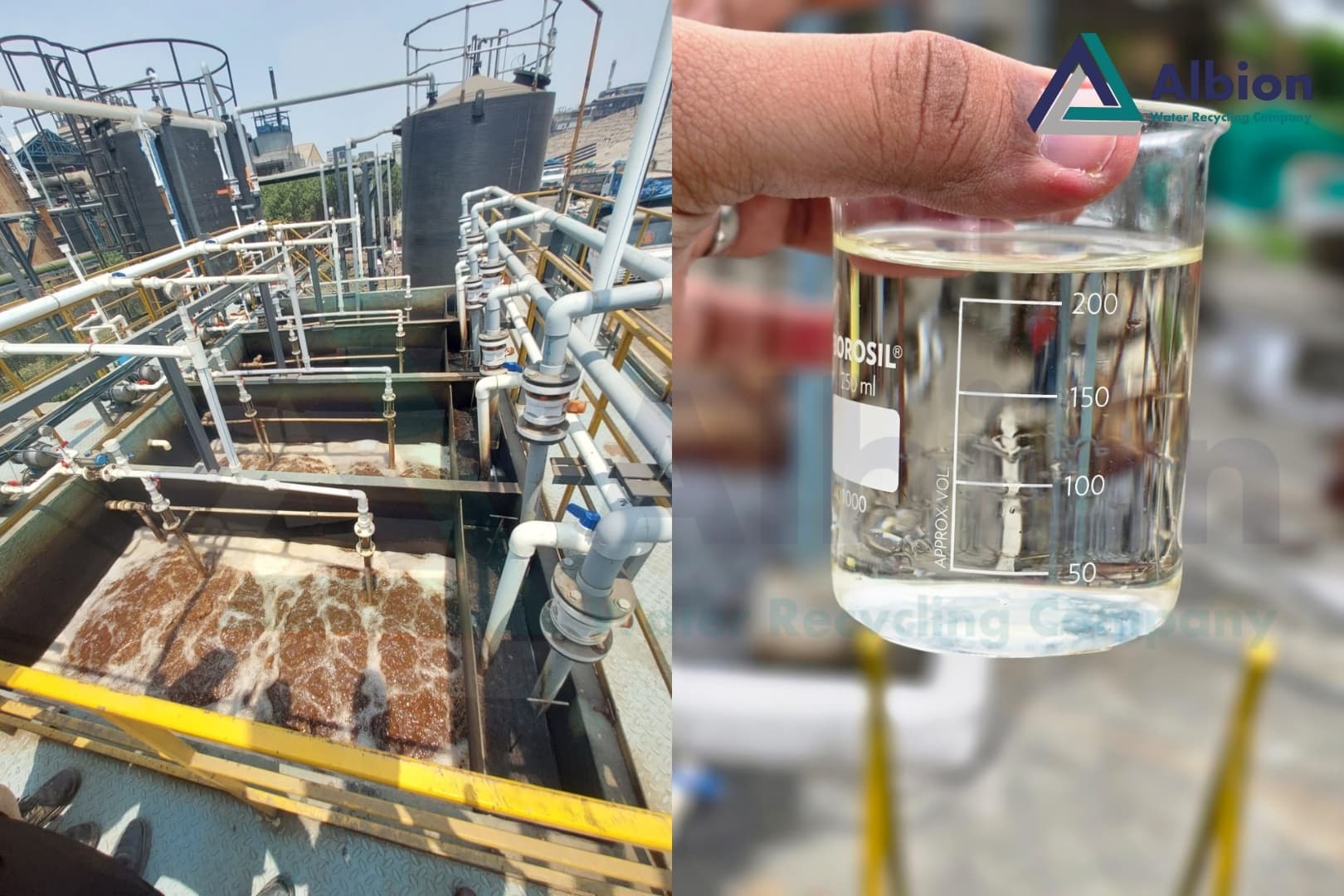
A Sequencing Batch Reactor is a fill-and-draw activated sludge process that carries out equalization, biological treatment, and clarification within a single tank, in a timed sequence, rather than in separate physical basins. Unlike a conventional activated sludge (CAS) plant, which requires a distinct aeration tank followed by a secondary clarifier, an SBR performs the same functions through a repeating cycle of operational phases in one reactor. This makes SBR a widely used process for STPs, and for ETPs treating biodegradable industrial effluent, especially where plot area is constrained or inflow patterns vary through the day.
How SBR Technology Works: The Five-Phase Cycle
An SBR system operates as a repeating batch cycle rather than a continuous flow-through process. Each cycle is generally divided into five phases, controlled through PLC-based automation and timers:
- Fill: Raw or pre-screened wastewater enters the reactor and mixes with the existing biomass (activated sludge) retained from the previous cycle. Fill can be static, mixed, or aerated depending on the process design and nutrient removal requirements.
- React: Diffused aeration and mixing are switched on. Microorganisms consume the biodegradable organic load (BOD/COD), and, depending on cycle design, alternating aerobic and anoxic periods can support nitrification and denitrification.
- Settle: Aeration and mixing stop, and the tank functions as a quiescent clarifier. The activated sludge biomass settles to the bottom under gravity, leaving clarified water above.
- Decant: A floating or fixed decanter carefully withdraws the clarified supernatant from the top of the tank without disturbing the settled sludge layer, sending it forward for disinfection, filtration, or discharge.
- Idle: The reactor briefly rests before the next Fill phase begins. Excess sludge is wasted during this stage (or during Settle/React, depending on design) to maintain the correct biomass concentration in the system.
In multi-tank SBR installations, reactors are typically staggered so that one tank is always filling while another is reacting, settling, or decanting, allowing the plant to accept continuous inflow even though each tank operates in batches.
Key Components of an SBR System
- Screening and equalization: removes gross solids and buffers flow variation before wastewater enters the reactor.
- Aeration and mixing system: blowers with fine or coarse bubble diffusers, or submersible mixers, supply oxygen and keep biomass in suspension during the React phase.
- Decanter: a floating or motorized fixed-arm decanter that withdraws clarified water from the correct depth without pulling in settled sludge.
- PLC-based automation and instrumentation: timers, level sensors, and in some designs DO/ORP probes that sequence each phase and adapt cycle timing to load.
- Sludge handling: a sludge wasting line connected to downstream thickening or dewatering equipment to manage excess biomass generated by the process.
Advantages of SBR Technology
- Compact footprint: Combining aeration and clarification in one tank reduces the civil area needed compared with a conventional activated sludge plant with a separate clarifier — useful for sites with limited plot area.
- Operational flexibility: Cycle times, aeration duration, and phase sequencing can be adjusted to handle fluctuating flow and organic load, which is common in residential complexes, hospitality, and mixed industrial effluent streams.
- No separate secondary clarifier required: eliminates a dedicated clarifier unit and its associated sludge return (RAS) pumping, simplifying the process train.
- Nutrient removal potential: With appropriately designed anoxic/aerobic periods within the React phase, SBRs can support biological nitrogen removal alongside BOD/COD reduction.
- Automation-friendly and phased expansion: the batch nature of SBR suits PLC-based automation, and multi-tank configurations allow capacity to be added in modules as demand grows.
Points to Consider Before Choosing SBR
- Reliable automation and instrumentation are essential, since phase timing directly affects effluent quality — this needs to be factored into O&M planning.
- Decanting is intermittent rather than continuous; downstream units (disinfection, filtration, tertiary treatment) or a balancing tank may need to be sized to accommodate batch discharge.
- Multi-tank designs are typically needed for continuous-inflow applications, which adds to the initial civil and mechanical scope compared with a single-tank installation.
- Operators need a working understanding of cycle tuning, since incorrect phase durations can affect settling performance and treated water quality.
SBR vs Conventional Activated Sludge (CAS): A Quick Comparison
- Footprint: SBR typically needs less area, since aeration and clarification share one tank; CAS requires separate aeration and clarifier basins.
- Sludge return: CAS relies on continuous RAS pumping between clarifier and aeration tank; SBR does not need a separate RAS system since settling happens in the same tank.
- Flow handling: CAS is inherently continuous flow-through; SBR handles flow in batches, which suits sites with variable or intermittent loading patterns.
- Automation dependency: SBR performance is more dependent on automated phase control than CAS, which can, if required, run on simpler continuous control logic.
Applications of SBR Technology
SBR technology is used across a wide range of STP and ETP applications, including:
- Municipal and urban sewage treatment plants (STPs) serving townships, cities, and local bodies.
- Residential and commercial complexes, including housing societies, hotels, and institutional campuses with fluctuating occupancy-driven flows.
- Food and beverage industry effluent, which is generally biodegradable and well suited to biological batch treatment.
- Pharmaceutical facility effluent treatment, typically as part of a larger multi-stage ETP train.
- Textile and dyeing effluent, generally as a biological polishing stage following physico-chemical pretreatment.
- Common Effluent Treatment Plants (CETPs) handling mixed industrial wastewater streams from multiple units.
Albion Ecotech's Approach to SBR-Based Wastewater Treatment
As a wastewater treatment engineering company, Albion Ecotech designs and executes SBR-based STPs and ETPs tailored to project-specific flow, organic load, and discharge requirements. Depending on the application, Albion integrates SBR with complementary technologies such as MBBR for higher organic loading, and Ultrafiltration (UF) and Reverse Osmosis (RO) for polishing treated water where reuse is targeted. For projects involving excess biomass, Albion also incorporates sludge management systems to handle thickening and dewatering of waste sludge generated by the biological process.
Albion's SBR designs are built around PLC-based automation for stable cycle control, which helps maintain consistent treatment performance even as inflow patterns vary across the day — a common condition in municipal and mixed-use developments. Where a project's water balance and quality objectives support it, Albion also evaluates opportunities for treated water reuse and energy-efficient blower and aeration selection to help manage long-term operating costs.
Conclusion
For projects that need reliable BOD/COD and nutrient removal within a compact footprint and flexible operating envelope, the Sequencing Batch Reactor remains one of the most dependable biological treatment technologies available today. The right SBR configuration, however, depends on site-specific flow patterns, load characteristics, and discharge or reuse objectives. Organizations evaluating an STP or ETP upgrade can benefit from a technical assessment before finalizing the process design.
%20Technology.jpg&w=3840&q=75)