Landfill Leachate Treatment: Technology Options and Zero Liquid Discharge Pathways
Executive Summary
Landfill leachate is one of the hardest wastewaters to treat. It forms when rain and the moisture in waste percolate through buried material, and it picks up organic matter, ammonia, salts, metals and a long tail of trace contaminants on the way. Unlike most industrial effluents, it does not stay the same: its character shifts as the landfill ages, and its volume follows the rainfall. A treatment plant built around a single snapshot is likely to underperform within a few years. This whitepaper explains how leachate composition changes, why ammonia and low biodegradability dominate design, how biological, physico-chemical and membrane stages are combined, and how concentrate and zero liquid discharge (ZLD) are handled. It closes with a decision framework and the cost drivers that matter most.
1. Why Leachate Needs Dedicated Treatment
Leachate that escapes the site contaminates groundwater and surface water, sometimes for decades. Even a lined and capped landfill continues to generate leachate during operation and through a long post-closure period, so collection and treatment are a long-term obligation, not a one-off project. In India, municipal solid waste is typically moist and rich in organic matter, which promotes leachate generation, and monsoon rain adds large seasonal volumes. Solid waste management rules and State Pollution Control Board consent set conditions for leachate collection, treatment and discharge. The specific limits differ by site and consent, so they should be confirmed with the Board before design.
2. How Leachate Changes With Landfill Age
Waste decomposes in stages, and leachate reflects the stage the landfill is in.
- Young leachate (early acid phase). High COD and BOD, high concentrations of volatile fatty acids, low pH, and a high BOD to COD ratio, so much of the organic load is biodegradable. Acidic conditions also dissolve more metals.
- Intermediate leachate. As methane-forming conditions take over, pH rises toward neutral or alkaline, COD falls, and the biodegradable share declines.
- Old or stabilised leachate. Lower COD but a low BOD to COD ratio, since what remains is dominated by humic and fulvic substances and other compounds that resist biological breakdown. Ammoniacal nitrogen stays high, often becoming the main concern, along with chlorides, other salts and colour.
Most Indian sites receive fresh waste while older cells settle, so a single leachate stream can mix young and old material. Dilution from rainwater, and concentration during dry spells, adds further swing. The practical consequence is that design has to cover a range, and the plant should be able to be reconfigured as the leachate matures.
3. The Main Treatment Challenges
- Ammonia. High ammoniacal nitrogen is toxic to many microorganisms at the concentrations found in leachate, especially as free ammonia at high pH, and it inhibits nitrification. It also takes a lot of oxygen to convert, so aeration energy rises.
- Low carbon-to-nitrogen balance. In older leachate there is plenty of nitrogen but little biodegradable carbon, so denitrification often needs an added carbon source.
- Refractory organics and colour. Humic substances and complex organics remain after biological treatment, which is why COD limits are rarely met by biology alone.
- High salinity. Chlorides and other salts are not removed by biology and constrain discharge and reuse. They also drive membrane scaling and osmotic pressure.
- Metals and trace contaminants. Heavy metals, and in some cases hazardous organics from mixed waste, may be present at levels that affect treatment and sludge classification.
- Scaling and fouling. Calcium, carbonate, iron and organic matter make leachate demanding on membranes, and recovery is limited accordingly.
- Odour, foaming and variable volume. Open storage creates odour, and flow rises sharply in monsoon.
4. Treatment Stages
4.1 Collection, storage and equalisation
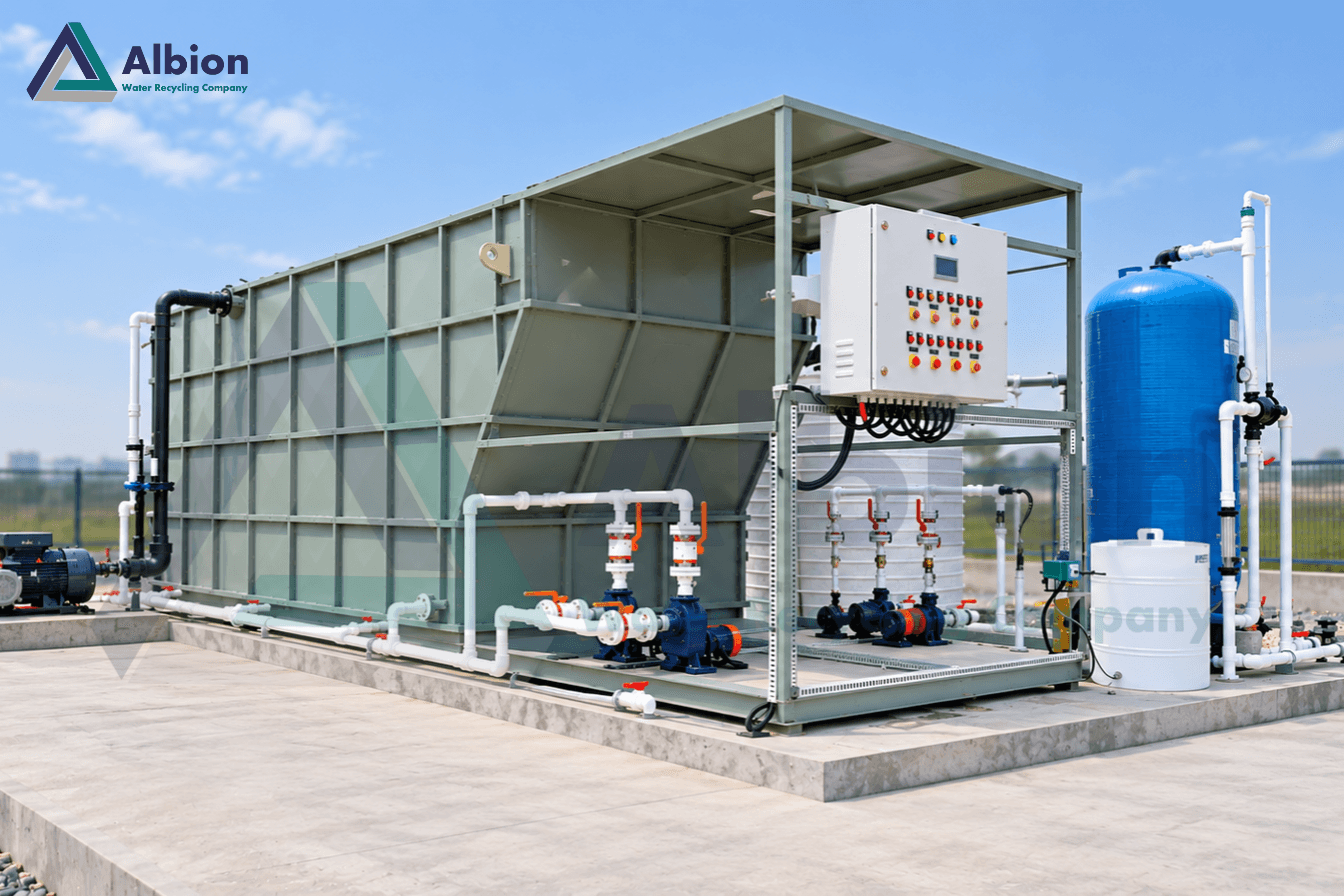
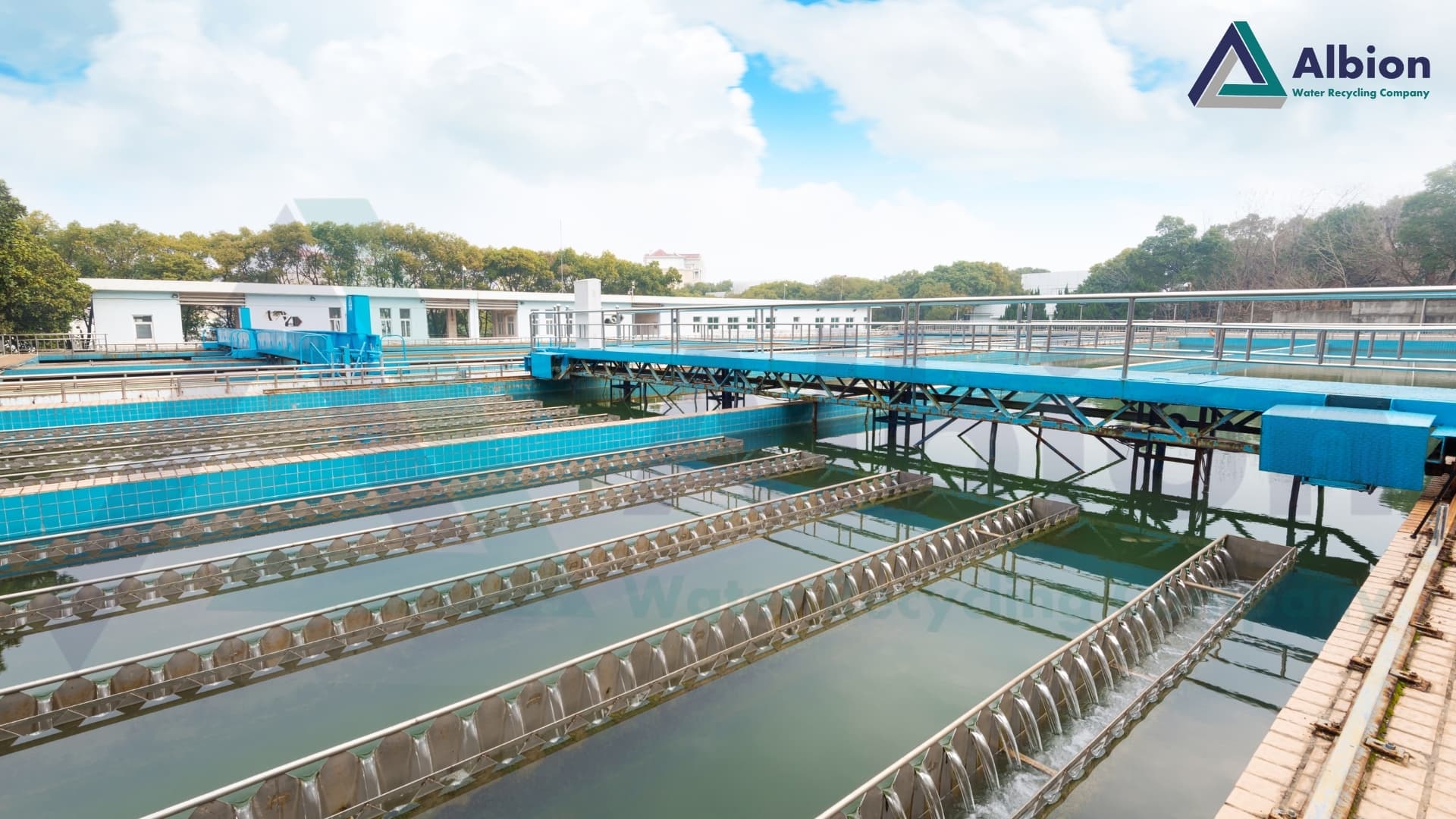
A leachate collection system feeds a storage or equalisation tank sized for monsoon peaks and buffer periods. Covering the tank limits rain ingress and odour, and mixing keeps solids and iron from settling and the stream consistent. Because leachate volume depends on rainfall, storage is one of the cheapest ways to reduce the size of every unit downstream.
4.2 Pre-treatment
Where ammonia is very high, air stripping at raised pH can remove a large share before biology, at the cost of chemicals and the need to manage the off-gas. Coagulation and flocculation remove some suspended and colloidal matter, colour and metals, and iron removal protects membranes later. Which of these is worth including depends on the leachate and should be tested.
4.3 Biological treatment
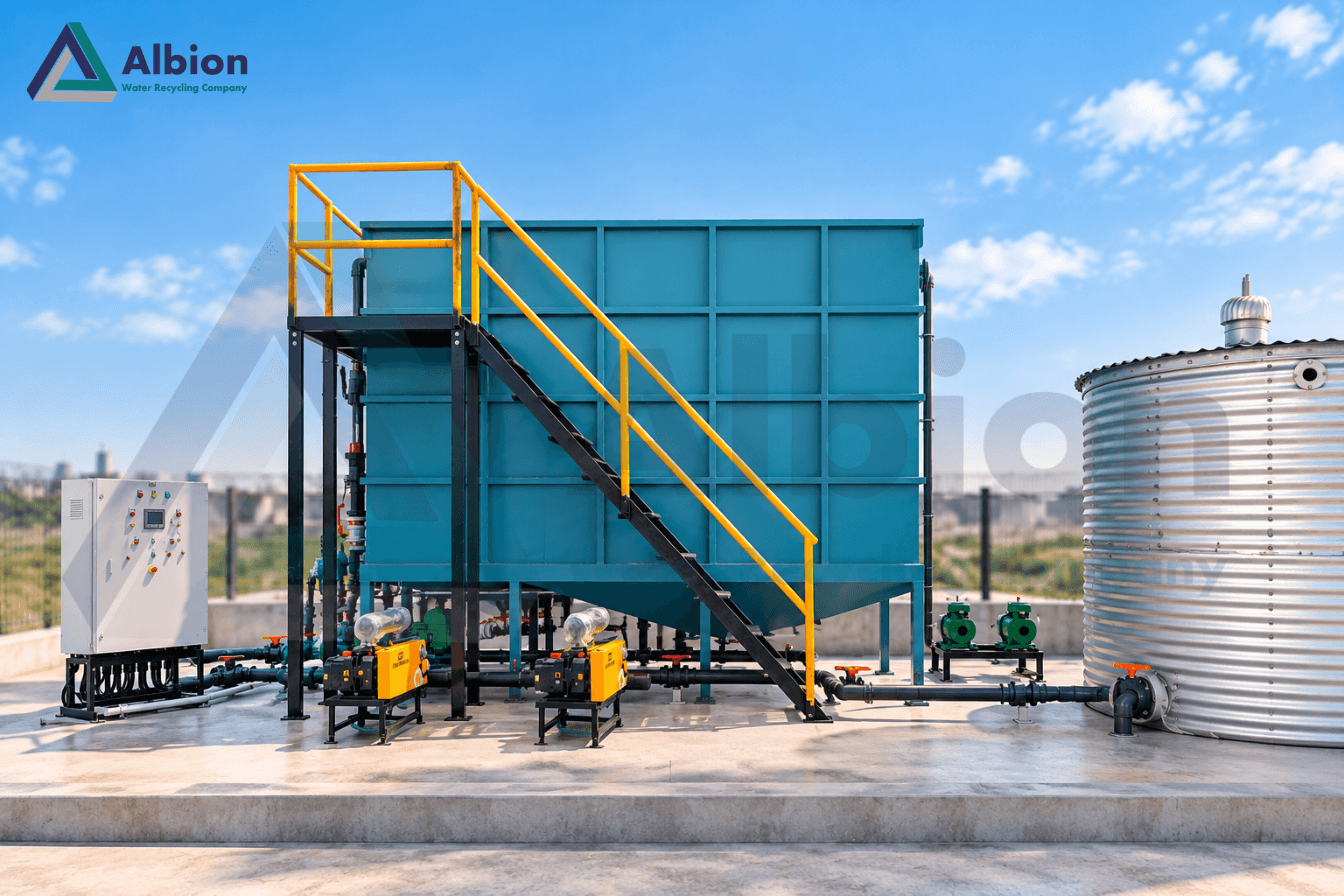
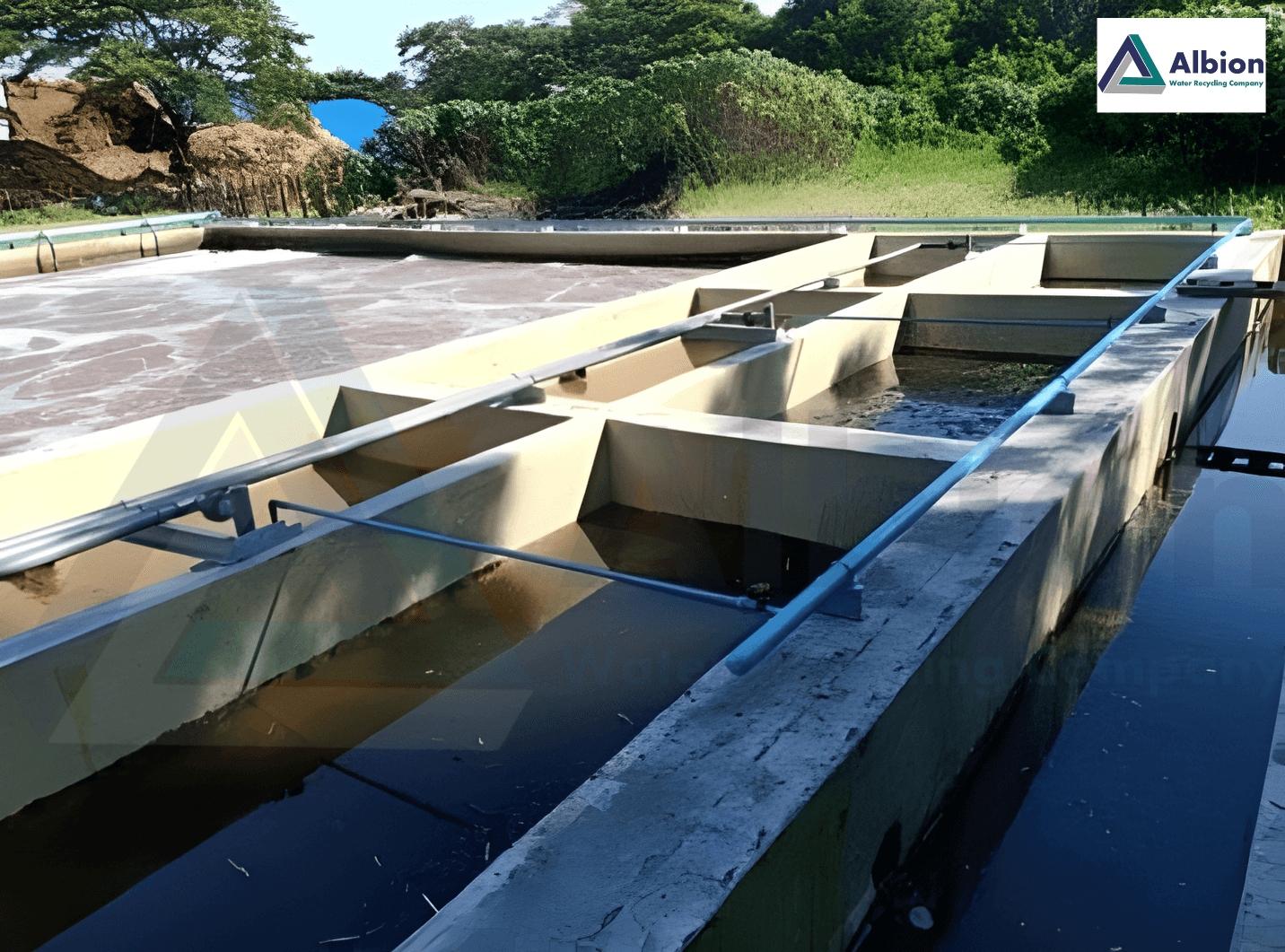
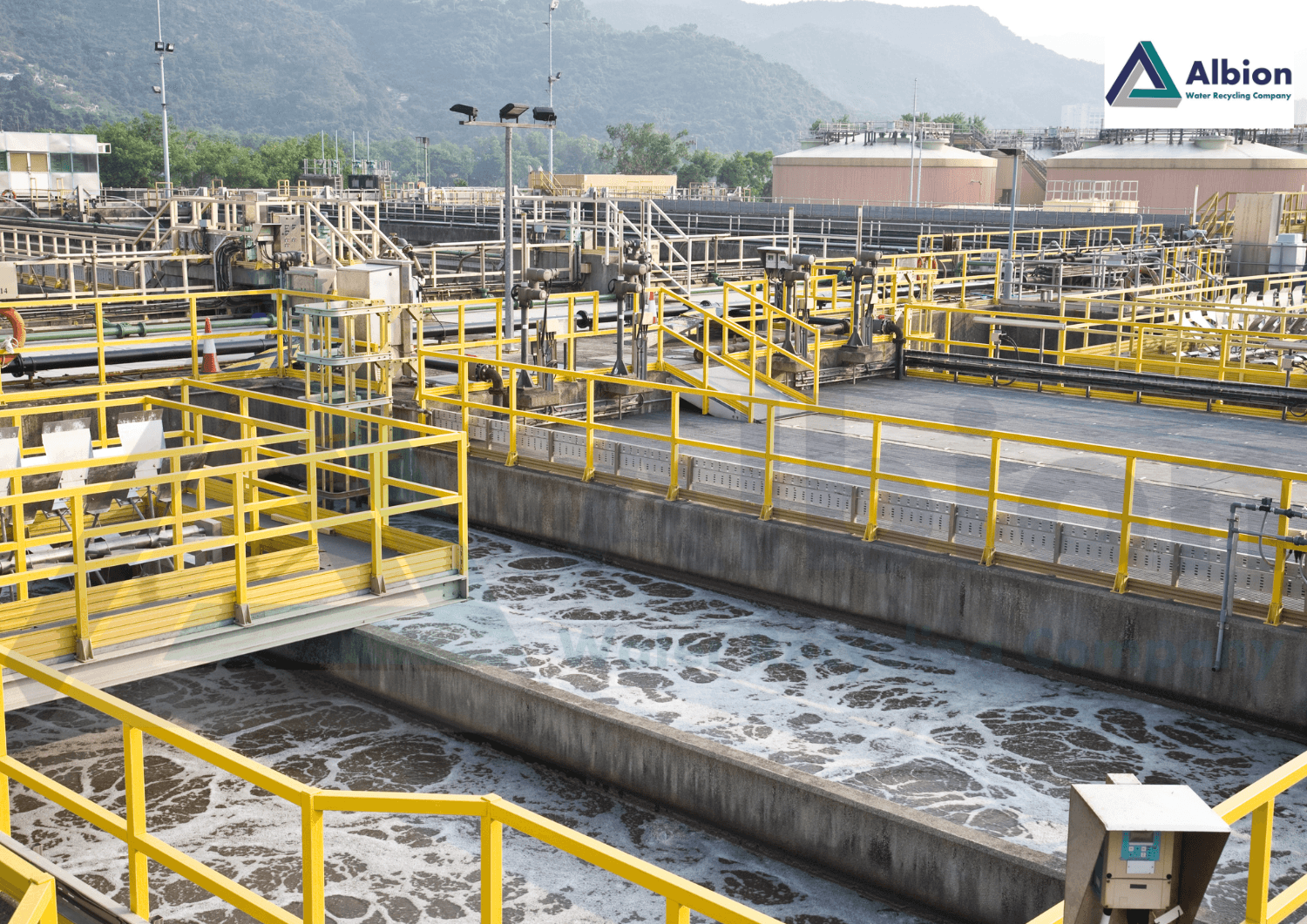
Young, high-COD leachate suits anaerobic treatment as a first stage, which removes most of the biodegradable load with less energy and produces biogas, followed by aerobic treatment. For ammonia, nitrification and denitrification are needed. SBR can run these as phases in one tank and tolerates variable load. MBBR and AMBBR hold nitrifying bacteria on carriers, which helps with the slow-growing organisms involved and with shock loads. MBR keeps a high biomass concentration and long sludge age, retains nitrifiers reliably and gives a solids-free permeate to feed membranes. Free ammonia inhibition, temperature and alkalinity must be managed, and external carbon is often needed for denitrification of older leachate.
4.4 Advanced polishing
Residual COD and colour that biology leaves behind can be reduced with activated carbon, advanced oxidation such as Fenton or ozone, or nanofiltration and RO. Carbon and oxidation are chemical- and consumable-intensive, and the cost depends on how much refractory COD must be removed. Which route is worth the cost is answered by bench trials on the actual leachate.
4.5 Membrane treatment: UF, NF and RO
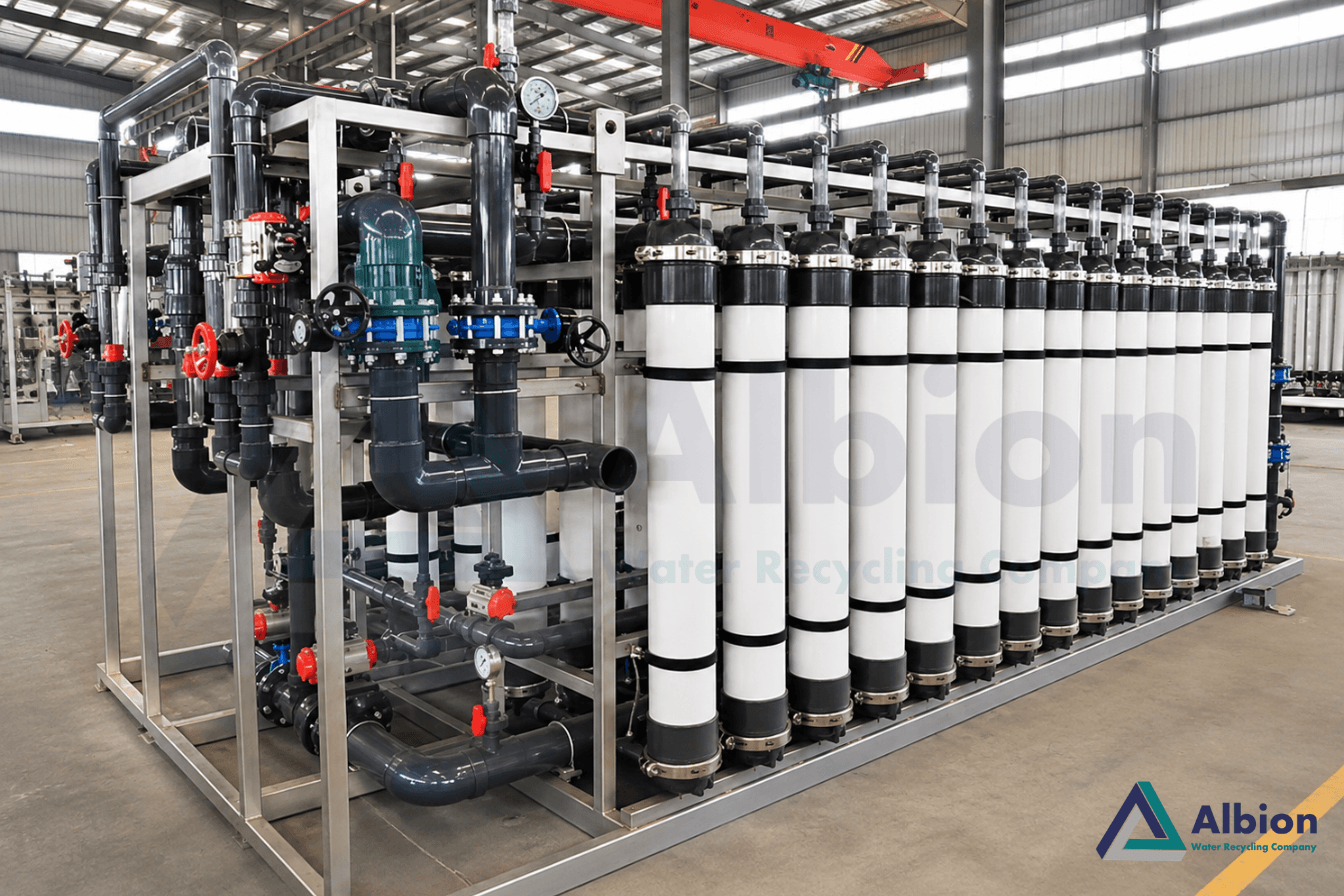
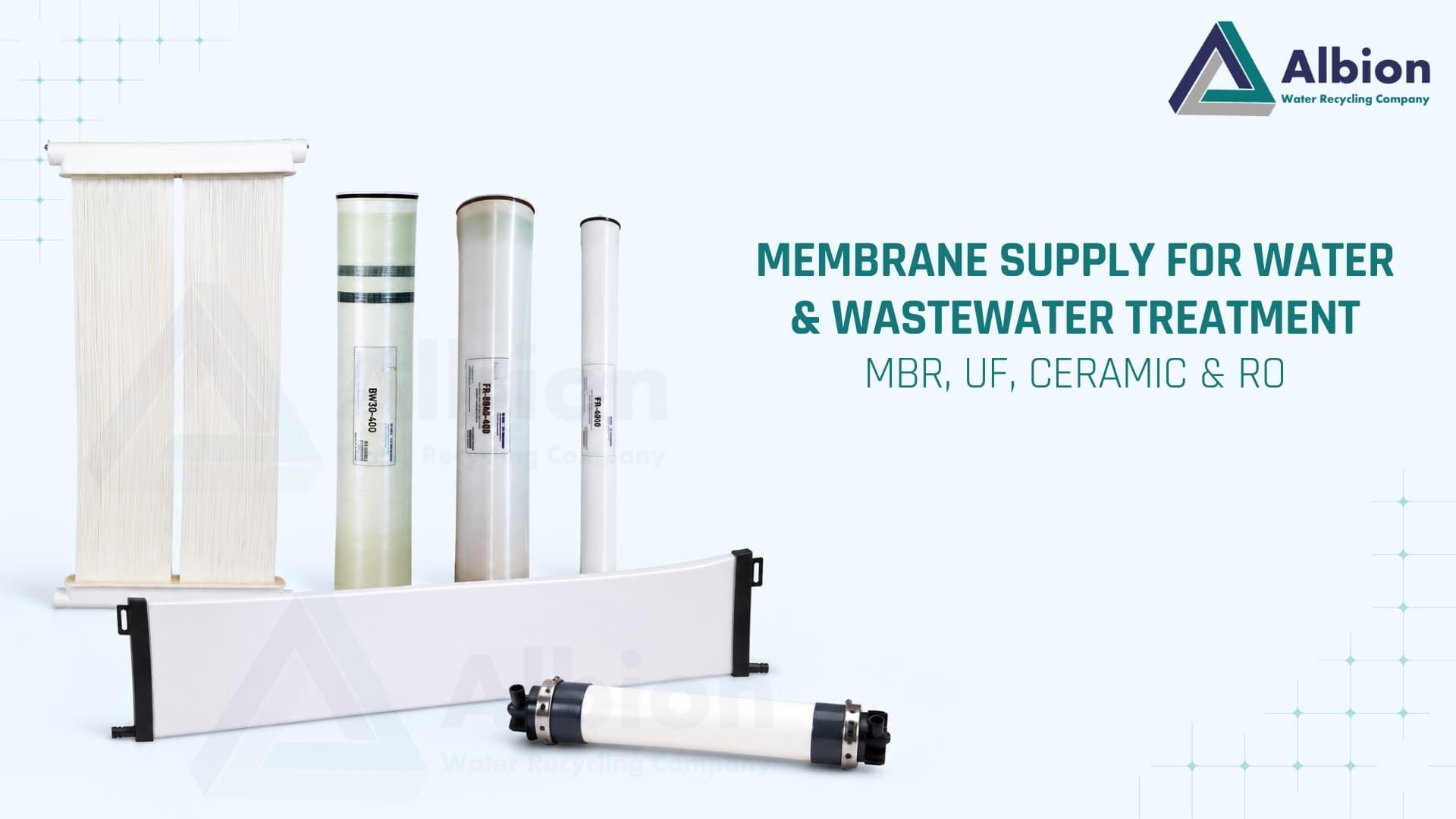
UF or an MBR permeate protects RO and removes remaining solids. NF and RO remove dissolved salts, residual organics and colour and produce water that can meet strict discharge or reuse standards. Leachate fouls membranes quickly, so the feed has to be well pre-treated, and recovery, antiscalant use and cleaning plans should be set from feed analysis. Specialised high-pressure or open-channel membrane configurations are used for the most fouling-prone leachates. Ceramic membranes are sometimes considered where chemistry is harsh, at higher cost.
4.6 Concentrate management and ZLD
Membranes do not destroy contaminants. They split the flow into clean permeate and a smaller, more concentrated reject, and that reject is often the hardest part of the project. Options include evaporation, with a multiple-effect or mechanical vapour recompression evaporator, and drying or crystallisation of the residue, which is the ZLD route. Returning concentrate to the landfill has been used in some places, but it concentrates salts and some contaminants in the waste body over time and is restricted or discouraged in many settings, so it should be assessed carefully against local rules. The residual salt and sludge from these steps usually need an authorised disposal route.
4.7 Sludge
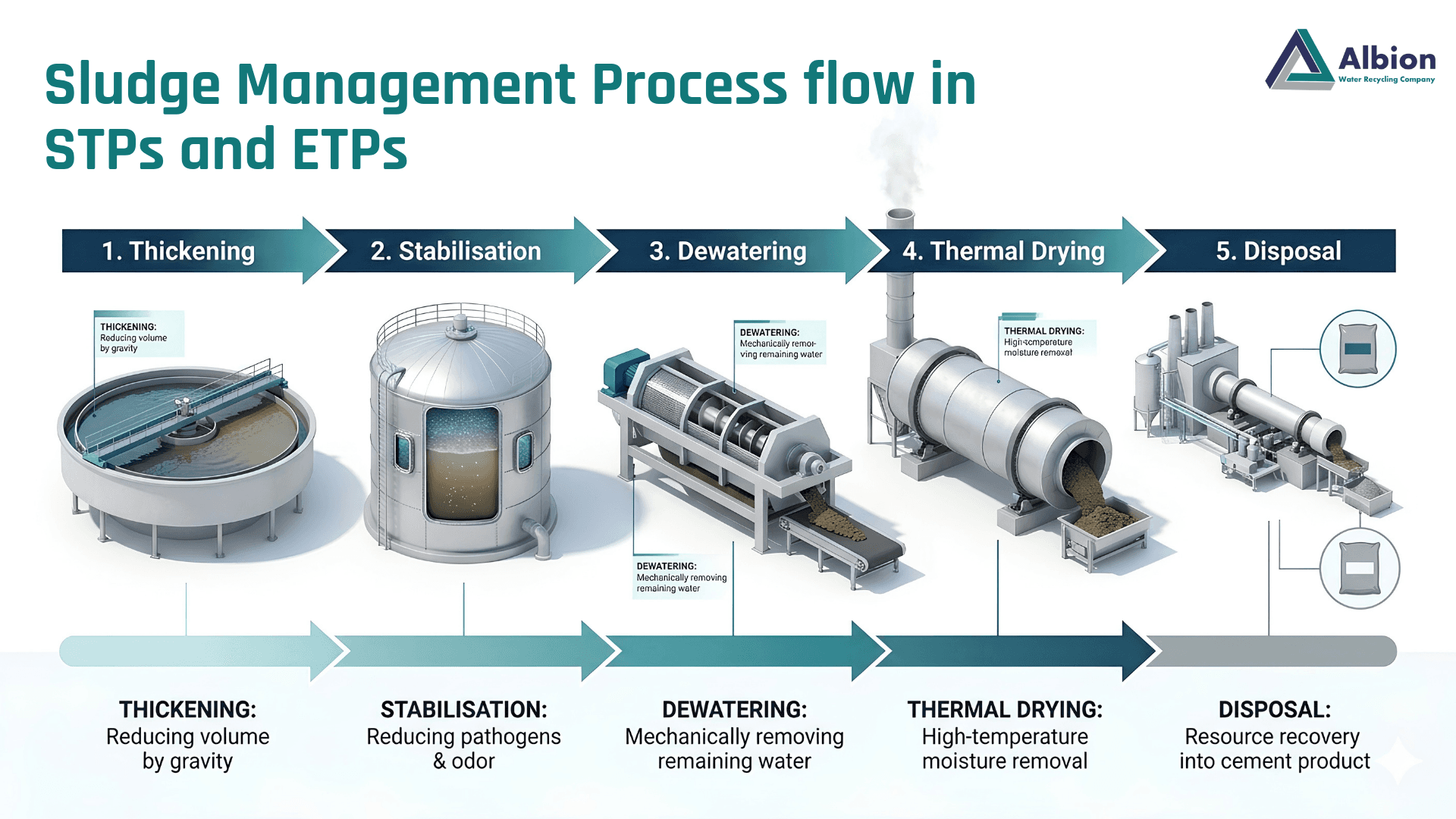
Biological sludge, chemical sludge from coagulation or iron and metal removal, and evaporator residues are generated. Because leachate can carry metals and hazardous compounds, sludge classification should be tested and the disposal route confirmed under the applicable rules.
5. Choosing a Configuration
No single train fits every landfill. The sequence below is a common starting point, which should then be narrowed through trials.
- Young, high-strength leachate: equalisation, anaerobic stage, then nitrification-denitrification in SBR, MBBR or AMBBR, or MBR, followed by polishing and, where needed, RO.
- Old, ammonia-dominated leachate with low biodegradability: ammonia stripping or an MBR-based nitrification-denitrification stage with external carbon, followed by NF or RO and advanced polishing.
- Mixed or variable leachate: a large equalisation tank, AMBBR or SBR for load resilience, then MBR and RO, so that the plant can handle both ends of the range.
- Sites with restricted discharge: add concentrate evaporation and crystallisation for ZLD, accepting the added energy cost.
6. Reduce the Volume First
Every cubic metre of leachate not generated is a cubic metre not treated. Diverting stormwater away from waste, using intermediate and final cover to shed rain, covering working faces and keeping clean runoff out of the collection system can reduce volume significantly. Because cost scales with volume, this is usually the cheapest improvement available and should be settled before the treatment plant is sized.
7. Economic Framework
- Capital cost: storage and equalisation, pre-treatment, biological stage, membrane skids, evaporation and crystallisation for ZLD, sludge handling, and corrosion-resistant materials throughout.
- Operating cost: aeration energy, which is heavy where ammonia is high, RO high-pressure pumping, evaporation energy, external carbon, antiscalant and cleaning chemicals, sludge and residue disposal, and operator time.
- Periodic cost: membrane replacement, which is more frequent on leachate than on cleaner feeds, and wear parts.
- Long horizon: leachate generation continues for many years after closure but changes in volume and strength, so a modular design that can be reduced, reconfigured or relocated can lower lifetime cost.
The most sensitive inputs are leachate volume, ammonia concentration, the RO recovery actually achieved, and the cost of concentrate disposal. A design that assumes optimistic recovery will understate concentrate volume and the thermal load downstream.
8. Common Pitfalls
- Designing from one sample, without capturing seasonal and age-related change.
- Underestimating ammonia, and with it oxygen demand and inhibition risk.
- Expecting biological treatment alone to meet COD and colour limits for old leachate.
- Sizing RO without a scaling and fouling assessment of the real feed.
- Ignoring concentrate until the plant is built.
- Leaving storage open and undersized, so monsoon flows overwhelm the plant and odour reaches neighbours.
- Using standard materials that corrode in saline, aggressive leachate.
9. Decision Framework
- Measure leachate volume and composition across seasons and, where possible, by cell age. Test BOD to COD ratio, ammonia, chlorides, alkalinity, metals and colour.
- Confirm discharge, reuse or ZLD requirements under the applicable rules and consent.
- Reduce volume at source through stormwater diversion and cover.
- Select biological stages on the biodegradable share and ammonia load, and plan for how the leachate will mature.
- Run bench or pilot trials for advanced polishing and membrane performance on the real leachate.
- Settle the concentrate and sludge route before fixing the train.
- Compare options on lifetime cost, including post-closure years.
10. Albion Ecotech's Perspective
Albion Ecotech designs leachate treatment from measured data on volume, composition and the discharge or ZLD requirement that applies, and treats the plant as something that has to change as the leachate does. Depending on the site, the train may combine equalisation and pre-treatment, a biological stage selected from SBR, MBBR or AMBBR, and MBR, polishing with UF, RO or ceramic membranes, and concentrate management through evaporation for ZLD. Sludge management, energy-efficient aeration, PLC-based automation and post-commissioning support are part of the scope, and plants can be supplied in packaged or civil formats, with modular layouts where capacity may need to change over the life of the landfill.
11. Conclusion
Leachate treatment succeeds when the design respects three facts: composition changes with landfill age, ammonia and refractory organics set the treatment limits, and the concentrate has to go somewhere. Reducing volume at source, treating ammonia deliberately, using membranes where standards demand them, and settling concentrate and sludge routes early are what keep a leachate plant compliant at a tolerable cost over a decades-long life. Trials on the real leachate, repeated as the site matures, are the most reliable way to avoid expensive surprises.
Frequently Asked Questions
Why is landfill leachate harder to treat than sewage?
It has much higher ammonia, salts and often COD, a share of organics that resist biodegradation, possible metals and trace contaminants, and a composition that changes with landfill age and rainfall.
Why does old leachate have low biodegradability?
As waste stabilises, the easily degraded organics are consumed, leaving humic and fulvic substances and other compounds that bacteria break down slowly. The BOD to COD ratio therefore drops while ammonia stays high.
Can biological treatment alone meet discharge limits for leachate?
Sometimes for young leachate with a high biodegradable share, but old leachate usually needs polishing such as carbon, advanced oxidation, nanofiltration or RO to meet COD, colour and salt limits. Standards depend on consent, so they should be confirmed.
What happens to RO concentrate from leachate?
It is usually evaporated and crystallised as part of a ZLD system, or sent to an authorised disposal facility. Returning it to the landfill is restricted or discouraged in many settings because it concentrates salts and contaminants, so local rules must be checked.
How can the cost of leachate treatment be reduced?
Start by cutting leachate volume through stormwater diversion and cover, then size the plant for realistic recovery, control aeration and chemicals, and use a modular design so capacity can follow the landfill as it ages.