Can AMBBR and MBR Technologies Be Combined? Unlocking Superior Wastewater Treatment
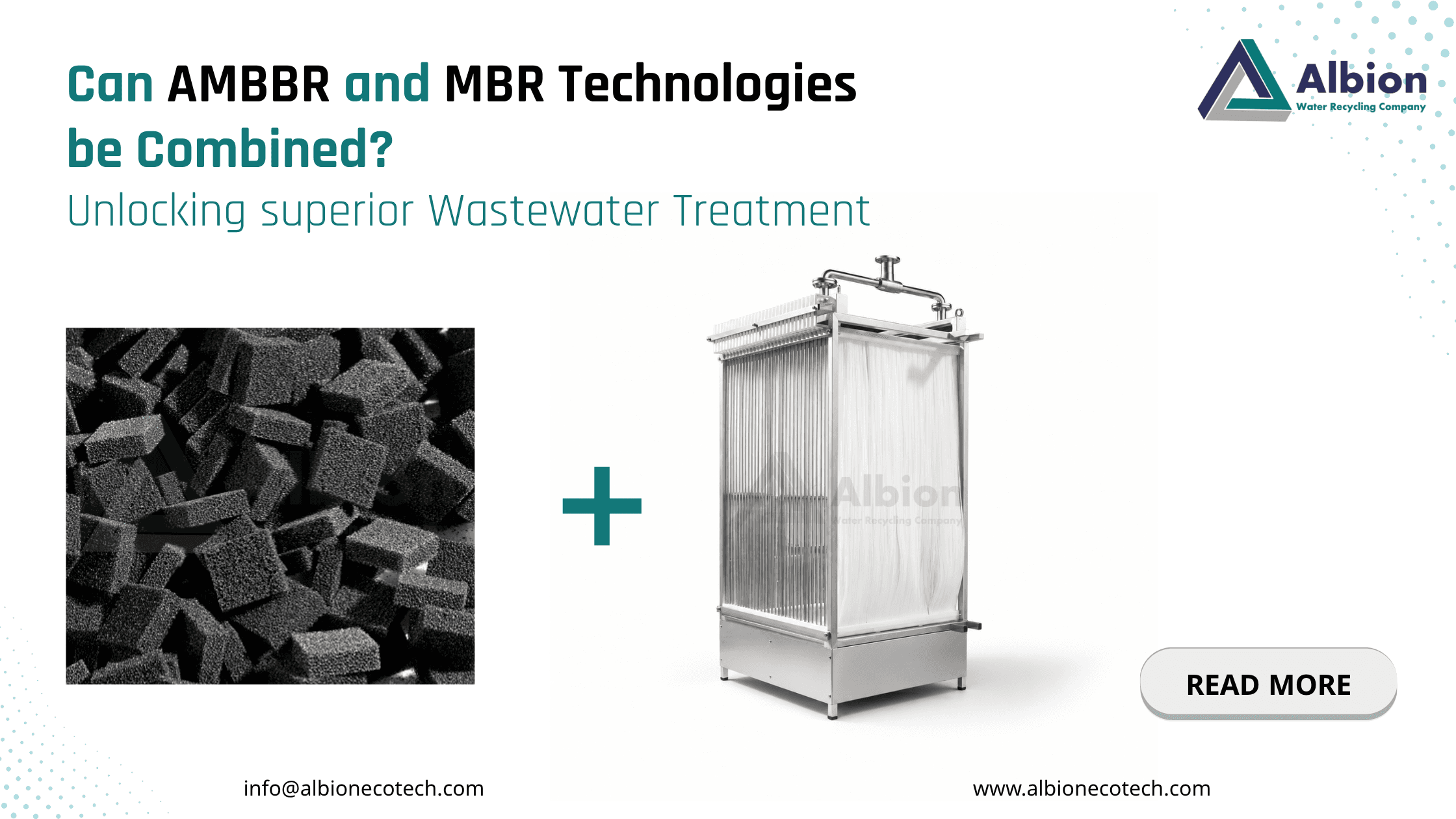
Yes, they can, and the combination is more common than the usual AMBBR-versus-MBR comparison suggests. In a hybrid train, an advanced moving bed bioreactor takes the bulk of the organic load first, and a membrane bioreactor finishes the job and produces a low-turbidity permeate. Each stage covers a weakness of the other. Whether the extra complexity pays off depends on the effluent, the discharge or reuse target and the site, so this article looks at how the combination works, where it helps, and where a single technology is the better call.
Why the question comes up
AMBBR keeps biomass attached to carrier media, so it copes well with load swings and fits a small tank. It still needs a clarifier or filter behind it, and the effluent is not membrane-grade. MBR replaces the clarifier with a membrane and delivers consistent, low-turbidity permeate, but it is sensitive to what reaches the membranes: sudden organic spikes, oil and grease, fibres and unstable biomass all raise fouling risk. Put the two together and the attached-growth stage acts as a buffer in front of the membrane stage.
How an AMBBR-MBR train is arranged
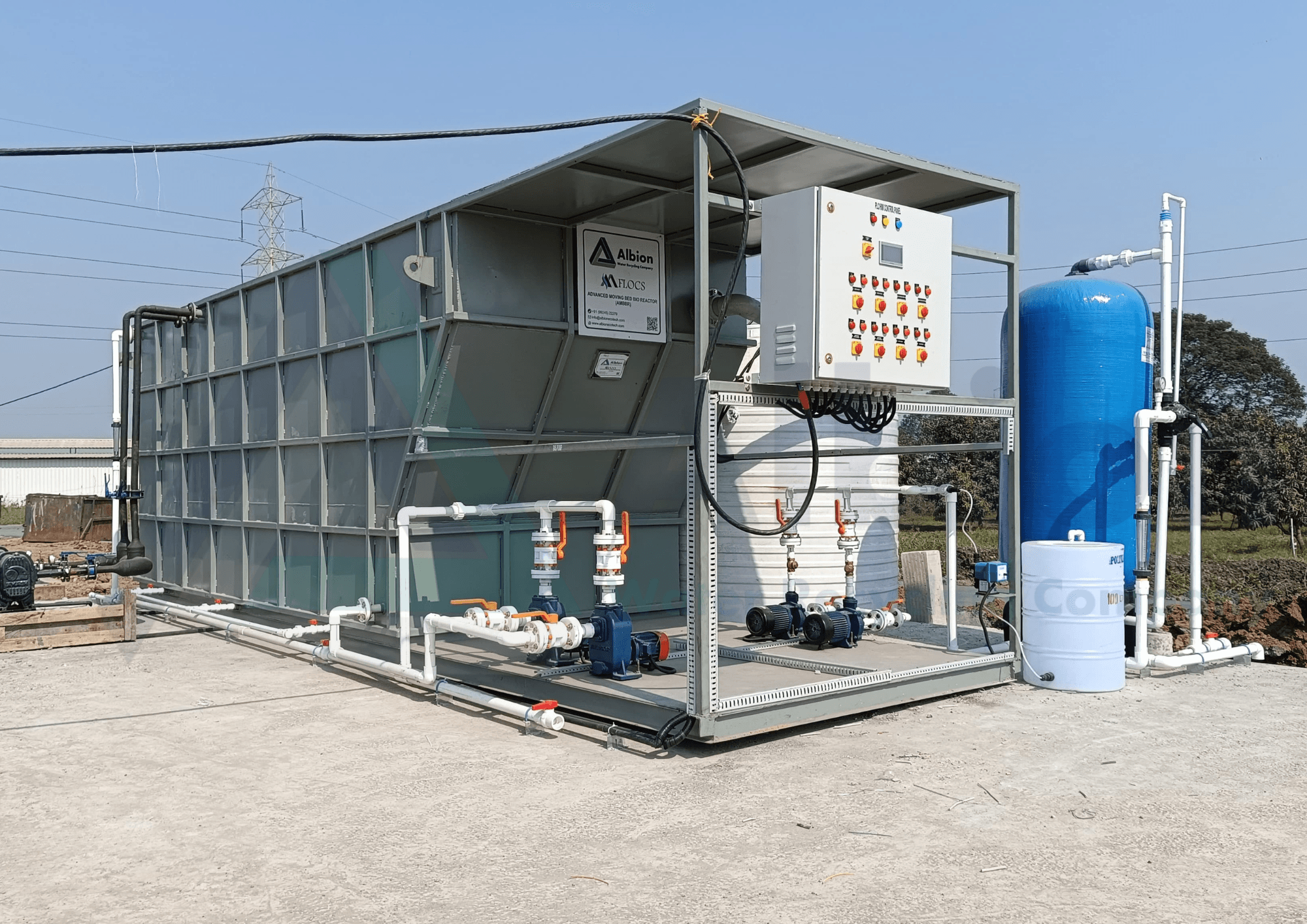
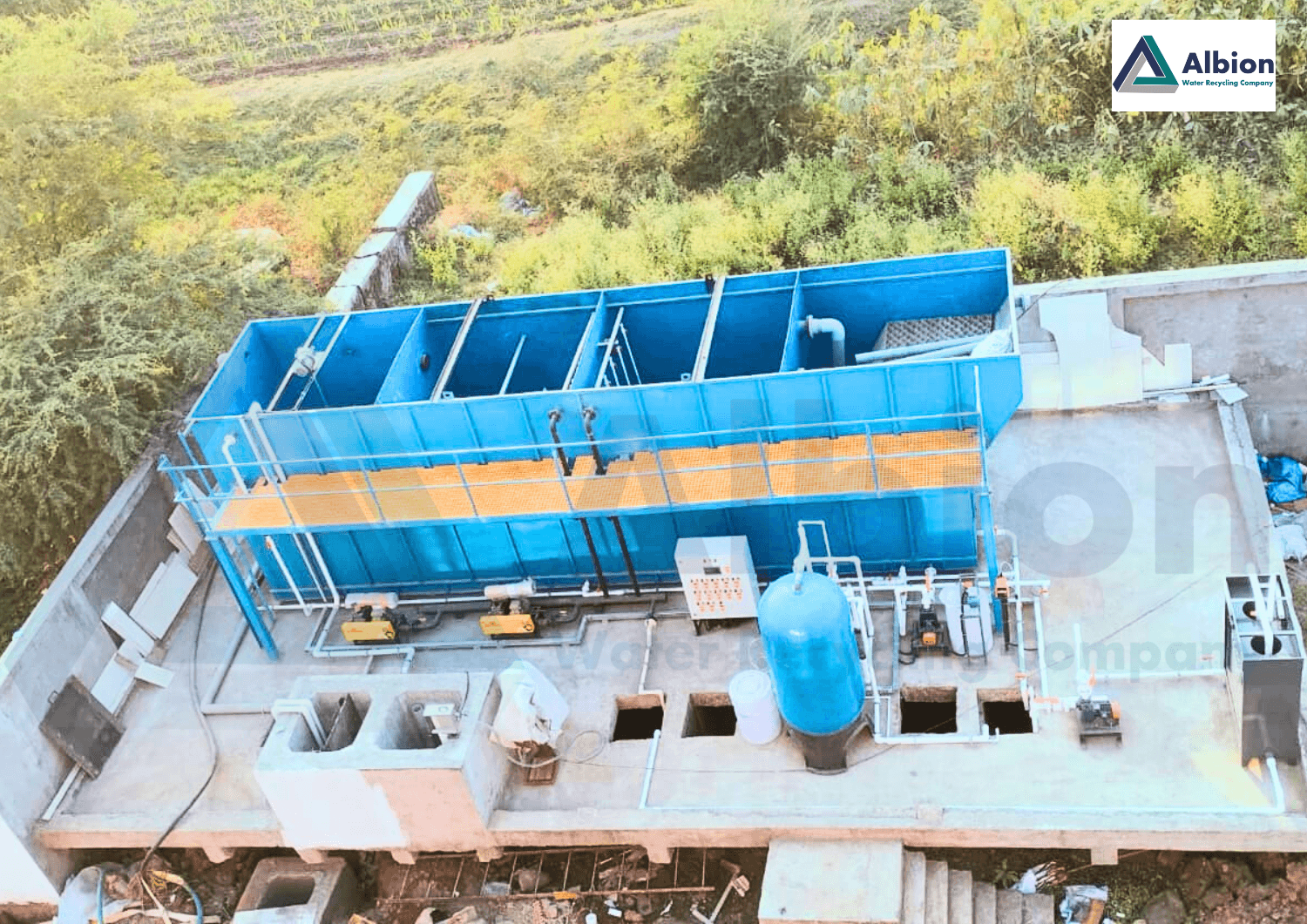
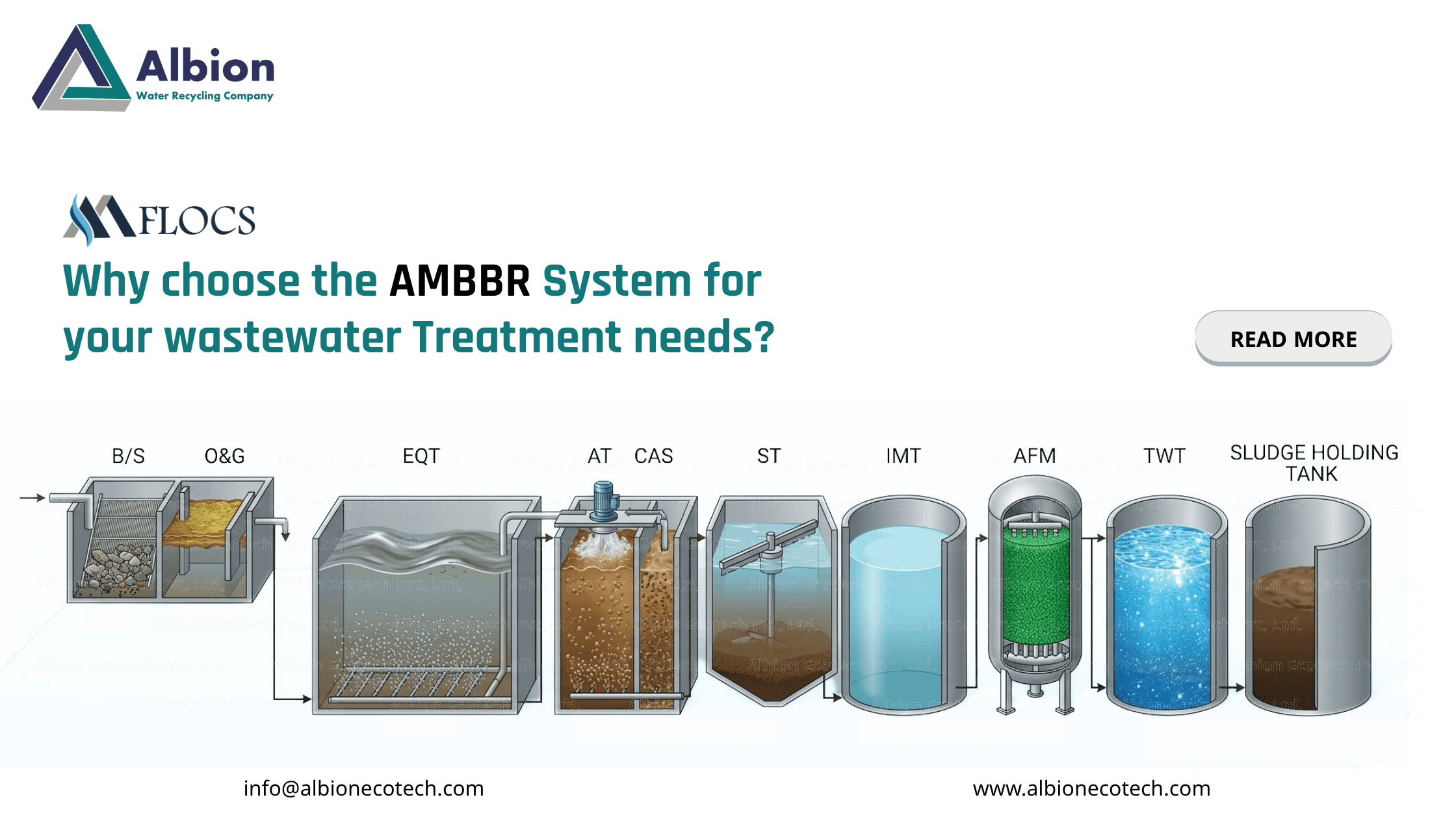
The usual layout runs raw effluent through screening and equalisation, then into the AMBBR reactor, where carriers hold a biofilm that removes most of the biodegradable COD and BOD. The AMBBR effluent, carrying some sloughed biofilm and suspended biomass, goes to the MBR bioreactor, where suspended growth completes the treatment and the membranes separate treated water from biomass. Fine screening sits ahead of the membranes. Anoxic zones and internal recycle can be added if nitrogen removal is required.
A second arrangement, often called hybrid MBBR-MBR, puts carriers into the same bioreactor that feeds the membranes. This saves a tank, but the carriers must be kept away from the membrane modules by retention screens, and the membrane tank itself is normally kept free of carriers, since moving plastic media can abrade membrane surfaces. Which arrangement suits a project depends on the membrane supplier's requirements, the footprint and whether an existing reactor is being reused.
What the combination offers
- Shock-load buffering. Biofilm on carriers is less prone to washout and tolerates batch discharges better than suspended growth alone, so the MBR stage sees a steadier, lower feed. This matters most for textile, pharmaceutical, food and beverage effluent, and for CETPs that receive mixed streams.
- A lighter duty for the membranes. Removing most of the readily biodegradable load upstream lets the MBR bioreactor be sized for polishing rather than the full load. Published work on hybrid configurations also reports changes in fouling behaviour, but results vary with the effluent and the design, so this should be verified for each project rather than assumed.
- Better nutrient removal options. Biofilms retain slow-growing nitrifying bacteria well, and the MBR stage adds long sludge age and a recycle path for denitrification. Together they give designers more room to meet ammonia and total nitrogen limits.
- Reuse-grade permeate in a compact footprint. MBR permeate is a clean feed for UF, RO and, where required, ZLD, so the hybrid train suits projects aiming at water reuse and recovery on limited plot area.
- A route for upgrading existing plants. A plant already running MBBR or AMBBR with a clarifier can sometimes keep the biological reactor and replace or supplement the clarifier with membranes, which avoids rebuilding the whole biological stage. A site check of the tanks, hydraulics and aeration is needed first.
What it costs you
- More equipment and more to operate: carriers, retention screens, two aeration systems and a membrane system with its cleaning-in-place routine.
- Higher capital cost than AMBBR with a clarifier, since the membranes and the extra stage are added. Membrane replacement stays on the long-term budget.
- Aeration for both the biological stages and for membrane scouring, so energy use needs a proper estimate rather than an assumption.
- Carrier fragments, fibres and grease can damage or block membranes, so screening and pre-treatment become more important, not less.
- Operators need to follow both biofilm health and membrane indicators such as transmembrane pressure and permeability.
Design points that decide whether it works
- Carrier fill and retention. Fill ratio should come from the load and the media's protected surface area. Outlet screens must be sized to hold carriers without clogging.
- Fine screening before the membranes. The required screen opening is set by the membrane supplier and the module type, and is usually fine. It should be treated as a protection for the whole membrane investment.
- Biomass state at the membrane tank. Sloughed biofilm and the nature of the suspended biomass entering the MBR affect filterability. Pilot or bench data on the real effluent is the safest basis for sizing flux.
- Aeration control. Dissolved oxygen control with variable-speed blowers matters in both stages, and aeration should be sized against the actual effluent's oxygen transfer behaviour.
- Sludge planning. The MBR stage runs at a high MLSS concentration, and excess sludge still needs thickening, dewatering and a defined disposal route.
- Automation. PLC-based control that links flow, DO, membrane flux and cleaning cycles keeps a two-stage plant steady, and remote monitoring helps sites with limited specialist staff.
When a hybrid makes sense, and when it does not
A hybrid train is worth a serious look when the effluent is strong or variable, the plot is small, and the treated water has to meet reuse quality or feed an RO or ZLD system. Textile and dyeing units, pharmaceutical plants, food and beverage processors and CETPs are typical candidates. It is also worth considering where an existing MBBR or AMBBR plant has to move to a tighter standard without a full rebuild.
It is hard to justify when the load is low-strength and steady, as in many residential sewage plants, since MBR alone is usually simpler and an AMBBR with clarifier and filtration is cheaper if reuse-grade water is not needed. If discharge norms can be met without membranes, the added stage is cost without benefit. The honest test is whether the plant needs both the load tolerance of AMBBR and the effluent quality of MBR.
How to evaluate it for a project
- Measure flow and load across batches and seasons, and note oil, grease, fibres and salinity.
- Confirm the discharge or reuse standard and whether UF, RO or ZLD follows.
- Compare three options on total cost of ownership: MBR alone, AMBBR with clarification and polishing, and the hybrid.
- Check footprint and whether existing tanks can be reused.
- Run bench or pilot trials on the real effluent before fixing membrane flux and carrier fill.
- Plan sludge handling, energy use and operator training alongside the process choice.
Albion Ecotech's approach
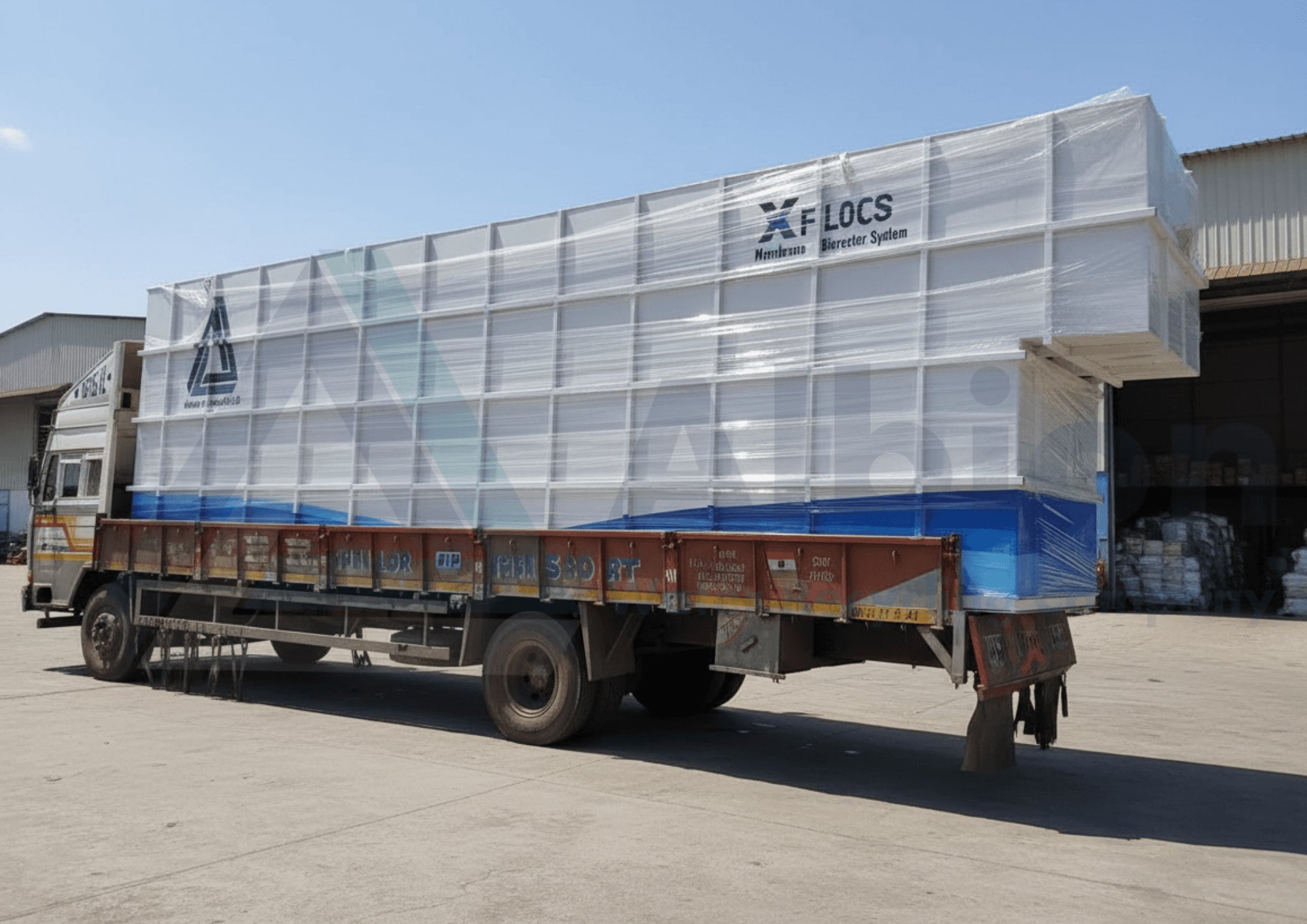
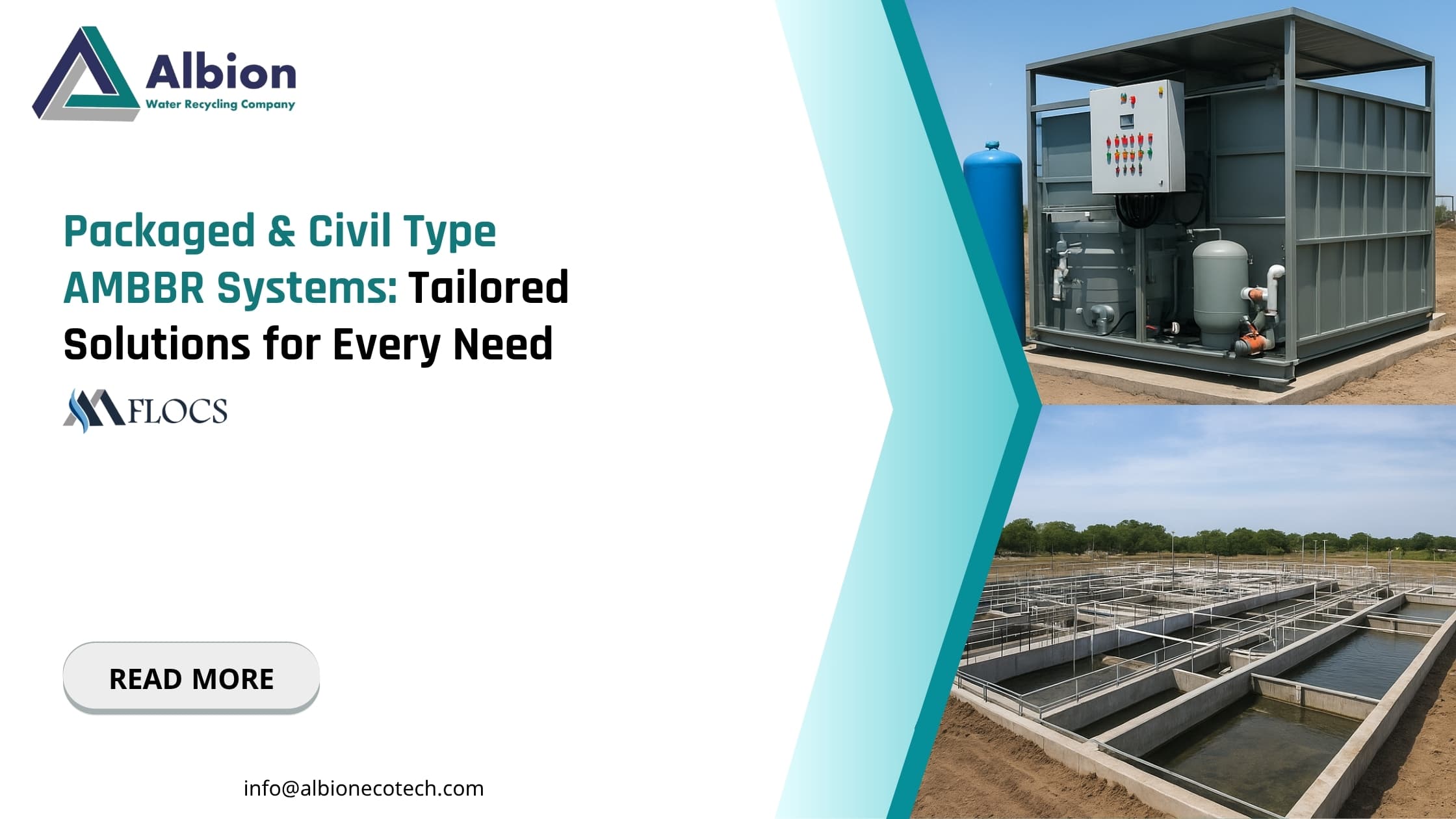
Albion Ecotech offers both M-Flocs AMBBR and X-Flocs MBR, in packaged and civil formats, and evaluates MBR alone, AMBBR alone and the combined train against each project's effluent, footprint and quality target before recommending one. Where a hybrid is the right fit, the two stages are designed as one system, with carrier retention, fine screening, aeration and membrane operation sized together, and with UF, RO or ZLD added downstream if reuse or recovery is a goal. Sludge management, energy-efficient blower and pump selection, PLC-based automation and post-commissioning support are included in the scope.
Frequently Asked Questions
Can AMBBR and MBR be used together in one plant?
Yes. A common layout places the AMBBR reactor ahead of an MBR stage, so the biofilm process removes most of the organic load and the membranes provide final solids separation and a low-turbidity permeate.
Does a combined system reduce membrane fouling?
It can help by smoothing load and removing readily biodegradable matter before the membranes, but results depend on the effluent and the design. Fouling behaviour should be confirmed with bench or pilot data rather than assumed.
Can carriers be placed in the same tank as the membranes?
Some hybrid designs keep carriers in the bioreactor that feeds the membrane tank, but carriers are generally kept out of the membrane tank itself, because moving media can abrade membranes. Retention screens and the membrane supplier's guidance decide the layout.
Is a hybrid more expensive than MBR alone?
It can be, because it adds a stage and more equipment. For strong, variable effluent it may allow a smaller or better-protected MBR stage, which can offset part of that cost. A total-cost comparison on the actual effluent is the only reliable answer.
Can an existing MBBR or AMBBR plant be upgraded with membranes?
Often it can, by keeping the biological reactor and adding or replacing the clarification stage with membranes. The tanks, hydraulics, aeration and available space need to be assessed first.
Which industries benefit most from a combined AMBBR and MBR train?
Those with strong or variable effluent and a need for reuse-grade water in a small footprint, such as textile, pharmaceutical, food and beverage, and CETP applications.