
How to Find a Quality Sewage Treatment Plant Provider in India: A Buyer's Guide
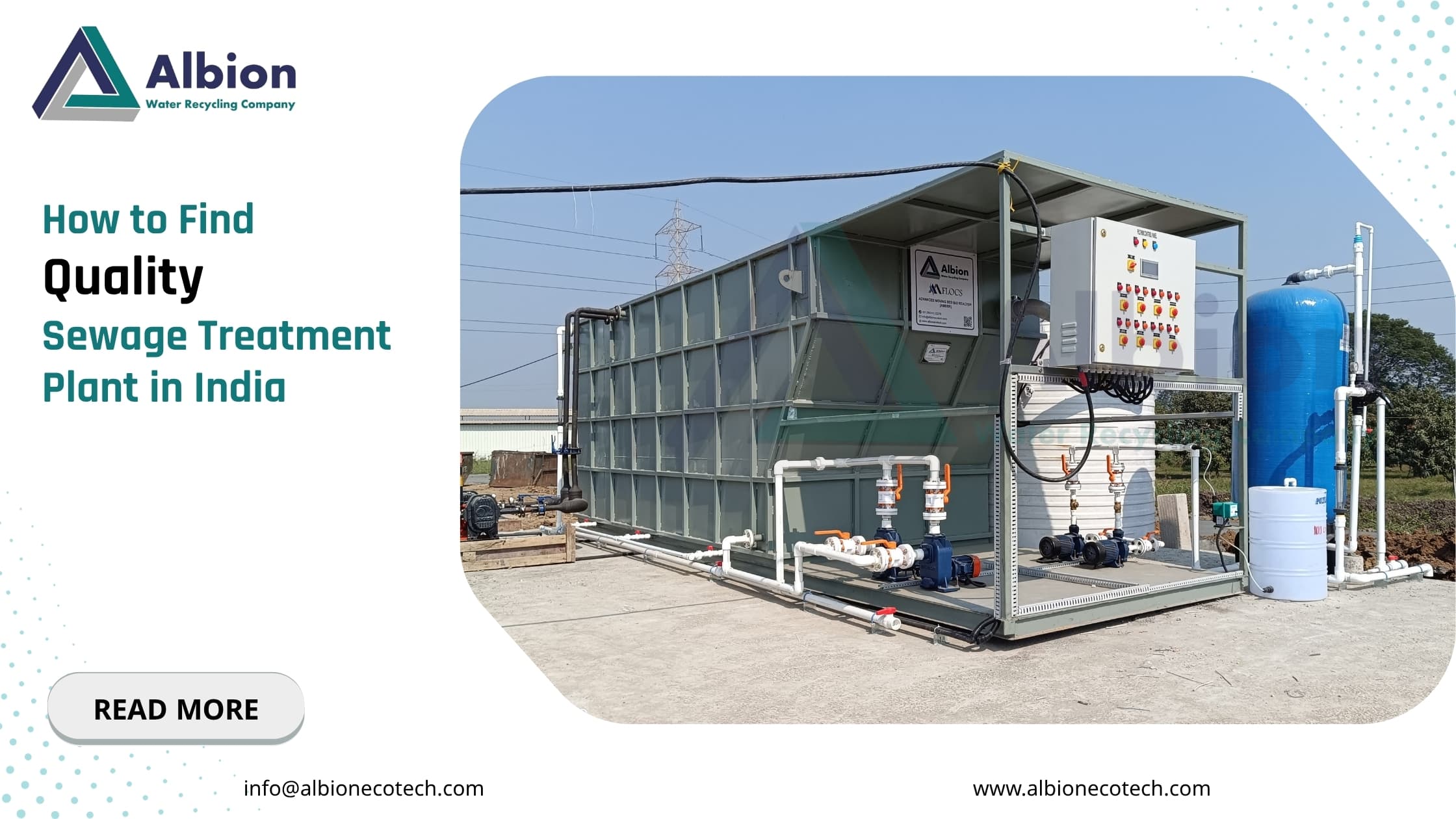
India's growing urban population, tightening state and central pollution control norms, and rising water stress have made sewage treatment plants (STPs) a necessity rather than an option — for municipalities, housing societies, hotels, hospitals, and industrial townships alike. But the market has no shortage of vendors, and treatment quality, compliance reliability, and long-term operating cost can vary widely between them. This guide walks through what actually separates a dependable STP provider from the rest, so that buyers can evaluate proposals with more confidence.
Why Choosing the Right STP Provider Matters
An STP is a long-term asset, not a one-time purchase. A poorly designed or undersized plant can lead to non-compliance with discharge norms, frequent breakdowns, high energy and chemical consumption, and expensive retrofits within a few years. Because treatment performance depends on correct process selection, equipment sizing, and ongoing operation, the choice of provider directly affects compliance risk, operating cost, and the useful life of the plant.
Key Factors to Evaluate When Selecting an STP Provider
Technology Fit for the Site
Not every site needs the same process. A quality provider will recommend a technology — such as SBR (Sequencing Batch Reactor), MBBR (Moving Bed Biofilm Reactor), or MBR (Membrane Bioreactor) — based on available plot area, inflow variability, effluent quality targets, and whether treated water reuse is planned, rather than defaulting to a single standard design for every project.
Regulatory Compliance Knowledge
A capable vendor understands applicable discharge norms set by the Central Pollution Control Board (CPCB) and the relevant State Pollution Control Board (SPCB), and, where groundwater discharge or recharge is involved, CGWA requirements. Designs should be built to meet these norms consistently, not just under ideal test conditions.
Customization for Flow and Load Variability
Sewage flow in residential complexes, hospitality projects, and institutional campuses fluctuates through the day and across seasons. A well-engineered STP accounts for peak flows, low-occupancy periods, and future capacity needs, rather than being sized only for an average daily flow figure.
Automation and Monitoring
PLC-based automation, instrumentation, and, where offered, remote monitoring reduce dependence on manual intervention and help maintain consistent treatment performance, which is particularly useful for sites without round-the-clock skilled operators.
Sludge Management Approach
Every biological STP generates excess sludge that needs thickening, dewatering, and disposal or reuse. Ask how the proposed design handles sludge management, since this is a recurring operational cost that is sometimes underestimated at the proposal stage.
Energy Efficiency and OPEX
Blower selection, aeration efficiency, and pump sizing have a major impact on power consumption, which is typically the largest recurring cost of running an STP. A provider who can explain the basis of their energy estimates, rather than quoting a generic figure, is generally a better sign of engineering rigor.
Water Reuse and Recovery Capability
Where treated water reuse for flushing, gardening, or cooling makes sense, ask whether the provider can integrate tertiary treatment such as filtration, UF, or disinfection to meet reuse-quality standards, and whether they have experience designing for this outcome.
Track Record and Project Experience
Ask for references or examples of comparable projects — similar flow capacity, similar end use, similar site constraints — rather than relying on general company credentials alone.
After-Sales O&M Support
A plant is only as good as its ongoing operation. Confirm whether the provider offers commissioning support, operator training, spare parts availability, and annual maintenance contracts (AMC), since most compliance failures happen after handover, not at commissioning.
Transparent Costing and Documentation
A quality vendor provides a clear breakup of civil, mechanical, electrical, and automation costs, along with design basis documentation (inflow, load, and expected outlet parameters), rather than a single lump-sum figure with limited technical backup.
Common Mistakes to Avoid When Selecting an STP Vendor
- Choosing purely on lowest quoted price without comparing scope, equipment specifications, and civil work inclusions.
- Sizing the plant only for current occupancy or flow, without accounting for future expansion or peak-day variation.
- Overlooking sludge handling and disposal arrangements until after the plant is commissioned.
- Not confirming AMC terms, response times, or spare parts availability before signing the contract.
- Assuming all biological treatment technologies perform the same, without evaluating which process actually fits the site conditions.
Questions to Ask Before Finalizing an STP Vendor
- What treatment technology are you proposing, and why is it suited to this site?
- What inlet and outlet parameters (BOD, COD, TSS, and applicable nutrients) is the design based on?
- How is the plant designed to handle peak flow and low-flow periods?
- What is the sludge management plan, and what is its estimated recurring cost?
- Can you share references from projects of comparable capacity and application?
- What does the AMC include, and what are the response-time commitments?
Applications Where Quality STPs Matter Most
- Municipal and government sewage treatment projects serving towns and cities, where consistent compliance is a public health requirement.
- Residential societies, gated communities, and townships that need to treat sewage on-site and often reuse treated water for flushing or gardening.
- Hotels, hospitals, and institutional campuses with occupancy-driven flow variation and strict service continuity requirements.
- Commercial complexes and IT parks that need compact, low-maintenance systems within limited plot area.
Albion Ecotech's Approach to Delivering Quality STPs
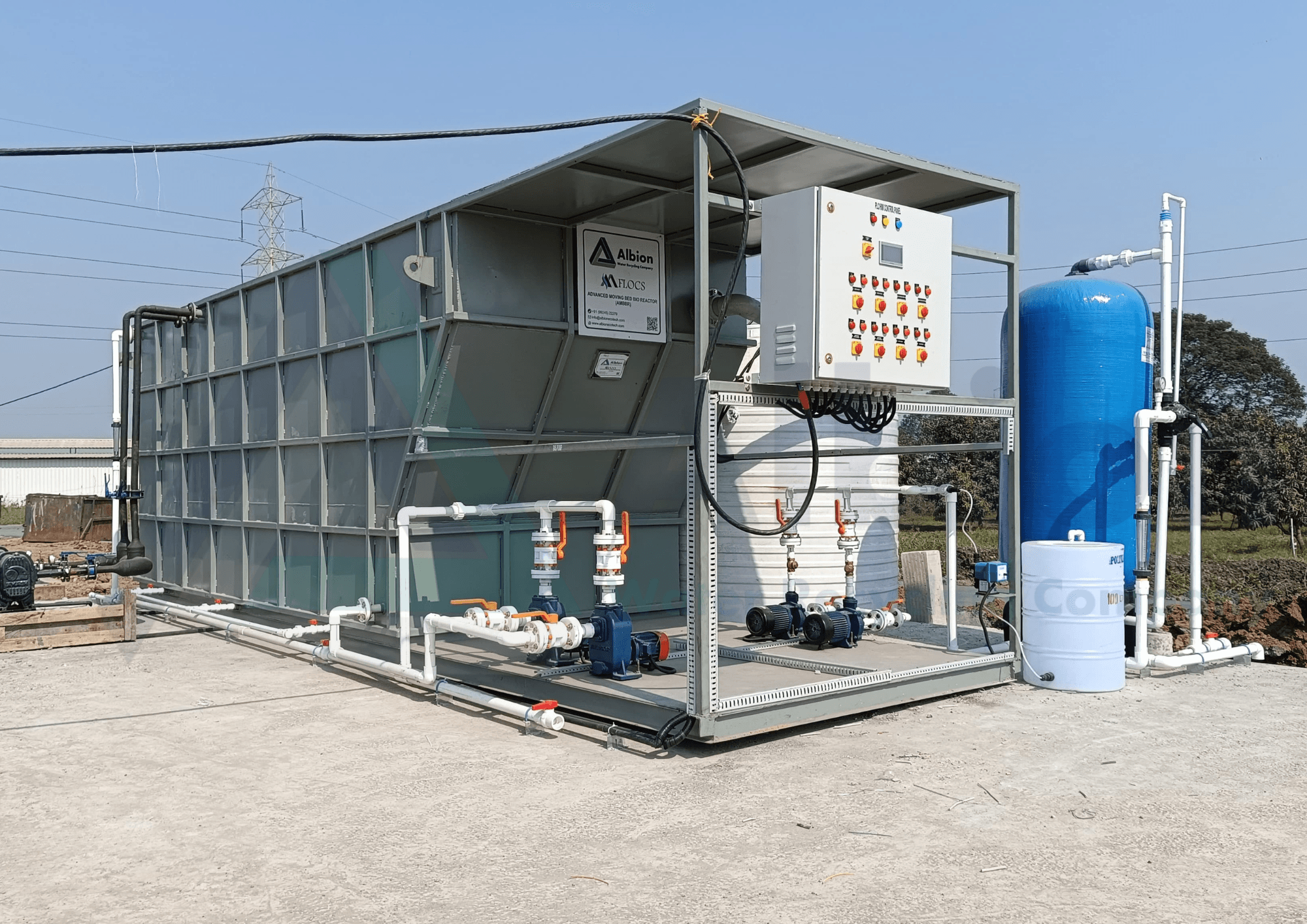
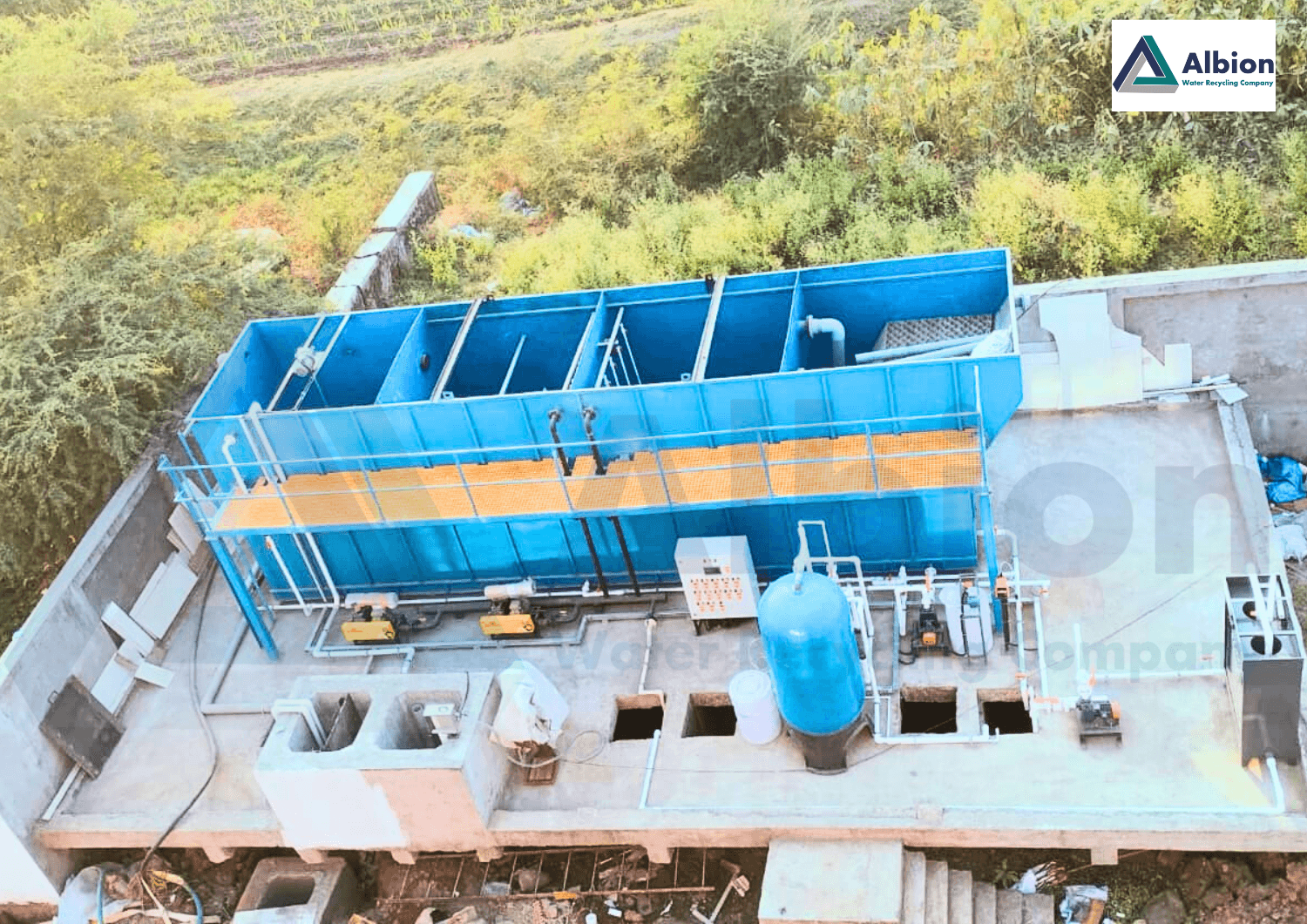
Albion Ecotech is a wastewater treatment engineering company that designs and executes STPs based on site-specific flow, load, and discharge requirements, rather than a one-size-fits-all template. Depending on the project, Albion selects from technologies such as SBR, MBBR, and MBR, and integrates tertiary treatment — including UF and RO — where treated water reuse is targeted. For sites with limited plot area or higher effluent quality expectations, MBR-based designs can be evaluated to reduce footprint while supporting reuse-grade output.
Albion's project scope typically includes PLC-based automation for consistent operation, a defined sludge management approach for handling excess biomass, and attention to energy-efficient blower and pump selection to help manage long-term OPEX. Where water reuse and recovery are part of a client's sustainability goals, Albion also evaluates tertiary treatment options aligned to the intended reuse application. Post-commissioning, Albion supports clients through operator training and annual maintenance arrangements to help maintain compliance over the plant's operating life.
Conclusion
Finding a quality sewage treatment plant provider in India comes down to evaluating engineering rigor, not just price. Technology fit, compliance understanding, sludge management planning, energy efficiency, and dependable after-sales support are the factors that determine whether a plant performs reliably for years or becomes a recurring source of compliance and cost issues. Asking the right questions upfront, and comparing proposals on these dimensions, is the most effective way to identify a capable STP partner.
%20Wastewater%20Treatment%20%20How%20It%20Works.jpg&w=3840&q=75)