
Conventional STP & ETP Technology: Where It Falls Short - and Why X-Flocs MBR is the Upgrade
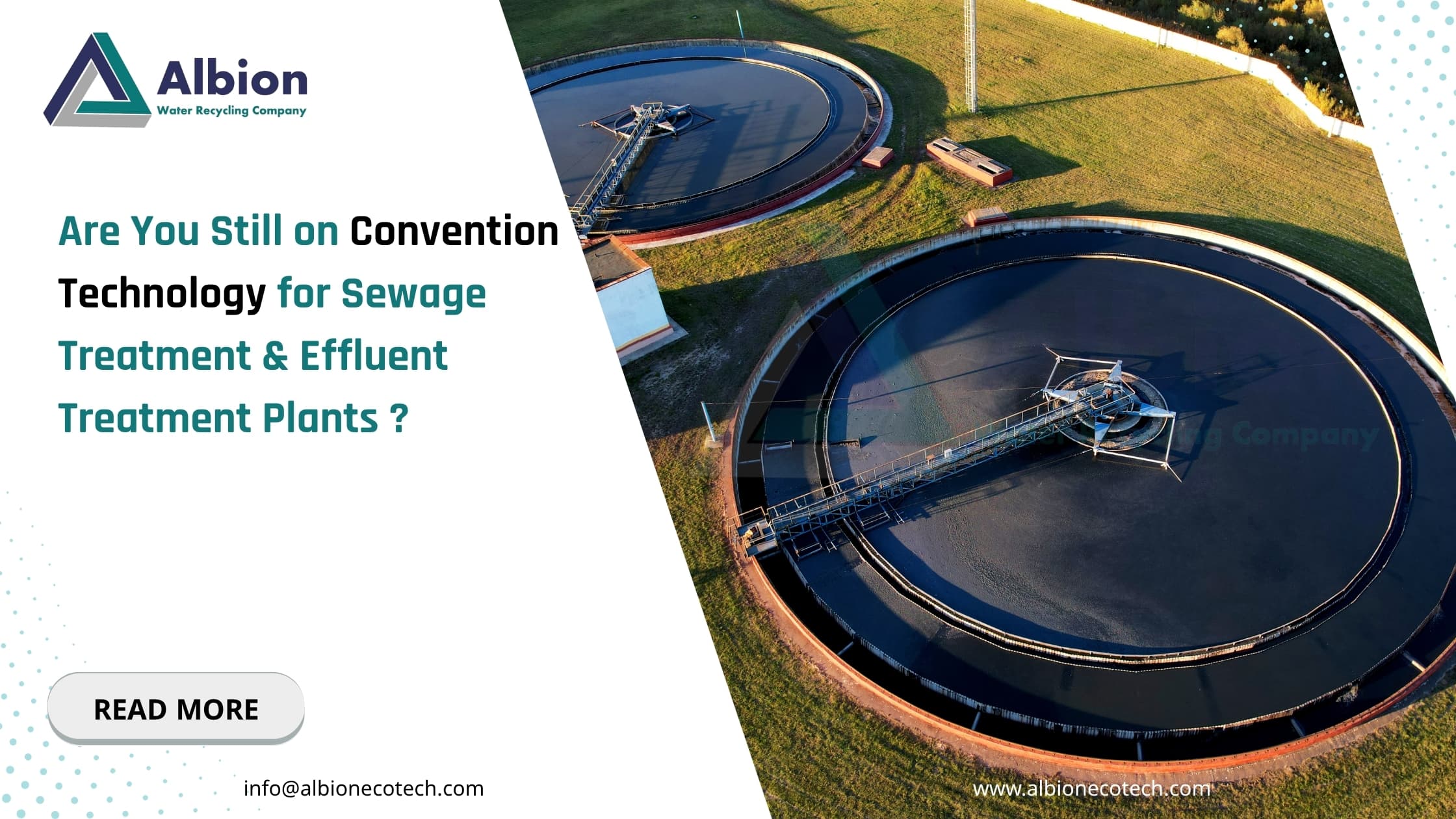
Conventional Sewage Treatment Plant (STP) and Effluent Treatment Plant (ETP) technology has been the industry standard for decades. It works. It is well understood. But as land costs rise, compliance norms tighten and water reuse becomes a business necessity rather than a nice-to-have, conventional technology is starting to show its limits. This is where membrane-based systems - like Albion's X-Flocs MBR - are changing what buyers can expect from their treatment plant.
Conventional STP Technology - A Quick Recap
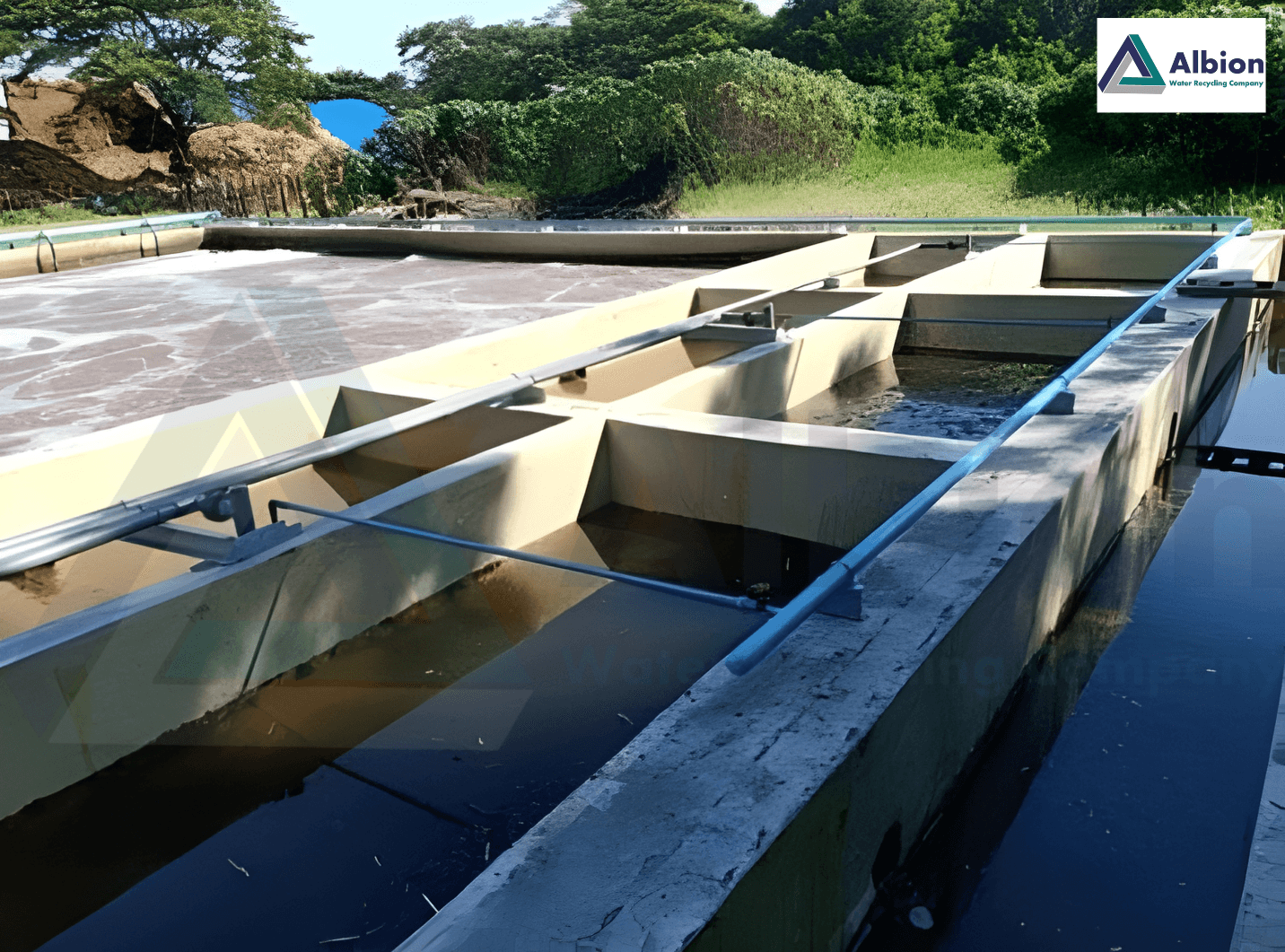
Conventional STPs are typically built around the Activated Sludge Process (ASP) or its variants - Extended Aeration, Oxidation Ditch, Trickling Filter and Stabilization Ponds. Sewage passes through screening, primary settling, biological aeration and a secondary clarifier before disinfection and discharge or reuse. Treatment relies on naturally occurring bacteria and gravity-based settling in civil-constructed tanks.
Conventional ETP Technology - A Quick Recap
Effluent Treatment Plants follow a similar biological treatment logic but are designed to handle industrial wastewater, which is often more variable in load, pH and contaminant type than domestic sewage. A conventional ETP typically includes equalization, primary treatment (screening, oil & grease removal), biological treatment (ASP or MBBR-based), secondary clarification and sludge handling - sized and configured to the specific industry's effluent characteristics (textile, pharma, food & beverage, chemical, etc.).
Where Conventional Technology Falls Short
Both conventional STP and ETP systems share the same structural limitations:
- Large land footprint - civil tanks for settling and aeration require significant space, a growing constraint for industrial plots and urban sites
- Effluent quality ceiling - gravity-based clarification cannot match the solid-liquid separation achieved by membrane filtration, limiting reuse potential
- Longer retention times - biological and settling stages extend hydraulic retention time compared to membrane-assisted systems
- Higher sludge volumes - more sludge is generated, increasing handling and disposal requirements
- Sensitivity to shock loads - sudden changes in flow or organic/industrial load can affect treatment stability

For projects where land is limited, reuse quality matters, or industrial effluent is variable and demanding — these limitations become real operational and compliance risks.
The Upgrade: X-Flocs MBR Technology by Albion
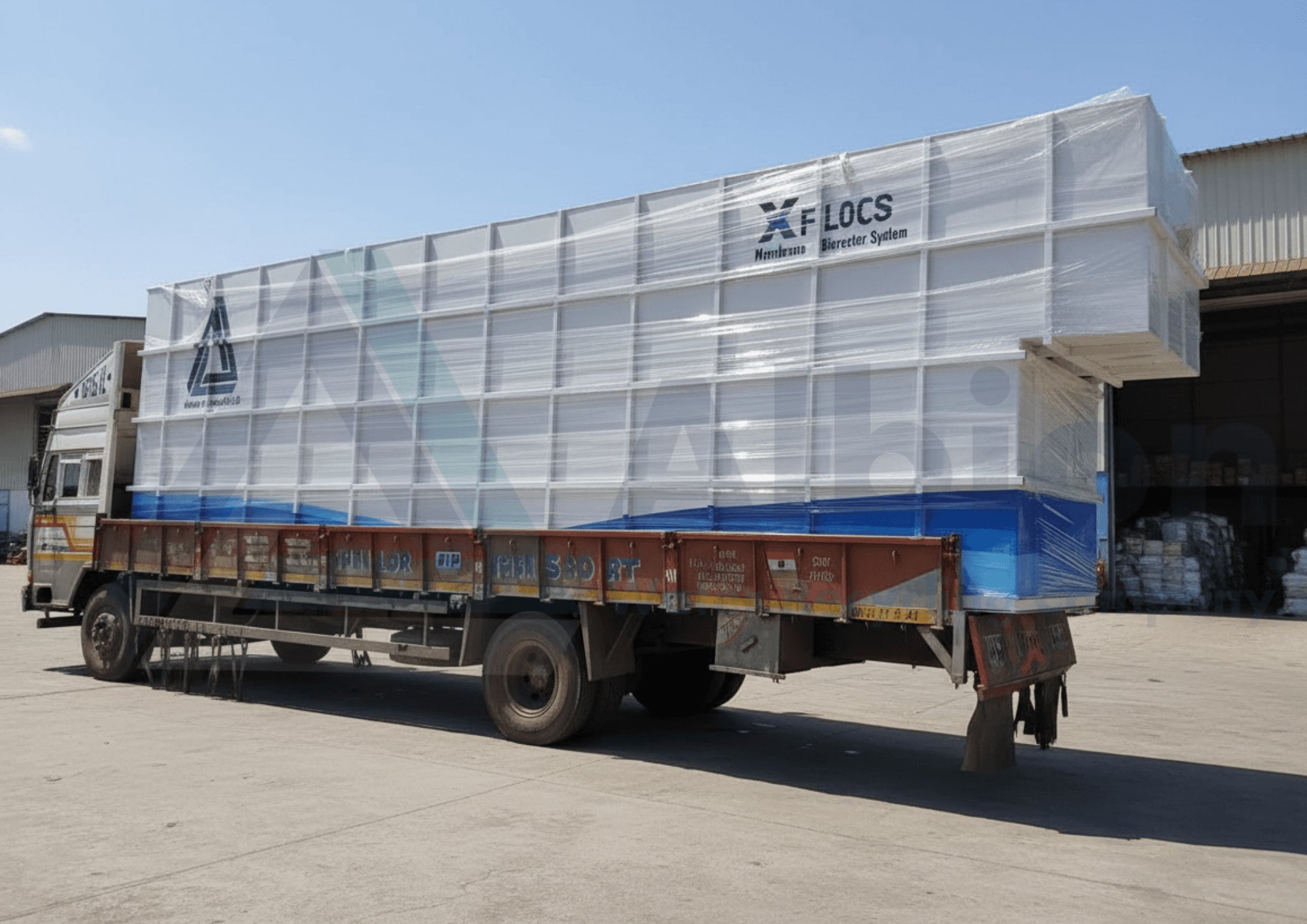
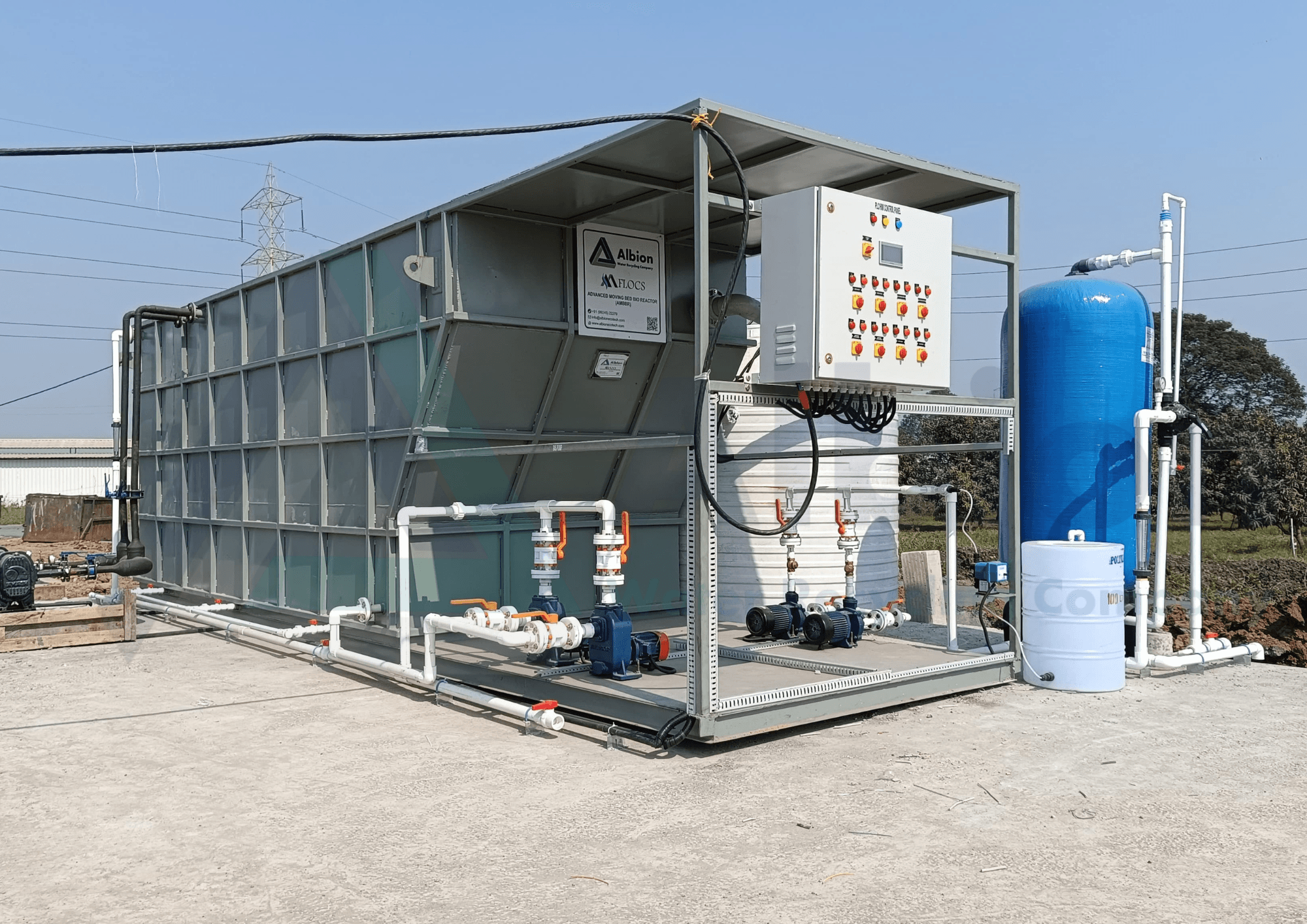
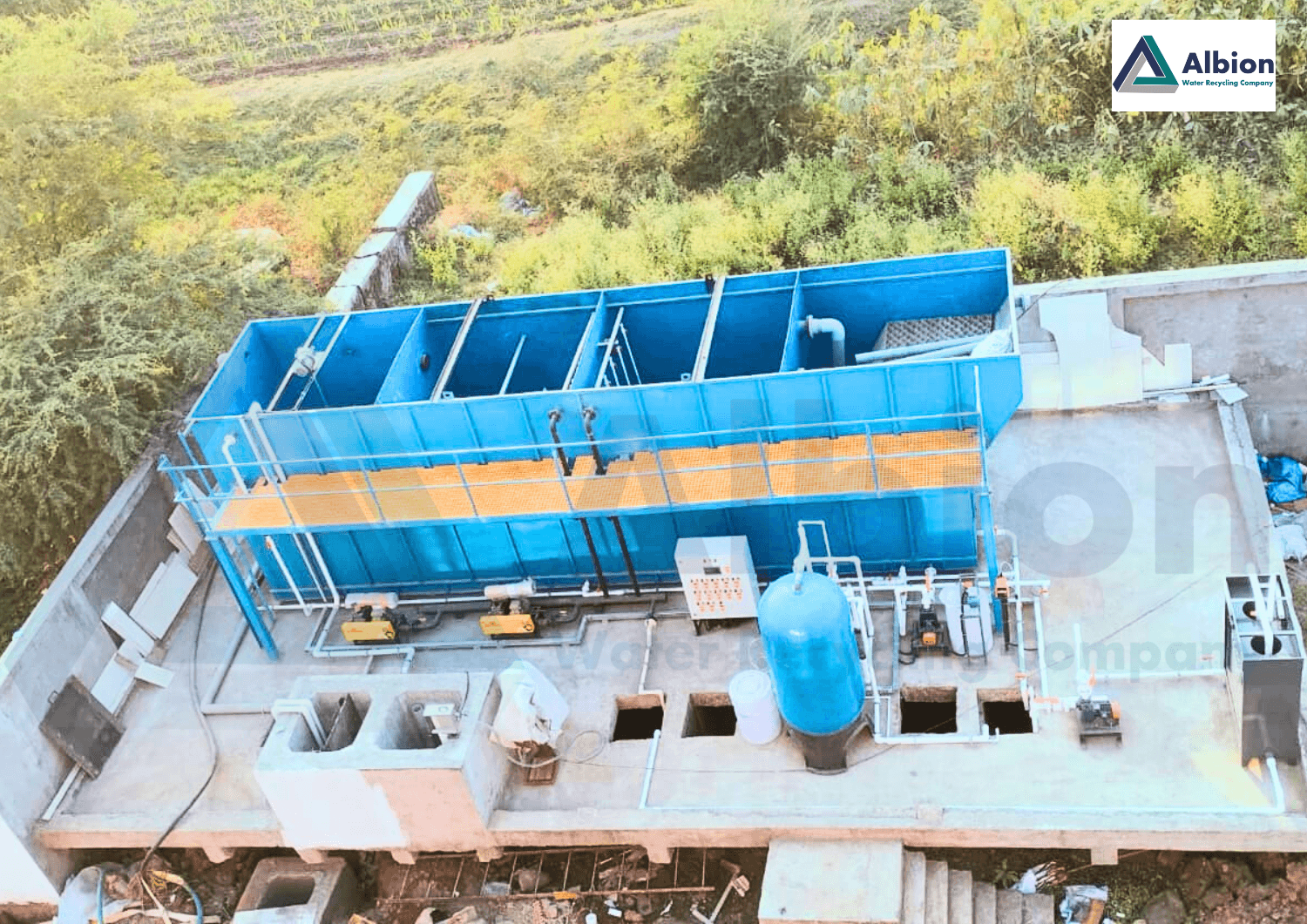
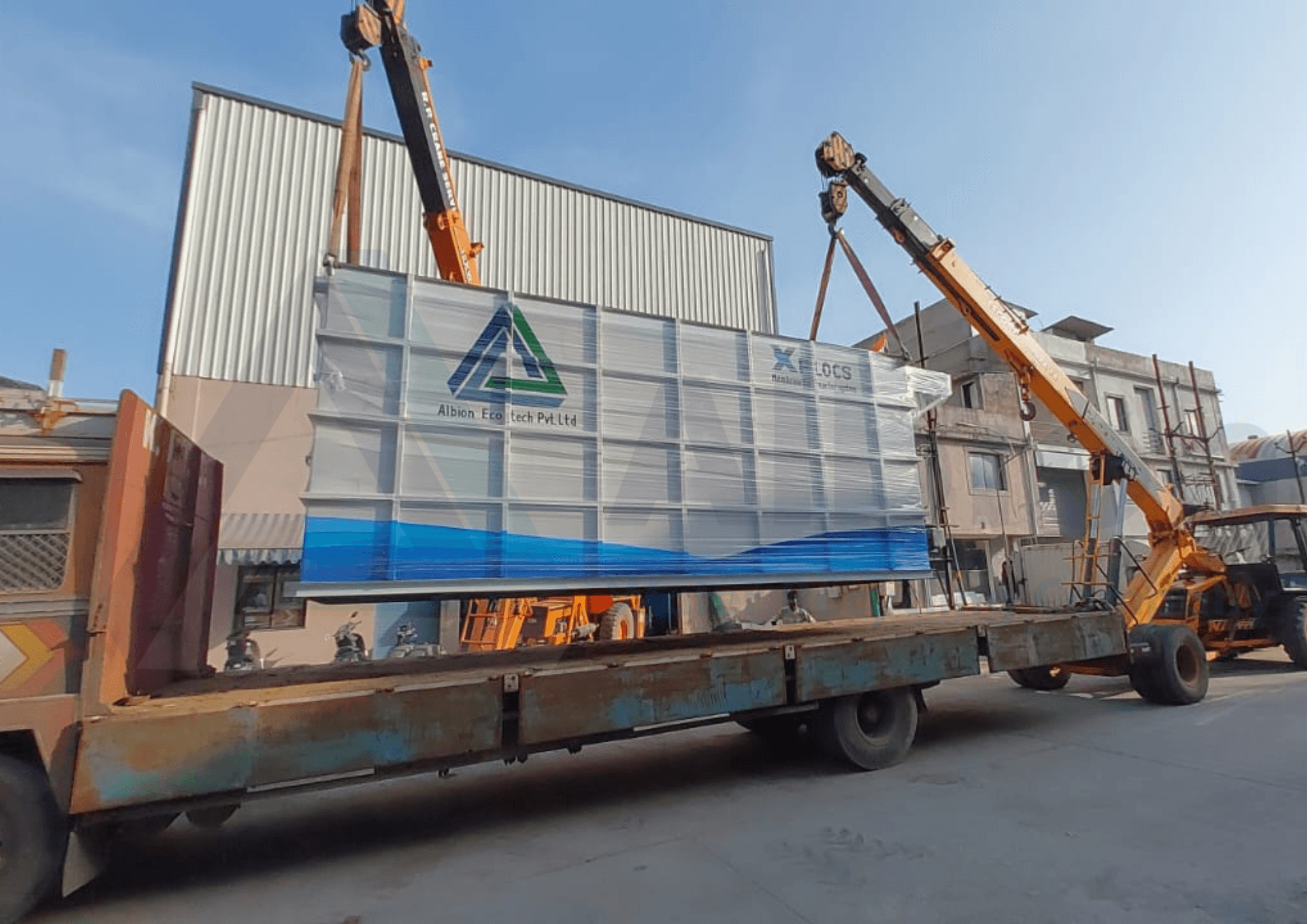
X-Flocs is Albion Ecotech's proprietary Membrane Bioreactor (MBR) technology, built on Blufox Eco-ventures LLP's Premium Hollow Fiber MBR Membranes & Sumitomo Electric (Japan) POREFLON PTFE hollow fiber membranes. Instead of relying on gravity settling in a secondary clarifier, X-Flocs MBR combines biological treatment with direct membrane filtration - physically separating treated water from biomass through the membrane itself.
This shift from gravity-based clarification to membrane filtration is what allows X-Flocs MBR to directly address the core limitations of conventional systems:
- Compact footprint - membrane filtration replaces the need for large secondary clarifiers, reducing overall plant size
- Higher effluent quality - membrane separation produces consistently clear, high-quality treated water suited for reuse applications
- Better suited to reuse-focused projects - where treated water needs to meet stricter quality benchmarks than conventional discharge norms
- PTFE hollow fiber membrane technology - sourced from Sumitomo Electric, Japan, a globally established membrane manufacturer
Should You Move from Conventional to X-Flocs MBR?
If your current or planned STP/ETP is facing any of the following, X-Flocs MBR is worth evaluating:
- Limited land availability for plant expansion or new installation
- Treated water reuse requirements - flushing, gardening, cooling, process reuse
- Stricter discharge or compliance norms than your current system can meet
- Variable or high-strength industrial effluent loads
Conventional technology isn't wrong - it remains a dependable choice for many projects. But where space, water quality and reuse are priorities, X-Flocs MBR is built to close the gap that conventional systems cannot.

Conclusion
Understanding the difference between conventional STP/ETP technology and membrane-based systems like X-Flocs MBR helps you choose the right plant for your site, budget and compliance needs - not just the most familiar one.
%20Technology.jpg&w=3840&q=75)